

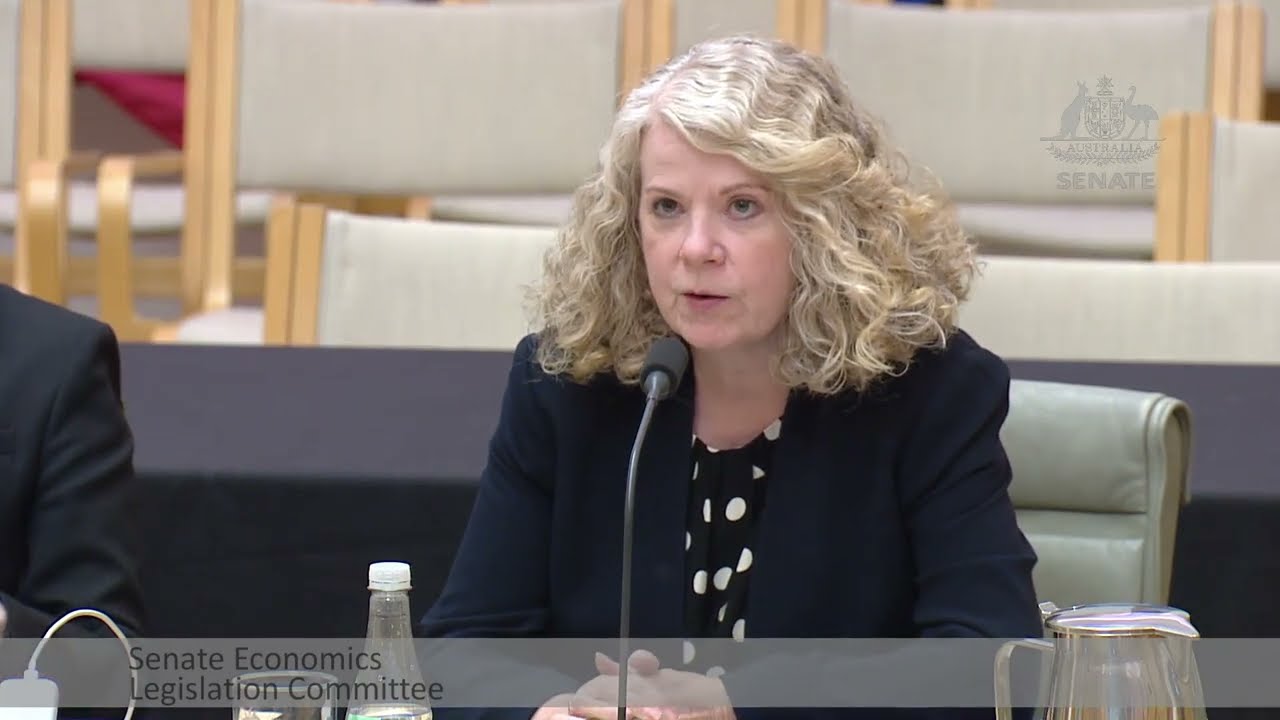
During recent Estimates hearings, I questioned officials from the National Water Grid (NWG) and Minister Murray Watt on critical water infrastructure and supply issues amid Australia’s surging population and rising demand.
I asked for an update on the Paradise Dam works, noting that the Crisafulli government is still evaluating the business case. I also asked questions regarding the Urannah irrigation project, highlighting that the detailed business case was withdrawn by the proponent and the Queensland government in late 2022.
Citing Australian Bureau of Statistics (ABS) data showing a 12.9% rise in water demand (including a 6% increase in household water and a 14% jump for food production), I enquired on how the government plans to meet this massive resource pressure. I pointed out that this surge equals the volume of a new Warragamba Dam every 18 months, asking where the infrastructure is to support record immigration levels.
While Minister Watt argued that the federal government funds regional water infrastructure, efficiency programs and buybacks, he maintained that state governments hold primary responsibility for drinking water supply.
I questioned the actual yield of the $210 million WISER program (Water Infrastructure for Sustainable and Efficient Regions) and asked why cancelled initiatives like the Hughenden irrigation project (HIPCo) remain active on the NWG’s website rather than being moved to a history page. These questions were taken on notice.
— May | Senate Estimates
Transcript
CHAIR: Senator Roberts.
Senator ROBERTS: First, could you update us on the Paradise Dam works. When we last spoke, you indicated that the Crisafulli government was still evaluating the business case and had not made a request for funding. Has there been any change to this?
Mr Southwell: No, we don’t have a business case from the Queensland government. I don’t believe the Queensland government has a business case from Sunwater either.
Senator ROBERTS: I also asked about the reason the project sponsor had pulled out of what is a project of national significance, the Urannah irrigation project. Mr Darrough took that on notice. It wasn’t, however, placed on notice. I’m trying to understand why the sponsor pulled out before asking the Crisafulli government why they aren’t proceeding with this project. Can you give me a simple rundown, please?
Mr Darrough: Pardon me, Senator, can you repeat the question about the question on notice. The response was provided.
Senator ROBERTS: ‘Mr Darrough took that on notice’, is what I said.
Mr Darrough: Yes.
Senator ROBERTS: It wasn’t, however, placed on notice.
Mr Southwell: We did table a response.
Mr Darrough: The Urannah Water Scheme detailed business case is publicly available on the Queensland government website. I provided a link for that as well. On the environmental impact statement material, the Queensland Office of the Coordinator-General published the terms of reference for the EIS on 31 March 2021, and it records that the EIS process was withdrawn in December 2022. This is a matter between the proponent and the Queensland government.
Senator ROBERTS: Do any of the projects in your project list include recycling sewage and/or grey water and directing the output into drinking water, including into a storage dam from which drinking water is drawn?
Mr Darrough: I would suggest that the answer is no, but I will take it on notice.
Senator ROBERTS: I’d be particularly interested in South-East Queensland.
Mr Darrough: I don’t have the—
Senator ROBERTS: No, I’m just saying. What is your target for water consumption per person, per day? How much water do you actually have to provide to keep water up to people, stock, station, irrigation, more people, more food and industry. We’ve got record immigration. What’s your target per person, per day?
Mr Darrough: That’s not a question for National Water Grid.
Mr Southwell: We don’t have a specific target from the National Water Grid Fund.
Senator Watt: Senator Roberts, remember that most of the responsibility for providing water, especially drinking water, if that’s your focus, rests with state and local governments. We have a role in funding some of that infrastructure.
Senator ROBERTS: I’ll just remind you of this from your website: ‘The National Water Grid Investment Framework ensures funding decisions guide long-term, responsible investment in water infrastructure. It also helps the government plan for future challenges, including climate change, population growth and rising demand for water in farming.’ According to the Australian Bureau of Statistics, water demand in Australia rose by 12.9 per cent from 2022-23 to 2023-24. A rapidly increasing population creates demand for more household water, up six per cent in that period. Also, from demand for food, water use is up 14 per cent. In actual terms, that represents another 1,965 gigalitres. In one year, that’s a new Warragamba Dam every 18 months. Where are these Warragamba dams coming from? Where are the plans for more water to meet the needs of the last million new arrivals, let alone the one million more due by 2028?
Senator Watt: I know that it would be your party’s policy to link all of these issues to migration. You just talked about the increasing demand for water for food production. That’s not necessarily about feeding the Australian population. You would remember, I’m sure, that the vast majority of food produced in Australia is exported. The demand for water is also partly about supporting the trade and businesses of farmers who produce the food.
Senator ROBERTS: Senator, I know you want to weasel out of it, but the fact is that immigration is up, food production is up, for whatever reason.
Senator Watt: Immigration is actually coming down under our government.
Senator ROBERTS: It’s up compared to three years ago. It’s up compared to five years ago.
Senator Watt: It’s coming down under our government. I know you don’t accept that, but it’s coming down.
Senator ROBERTS: It’s 750,000 for each of the last three years.
Senator Watt: That’s not correct. We can produce the figures that show—
Senator ROBERTS: Three years ago it was 750—
Senator Watt: This is not really the committee to get into this—
Senator ROBERTS: Correct. Where are the future Warragamba—you’ve got a water crisis cabinet.
Senator Watt: But net overseas migration is falling.
Senator HENDERSON: It’s at a record high.
Senator ROBERTS: You’ve got a water crisis coming; what are you doing about it?
CHAIR: Senators, I think there’s a bit of talking over each other. We’re getting to the end of the evening. Let’s do this as clinically as possible: question then answer.
Senator Watt: In general terms, from a federal government perspective, what we are doing to meet the demand for water across the country is helping fund certain infrastructure projects.
Senator ROBERTS: Which ones?
Senator Watt: The projects that the National Water Grid has funded, which we’ve said we’ll come back to you on notice about. There are many of them. We are encouraging water efficiency and investing in water efficiency, including on farms. We are funding voluntary water buybacks. There are a range of activities that we are funding. But when it comes to restrictions on water consumption, that is generally determined by state and local governments or the owners of that infrastructure.
Senator ROBERTS: When is the next Warragamba Dam coming? Where is it? We need a new Warragamba Dam every 18 months. Where are they? They’re not there.
Senator Watt: That would generally be a matter for states.
Senator ROBERTS: You’ve got your WISER program, water infrastructure for sustainable and efficient regions, which sounds nice. Let’s describe it: plugging leaks, building local pipelines and improving recycling facilities—$210 million in total. How much will this water add up to, from the WISER program? Will it be a Warragamba Dam every 18 months?
Mr Darrough: I need to take that on notice.
Senator ROBERTS: Last question on this bracket: your website still lists projects that have been killed off by the Albanese government, including the Hughenden irrigation project, HIPCo. Why are cancelled projects not removed or moved to a history page? Is it to give the impression the National Water Grid is actually expanding when it’s not?
Senator Watt: There were no announcements made about that project in the budget.
Senator ROBERTS: Previously?
Senator Watt: Not that I’m aware of.
Senator ROBERTS: Will you check? Take that on notice?
Senator Watt: Sure.






Leave a Reply
Want to join the discussion?Feel free to contribute!
Using your first name