

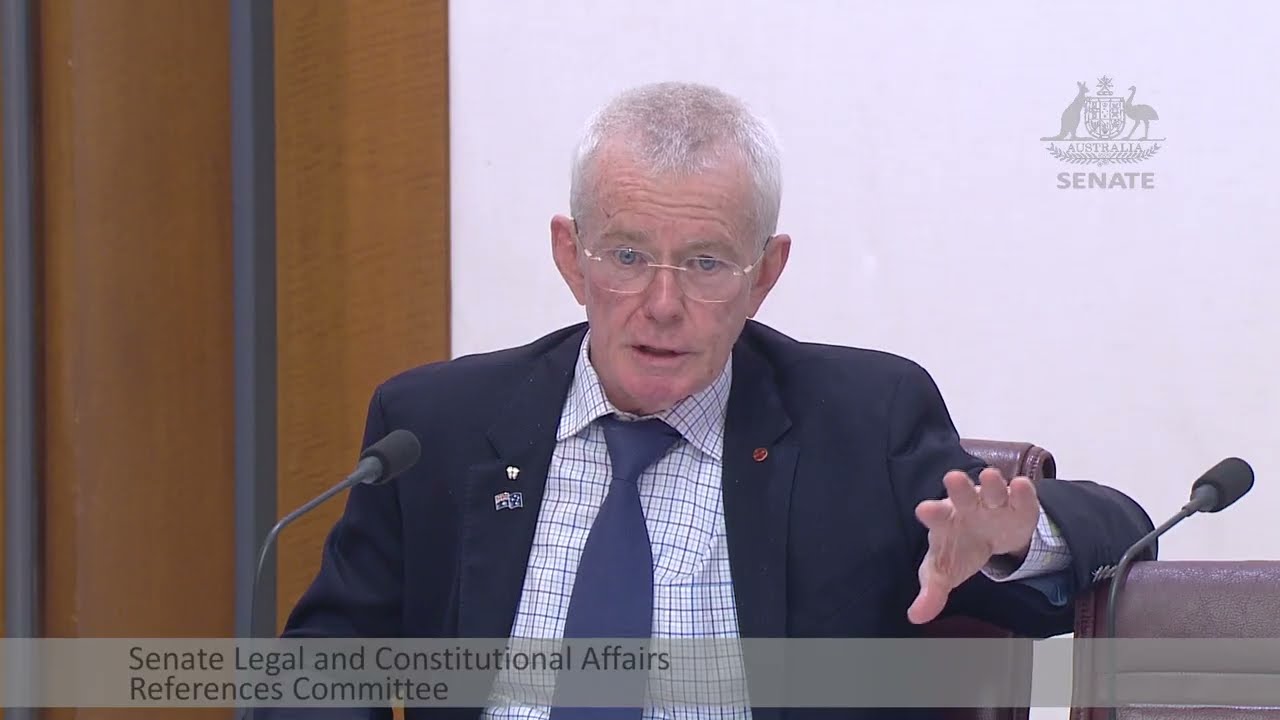
During this session with the Office of the eSafety, I requested an updated, detailed breakdown of the Commissioner’s overseas trips, including destination countries, separate trip counts and specific cities and dates for travel to the United States – which was taken on notice.
I then turned to the March 2026 compliance update that states that 4.7 million (now 5 million) accounts have been deactivated, pointing out that these likely included bots, orphaned profiles and inactive accounts rather than active users.
Despite repeated questioning, the eSafety officials admitted they do not know how many of those closed accounts belonged to actively engaged Australian children, relying instead on self-reported figures from tech platforms under compulsory notices without verifying if the accounts were dormant.
Citing public reports and industry feedback, including data showing 70% of children aged 10 to 16 are still on social media and criticism from platforms like Meta, I highlighted that the ban is largely failing to stop workarounds and bypasses.
While the Commissioner defended the figures as a useful baseline for harm reduction and pointed to a 37% overall drop in young people holding accounts, I maintain that “stating” millions of deactivated accounts misleads the public when the eSafety office cannot prove how many active under-16 users were actually removed.
— May | Senate Estimates
Transcript
CHAIR: We will keep going with the eSafety Commissioner. Senator Roberts.
Senator ROBERTS: Moving on to travel, in previous estimates, I asked how many overseas trips the eSafety Commissioner had undertaken and I received reply SQ25-002143. This shows 22 destination countries including Canada, France, Switzerland, Ireland, Japan, United States, Germany, Italy and the list goes on. This answer, though, does not say how many trips to these destinations were made. Please update this reply on notice for recent trips and indicate for all destinations how many separate trips were made to each destination. In the case of the United States, please indicate cities visited and dates.
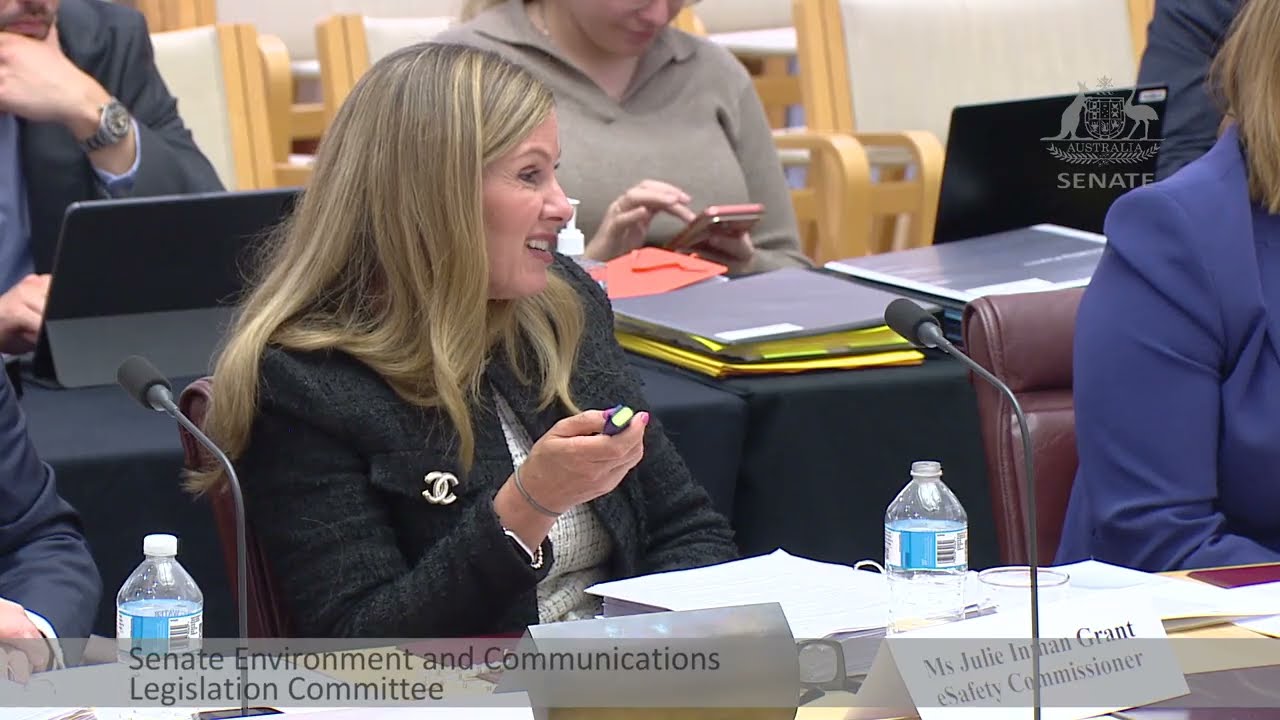
Ms Inman Grant: Sure. I’m happy to take that on notice, but I try and hit as many places on one flight as possible.
Senator ROBERTS: I note your March 2026 compliance update is still talking about the 4.7 million accounts that were deactivated at the time the under-16 ban started. I would suggest these were accounts that tech firms, preparing for the introduction, were shutting down for being mostly bot and orphaned accounts. Since you’re still claiming the win, let me ask: can you tell me how many of those 4.7 million accounts were confirmed as an active account of an Australian child under 16?
Ms Inman Grant: There have been 300,000 subsequent accounts that have been restricted or deactivated, so a total of five million. If it gives you any comfort, it’s not like I pulled out a piece of scrap paper and wrote down a bunch of numbers.
Senator ROBERTS: I’m not suggesting that.
Ms Inman Grant: These numbers are provided by the companies themselves through legally enforceable notices. As I mentioned earlier, we’re sending out subsequent data notices. We are interrogating those numbers to make sure that they accord with what we’re seeing through our various tools. We’ll be asking additional questions. Where our real focus is now—that was really the low-hanging fruit when we deactivated and restricted the known under 16s at that time. What we really need them to focus on is preventing any sort of reregistration or circumvention of the systems that they have in place, and, certainly, we want them over time looking at much stronger sign-up restrictions so that they’re not continuing to attract or trying to attract tweens, in particular, between the ages of eight and 12. One of the platforms said in discovery documents that tweens have a herd mentality. They said, ‘We should try and get them locked in as early as possible, so we have customers for life.’
Senator ROBERTS: You didn’t answer my question. I asked: how many were active accounts of an Australian child under 16? It tells me that you don’t really know because the numbers were what you were told by the tech platforms.
Ms Inman Grant: Right. We’re asking—
Senator ROBERTS: You don’t know?
Ms Inman Grant: We’re asking some deeper questions about the nature of those accounts. Is there anything you’d like to add, Ms Snell?
Ms Snell: I think what we can add to that is to say that there were accounts that were registered as being held by an Australian end user under 16. That was the basis on which the platforms took action to restrict access to those. We don’t have a breakdown of how recently those accounts have been used and whether, for example, they were dormant or not. But I think what’s important to understand there is just because an account hadn’t recently been active is not to mean that the owner or user of that account couldn’t start using it again. Part of the intention of this law and all of the regulations that eSafety enforces is it’s a proactive protection. That’s about making sure that kids under 16 don’t start using these harmful services.
Senator ROBERTS: The point is you do not know how many accounts of under 16-year-old children were shut down. Here’s an article from Tech Guide by Stephen Fenech, ‘After 100 days of the Under 16 social media ban the verdict is in—it’s a massive failure’. The article says, ‘Seventy per cent of Australians aged between 10 and 16 are still on social media platforms.’ It goes on to say: Snapchat reported it had closed down more than 415,000 accounts with its own age detection technology but parents, teens and experts are all saying it is easily and routinely bypassed— we’ve heard that a lot too— A poll on X showed 45 per cent of respondents said their child had found a workaround to the ban with a further 34 per cent saying the ban has had no impact at all. In this sample, eight out of 10 parents says there is no effective enforcement of the social media ban. Then it goes on to say: Meta—the platform that owns Instagram and Facebook—also shared its feed back after 100 days of Australia’s social media ban. “Australia had the opportunity to set a single, accurate standard for age assurance across the whole app ecosystem,” Meta said in a statement. “Instead, the Government chose a patchwork approach that’s inconsistent across services and risks pushing young people towards less regulated, less safe corners of the internet— that’s exactly what we said would happen— “If the goal is genuinely safer, age-appropriate experiences, we believe the best option is to raise the bar across the entire ecosystem and give parents a simple, consistent point of control— that’s exactly what we said before it was applied— “App-store level age assurance is the practical path that Australia missed.” Those are some comments.
Ms Inman Grant: Sure. There was a lot there but let me say this is a pretty typical playbook I’ve seen many times before. The platform that doesn’t want to be regulated says that the third-party technology that they’re using isn’t efficacious, even though it’s already been tested, and it’s not getting better, so they blame the policy or they blame the regulatory guidance. They then say it should be somebody else’s responsibility to age-gate our platform. We don’t tolerate that in the real world. This would be like a bar or a pub saying, ‘Carding a child at the door is not our responsibility. We should make the brewery or the wholesale manufacturer be responsible for them getting into the bar.’ You own the risky environment. You need to own that space. Where I agree is there are things that we can and should be doing up and down the stack to help give these platforms more signals, and that’s particularly what Apple’s age range API does. Interestingly, some of the companies have taken it up and some have not. I think it’s also interesting to note you mentioned Meta, and I think they put in their blog that they had deactivated about 554,000 accounts. They were asked in court in New Mexico because they told the New Mexican government they couldn’t deactivate accounts for New Mexicans. The court pointed to the fact that in their own blog they said they were able to do this. I take a little bit of that with a grain of salt. The 70 per cent number that you mentioned came from our public compliance report and that’s accurate. Seventy per cent of kids who were on Snapchat, TikTok, Instagram, Facebook and YouTube were still on, and, in many cases, they were never even asked to age verify. That is precisely why we’re taking on and looking more closely at those five particular companies because what we have seen, in terms of our data, is the number of young people holding under-16 accounts on social media has decreased by 37 per cent. If you think about any other public health movement over a three-month period, that’s a very impressive reduction, and this is what we’re going for. We’re not just looking at numbers; we’re looking at realistic harm reduction. That goes alongside the reduction of young people on these platforms. That’s a really important measure, not the initial—obviously it’s impressive that those initial accounts were deactivated, but the test for the companies right now, and whether they’re continuing to improve and live up to the reasonable steps, is whether they’re preventing them from re-entering and reregistering their platforms to let them back on.
Senator ROBERTS: With respect, there were parents quoted, surveys quoted and big tech platforms quoted. I remember all of the Apollo moonshots had a quote that was their guiding theme, and one of them was: ‘In God we trust. All others bring data.’ You are giving me no data. You’ve had three chances. You’ve given me no data that tells me anything about the number of active accounts shut down.
Ms Inman Grant: How much does it matter to the ultimate goal of the policy which is to keep children off social media accounts?
Senator ROBERTS: It goes to your statement that 4.7 million accounts were deactivated at the time the ban started.
Ms Inman Grant: Yes, and we stand behind that to the extent—
Senator ROBERTS: But they’re not active.
Ms Inman Grant: Pardon me?
Senator ROBERTS: They’re not active. You don’t know that. You trusted the tech platforms. You said that you didn’t have the data and you don’t know.
Ms Snell: Can I just say, on that, that the data we have and the number of accounts the platforms have advised us—whilst you say we trust the platforms, they provided that information to us under compulsory notices. There was a penalty for them if they didn’t respond to those notices; they all did respond. There was also a criminal offence if they provided false or misleading information. At the moment we have no evidence to suggest the information they provided was false or misleading. But we also accept there are still kids on platforms, and we are concerned with the platforms’ compliance. That’s why we have ongoing investigations where we are interrogating the platforms and the steps they are taking to determine whether they are complying with the law.
Senator ROBERTS: The commissioner told me that the tech platforms have provided the number. There’s no way you can check to see which were active. You don’t know how many active accounts were shut down.
Mr Fleming: The legislation asks platforms to prohibit under-16s from being on that platform. It doesn’t mention active or inactive users. That’s data that is not necessarily needed for the purposes of compliance.
Senator ROBERTS: If you’re talking about 4.7 million accounts being deactivated at the time, the public would take that as 4.7 million under-16-year-old children have had their internet accounts deactivated. That’s not what it means at all.
Ms Inman Grant: It’s important to go back—and we can provide you further information on notice. These numbers weren’t totally plucked out of thin air. We worked with the platforms using our section 20 transparency powers a year prior to this coming into place, to ask them to give us a realistic estimate of how many under-16s they had on their accounts there. We did some of our own youth research, and we triangulated those—it was a multimethod type study. The numbers they provided us are not out of the realm of what we expected, based on that earlier set of research and transparency data. If you look at the regulatory guidance and what we’ve asked the companies to do, the first thing we asked them to do—again, the low-hanging fruit—was, ‘Let’s just start by getting rid of the under-16 accounts you know exist.’ Some of them may have been deactivated, some of them may be live, some of them may have been double. But the important part of taking the reasonable steps is exactly what Mr Fleming said: we’re trying to reduce the number of under-16s that have and hold accounts on social media. That is the measure, and then there is the harms reduction that that affords them by not being exposed to the harmful and deceptive design features on these social media platforms. I don’t want to get caught up on those particular numbers because they give us a baseline, but we’ve moved on in terms of what we’re looking at with respect to compliance and lifting that compliance.
Senator ROBERTS: It doesn’t matter how many times you say it; the 4.7 million accounts that were deactivated at the time were not all active. We know that. You are trusting the tech platforms you say should not be trusted. You also say the person who owns the risky environment should be the one enforcing it—that’s the parents—and they have the tools. But you’ve bypassed the parents.
Ms Inman Grant: No, I’m talking about the platform, the online space. Of course parents have an important role, but they’re not targets of compliance. We’re trying to empower them to do what they can to be engaged in young people’s digital lives. From everything we have seen in terms of the increase in visits to our website and the conversations we’re having, and even the letters we’re getting into the office, it indicates that parents have been hyperengaged—which is great.
Senator ROBERTS: This echoes something I said before the ban came in: “If the goal is genuinely safer, age-appropriate experiences, we believe the best option is to raise the bar across the entire ecosystem and give parents a simple, consistent point of control. “App-store level age assurance is the practical path that Australia missed.” So it’s not all roses.
Ms Inman Grant: Actually, we put some restrictions on the app stores in the context of our age appropriate design code. To me, that’s passing the buck. You’re the social media site that is building these deceptive and harmful design features to keep young people on there and to track them in the first place, and to monetise them. You have no responsibility for being the bouncer at the door to make sure that young, underage people aren’t getting in. I don’t see how any organisation could shirk that responsibility. There should be shared responsibility up and down the stack, but it shouldn’t be, in my view, primarily on the app stores or the devices. We need more protections on both.
Senator ROBERTS: Parents are the best. We’ve undermined parents.
Ms Snell: If I can just add one thing: it’s also important to understand that a number of these services are accessible via the web without the need of having the app. If you had the requirement only on the app stores, young people would still be able to access these services by logging into an account through a web browser—so that would not achieve the result. That’s why it’s important to have it at the level of the service itself.
Senator ROBERTS: I’m saying: give the parents the responsibility back.
Senator Green: Parents are the ones that asked us to introduce the laws.
Senator ROBERTS: Many opposed it.







I work in a school and almost every student I teach across grades 7 to 10 still has access to Instagram and SnapChat. When asked, they say that parents or older siblings set it up for them. Some say their account was never blocked. A stupid law from an out-of-touch government.