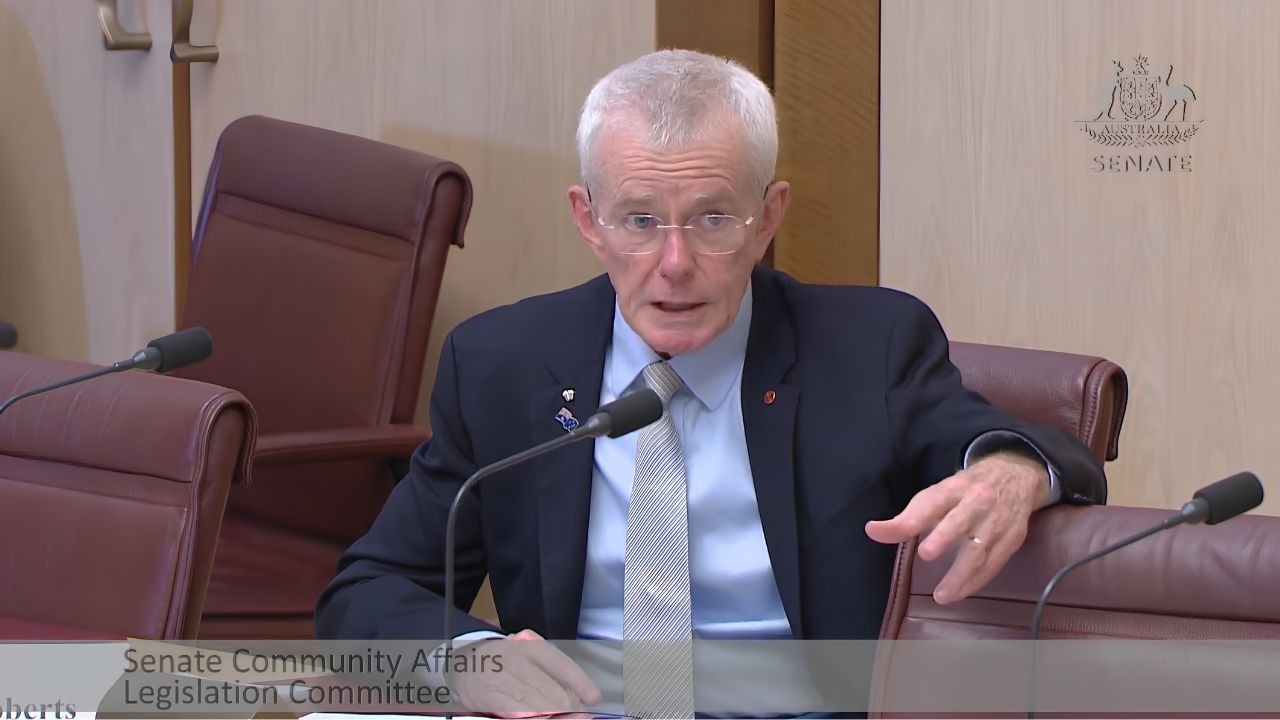
During the February Estimates hearings, I pressed the government and the Illicit Tobacco Commissioner on the ineffectiveness of their strategy to combat the illicit tobacco market.
Tobacco excise revenue is projected to fall to just $1.9 billion by 2029-30, far below the $16 billion-plus previously collected. A clear sign the government does not expect its enforcement efforts to meaningfully reduce the black market.
The Commissioner’s own report lists 10 drivers of illicit tobacco yet fails to directly acknowledge that high excise and the resulting price gap are major contributors, despite everyday Australians, including police officers, confirming this reality.
Independent data from Roy Morgan shows smoking rates have increased from 16.8% to 17.1% following recent excise hikes, contradicting the government’s claim that higher taxes reduce smoking. Without knowing the true size of the black market, boasting about a 34% increase in seizures of illicit product is meaningless. We cannot measure success when you don’t know the scale of the problem.
The government continues to act without reliable data, ignores evidence that contradicts its assumptions, and refuses to confront the policy settings driving the illicit tobacco growth.
This is a failure that Australians should not be forced to tolerate. It’s costing taxpayers billions in lost revenue.
One Nation will take drastic action until the illicit market is wiped out, then return duty to a much lower, more sensible and sustainable rate.
— February | Senate Estimates
Trancript
CHAIR: Senator Roberts.
Senator ROBERTS: My questions are to the Commissioner for Illicit Tobacco and E-cigarettes. My question on notice No. 15 remains unanswered from last estimates. It read: How many acts of violence were committed in Australia that were directly related to illegal tobacco and vapes? I’m talking about murders, fire bombings, assaults and similar acts or threats of violence. I did get a part answer in that the question was best answered by law enforcement, which I assume would include various state and federal agencies. Your role, as you expressed it to me in last estimates is, ‘activities that support intergovernmental governance functions and support reporting on the size and consequence of the illicit market’. Doesn’t consequence include acts of violence related to the illicit industry and criminals associated with that?
Ms Shuhyta: We had looked at how to report on those statistics. At the moment, there isn’t a consistent way that we can report on the exact number of criminal activities related to illicit tobacco across states and territories. There are different datasets and definitions. For example, an arson might be coded or recorded as an arson but not necessarily if it is illicit tobacco related. It’s very hard for me to pull together the data from across Australia on those specific activity levels. We are continuing to work with states and territories in terms of what might be realistic there. We’re working with criminal intelligence agencies and AFP to look at the best way we can report as we move forward. The metrics that I have in the report to parliament this year are based on the data available to us. As we move forward over the years, we will definitely be looking at how we can mature that data and make it more sophisticated and comprehensive.
Senator ROBERTS: Thank you for admitting that you don’t know the consequences. I suggest listening to some people in the street. Secondly, the loss of tobacco excise revenue is stunning. In 2019-20, excise brought in $16.3 billion. In 2024-25, tax revenue had fallen to $7.8 billion, or about half, with a projection for 2025-26 of $5.5 billion, or one-third of what it was just five years ago. Minister, when will you accept that the Laffer curve applies to tobacco excise and the higher the tax rate the less revenue is received, especially with cheap illicit tobacco competing. I’m talking to police in Queensland who go to illicit tobacco to get cheaper cigarettes.
Senator Watt: We certainly agree that illicit tobacco is a very serious problem and the connection to organised crime. That’s why we’ve devoted so many more resources to tackling illicit tobacco. I’m sure the commissioner and others could talk to you about the operations they’ve undertaken. In fact, I don’t know if you were here when the commissioner gave his opening statement.
Senator ROBERTS: I was.
Senator Watt: He talked about the success of those operations in terms of the seizures that have been achieved.
Senator ROBERTS: Minister, his people have seized plenty of material, but we don’t know the total size and it could be a tiny proportion, which is what this is.
Senator Watt: The commissioner might be able to give you some information about that. I’m not sure. On the excise, I understand why many people would like to see us reduce the excise. The government’s view is that we shouldn’t be giving in to organised crime. We should actually take them on and we should arrest them. We should confiscate the illegal tobacco. We know that tobacco kills thousands of Australians every single year. We know that higher prices for tobacco puts people off smoking, and that’s a good thing for their health. It’s a good thing for the health budget that we all pay for.
Senator ROBERTS: That’s why they buy it cheaper, Minister.
Senator Watt: I’m aware of that. That’s why we are so determined to break the organised crime rings that are behind illegal tobacco.
Senator ROBERTS: But, Minister, you’re not confident because you forecast, yet again, another reduction in revenue from tax. Page 8 of the Illicit Tobacco and E-cigarette Commissioner Report 2024-25 lists 10 factors behind the growth in the illicit market. Not one of those mentions the high level of tobacco excise. Commissioner, do you really believe the high price of legal cigarettes is not driving demand for illicit tobacco? Not even 10th out of 10?
Ms Shuhyta: Just a correction—excise is listed on that page. In terms of a number of drivers for the illicit market, price differential is listed as one of those drivers. Within price differential, there is a number of aspects. One is that the cost of illicit tobacco is pushed down because of cheap supply costs and an overabundance in the region of illicit tobacco—
Senator ROBERTS: And lack of excise.
Ms Shuhyta: And then excise and tobacco company profitability actually pushes up regulated tobacco. You’ve got those two things at play. Excise isn’t the be-all and end-all driver of the illicit market. We see different excise rates around the world in different countries that don’t correlate with the size of the illicit market. In fact, in some countries with the cheapest tobacco there are sizeable illicit markets. Or within the same country that has a standard excise rate, you’ll get different market shares of illicit tobacco in different cities. For me, it’s not as simple as advising government that excise is the solution.
Senator ROBERTS: Talking to people in the street, including policemen who use illicit tobacco, it’s certainly very significant. On page 9, Commissioner, you’re claiming success because the amount of illicit product being seized has increased by 34 per cent. Do you accept making a claim of success when you don’t know how much the black market has grown is pointless? If you don’t know the total size of the black market and no-one has any idea—I’ve asked before—you don’t know whether you’re having success or you’re failing. Looking at the criminal activities and the adoption of illicit tobacco widely, it looks like you’re failing.
Ms Shuhyta: I’m going to try to answer the question that is in there. We do have an estimate of the size of the illicit market. This report does estimate the size of the illicit market. It’s the first time that we’ve been able to do so. I think at the last estimates I wasn’t able to give you that size because the report hadn’t been finalised and tabled, but it is there now.
Senator ROBERTS: Minister, I find it troubling that the budget projection for tobacco excise in forward estimates only shows revenue of $6.9 billion in 2028-29. That suggests you do not expect the commissioner to make a dent in the illegal trade. Shouldn’t that figure be closer to the $16 billion or more we used to get? Isn’t that an admission of failure or of ignorance?
Senator Watt: We’re absolutely not giving up in the fight against illegal tobacco. Again, I’m sure—
Senator ROBERTS: You said you are.
Senator Watt: I don’t think you should insult the efforts of the Border Force personnel.
Senator ROBERTS: That was a clever switch, Minister, but I’m not doing that. They’re doing a good job.
Senator Watt: You’ve just said it’s a failure. They’re the people who are on the front line, taking on organised crime.
Senator ROBERTS: Your failure to control illicit tobacco?
Senator Watt: You and I are sitting in this room. We have Border Force personnel out there on the front line taking on the organised crime elements behind illegal tobacco, and we are absolutely determined to keep that up.
Senator ROBERTS: Minister, the report makes a statement on page 19 that reducing the tobacco excise will increase smoking rates and undo the gains made to date, which you said earlier. In July 2025, Roy Morgan showed recent excise increases on top of the normal CPI increase had caused an increase in smoking rates from 16.8 per cent to 17.1 per cent. The graph I’ve seen confirms that. Yet you are saying the opposite. The National Tobacco Strategy added large excise increases in September 2023, ’24 and ’25. Can you show any data that these massive increases have reduced smoking rates? I suggest that the opposite is true, and that’s what the data shows.
Senator Watt: The trouble with—
Senator ROBERTS: Criminals don’t ask for ID.
Senator Watt: No, I’m aware of that. They’re very bad people who deserve to be locked up, which is what we’re trying to do. Your question about smoking rates is probably one you should take up in the Health estimates. That’s not the work of this department. The work of this department is going after organised crime. We’d appreciate your support in that effort.
Senator ROBERTS: You’ve got my support. That’s why I’m talking about this and that’s why I’ve been raising it for a couple of years now. Decades of shoddy governance show that our biggest problem is governments acting without data, going without data and contradicting the data in so many areas.
Senator Watt: I’ll let that pass.