

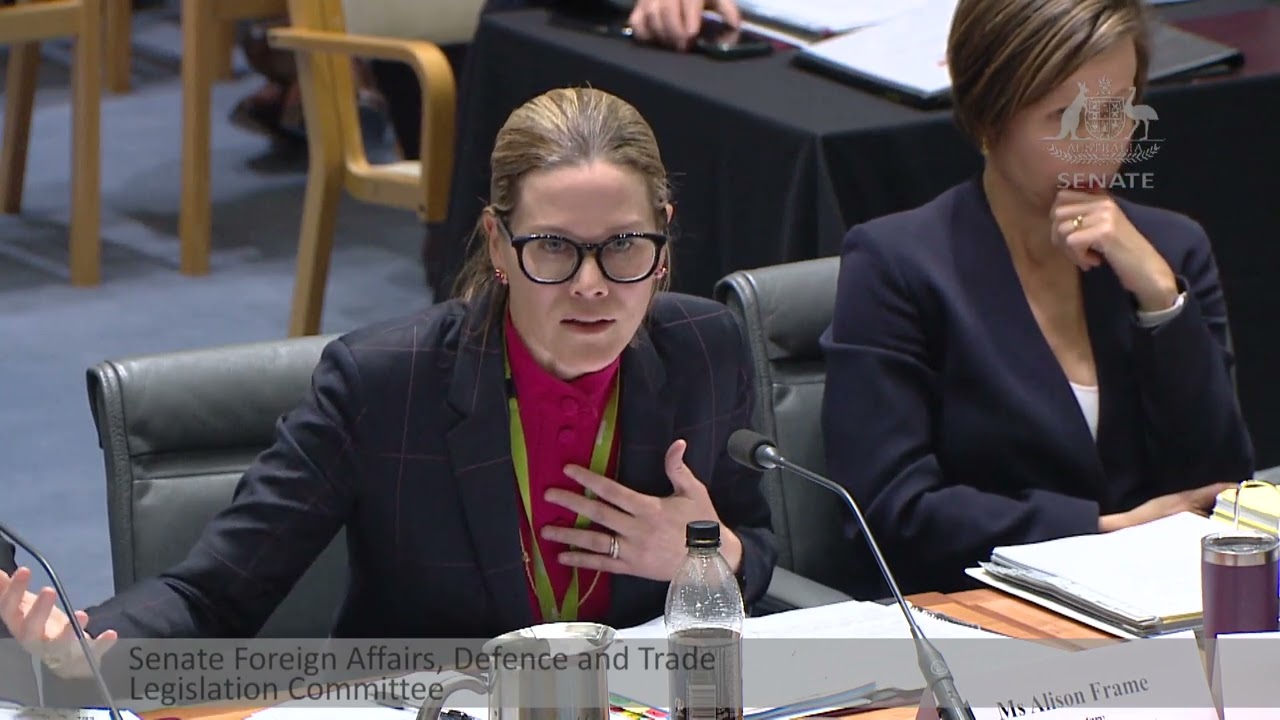
During this estimates session, I brought serious concerns from my Queensland constituents regarding disruptions facing the skirmish sports and gel blaster industry. Small businesses and lawful hobbyists are trapped in a web of confusion due to recent amendments to the Customs (Prohibited Imports) Regulations 1956 and the Combatting Antisemitism, Hate and Extremism (Firearms and Customs Laws) Act 2026.
I highlighted a specific case of a compliant Queensland business owner who has followed every weapon licensing rule, yet had one shipment seized and destroyed by Border Force and another returned to the sender. These people are legitimate business operators, not extremists or terrorists, and they need clarity.
I asked the Minister and Australian Border Force (ABF) officials how these new definitions are being applied in practice.
Acting Deputy Commissioner Smith has agreed to liaise directly with those affected to hopefully resolve their specific import and permit grievances.
ABF officials have also committed to updating and publishing clearer guidance materials online and working closely with industry partners to map out lawful import pathways.
Department Secretary Ms. Foster admitted that due to the “hurried” and “pressured” nature of drafting this legislation following the Bondi attack, no formal economic impact assessment was conducted, and no transitional provisions were included for existing businesses. She took on notice my request to investigate potential transitional support regarding stock and employment management.
Further, she said that the government’s intent is not to ban gel blasters, but rather to regulate them consistently across states. Under the new framework, importers require both a firearm-style licence for the gel blaster and an import permit.
The government confirmed they are establishing a firearms council specifically intended for ongoing consultation with industry, legitimate holders, and affected stakeholders to iron out these regulatory wrinkles.
Australian Border Force (ABF): 131 881 within Australia, or (02) 6196 0196 from outside Australia.
Transcript
Senator ROBERTS: Thank you for appearing again today; good to see you. Minister, these questions are built on an extensive session with constituents in Queensland. One in particular has followed all the rules for importing parts for gel blasters but is still being refused access to necessary gel blaster equipment for his business and personal use. He’s done everything. Border Force confiscated one shipment and destroyed the goods, and the other shipment was returned to the sender. He’s had no problem with Queensland weapons licensing, who approved the purchase. He and many others within the hobby, the hobby industry and small business, believe the industry may be at risk due to the amendments to the Customs (Prohibited Imports) Regulations 1956 and the Combatting Antisemitism, Hate and Extremism (Firearms and Customs Laws) Act 2026. They’re confused, so I’m hoping to get some clarification.
Senator Watt: I’m afraid that’s probably a level of detail I’ll need to get the officials to respond to, about the exact prohibitions.
Senator ROBERTS: I was just making you aware of the context before asking the questions. The first one is to you, Minister: can you confirm how skirmish sporting equipment, including gel blasters and paintball markers and their parts, is intended to be treated under the revised import framework?
Senator Watt: I might get the officials to speak to that.
Mr Smith: I can speak specifically in terms of the Australian Border Force’s actions at the border, in terms of administering the prohibition. With the level of detail you’re talking about in terms of the actual legislation itself, in terms of the background behind the legislation or what the legislation has brought forward, I might have to take that on notice. Can I just check: is it the actions of the ABF that you’re looking for?
Senator ROBERTS: It’s broader than that; it’s the interpretation. People are confused.
Mr Smith: In terms of the administration of gel blasters at the border?
Senator ROBERTS: Yes. You’ll see the questions that I ask. I’ve got quite a few.
Mr Smith: I may have to take the specific details on notice. Broadly speaking, from the Australian Border Force perspective, in terms of changes to the legislation, we would work within the parameters that have been defined as to what a prohibited good is. I can only assume that, in the case you’re talking about, the goods themselves would fall within the parameters of being a prohibited item, which is why they’re being seized at the border.
Senator ROBERTS: That’s correct.
Mr Smith: On the detail in relation to the legislation itself, as to what it is and what it isn’t, I might have to come back to you on notice, in terms of any complexity with that question.
Senator ROBERTS: If you could, please, and maybe add to that the subsequent answers to questions, because I think we’re heading down the same line of questioning. Given these items are defined within the legislation, can the minister or an officer clarify how those definitions are being applied in practice across the Combatting Antisemitism, Hate and Extremism (Firearms and Customs Laws) Act 2026 and the Customs (Prohibited Imports) Regulations 1956?
Mr Smith: The combating antisemitism, hate and extremism firearms laws act achieved royal assent on 21 January. The act strengthens the firearms import controls. It strengthened the permissions, the limitations and the ministerial discretion in relation to the way those laws are managed at the border. They provide specific detail in terms of the parameters of what falls within and constitutes that legislation. Again, I’ll have to take that on notice specifically in terms of the questions you have around your constituents’ concerns.
Senator ROBERTS: It might help if we can put the constituents concerned in contact with you.
Mr Smith: That would be good, thank you.
Senator ROBERTS: I think I know the answer to this now: what clear practical guidance is being provided to ensure lawful individuals—these people are not far-right extremists or far-left-wing terrorists—and businesses can consistently interpret those definitions and remain compliant under the new framework? Is there guidance?
Mr Smith: Frameworks from the Australian Border Force perspective are provided through the internet sites in terms of where our webpages would provide details—
Senator ROBERTS: The Border Force websites?
Mr Smith: That’s correct. Also, our engagement with industry across a number of different levels—we are working across different industry partners to ensure that any further details are published in Australian notices that go out through our industry partners.
Senator ROBERTS: What’s the intended lawful pathway or steps that businesses and individuals need to take to remain compliant under the new import requirements? Is that laid out anywhere?
Mr Smith: It would be. It’s fair to say we maintain a strong line of communication with any individuals that may have questions in relation to trade matters. We have specific areas within the Australian Border Force who engage with importers that may be seeking clarification in relation to whether goods have fallen within the parameters of being prohibited. Those mechanisms are available through our intranet sites.
Senator ROBERTS: Will guidance be issued to clarify how this framework is to operate in practice?
Mr Smith: Guidance continues in terms of how the Australian Border Force administers that legislation at the border. In terms of the specific legislative framework, that may sit outside of the Australian Border Force— potentially with other agencies such as the Attorney-General’s Department or others that administer the framework.
Senator ROBERTS: Minister, does the government accept that lawful operators are currently unable to determine how to comply? There’s a real problem there.
Senator Watt: As you’ve heard from the acting deputy commissioner, there has been guidance material provided. I’m sure that the officials will take on board what’s been said today. If there are ways that that can be further clarified, I’m sure they’ll do that. Ms Foster: It would be very helpful to put the constituents in touch with Border Force so that they can hear directly from them and try and work with them.
Senator ROBERTS: That’s what I asked Mr Smith about.
Mr Reynolds: We’re very happy to put more material online to assist people looking to lawfully bring these items into Australia.
Senator ROBERTS: Thank you. Is there an approval pathway? Do you stamp approval on goods or on applications, or do you just confiscate them or send them back?
Mr Smith: There’ll be two streams that are administered at the border. We look at our first response at the border for goods that we identify as part of our examination. Equally, we have streams that look at our preclearance interventions. That’s when we have teams that look at the specific documentation and what’s been declared the appropriate permits to ensure that what is coming through the supply chain has been validated before it arrives in the country. We have teams focused on trying to make sure that, if there are legitimate entry permits in place and the goods sit within the parameters of being a legal item, they are facilitated through the border as quickly as possible. Where there is any confusion in that, if that’s from a pre-clearance perspective such as the documentation isn’t clear and requires clarification, those goods are held pending further information from the importer. Equally, when goods are identified at the border subject to our examination, if they do not have clear documentation to support permit entries, they are held pending further details from the importer.
Senator ROBERTS: One of the constituents said he had all the permits necessary, but one shipment was shipped back and the other shipment was confiscated and destroyed. Does he have to get any clearance from you beforehand?
Mr Smith: It probably goes to the earlier conversation on the line of questioning you have—they are very specific details. Maybe if we discuss it with the constituent themselves, we can get clarification around that answer.
Senator ROBERTS: Minister, did the government consider the needs of stakeholders involved in structured skirmish sports and related activities when developing the current framework? I know the legislation was rushed, for reasons the government made clear.
Senator Watt: I believe that we did consider that, yes.
Senator ROBERTS: Did you consider the skirmish industry specifically?
Senator Watt: I wasn’t directly involved in that but I’m sure that that was given consideration.
Senator ROBERTS: Could we get on notice not personal names but the names of groups that were consulted?
Senator Watt: I’m happy to take that on notice and I might just ensure that that answer also reflects what other consideration was given, aside from meetings with stakeholders.
Senator ROBERTS: I noticed—and this is not being critical; it’s being complimentary—that you said you didn’t know for sure, but you’d get back to me.
Senator Watt: Yes. I’ll take that on notice.
Senator ROBERTS: That’s good. If stakeholder needs were not fully considered, will the government commit to engaging with affected groups to ensure the framework is clear, practical and workable? In other words, will you do a review?
Ms Foster: I think we probably need to understand what the scope of the problem is, and we will then establish whether or not there is a problem of a nature that needs a review, whether there are things we can streamline or whether in fact the government’s intent is being implemented. This may not be helpful, Senator, but my understanding is that essentially there were different approaches to gel blasters in different states. What the legislation did would essentially mean was that people who wanted to import a gel blaster needed both a licence—like a firearm licence but a licence for the gel blaster—and an import permit. It may be that if we work through with your constituents what is missing in the framework we might be able to remedy it.
Senator ROBERTS: Has any assessment been undertaken of the economic impact of these changes on small businesses and associated employment?
Ms Foster: When we were developing the legislation, we certainly had discussions, most particularly in Queensland because that’s where most of the gel blaster industry was centred. So there was a consideration of the impacts as we were preparing the legislation.
Senator ROBERTS: The economic impacts?
Ms Foster: That’s right, and the impacts on the businesses.
Senator ROBERTS: That’s good. What impacts were identified?
Ms Foster: We were aware, as I said, that there was a sort of grouping, particularly in Queensland, of industry that would be affected, so that was one of the things we took into account as we were developing that.
Senator ROBERTS: Did you quantify the size of the impact economically?
Ms Foster: Not to my memory. I’m trying to answer these questions for you, because it was one of the earlier outcomes, very much from memory, not having been personally involved in the work. The level and extent of the work that was done is not something I can recall, but we can get you that on notice.
Senator ROBERTS: Thank you. Secretary or Minister, if there is a need for it, will any transitional provisions be considered for existing businesses and lawful participants affected by these changes?
Senator Watt: I’m sure there’d be someone who could speak to whether there are transitional provisions in the legislation.
Senator ROBERTS: Even better.
Ms Foster: Minister, I don’t believe we did include transitional provisions in the legislation.
Senator ROBERTS: I don’t think so.
Ms Foster: I’m also advised that we did provide some analysis on the impact but not a formal impact assessment. You’ll recall that it was a pretty—
Senator ROBERTS: Hurried.
Ms Foster: pressured period when we were doing this work. What we were trying to do was to actually understand and highlight the impacts so that government could make an informed decision.
Senator ROBERTS: I appreciate your openness and honesty there, Secretary. If current operators need it, can they get clarification or transitional provisions on how to manage stock, employment and ongoing operations? They’re confused.
Ms Foster: We’ll certainly perhaps include that in the earlier undertakings that my colleagues have made in terms of the import and permit issues. I think it would be helpful if we wrapped this up as a package of advice.
Senator ROBERTS: Should these constituents go directly to someone or just follow the website?
Mr Reynolds: They’re welcome to come directly to the Australian Border Force and we will assist them as we can.
Senator ROBERTS: Is there any name to refer to within the Border Force?
Ms Foster: I think Acting Deputy Commissioner Smith would be happy to receive representation.
Mr Smith: Absolutely.
CHAIR: I’m looking at the time, Senator.
Senator ROBERTS: One last question: Minister, I’m not asking for a mea culpa, but does the government acknowledge the risk of unintended economic and community impact in the absence of transitional guidelines?
Senator Watt: I guess the government made a decision, especially after the dreadful antisemitic terror attack in Bondi—
Senator ROBERTS: Agreed.
Senator Watt: that action needed to be taken urgently on what we described as the motive and the method for that attack. That’s why we brought in legislation that addressed the motive, being antisemitism and hate speech and hate crimes, and we also brought in legislation to address the method, which was those firearms, which I think most people would agree should never have been in the hands of those individuals.
Senator ROBERTS: Agreed.
Senator Watt: That is why we took the action that we did. I understand that not everyone is pleased about that, but we don’t back away from the need to take that action.
Senator ROBERTS: With almost all legislation, there’s a risk of unintended consequences. You have consultation before and review afterwards. With the rushed legislation—and I’m not being critical because, as you’ve just explained, there’s a need to balance urgency with the risk of consequences; I acknowledge that fine consideration—there is a risk in the absence of transitional arrangements.
Ms Foster: Let me take it on notice. Often, as you know, we build into legislation a review. Let me see if there is such a thing or what our intent is. I would note also that we haven’t in the legislation banned gel blasters. They have been regulated in a way that they weren’t previously in some states. So I am hopeful that we can find a way to work with affected parties in that regulatory framework. It would be a different matter, of course, if they had been banned and there were no options for people going forward.
Senator ROBERTS: Yes, and I thank you. You’ve hit the nail on the head, I think. People are concerned that either the legislation was an attempt to ban gel blasters or it’s a precursor to banning them. I don’t think that was the case, but—
Ms Foster: That’s not the case—you’re right—and that’s one thing that you could immediately take back to the constituents. The other thing that might be helpful is that we are setting up a firearms council with the express purpose of consulting. I’m not sure if you were here yesterday when we were working through with Senator McKenzie the very broad range of groups that we have been consulting with. She was obviously concerned to make sure that we were including industry, legitimate firearms holders and people with other legitimate uses. I think this could be very helpful in the context of the regulation of gel blasters as well.
Senator ROBERTS: Thank you.





There are two problems here.
Firstly, the government and border farce should not have the right to arbitrarily destroy shipments or return them. The business should have a chance to appeal the decision. A business importing goods is vastly different from some dodgy person smuggling some illegal item into the country.
Secondly, hastily drafted legislation should be outlawed. There should be a mandatory cooling off period between the drafting of any legislation and its appearance in parliament and, in the event of it passing, a further period before it is to take effect. We have too may knee-jerk reactions nowadays.
And a bonus third problem: There should be no such thing as retrospective legislation. That is so wrong. People make decisions based on the legislation of the day. To later on change the legislation and decree that this new legislation now applies to previous years is a violation of justice and common sense.