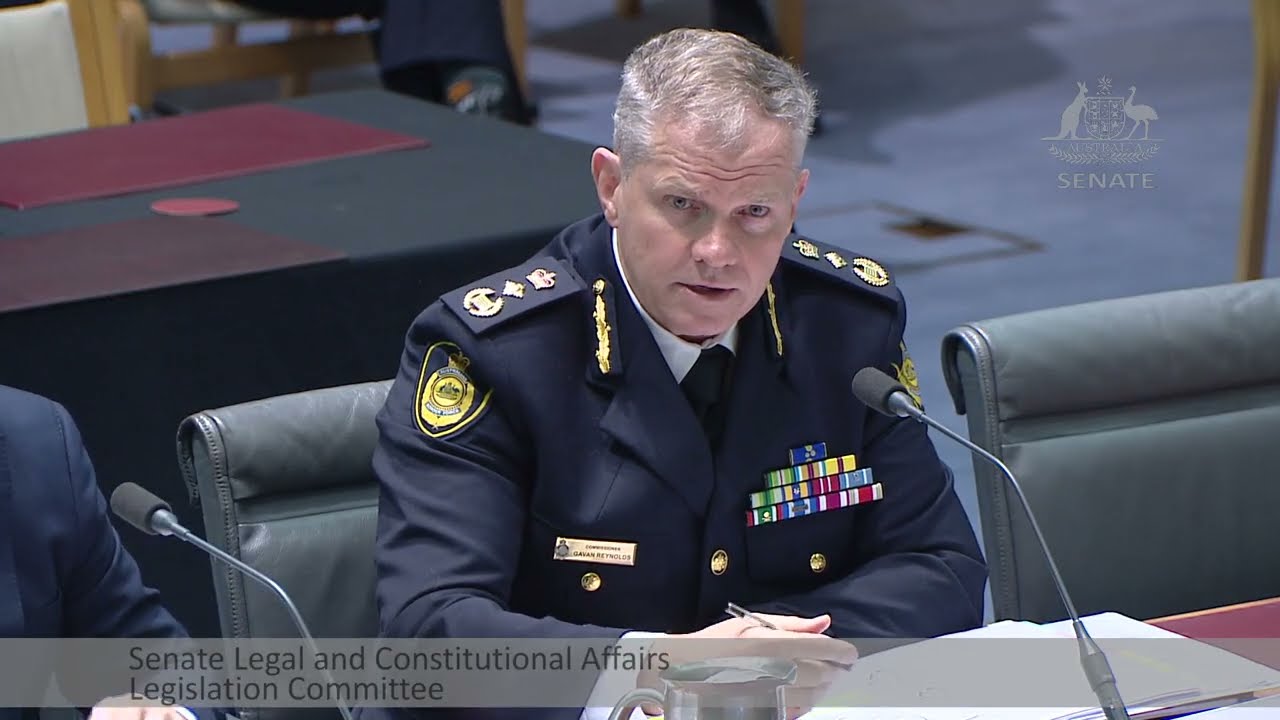
These Estimates questions relate to the Department of Veterans’ Affairs’ proposed $5,000 aggregate cap on allied health services.
Our veterans and doctors are worried – and they have every right to be.
The government claims this cap won’t hurt complex-case veterans, yet they admit the system to apply for funding above the cap hasn’t even been designed yet.
Fix the system, don’t punish everyone! If there’s fraud, target the fraudsters. Do not penalise the vast majority of honest, caring doctors and vulnerable veterans.
Those who sacrificed for our country should never face cost-cutting measures disguised as ‘reforms.’ Our veterans deserve certainty, respect, and our support.
Transcript
Senator ROBERTS: Thank you for attending. I want to go over some changes to the annual monetary limit— some details that may not have been covered. I’ll do my best to try and avoid questions that were going to be asked but have since been covered. If I miss out, let me know. I’m also passing on a lot of complaints and questions from veterans as well as doctors. Doctors are appalled and resigned, yet, fundamentally, they all care. You have already confirmed that the cap is an aggregate cap across all allied health services, not per discipline. Is that correct?
Mr Kefford: No, that’s not correct. It does not include optical, dental or hearing services.
Senator ROBERTS: Apart from them. Physio, physical treatment, mental health—they’re all aggregate?
Mr Brown: Open Arms counselling services are also not included.
Senator ROBERTS: Does the minister accept that an aggregate cap would force complex-case veterans to ration treatment between conditions formally accepted by the Commonwealth?
Mr Kefford: Again, no. We gave evidence earlier today about the ability, particularly in complex cases, for there to be additional thresholds. The point of having the $5,000 threshold is to ensure that treatment is effective, and there’s an undertaking in the announcement for there to be consultation on the basis on which that additional funding will be provided.
Senator ROBERTS: Will the TPI gold card holders with multiple accepted conditions be exempt from any aggregate cap, consistent with existing exemptions for physiotherapy and exercise physiology?
Mr Brown: No. Exceptions to the cap will be considered on a basis of clinical need. Many of the cohort that you’re referring to would potentially meet that requirement, but that will be subject to a consultation process around the design with the veteran community and provider groups.
Senator ROBERTS: So that’s not designed yet?
Mr Brown: The process for veteran card holders to go above the $5,000 annual monetary limit where there is a clinical need has not been designed yet. This measure commences on 1 July 2027, and we’ve got that lead-in time to do that consultation work.
Senator ROBERTS: What objective criteria will DVA use to determine when funding above $5,000 will be approved, and how will veterans be informed of their eligibility?
Mr Kefford: The focus, as we’ve said, will be on clinical need and effectiveness of the treatment, and the announced consultation process, once it has been concluded and the arrangements have been confirmed, will be communicated to veterans so they can understand the operation of the new arrangements.
Senator ROBERTS: How will they be communicated?
Mr Kefford: In our usual mechanisms.
Senator ROBERTS: Well, that’s what bothers a lot of veterans.
Mr Kefford: We use our Vetaffairs newspaper, our social media and other presences, as well as the formal publication of the outcomes of the consultation process, as we’ve done for other similar ones.
Senator ROBERTS: Do you have a collection of microservice organisations, as well as the RSL, that you can send it to?
Mr Kefford: Indeed. We would normally engage with the ex-service community as well—ex-service organisations.
Senator ROBERTS: Have you heard of W Edwards Deming?
Mr Kefford: No, sorry.
Senator ROBERTS: He was famous, globally, as a management consultant; he died at the age of 95. He said that 95 per cent of problems are not with individuals but with the system. How have you approached the design of the new policy? My point is that you’ve got a problem. There’s some fraud going on—I accept that; wherever there’s money, there are tendencies for some fraud. But the majority of doctors and the majority of veterans are honest and caring people. Has there been any thought to, rather than punishing everyone or limiting everyone, putting a severe punishment on the few miscreants?
Ms Frame: As we explained earlier this morning, the measure will benefit most veterans in terms of providing them with clearer, up-to-date insights on who they are seeing and where they are up to with their cap. They will have that on MyService, which is a facility they don’t have now. They will have the benefit of more providers. We anticipate there will be more providers availing themselves of the increased rates that are also part of the measure, and we have designed the consideration around $5,000. The policy objective of that threshold of $5,000 is to ensure the maximal effectiveness of the treatment that veterans are receiving. It provides a way by which we can assure the veteran that the providers who are delivering them services are accountable for genuine improvements in their condition and not just delivering services in perpetuity that aren’t subject to any checks and assurances that they are affecting real improvements in veteran wellbeing.
Mr Brown: I reiterate the evidence I gave earlier today that, of those veteran cardholders who access allied health services with those veteran cards, the average amount of services they provide, based on historical data, is around $3½ thousand per annum, so the $5,000 cap is adequate to facilitate allied health services for the majority of veterans accessing those services through card arrangements.
Senator ROBERTS: Averages can be really misleading and deceptive. They can hide things. I’m not accusing you of hiding things, but averages—that’s a fact. What percentage of—
Senator McAllister: He has the median as well. There are a number of statistical indicators. You may enjoy this.
Senator ROBERTS: They’re partial indicators.
Mr Brown: We have a number of high-end users that skew that average. The median is $1,900 without those high-end users skewing that average.
Senator ROBERTS: What percentage of veterans go over $5,000 in a year?
Mr Brown: It fluctuates, but it’s between eight and 12 per cent, so roughly one in 10 of the eligible population.
Senator ROBERTS: That’s a sizeable number nonetheless. That skews. It distorts. Have you built systems— or are you still building systems—to take care of that 10 per cent’s needs?
Mr Brown: That would be the process that we’ll build off the back of the consultation that will occur over the next 12 months to ensure that we’re meeting the clinical needs of those veteran cardholders who require an amount over the $5,000 threshold.
Senator ROBERTS: What I’ve found in my career is that humans are not afraid of change. People misleadingly say that humans are afraid of change. What they’re afraid of is uncertainty. Is there anything you can do to make things less uncertain for veterans who are worried?
Ms Frame: I announced in my opening statement this morning that we will be doing this consultation. We have conveyed that. We will be consulting on the mechanism, but we have also put a section on our website in the last week that responds to miscommunications, what is coming to us about the veteran community and where they have fears about how the measure will be affected. As we said, it hasn’t started yet, but we are doing our best to proactively engage with that and put up-to-the-minute information that responds directly to where we see misinformation and misapprehension circulating in the veteran community to address that exact uncertainty and provide as much information as we are able to at this point in time.
Senator ROBERTS: Are you consulting with any veterans to design the communications before you release the communications? This is not meant disrespectfully. It’s meant with complete respect. Your environment is different from the veterans’ environment. Your language is different. Are you using veterans to guide you in the messaging? That seems to be a big problem.
Ms Frame: No, not directly with that communication as I understand it at the moment. It is based on direct feedback from veterans, so we’re looking at exactly what they are saying and using their own language and terminology in our responses as much as possible.
Senator ROBERTS: So veterans will be required to apply for additional funding. What evidence will be required, and how long will approvals take? Is that still being designed?
Mr Kefford: That’s the nub of the consultation, which will involve a process of both presentations from us and submissions from individuals as well as professional organisations. So that will be worked through, and it will be communicated once it’s been settled.
Senator ROBERTS: Will there be regular updates and communications?
Mr Kefford: Indeed.
Senator ROBERTS: What appeal mechanisms will exist if DVA declines to fund clinically necessary care above the cap? That’s still part of the process being designed, I take it.
Mr Brown: That will be considered during the design process, but it’s not going to be an administrative decision made under any primary legislation. We’ll consider that issue during consultation, but it’s unlikely—I don’t want to speculate too much—that it will be appealable through our normal administrative decision-making processes.
Senator ROBERTS: Do you have any ideas on how it will be appealable?
Mr Brown: No. I don’t want to speculate further about what the process might look like ahead of a consultation period.
Mr Kefford: Mr Brown’s absolutely correct. I would say two things. First of all, the intention here, as the secretary has outlined, is to ensure that allied health is clinically appropriate and effective. And the purpose of having the process that we’re describing is to ensure that, particularly, those veterans who have more complex needs are properly cared for and receive the support and rehabilitation that they need.
Senator ROBERTS: What assessment has the government made of the risk that a capped funding model will further reduce provider willingness to treat veterans, given existing concerns about low DVA fee schedules? I’ve had a number of doctors say this is insane.
Mr Kefford: Part of the measure is, directly to that point, to actually increase allied health fees. One hundred and sixty-seven, is it, Luke?
Mr Brown: It’s 169—$170 million in round numbers.
Mr Kefford: And that’s intended to encourage more providers to provide services to veterans. That’s been welcomed by a number of bodies, and we tabled a letter from the physiotherapists association—that’s not the proper title—this morning.
Mr Brown: For example, as part of that measure, for a face-to-face standard room consultation with a physiotherapist, our fee will increase from $75.10 to $110. Those fee increases apply across the board to allied health providers.
Senator ROBERTS: How does the government reconcile the introduction of a monetary ceiling with the royal commission’s finding that barriers to healthcare access contribute to veteran suicide risk?
Mr Kefford: A part of the measure is to, below that threshold, actually remove the requirement for the treatment cycles that currently exist and to provide that flexibility, recognising that the threshold’s been set with regard to what is normal usage, but then to have a process to ensure that necessary treatment is available and that treatment that’s provided is clinically appropriate.
Senator ROBERTS: Does the government accept that veterans with numerous accepted conditions will exhaust the cap more quickly than those with a single injury, despite both having conditions recognised as service caused?
Mr Kefford: That would be the logical conclusion, and that’s why we’re having a process of—the $5,000 limit is a threshold at which point there can be further decisions about clinically necessary care that needs to be provided.
Senator McAllister: I think it’s worth—just in response to your last three or four questions, Senator—putting the whole measure in context. The royal commission did say that the government should take steps to improve access to health care, including by raising the charging or the provisioning for procuring allied health services. This measure does that; it raises the fees. It also seeks to remove some of the administrative hurdles for veterans by removing the treatment cycle, which will remove some of the impediments to people procuring the services that they want for their own needs. And, as Ms Frame said, it also will allow us to invest in some digital systems that will let veterans see what services they’ve already used and what resources might be available to them. So the context for this is actually a broad measure to improve access to allied health across the sector.
Senator ROBERTS: What safeguards exist to prevent the cap from disproportionately harming veterans with complex, chronic or degenerative conditions?
Mr Brown: Part of the measure that’s been announced by the government is that, where there’s a clinical need to access allied health services above the $5,000 cap, that will be provided.
Senator ROBERTS: What transitional provisions will be put in place to ensure veterans do not experience sudden loss of access to essential treatment when the cap begins in July 2027? This is a source of pretty severe mental health pressure. Is there a transitional arrangement?
Mr Kefford: The detail of, particularly, the mechanism by which veterans will seek additional funding above that first threshold is the nub of the consultation process. I’m sure the concerns that you’re raising will be aired in that context.
Senator ROBERTS: When will clear, written guidance be issued to veterans and providers explaining how the cap will operate in practice? Do you have a scheduled time or an approximate time?
Mr Kefford: The undertaking is that the consultations will commence in August. We haven’t set a conclusion or detailed timeline for that yet, but certainly the intention would be to have arrangements clear and able to be communicated well in advance of 1 July.
Senator ROBERTS: Minister, we understand what you’re trying to do, but I don’t think the message has got out from the department, the DVA, as clearly as possible, because $5,000 is seen by many veterans as pitifully and ridiculously small. It’s an insult. How much of this is a cost-cutting exercise to get your government through the hoops with regard to the waste and hypocrisy that it’s shown—
Senator McAllister: I indicated to you earlier—
Senator ROBERTS: across all budget areas.
Senator McAllister: that our goal is to ensure that veterans have access to the allied health treatment they need in a timely way, and to make sure that the services they’re being provided are clinically effective. One of the consequences of creating a system where very large quantities of services are procured from the private sector by individuals is that we see the emergence of some behaviours in that market that are not in the best interests of veterans. At the worst end of it, it looks like fraud: claiming for services that were never delivered. Stepping a few clicks back from that, sometimes it looks like overservicing: making a set of recommendations for which there is no clinical evidence and from which the individual doesn’t see a material benefit in their own health and wellbeing. We judge that, given what we know about the use of these services by veterans, most veterans are using well under that $5,000 limit. When we see veterans experiencing higher rates, we think it’s appropriate for there to be a threshold to evaluate whether what’s on offer to that person is genuinely going to assist them. We have every intention of ensuring people do get the healthcare services they need, and this reform is about a multipronged approach to make sure that’s true, both for the people whose needs are at lower levels of intensity and for the people whose needs are at the higher level.
Senator ROBERTS: This government has developed a reputation for wasteful spending and loose spending, and people are concerned about that. It seems to me that there’s a lot of work going on, but the root causes are resignation among the veterans that nothing concrete has been done, and there’s so much fear. I think it’s a matter of not only what you just stipulated as your desire and what your targets are but how it’s being done—the process. Would you agree?
Senator McAllister: I don’t agree with many of the things you said. Our government in each and every budget have found savings so that we can prioritise the things that we care about and that we know the community cares about. One of those areas of investment has in fact been in DVA, because we came to government knowing that it was significantly underprovisioned and that the lack of staff, in particular, in this organisation had led to unconscionable delays in people being able to access the services that they deserve as veterans. We’ve set about addressing that, and there’s a lot to be proud of in the work that’s been done by the many people who work in this department and the collaborative way that the veterans community has engaged in that work to make sure that we do improve the service level that’s available.
Senator ROBERTS: Thank you, Minister.