
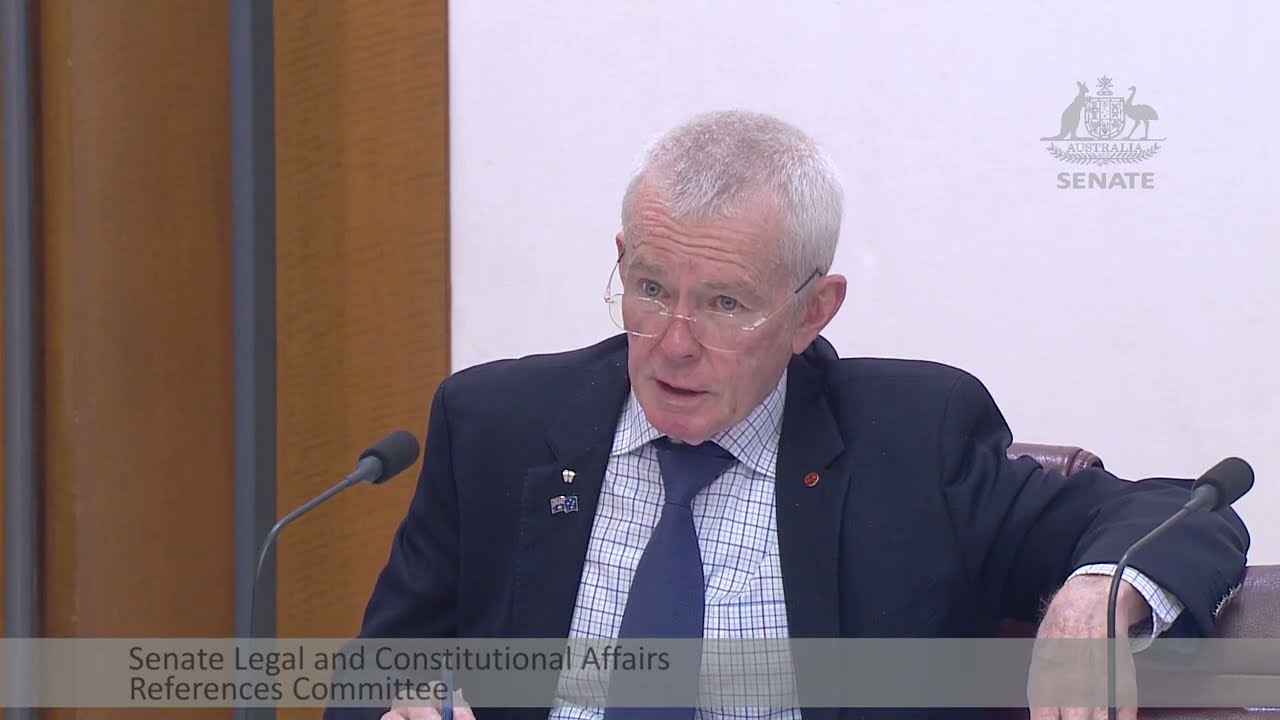
Some have claimed that no One Nation Senators showed up to the Senate hearings into the Illicit Tobacco industry.
I sat through it myself, questioning publicans, tobacconists and small business owners about what this trade is doing to their towns.
What they told me was blunt. Smoking rates rising, legal tax revenue in freefall, and organised crime filling the gap — firebombings, shootings, communities losing businesses that will never reopen.
That’s exactly why One Nation will cut tobacco excise by 75 per cent – to take the market back off the criminals who are getting rich off this Government’s failed policy.
I did the work. I heard the evidence. And it backs our plan.
Transcript
Senator ROBERTS: Thank you all for appearing today and for the effort you’ve gone to. I’d like to go to each one in turn. Mr Allen, you’re a publican. You used to make some money out of cigarette sales?
Mr Allen: I did.
Senator ROBERTS: And you’re not a smoker?
Mr Allen: No.
Senator ROBERTS: But you have come up with a comprehensive integrated solution in your submission. It’s multifaceted and it includes a component to decrease smoking rates. So you’re not against cutting smoking, but you just want it to be done fairly, sensibly, honestly and legally.
Mr Allen: Correct. If you look at the trends in Australia at the moment, smoking rates have—for a threedecade period, they were on their way down, until now. I’d argue that when this household survey comes out towards the end of this year, not only will they have flatlined; they’ve gone up. That’s based on the Roy Morgan research report and the wastewater report. That wastewater report, you’ve got to remember, says between 2024 and 2025. We’ve still got this year to go, so we could go up even further. I’ve lost my train of thought.
Senator ROBERTS: This is defeating the actual purpose of the—
Mr Allen: Sorry, yes. Smoking rates are coming down, alcohol consumption is coming down naturally, sugar consumption is coming down. If you look at soft drink consumption in Australia—it’s all naturally coming down. We don’t have a sugar tax in Australia. People are making better choices about their lives. It’s as simple as that. My kids don’t smoke, they don’t drink a lot. Some of them don’t drink at all. And that’s the choice they’re making. We don’t need big government telling us what to do, putting in these punitive taxes on things to try to stop us having choices in life. People are making their own choice to live a healthier life and that’s why we’re seeing tobacco, we’re seeing alcohol and we’re seeing sugar consumption come down. But unfortunately, because of what government has done with tobacco, we’re starting to see that plateau and then potentially even spike.
Senator ROBERTS: I’ll come back to that in a minute. You said margins are so big that an illicit tobacco store gets shut down and they lose $200,000 of stock confiscated and it means nothing.
Mr Allen: It’s a cost of doing business; that’s all it is. When you’ve got a $10 billion—the illegal illicit tobacco market in Australia is as big as the footwear industry. It’s huge. That’s how big it is. We’re taking a knife to a gunfight at the moment with the states trying to control this. It’s just not working.
Senator ROBERTS: You’ve spoken up and spoken out in Bega. You’re speaking out very plainly and clearly here. Is there any fear behind that?
Mr Allen: No. As I said, I’m not renewing my licence in three months. I can see no future in selling tobacco in my bottle shop, and that’s my position. I’m here to tell people how it is. I’m not here to hide behind things or try to fiddle at the margins. I’m trying to tell people what is happening in Australia and what it’s doing on a fiscal level, on a health level and on a crime level. And, as I think my evidence has shown, it’s a disaster.
Senator ROBERTS: But there have been threats against people. There have been murders.
Mr Allen: Absolutely. There was one in Melbourne: the young lady who was in the wrong house at the wrong time. The wrong house was firebombed. She was killed along with the dog. It’s terrible. And there have been people just killed. There’s the lady who was making kebabs in Auburn last year and just going about her business and they’ve come in and shot her and she’ll never be the same again. There was an armed robbery in Narooma a few months ago where that the poor guy behind the bar was hit in the side with a shotgun—in Narooma. He’ll never be the same again. It’s all to do with this criminality that’s coming into our regions because of illicit tobacco.
Senator ROBERTS: So we either comply with the law or we let the unlawful—
Mr Allen: The underworld will take it over, I’ve got no doubt. I went to the state inquiry last year and all the senators, whether they were Labor, Liberal, Green, National—like Cate Faehrmann, the Green, Stephen Lawrence from Labor—grilled Amber Shuhyta, the ITEC Commissioner, fairly hard. They were interested in what excise levels are doing. This inquiry is very politicised. The Greens and the Labor senators seem to be interested in anything else but excise. And if we don’t focus on excise, nothing is going to be solved here. I can guarantee that.
Senator ROBERTS: Speaking of excise, I’ll just divert slightly. One Nation policy is to cut excise on alcohol—on beer and spirits served in hospitality venues. And the reason for that is that the excise is so damn high and alcohol prices are so high that they have binge drinking and what they now call preloading, tanking up before you go out, so the hospitality venues get bugger-all revenue.
Mr Allen: I absolutely agree, Senator.
Senator ROBERTS: It is causing a decrease in service from where they have responsible serving of alcohol to now binge drinking.
Mr Allen: Correct.
Senator ROBERTS: So that’s damaging.
Mr Allen: It was very similar when the alcopops tax came in, if you can remember, back in, I think, 2008. Kevin Rudd said, ‘We’ve got a binge drinking problem in Australia, so we’ll bring in the alcopops tax. We’ll tax premixed or RTD drinks at the same level as spirits, at 66 per cent.’ So what happened? Everyone went out and bought spirits. The kids went to the parties; they took their bottle of spirit and their bottle of Coke and just mixed it up. And often it was a much higher concentration than the four per cent premixed RTD in the can. God knows what percentage it was. But that’s the problem when you try to solve things with taxation and excise. It’s just madness.
Senator ROBERTS: What you’re all arguing for is getting back to the core issue, the core problem, the driver of this problem, and that is excessive excise tax.
Mr Allen: The sweet spot was 2020. We collected $16.3 billion in tax, and that adjusted is $20 billion in today’s money. In 2020 we collected $20 billion. In 2030 we’re going to collect $2 billion. And I doubt that’ll be right. That’s a 90 per cent drop in 10 years. Now, if that is successful policy, I’m not here. I don’t know what is.
Senator ROBERTS: And smoking rates are going up.
Mr Allen: And smoking rates are going up. It’s just absolute madness.
Senator ROBERTS: All of you have given very direct answers, so I’ll move on to Ms Wishart. You’re a legal family-owned tobacconist. In a small town in regional New South Wales, Junee. You say that the illegal tobacco industry has devastated your small business, with income down by 80 per cent. So you’re down to 20 per cent of what you had. In your submission you’ve called for the excise to be rolled back because of the huge social aspects for the community and society in general. Is that correct?
Mrs Wishart: Yes.
Senator ROBERTS: Do you want to expand on that?
Mrs Wishart: Particularly in regional centres, if a business closes down, another one may never open.
Senator ROBERTS: You lose that knowledge of the community.
Mrs Wishart: Yes. And banks don’t like small business. You’ve got to fight to open one, let alone to survive in one. And small towns are communities. That word just isn’t a catchphrase. We are communities. So when the four local schools, when Can Assist, when the swimming club, the football club and the soccer club all come in for donations, they’re guaranteed it, or they were. I haven’t been able to donate for two years, which is horrible as a member of the community. They know not to even ask now because they know the position that I’m in.
Senator ROBERTS: And the criminal pushing illicit tobacco doesn’t donate.
Mrs Wishart: He’s not supporting anyone but himself. Nothing’s getting put back.
Senator ROBERTS: Okay, thank you. Mr Rodie, you’re a tobacconist at Margate?
Mr Rodie: I’m a tobacconist at Deception Bay.
Senator ROBERTS: Sorry, you said that. That was my mistake. You’ve come up in your submission with a list of 10 recommendations that show the comprehensiveness of the solution. You’re not opposed to cutting smoking; you just want to go about it fairly so that everyone benefits—correct?
Mr Rodie: Yes, that’s right. I’d like a level playing field. At the moment there’s no level playing field at all.
Senator ROBERTS: Thank you. Mr Alexiou, you’re from Devonport, Tassie?
Mr Alexiou: Yes, Senator Roberts, I am.
Senator ROBERTS: And you’ve got a Foodworks, so you’re a supermarket?
Mr Alexiou: Yes. We’ve been in our business for 40 years.
Senator ROBERTS: You’re asking the Senate to recognise that illicit tobacco is not a victimless issue. It’s hurting real businesses, real workers and real communities in Tasmania—correct?
Mr Alexiou: Correct.
Senator ROBERTS: And the social knock-on effect is important to the whole community. You’ve also said that the long-term viability of neighbourhood retail in Tasmania is at risk.
Mr Alexiou: Of course. Have you heard the previous speakers? I concur with those comments.
Senator ROBERTS: Thank you, Chair, and thank you all because your evidence has been succinct and direct. I appreciate that.







Thank you 🙏