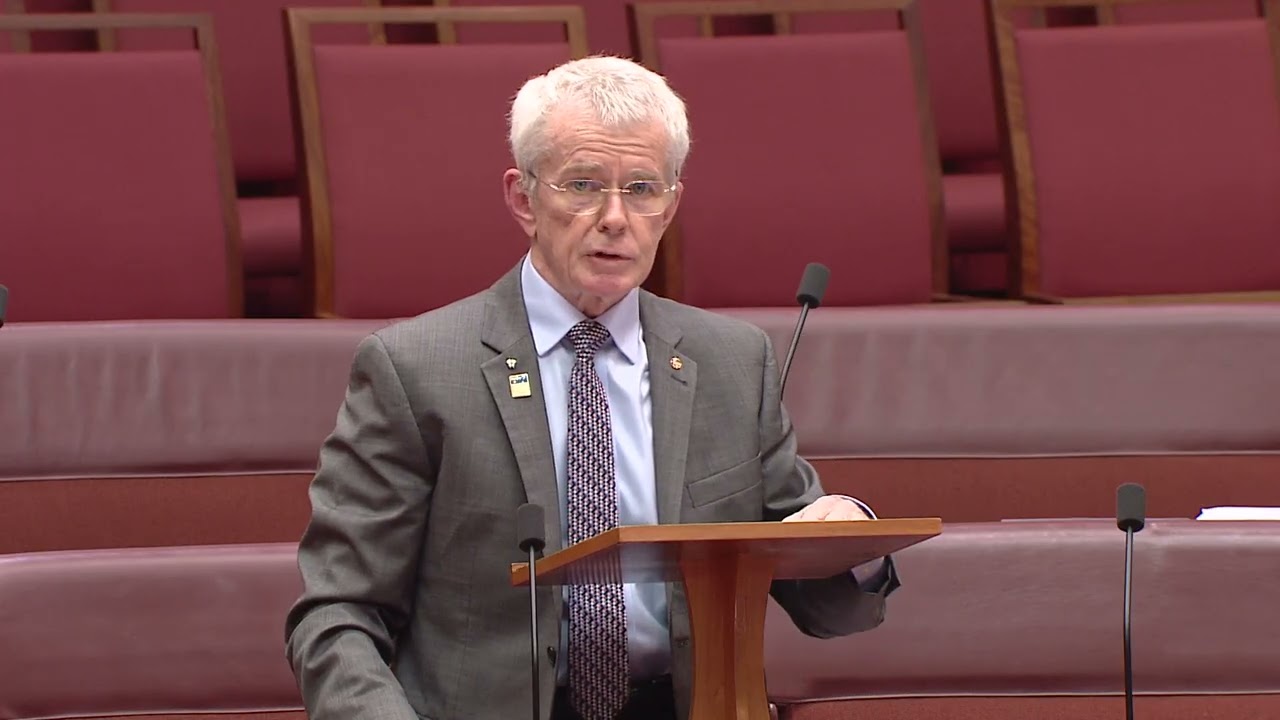
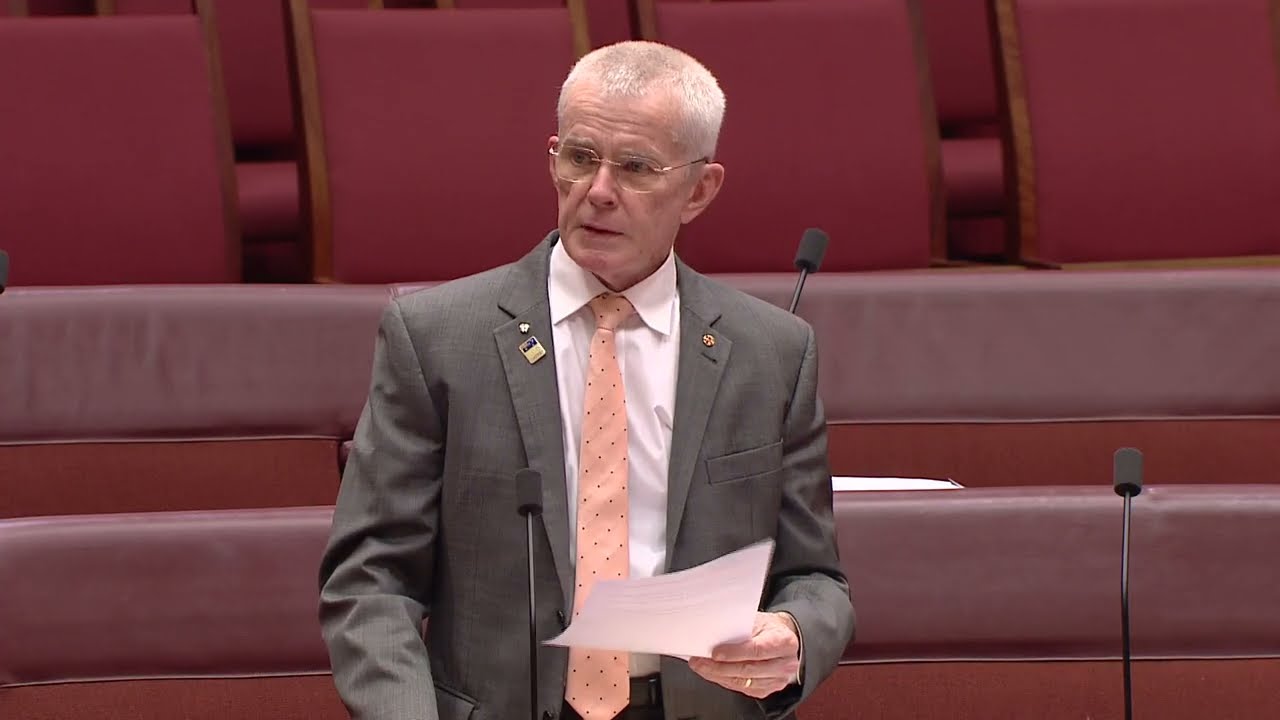
This is my interaction with federal agencies at the Illicit Tobacco hearing in Canberra on 18 May 2026.
Tobacco excise tax losses range from $7.7 billion to $11.8 billion annually (ITEC report).
The agencies confirmed that illicit tobacco is a massive, highly sophisticated, and growing threat tied directly to organised crime.
The Australian Federal Police (AFP) stated that intergang violence, property destruction and loss of lives can be directly linked to this illegal black-market trade.
I pointed out that the real safety issue facing everyday Australians involves fire bombings, gang violence, and murder on our streets, not just general health advice.
The agencies pointed to successful operations, such as the AFP citing specific busts netting millions of illegal cigarettes and $93 million in evaded excise. However, when I pressed them on concrete metrics to
show whether they are actually making a dent in the trade or if these seizures are just a “drop in the ocean,” they struggled to give a clear percentage or ratio against the total market.
Success isn’t just about slowing down market growth or rattling off isolated seizure statistics. The Australian public deserves to know the exact scale of the impact being made.
We shouldn’t be merely managing or stopping this illegal trade from “growing,” we should be eliminating it entirely.
Transcript
Senator ROBERTS: Thank you all for appearing. Let’s explore your understanding. I’m going to give you free rein to show the people of Australia and the parliament of Australia what you know and are doing. Perhaps you could answer these questions in turn, please, starting on the left. Do you accept that there is a significant problem with illicit tobacco? If so, why? If not, why not? How do these problems manifest? Could you be specific about the impacts on human life and also the dollar cost.
Mr de Crespigny: From CDPP’s point of view, I’m not sure whether we’re best qualified to provide an answer. We’re prosecuting offences, but we’re certainly very much engaged in relation to prosecutions arising from the illicit tobacco trade.
Ms Sirec: As we said in our submission, any criminality is a concern for the Australian Federal Police. Illicit tobacco is an illicit commodity and we will target that. We do know that it’s having an impact. As we’ve heard from our ACIC colleagues, it’s impacting our communities, it’s impacting health and it’s obviously causing some violence and harm in the community. So, certainly, we work very strongly with our partners on being able to impact and disrupt the criminal environment in connection with illicit tobacco. I have forgotten the second part of your question.
Senator ROBERTS: How do these problems manifest—if you could be specific—in terms of the cost to human life and the dollar cost?
Ms Sirec: As for how it manifests, we know that competition is happening across organised crime gangs, so we see intergang violence. We see property destruction occurring in our jurisdictions, which our state and territory partners also have to target. We’ve heard from the ACIC regarding the loss of three lives, and I think the ACIC are on the record already about the dollar value of illicit tobacco being in the billions, in terms of impacting community.
Mr Meyer: Building on what has been said already, I think the other element, from our perspective, is the recycling of the profits that are made through illicit tobacco into a range of other organised crime activity, as I mentioned, whether it be drugs or a range of other activities which flow on to a range of harms within the community. Just in terms of metrics and numbers, I know that the Illicit Tobacco and E-cigarette Commissioner’s report estimates the total amount of excise evaded in 2024-25 to be between $7.7 billion and $11.8 billion. The Australian Institute of Criminology estimated that the total economic and social cost of illicit tobacco in 2023-24 was approximately $4 billion.
Senator ROBERTS: The other group, AUSTRAC?
Mr Helmond: In response to your first question, in 2024 AUSTRAC developed the national risk assessment on money laundering. At the time, it assessed the illicit tobacco market as posing a medium and increasing threat of money laundering. That same product forecast that, over the next three years, the illicit tobacco threat was likely to increase. We have recently published an update to that national risk assessment which shows that illicit tobacco has increased in volume and we’re seeing that criminal groups are becoming more sophisticated and diverse in the ways in which they’re laundering that money. That’s really driven by high market demand and profitability. I think, to your second question, just referencing the ITEC annual report 2024-25, ITEC estimated that in 2024-25 the illicit tobacco market was worth up to $6.9 billion.
Senator ROBERTS: Again, each in turn, what are the three most important points that you would like to make to this committee?
Mr de Crespigny: From the CDPP’s point of view, there are two things that we are seeing about the place. Firstly, of the prosecutions that we’re doing, more of them involve multiple defendants, indicating large, organised crime groups. The other thing that we’ve seen about the place is a rise in state prosecutions, so the states are very much taking it on. In both New South Wales and Victoria, they’ve increased the penalties for relevant offences, such as the sale of illicit tobacco. It’s not something which is just being done by the Commonwealth; it’s also being done by the state authorities.
Senator ROBERTS: Do you have a third point?
Mr de Crespigny: I do think that there’s possibly a need to understand its impact upon the community, both in loss of revenue and in the health impact that it has. That’s something that we try to get across in our sentencing matters, because part of the point of the exercise is to, in actual fact, lower Australia’s smoking rates.
Senator ROBERTS: What about the safety of people?
Mr de Crespigny: People are safer if they don’t smoke.
Senator ROBERTS: I meant in terms of firebombings and murders.
Mr de Crespigny: That’s something that, certainly, I observe because I have heard it at the committee and read it in the newspapers, but it’s not something which falls within the CDPP’s speciality.
Senator ROBERTS: Thank you. AFP?
Ms Sirec: The AFP knows that the threat is dynamic, interconnected, tech enabled and resilient. There are three points that I would like you to take away. Firstly, our approach, with our partners, is that we target supply chains, enablers and trusted insiders. Secondly, we exploit and dismantle criminal communication systems. Thirdly, we identify, restrain and seize criminal assets and financial facilitators to take the profit out of this crime.
Senator ROBERTS: Could you be more specific, please. How do you do these things? What do you need? What actions do you actually take?
Ms Sirec: As for actions, we target the supply chains. For instance, in New South Wales, we partner with New South Wales police and the Crime Commission to target trusted insiders—that is, those individuals who allow the illicit flow of tobacco to come through the borders. We exploit and dismantle the criminal comms systems, through understanding our capabilities around encrypted communications, and being able to infiltrate and use our powers to be able to identify organised crime. Through the additional funding that the government has provided regarding our Criminal Assets Confiscation Taskforce, we can identify, restrain and seize the criminal assets, and we’ve done that successfully. We’ve seized directly over $39 million worth of property since 26 June 2025.
Mr Meyer: As I mentioned in one of my previous responses, serious and organised crime see there being lower barriers to entry and lower penalties associated with illicit tobacco and the market. A bill is going through parliament at the moment, and I know that, across our state and territory counterparts, they’re also looking to have greater consistency, in terms of their own regulatory and legislative approach. Firstly, being able to level out and make it harder for serious and organised crime to operate, and increase the penalties, obviously will help to deter some of those actors. Secondly, targeting the efforts the whole way through the supply chain, as Deputy Commissioner Seric said, not just here in Australia but at the border and internationally with our partners, will be incredibly important, and we continue to do that. Thirdly, in addition to the commodity itself, it’s being able to dismantle the actual groups behind it. Those groups are involved in a range of other illicit activity as well. By effectively deterring and dismantling those groups, we’re actually going to have a significant effect across a range of threat types.
Senator ROBERTS: AUSTRAC?
Mr Helmond: Coming to this from the perspective of an intelligence agency, the first point that I’d make is about partnering with our law enforcement and intelligence agencies that we work with. AUSTRAC is a member of the Illicit Tobacco Taskforce, we support the national disruption group and we work with the ITEC. It’s really through those partnerships, and their ability to leverage our data, that ensures there is financial intelligence that gives a good picture of the activities there—the supply chains, and how profits are generated and moved. It gives those investigative agencies greater insights, in order to target these groups. The second point I’d make is that it’s essential for AUSTRAC, as both an intelligence agency and the financial regulator, to work very closely with our industry partners—the banking sector, the remittance sector and the digital payments sector—so that we can not only continue to get those insights from them but also work with them on increasing their risk controls, their transaction monitoring and their understanding of the nature of the threat and the way it’s evolving, in order to help them detect that activity. The third point that I’d make goes to a real investment in our crypto-tracing capability. With the impact that government is having, we’re starting to see that increase in online sales and more movement of these proceeds through digital currencies. It’s important for us to keep up with that and continue to be able to have the tools and the capability to follow those fund flows through those digital transactions that are made as well.
Senator ROBERTS: How do each of you measure your effectiveness? Is the taxpayer getting value? And, if so, how do we know? We’ve pretty much all agreed that this problem is worth billions of dollars, it is costing lives and it has health impacts. What are you doing to reassure the taxpayer?
Mr de Crespigny: From CDPP’s point of view, our effectiveness is measured by the prosecutions that we undertake; we think we’re undertaking those effectively and we’re getting quite reasonable results. The offence provisions are quite complex. These offence provisions—say, the Customs Act provisions—aren’t just focused on the actual importation of the tobacco; it’s a requirement that the person also had an intention or was reckless in defrauding the revenue. They’re not the most straightforward offence provisions. Our effectiveness is in working with our referring agencies and pursuing prosecutions.
Ms Sirec: From the AFP’s perspective, we would measure our effectiveness by our ability to partner, disrupt and dismantle organised criminal groups. Only months ago, Commissioner Barrett identified her No. 1 target, who was involved not only in a myriad of other crimes but also in illicit tobacco. Through our partnerships with our offshore law enforcement agencies, we’ve been able to disrupt his ability, to directly impact. There’s a success measure there. Of course, the number of prosecutions and seizures of illicit tobacco and our ability to understand the criminal networks are another measure of success. Finally, as I said before, with the investment that the government has made in terms of our asset restraint, we’ve been able to restrain more than $39 million since June 2025 and taken the profit out of this crime.
Senator ROBERTS: Could you give me some quantified specific effect that you’re having with each of those measures? What indicates success, and what indicates how far we have yet to go?
Ms Sirec: Sure. I can give you a couple of case studies. As per our submission, for instance, with Operation Collinsville, late last year, with the Australian Border Force and Victoria Police, we arrested six senior syndicate members and charged them with various charges. There were 14 search warrants across various factories and premises. We seized over 24 million cigarettes, six million kilos worth of looseleaf tobacco and 51,000 vapes, while also being able to seize various other items and instruments of the commission of the crime—mobile phones, cash machines et cetera. That’s just one investigation. In another investigation, in 2024, Operation Centinel-South-Tyres, over 10 million cigarettes were seized and a number of the syndicate members were arrested. This syndicate was responsible for the importation of more than 77 million cigarettes, so we disrupted that syndicate, which equated to $93 million in excise tax. In 2025, we also successfully obtained restraining orders for over $800,000 in property.
Senator ROBERTS: It’s a big problem. How big is it? Is this a drop in the ocean, or has this had a significant impact on their illegal business?
Ms Sirec: Every criminal group that we can disrupt creates an impact.
Senator ROBERTS: In your answer, you’re not giving me anything specific, in terms of indicating your understanding of how big the problem is financially.
Ms Sirec: We’ve heard already from our colleagues here about the dollar value, in terms of the cost of this criminality, and also—
Senator ROBERTS: With due respect, I want to know what your understanding of it is.
Ms Sirec: As we’ve heard, it’s a $7 billion harm to the community.
Senator ROBERTS: Is what you’ve done, in the cases that you’ve just rattled off, five per cent or 50 per cent of the trade?
Ms Sirec: I can’t give you a quantum of the percentage of the trade, but they are only two examples—they’re in our submission—of multiple examples that I could provide of the impact that we’re having.
Senator ROBERTS: It’s good to see that success, but is that five per cent, 50 per cent or 90 per cent? How much further do we have to go?
Ms Sirec: I won’t speculate on the percentage; I believe that sits there. Certainly, the fact that we are sitting here today means that we’ve obviously got more to go. But we have the right capabilities and the right people involved in this to do everything that we can to disrupt this.
Senator ROBERTS: How do the people and the parliament know from your answers—you’re not being very specific—in terms of the overall figure? Are you making a dent in it; again, is it five per cent?
Senator COLBECK: It’s $93 million worth of excise seizure versus a $12 billion loss in excise; it’s a drop in the ocean.
CHAIR: Perhaps I can assist, Senator Roberts. We’re all here to try to stop this market growing, and it’s great to have numbers of cigarettes, like 10 million, being confiscated at the border and so forth. But it would be really helpful if you could provide to the committee, on notice, in percentage terms, the amount of disruption that you are making with what is being confiscated versus the size of the illicit market. I can appreciate that you may not have that in front of you, and this is not to take away from any of the great work that you are doing, but I think it is an important piece of evidence for the committee, so that we are able to look at just the pure scale of what is coming into the country.
Ms Sirec: I’ll have to take that on notice.
CHAIR: Thank you; that would be very helpful.
Senator ROBERTS: I want to make the point that we’re not just interested in stopping the business growing; we’re interested in stopping the business altogether.