

Today’s headline in The Australian: Snowy 2.0 hydro scheme could cost $75bn after catastrophic planning failures.
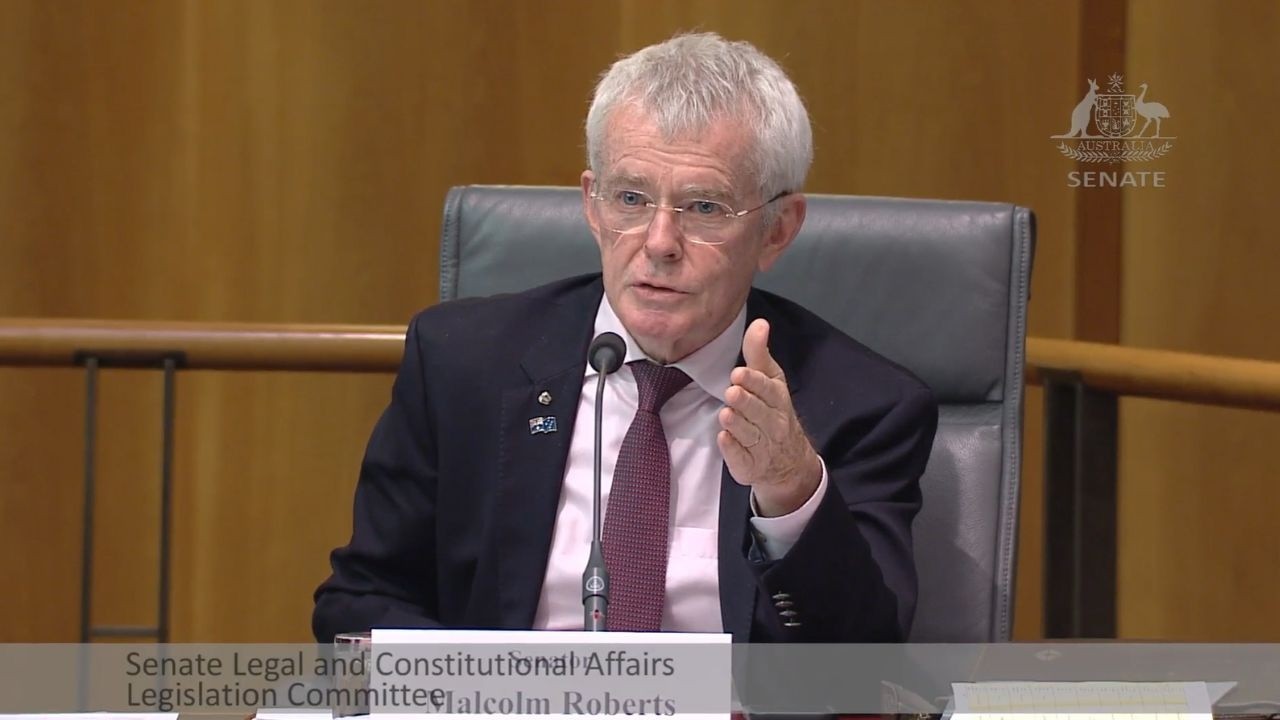
This is my October Estimates hearing with Snowy CEO Mr Barnes and Minister Ayres about the escalating costs, structural problems and ongoing management of the Snowy 2.0 project.
When I asked Mr Barnes in what year the borrowed money and bonds for Snowy 2.0 would be paid off, he admitted he did not have a repayment profile in mind and stated that Snowy Hydro will never reach zero debt or zero bonds.
I pointed out that with the government running financial deficits out past 2050, every cent going into Snowy 2.0 is debt-funded. Mr Barnes confirmed that the current sunk cost is just under $12 billion.
Citing a comment by Robert Gottliebsen in The Australian calling Snowy 2.0 a “laughing stock” with no certainty that it will work, I questioned Mr Barnes on its actual power generation. He confirmed a 20% inefficiency loss, noting the project absorbs 6,000 gigawatt hours a,of power to only produce 5,000 gigawatt hours of electricity for the evening and morning peaks.
The project’s 5,000 construction jobs amount to a government-subsidised employment scheme that decreases national productivity. These workers should instead be reemployed in high-productivity projects like housing, dams, or power stations to reduce the cost of living.
I asked Minister Ayres why the Albanese government continues the project knowing it lacks a proper business case and suffers from increasing technical obstacles. While the Liberals initiated the project out of ignorance, the current government continues the project out of desperation for “renewable” power at any price.
Of course, true to form, Minister Ayres defended the project as one of national importance essential for energy security and grid firming.
When I first started asking about ending the project in 2024 the sunk cost was only $4bn. The more the Government hides from the inevitable, the more it costs taxpayers.
Snowy 2 needs to be put out of its misery and we need to return to building reliable, high-energy-density baseload power using coal.
Transcript
CHAIR: Thank you. Senator Roberts.
Senator ROBERTS: Thank you, Mr Barnes, and your staff, for being here again. When will the money borrowed to pay for this project, including bonds, be paid off? What year?
Mr Barnes: We finance Snowy 2.0 at the company level, so at Snowy Hydro level. Private debt and our shareholder loans, so loans from the government, have a range of debt repayment profiles. I think for the shareholder loan there’s a soon-as-reasonably-practical obligation. You’ve used the word ‘bonds’. We don’t want to specifically use bonds, but I presume you mean in bank debt and shareholder debt.
Senator ROBERTS: Yes, I do. So what year?
Mr Barnes: it will be paid off progressively.
Senator ROBERTS: So what year will it be finished paying off?
Mr Barnes: We will always hold a debt balance as Snowy Hydro. So we will never go to zero debt.
Senator ROBERTS: When will you pay off 95 per cent?
Mr Barnes: We will never go to zero bonds. We will always hold—
Senator ROBERTS: No, that’s leaving a five per cent balance. So when will you go to 95 per cent paid?
Mr Barnes: I don’t have a repayment profile in my head.
Senator ROBERTS: Could you take it on notice?
Mr Barnes: I don’t think we would be able to model that, to be honest, but we’re happy to take it on notice and see what we can provide. We could probably provide the debt roll-off profile that we will be required to repay or refinance.
Senator ROBERTS: Whatever you think is needed for good stewardship of taxpayer money.
Mr Barnes: Yes, of course.
Senator ROBERTS: It’s not valid to say consolidated revenue has contributed to the cost of Snowy 2.0 when your government is running debt and finance deficits out past 2050. Every cent going into Snowy 2.0 is debt. How much is the total cost of the project, including the interest paid on capital through to—the year you wouldn’t mention, but—
Mr Barnes: The $12 billion target cost that was approved in 2023 was a $4 billion equity contribution.
Senator ROBERTS: That was under the first or second year of the Albanese government.
Mr Barnes: It was in 2024, I think, that it was approved, yes—wherever that is in the political cycle. There was an additional shareholder loan provided which will be required to be paid back in the 2030s. Obviously, we’ve provided this disappointing advice to the government of the higher cost, and they are considering how they may support us through that higher cost. In terms of capitalised interest, again, we finance the organisation at the company level rather than the project level. I think in a prior hearing, I referred to between $2 billion and $3 billion of capitalised interest over the life of the project.
Senator ROBERTS: Could you total that up on notice, please.
Mr Barnes: Yes, of course.
Senator ROBERTS: Thank you. So you’ve confirmed the current sunk cost is around $12 billion?
Mr Barnes: Yes. As at the end of June, we were just under $12 billion.
Senator ROBERTS: And how much more would be incurred if the project was terminated right now, today?
Mr Barnes: We’ve not done that analysis for public consumption because obviously we are—
Senator ROBERTS: Have you done the analysis at all?
Mr Barnes: We have done the analysis of what would we do if we were to change contractor, as has been reported in the press, but we have not done the analysis on what it would cost to terminate the project, given the importance of the project to the grid.
Senator ROBERTS: Okay, we’ll get back to that again. Robert Gottliebsen in the Australian says: ‘Snowy Hydro 2.0 has destroyed voters’ faith in mega renewable energy projects. It’s a laughing stock.’ That was in the Australian last week. He made the comment in his story about the cost blowout that: Worse still, there is no certainty that the project will actually work. What confidence level, Mr Barnes, do you have that the project will generate the 375,000 megawatt hours of power each year, and, more generally, is there anything in this report to support Robert’s statement?
Mr Barnes: The project will absolutely work. It doesn’t generate 375 megawatt hours a year; it acts as a storage facility. Our modelling shows that it will actually absorb 6,000 gigawatt hours of electricity and produce 5,000 gigawatt hours of electricity. So it will absolutely work.
Senator ROBERTS: So that’s the inefficiencies of—
Mr Barnes: Yes, 20 per cent—
Senator ROBERTS: So you get less power out of it than you put into it?
Mr Barnes: Yes, that’s as any battery. To say it produces 375,000 megawatt hours is not a characterisation of its role. Its role is to absorb excess renewables, store those for the time when the grid needs it the most, and it will absolutely do that.
Senator ROBERTS: Okay. Well, we’ll go into the details at a later date. I note in your release, you say: Closure of the project would cost 5,000 jobs. Those are construction jobs, correct, not permanent jobs?
Mr Barnes: That’s correct.
Senator ROBERTS: Is there no other project in Australia that those construction workers could get to work on? For example, the Brisbane, Queensland, Australian Olympics? Housing is desperate for workers, really desperate because the government is bringing in unskilled people. There are dams to build and power stations to build. Have you done any work on how your workforce could transition away from Snowy 2.0?
Mr Barnes: No.
Senator ROBERTS: Taxpayers are subsidising an employment scheme. That’s basically what Snowy 2.0 is at the moment. With subsidies, productivity decreases. We’re decreasing the wealth of Australia. You can employ them on projects that will actually increase productivity of Australia. That would be wonderful for improving people’s cost of living; it would be wonderful for higher pay rises that will be noninflationary. But, instead, you’re doing the reverse: You’re decreasing productivity when you could be refarming these people out, releasing them and getting on with higher productivity projects for the benefit of the country.
Senator Ayres: I think from the government’s perspective this is an important project that will strengthen energy security. You said earlier in a question today that you were worried about firming. This is a very important project in the context of the requirement for firming. As Mr Barnes said, the increasing costs is disappointing.
Senator ROBERTS: I reckon!
Senator Ayres: But it’s a consequence of a decision by the previous government to—
Senator ROBERTS: I grant that we were criticising it back then.
Senator Ayres: including your leader, Mr Joyce, to race to—
Senator ROBERTS: What’s he leader of? I thought Pauline Hanson was the leader.
Senator Ayres: Well, I’ll leave that to you guys. It was a race to a press release and, as Mr Joyce said, done on the back of a beer coaster. There are consequences when large infrastructure projects are run like that.
Senator ROBERTS: There certainly are. Senator Ayres: Increased costs are inevitable. Once you have a path dependency and poor engineering design, then the rectification costs for that, with the limited number of choices that you have—
Senator ROBERTS: So you inherited that project. Why didn’t you stop it right then in 2022?
Senator Ayres: Because it is an important project for the country.
Senator ROBERTS: With the numbers involved as a load generation? Come on!
Senator Ayres: Australians do hard things, and we are going to get through this project because it is required to make the country stronger.
Senator ROBERTS: But most Australians do not do these kinds of things.
Senator Ayres: It is 65 per cent complete. We will see it through.
Senator ROBERTS: For miniscule benefit. How much more is going to be lost?
Senator Ayres: It is not a miniscule benefit. It is a very important national project. We will complete the project. There are consequences from a failure to do the design work by the Abbott, Turnbull and Morrison axis of disinvestment and disaster; that is true. Mr Joyce was a key architect of that, and Mr Taylor was the minister. Mr Taylor at the time said very encouraging things. He said, ‘The economics stack up.’ Mr Taylor said: This is a great day for this region. This is a great day for Snowy Hydro. Most of all, this is a great day for Australia.
Senator Henderson interjecting—
Senator Ayres: Well, he was the one who bungled it. CHAIR: Senator Henderson.
Senator Henderson interjecting—
CHAIR: Senator Henderson!
Senator HENDERSON: $25 billion—
CHAIR: Come to order!
Senator Ayres: Mr Taylor— Senator Henderson interjecting—
CHAIR: Sorry, Minister, just one second. Senator Henderson, you interrupted me, and now you have interrupted Senator Roberts. Please don’t interrupt other senators when they’re asking their questions.
Senator Ayres: I’m not going to be bellowed over. Mr Taylor was the principal architect of this problem. He is the worst energy minister Australia—
Senator HENDERSON: You’re the worst government—
Senator Ayres: has ever had.
Senator HENDERSON: we have ever had in this country.
CHAIR: Senator Henderson, come to order! Senator Henderson interjecting—
Senator Ayres: Nothing built.
CHAIR: Senator Henderson, come to order!
Senator Ayres: Cost blowouts, delay—
Senator Henderson interjecting—
Senator Ayres: Disinvestment and decay.
Senator Henderson interjecting—
CHAIR: Senator Henderson!
Senator Ayres: That is Mr Taylor’s legacy in energy terms.
Senator Henderson interjecting—
CHAIR: Well, no, Senator Henderson, he is making an observation about government, but he is answering a question from Senator Roberts. So will everyone please come to order. Minister, please finish your answer, and then we will go back to Senator Roberts for his question.
Senator Ayres: I think I’m done.
CHAIR: Senator Roberts.
Senator ROBERTS: Minister Ayres, your government, the Albanese-Bowen government, endorsed this project when you came to power. You had the authority of the Public Service. You had the whole Public Service at your disposal and you did not do a proper evaluation. The project came out from the Liberals with no policy basis and no options, no alternatives, no business case and no cost-benefit analysis, and it went ahead with no adequate drilling. You knew all of that. You had been sweating on that for years, and yet you still went ahead with it. That’s worse than the Liberals. The Liberals went ahead with it because they were ignorant, but you went ahead with it deliberately. Why?
Senator Ayres: It’s a project of national importance. Mr Taylor said in October 2019—
Senator ROBERTS: Why did you? My question is: why did you?
Senator Ayres: He said: … we made our investment decision after we’d done a cost benefit, and after we’d done the feasibility work. That’s what Mr Taylor said.
Senator ROBERTS: Heavily redacted.
Senator Ayres: No, no.
Senator ROBERTS: Yes, it was.
Senator Ayres: It’s the words that he used in a radio interview.
Senator ROBERTS: But you knew all this. You knew all this.
Senator Ayres: He said, ‘Snowy 2.0 is a defining project in our country’s history.’
Senator HENDERSON: This was authorised under your government, Minister.
Senator Ayres: The problem for the Liberals and Nationals is they can’t accept responsibility for what they got wrong.
Senator HENDERSON: You can’t accept the facts. It went off the rails under your banner.
Senator Ayres: And we will see—
Senator HENDERSON: You renegotiated the contract—
CHAIR: Senator Henderson, I’ve asked you—
Senator HENDERSON: and the whole thing has gone off the rails.
CHAIR: Senator Henderson, I’ve asked you a number of times to please stop interjecting while the minister is answering Senator Roberts’s questions.
Senator Ayres: You may be unable to accept responsibility—
Senator HENDERSON: You can’t accept the facts, Minister.
Senator Ayres: and you demonstrate that when you shout over the top of me. This is an important project that was set up badly by the previous government. The costs of abandoning it are immense for the Australian community. We will see it through, and we will get it done, and we are relying upon Snowy Hydro to do that work. It is, as Mr Taylor said, an important project.
Senator ROBERTS: What work, Minister, has your government done since 2022, when it came into power and knew this was a dog, was very badly set up and was very badly managed? It was a mess. What extra work did you do to satisfy yourselves that it was a good project? This is now your project. You’ve had four bloody years to do it and you’ve just gone from mess to mess. What extra work did you do? What extra analysis? What did you do to correct the Liberals’ mistakes?
Senator Ayres: Mr Barnes will be able to talk to the engagement between the government and Snowy Hydro to make sure that the work required to get this, in an engineering and business and commercial sense, through from one end to the other, literally, is done in the most efficient and effective way possible. It started in a pretty bad place with an unfunded, uncosted project that had, as Mr Barnes has said and I think has been observed by experts, a weakness in terms of its engineering design.
Senator ROBERTS: Why didn’t you cancel it when you first came to power? Why didn’t you do your due diligence? You’re telling us how bad these people were, and you just accepted that you rubber stamped it blindly.
Senator Ayres: Them and Mr Joyce, of course, who was engaged in this work too.
Senator ROBERTS: Why didn’t you stop this project? Why didn’t you review the project?
Senator Ayres: Because, like with so many things, we had to clean up the Liberals’ messes. That’s what we had to do.
Senator ROBERTS: Cleaning it up could mean shutting it up.
Senator Ayres: That’s what we have to do.
Senator HENDERSON: You’re doing a great job! You did a great job from $6 billion to $25 billion!
Senator Ayres: No, this is an important project that the country requires, and we spend a lot of our time cleaning up Liberal messes.
Senator ROBERTS: What due diligence did you do before you decided it was too important? What specifically did you do? This is on you. It started as a mess, that’s true, but this is on you. You could have shut it down in 2022.
Senator Ayres: Well, we had a choice: stick with a broken contract or reset it and get the project moving.
Senator ROBERTS: What specifically did you do?
Senator Ayres: It’s the right decision. I’ll let Mr Barnes go to the detail, if possible, of our very thorough engagement with Snowy Hydro about these questions. Are we happy with the cost increase? Absolutely not. The original contract didn’t have the provisions that would normally be required for penalties for contractors missing cost and performance targets. The problem is this was an Angus Taylor blank cheque. That’s how this began. Now, what’s changed since we’ve taken government—
Senator HENDERSON: This is completely untrue.
Senator Ayres: is progress in construction.
Senator HENDERSON: It was a fixed-price contract, and you changed it to a cost-price contract.
Senator Ayres: No adequate penalties.
Senator HENDERSON: A completely open-ended contract.
CHAIR: Senator Henderson, I’ve asked you a number of times.
Senator Ayres: An opaque—
Senator Henderson interjecting—
CHAIR: Senator Henderson, you do not have the call at this point. It is with Senator Roberts and the minister. Please stop interrupting the line of questioning.
Senator HENDERSON: It’s a total fabrication, what the minister is saying.
CHAIR: Senator Henderson.
Senator HENDERSON: You moved to a cost-plus contract—
CHAIR: Senator Henderson, come to order.
Senator HENDERSON: and that’s why it’s blown out.
CHAIR: Senator Henderson, please stop interjecting in this process. Senator Roberts and the minister are engaged in questioning. We will come to you at the appropriate juncture. Minister.
Senator Ayres: As Mr Barnes was at pains to go through, characterising this as a cost-plus contract is completely inaccurate. It’s a phrase that is used for completely partisan purposes and deliberately misunderstands the nature of the contract, the reason that having that kind of oversight engaged in the contract is so important and why the way Mr Taylor set this up was so deficient. Every time Mr Taylor was taken to these issues, he ignored the risks. Every time he became aware of the risks, he covered them up. Australians did not know the true state of this project until we took government. It is an important project. We are going to get it done. We are very disappointed with the increase in costs, and you have Mr Barnes here in a position able to answer questions in detail about the work he is on. For example, the power station excavation, which hadn’t even started at the time of the reset, is now almost 90 per cent complete. Tunnelling, bricks and mortar, plant and equipment—real progress, the way that I would measure it in the real world, is being made. It’s hard work that 5,000 Australians are engaged in, and I’m not going to talk down their efforts for a second.
CHAIR: Senator Roberts.
Senator ROBERTS: Mr Barnes is going to answer, isn’t he?
Mr Barnes: What’s the question, sorry?
Senator ROBERTS: What I put to Senator Ayres. What have you done? Why did you continue the project?
Mr Barnes: If I can give you a little bit of a chronology. In early 2022—so before my time, but I was able to review the records—the project was making in the order of 0.2 per cent progress per month. The contractor was needing propping up with a cashflow support agreement, and there were $4 billion of claims on the table. Fixed price contracts tend to drive an adversarial approach where you don’t get progress. The first question that is asked when one encounters a problem is: how does this get paid for, because it’s not our fault? The project was not moving forward. In 2023 we moved it to an incentivised target cost model, which has rewards and penalties for performance. Those are very common across Australia; in fact, in the last few years, they are probably the dominant form of construction contract. That allows you to have an open conversation about making progress on the project. In 2023, the advice of myself and the Snowy board—just to be clear, it’s myself and the Snowy board that do the work—was to reset this contract to an ITC model and get progress moving again, and we saw progress double over that period. What we underestimated at the time, and what we got wrong—and I’m not shying away from that—was that we relied on the contractor’s estimate for the balance of the work. In the middle of 2023 we were $4.3 billion through the job, on which the contractor received no margin. At that point the contractor estimated the balance of the job, and that was wrong. We saw that early, and we were clear—I think it was October 2025 when we announced that we would not be able to complete this project for $12 billion. We are making sure that the design immaturity that was enduring is corrected, and that’s what we’ve corrected in the last year. In the last year we’ve had great progress on all the excavation work. I’ve explained what we got wrong in that estimation process, and I’ve explained where I think the project will end. To come to the value of Snowy 2.0, clearly Snowy Hydro is a profit-making organisation. This is a unique asset in a market that does not yet exist. It’s dealing with a range of scenarios for this asset. Earlier in the year we released a report by Baringa Partners which showed what the grid looked like with and without Snowy 2.0. Without Snowy 2.0, reliability is put at risk and prices are higher. We did the counterfactual to eight-hour batteries, which are currently the largest commercial alternative to Snowy 2.0, and one would have had to have 42,000 megawatts of eight-hour batteries. The current cost of that would be over $80 billion. From my perspective and the Snowy Hydro board’s perspective, we’ve got the right contract model to make progress. This project is incredibly valuable to the grid, and the risks of not doing it would risk reliability and higher prices in the electricity market. We’re committed to this project. The Snowy Hydro board and I provided advice to government a few weeks ago of the new cost range and that the project should continue.
Senator ROBERTS: Thank you. Another part of the project is to assess not just the cost but the risk. What have you done since you came on board, and what has the Albanese-Bowen government done, since it took power in this country, to understand the risks better? What geophysical drilling have you done at the front of the tunnels?
Mr Barnes: Snowy Hydro is responsible for delivering this project. The first thing we did was to get transparency and visibility and a contract model that worked. We could not have done the work we’ve done under a fixed-price model, I can assure you; that $4 billion would be $20 billion, and we’d be in court, and the project would not be moving forward. We have a very rigorous cost verification process. We have a number of independent experts embedded within the contractors’ team and our own team. We are adding independent advice to the Snowy board.
Senator ROBERTS: What have you done to reduce the risk? That’s the biggest thing in this project.
Mr Barnes: Unfortunately, once the project is sanctioned and you’ve started digging holes and drilling tunnels, you’ve lost the opportunity to do broad geological surveying.
Senator ROBERTS: Can’t you do that ahead of the drilling machine, to at least clarify that?
Mr Barnes: For the areas that we are concerned about, the famous TBM Florence is currently ahead of a naturally occurring asbestos zone, and there’s drilling ahead of the machine to deal with that. TBM Monica, which will traverse the Long Plain Fault Zone, has subsequently had full length of the drive geological surveying—so that’s the full couple of kilometres where we think this zone is tricky. The new tunnel boring machine that we acquired to deal with the Long Plain Fault Zone—which by the way, would not have been a decision you would have made under a fixed-price contract; you would have let poor old Florence get there and fail, and would have many years of delay. TBM Monica has got the most advanced probe in technology, along with dewatering technology to prepare the ground ahead. There’s a lot of governance oversight and there are a lot of physical things we’ve done on the ground to assure ourselves we can continue to get this job to move. The team in Snowy that’s responsible for this—at the time of the reset it was maybe 30 or 40 people. I now have 200 people embedded on this project.
Senator ROBERTS: What’s the net present value now of this project?
Mr Barnes: We haven’t released the business case at this point, because the job to date was to get advice to government to work out the subsequent support.
Senator ROBERTS: Still no business case?
Mr Barnes: We have done a range of economic modelling both on the cost range and the return range, and that will inform the government support over the next few months.
Senator ROBERTS: What will it cost total—I think it’s now $22 billion estimated, plus contingencies—and what will it save per year with the miniscule amount of electricity it’s going to produce per year?
Mr Barnes: Snowy 2.0 does a number of things. The first thing is it absorbs excess renewables. If you read some reports out of the UK recently about the massively escalating cost of what they call turndown payments—so when a wind farm or solar farm can’t produce because the demand is not there, because the—
Senator ROBERTS: Which we told everyone about.
Mr Barnes: Snowy 2.0 is fantastic at absorbing that excess production. That allows 6,000 to 7,000 megawatts of wind farms and solar farms to be developed. So that’s point No. 1, that it brings cheap energy to the grid. Point No. 2 is that Snowy 2.0 then stores that energy for periods when demand is higher, in the evening. More importantly, when we get two or three days, or up to a week, of low wind and solar production, the grid does not solve without Snowy 2.0 in those circumstances. It then provides system strength services. So when the big coal plants retire and the big spinning machines are not there, Snowy 2.0 will provide that service. In addition to that, the effect on wholesale prices is to reduce those because we are not bringing on what might be more expensive gas or overinvesting in batteries and renewables to provide that service. Then the final one, which does not accrue to Snowy Hydro of course, is the broad economic benefits through the construction phase
Senator ROBERTS: It seems ludicrous to me that you compare batteries, because batteries are not industrial scale. You also have admitted there are out-of-peak periods that are out of sync with demand, so we are going to plunge $50 billion into this mess just to overcome an inherent flaw in solar and wind. What’s wrong with just building a coal-fired power station? You could be done with it.
Mr Barnes: My job as CEO of Snowy Hydro is to power Australia’s renewable energy future. That’s in our statement of expectation, and that’s what Snowy 2.0 will do.
Senator ROBERTS: As an adviser in 2017, I called for the project to be scrapped. As a senator, on 25 October 2023—three years ago—I called for it to be scrapped. At the time, sunk cost was only $4 billion against a project cost of $12 billion. Minister, in your pursuit of an ideological goal, net zero, that other countries are moving away from, your government has wasted $12 billion on this foolhardy project and wants to waste another $40 billion including transmission lines which were never imagined to be needed. And who knows how much there will be in interest payments over the next 30 years? We haven’t got a figure on that. Minister, will you put this idiot idea out of its misery and get back to building baseload power generation.
Senator Ayres: Well, I wouldn’t use that kind of language to describe the people and the project that is going on here. It’s an important project for Australia. The previous government—and I’m sharply critical of their failure to plan—recognised this was an important project for the country. The alternative, as you say, is wall-to-wall outdated technology being installed to take Australia backwards, lift our costs, make us uncompetitive and force industry offshore. Installing coal-fired power, which appears to be your alternative proposition—
Senator ROBERTS: The footprint is incredibly small and there’s high energy density.
Senator Ayres: I listened patiently to what you said, even though I sharply disagree with it—all of it. I don’t want to be interrupted; I didn’t interrupt you. Your prescription—Senator Hanson’s prescription and Mr Joyce’s prescription—for the country is to take us backwards, to lift our costs, to force industry offshore and to take us to lower growth, lower employment and a lower wages future. I understand that’s what you want to do, but that’s not what the Albanese government is going to do. We’re going to finish this project because it’s in the national interest to finish it. Now, you’ll have to put up with, over the course of the next short while, Senator Watt, who’s going to be delighted to—
Senator ROBERTS: Minister, how did we go from the cheapest electricity in the world to the most expensive?
Senator Ayres: I don’t want to spend the night explaining how technology evolves. Some things that were cheap in 1950 are expensive in 2026.
Senator ROBERTS: Coal-fired power is the cheapest in the world. And it’s reliable—
Senator Ayres: Well, I don’t know how to—
Senator ROBERTS: and synchronous—
Senator Ayres: persuade you, Senator Roberts—
Senator ROBERTS: and stable.
Senator Ayres: because I know you’re not listening. Technology changes. The relative economic cost of technology changes. There are productivity changes. That’s the first point. The second point is Australia has a different geography to other countries. So our relative competitive advantage is different to other countries.
Senator ROBERTS: That means it’s all the more important we have high energy density.
Senator Ayres: We have limitless space and enormous wind and solar resources. You would not want to be anywhere else on earth but Australia.
Senator ROBERTS: Low energy density is scattered.
Senator Ayres: Now, I understand you want to take the joint backwards. You want to lower our future growth and to lower our future productivity. Keep on with it, but that is not the approach that this government is going to take.








Leave a Reply
Want to join the discussion?Feel free to contribute!
Using your first name