

This exchange is about the Australian Border Force’s (ABF) response to asbestos found in the lift brake pads of imported wind turbines.
Mr Reynolds of the ABF explained that after discovering the issue, the ABF “doubled down” on efforts by implementing a specific screening profile to target at-risk shipments. From 1 December to 1 April, 42 matching consignments were intercepted.
35 were cleared via document-based risk assessment; 4 were referred for laboratory testing (all returned negative results), whilst 3 were held pending further documentation.
While Mr Reynolds could not explain how the original contaminated brake pads slipped past the border, he noted that the ABF relies on a combination of self-assessment by importers, risk-based targeting and severe financial penalties to deter illegal imports.
Fines for deliberately importing asbestos without a permit can reach up to $330,000 for individuals and $1.65 million (or 15 times the value of the goods) for companies.
Resolving the issue for contaminated turbines already operating in Australia falls under state government jurisdiction, not federal.
Mr Reynolds took several questions on notice, promising to look into whether the original importers committed a deliberate or accidental offence, whether any fines or prosecutions have been levied against them, and if any current prosecutions are outstanding regarding the operational turbines.
Transcript
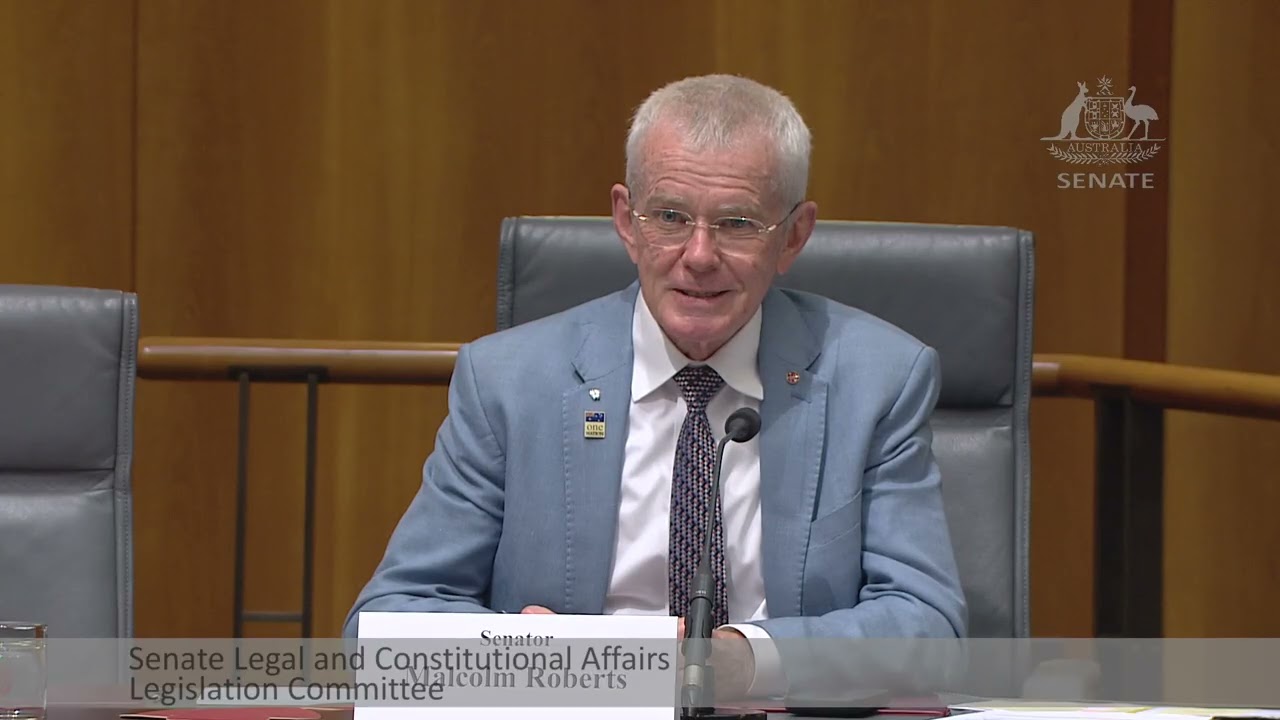
Senator ROBERTS: This is about wind turbines that have been imported into Australia containing asbestos. Now that the asbestos in imported wind turbines has been identified, what’s been done to remedy the problem and prevent recurrence?
Mr Reynolds: The issue was asbestos in the brake pads in lifts inside the wind turbines. What we put in place was what we call a ‘profile’ on the border to look for these products. Between 1 December and 1 April, the Australian Border Force recorded 42 consignments matching against profiles introduced a target asbestos risk because of that wind turbine issue. Of the 42 consignments, 35 were cleared by risk assessment of the documents by ABF officers. The Australian Border Force referred four shipments for laboratory testing. All four returned negative results and were subsequently released. The remaining three consignments are, as of 1 April, held pending provision of further assurance documentation. We’re actively managing that risk on the border.
Senator ROBERTS: Are you actually inspecting the wind turbine brakes when they come in, or is it just done by risk assessment?
Mr Reynolds: It’s both. We’ll make a determination based on that initial risk assessment, and, where required, where we have concerns, then we will refer those for the testing.
Senator ROBERTS: Who does the testing?
Mr Reynolds: I don’t have the name of the laboratory, but it is a nationally recognised laboratory.
Senator ROBERTS: Your officers go to the site where the turbine brakes are stored, pending clearance, and then, if necessary, notify the testers.
Mr Reynolds: What we’ll do is we will provide a direction that that consignment is to be tested. Then the consignment will go to the laboratory to conduct the testing. Depending on the results, we may seize that particular consignment or it will be released.
Senator ROBERTS: How did this problem slip past the Australian Border Force?
Mr Reynolds: Once we became aware of it, we were absolutely onto it. We’ve been testing for asbestos over a number of years. How these particular brake pads made it into the country, I could not tell you. What I can tell you, however, is that for any individual there is a $330,000 fine or three times the value of the goods and for any companies who are deliberately importing asbestos products without a permit it’s a fine of $1.65 million or 15 times the value of the goods. There are significant penalties under the customs regulations for bringing asbestos into the country without a permit.
Senator ROBERTS: An importer of wind turbine brakes could just look at that and say to themselves: ‘What’s the risk assessment involved here? What’s the risk of getting caught?’ If it’s tiny, then it’s worth trying to flout the fines because they won’t get fined. They’ll do a risk assessment the other way.
Mr Reynolds: What I’d offer to you is the fact that we have intervened with 42 consignments which came into the country in that five-month period between 1 December and 1 April. This would indicate that we’re absolutely applying all that we can at the border to look for asbestos coming into the country, including for the wind turbine lift brakes and any other asbestos product.
Senator ROBERTS: That’s subsequent to them coming in without detection and being put into operation. You can’t tell me how that slipped past you. If you can’t tell me how, how do you know that what you’re doing now will get it all? I can understand you can’t possibly inspect every piece of equipment, every good and every item that gets imported by individuals or on major shipments and commercial loads. You have to use some kind of intelligence assessment and a risk assessment. I understand that. Have you changed practices?
Mr Reynolds: Yes, that’s precisely what we have done.
Senator ROBERTS: With the 42?
Mr Reynolds: That’s exactly it. Because we recognised that there clearly were some asbestos products that made it into the country, we doubled down on our efforts to reduce the risk of any asbestos brake pads for wind turbine lifts getting into the country. I think the figures I’ve provided for you demonstrate that we are being effective in getting after it.
Senator ROBERTS: I’m wondering how many other lapses there are, not just wind turbine brakes. Going back to this case: was there an offence committed by the importers or the purchasers by misdescription or omission?
Mr Reynolds: You’d need the details of the importers for those particular lift brake pads, so I don’t have that for you here. I could take it on notice if that would be of assistance.
Senator ROBERTS: If you could please. I’d like to know if it was deliberate or if it was sloppiness on the part of the importer.
Mr Reynolds: Certainly.
Senator ROBERTS: Have all contaminated wind turbines had the problem alleviated, Minister?
Senator Watt: I don’t know that I can give you an across the board answer. I’m not sure whether the commissioner has any further information on that.
Senator ROBERTS: Would that be your responsibility? I would have thought—
Mr Reynolds: It’s a state responsibility to deal with that issue.
Senator ROBERTS: How can I go about finding that out?
Senator Watt: Well, you’ve got some MPs in the South Australian parliament; that might be a good place to start.
Senator ROBERTS: And WA.
Senator Watt: Oh yes; I forgot about that.
Senator ROBERTS: And soon New South Wales.
Senator Watt: I’m not sure they agree with you on fracking and a few other things, but, anyway, that’s another issue.
Senator ROBERTS: We’re always listening to constituents, Senator Watt. We don’t just go blanket.
Senator Watt: ‘Drill, baby, drill’ except in South Australia?
Senator ROBERTS: Except in one electorate.
CHAIR: If we could get back to questions, that would be really helpful.
Senator DUNIAM: This is the entertainment.
CHAIR: No, I am not here for the entertainment.
Senator ROBERTS: I’m just going through my questions. The commissioner has answered most of them. What penalties or fines have been assessed for identified breaches? You’ve already told me the heftiness of the fines. Have any been levied on the importers in court?
Mr Reynolds: To date, all of the consignments that we have reviewed and have referred for testing have been found not to contain asbestos.
Senator ROBERTS: What about the ones that have been found and were in operation?
Mr Reynolds: I’ll take that on notice and do my best to answer that question for you.
Senator ROBERTS: In general, you’re there to apprehend illegal goods coming in illegally?
Mr Reynolds: That’s right.
Senator ROBERTS: If they get through the border and are put into operation, who is then responsible for enforcement? Is it someone else or is it you?
Mr Reynolds: We can still apply the Customs Act for goods that have made it through the border.
Senator ROBERTS: Do you have any prosecutions outstanding?
Mr Reynolds: For asbestos related issues?
Senator ROBERTS: Yes.
Mr Reynolds: Not to my awareness.
Senator ROBERTS: Was anyone prosecuted for the ones that were discovered in operation?
Mr Reynolds: I think that is something that we can take on notice for you.
Senator ROBERTS: The self-assessment of components by the importers is appropriate given your limited workforce and the extent of imports coming into Australia—the extent in terms of not only dollar value but the complexity of things today?
Mr Reynolds: All importers have responsibilities as far as ensuring that they meet the legal requirements for the importation of goods into Australia, but we will conduct compliance checks on any goods over which we have a suspicion that it may be an illicit or prohibited product.
Senator ROBERTS: So your way of protecting the borders, keeping the borders secure is to do inspections. That can’t cover everything, so you use risk assessments, put responsibility on the importers, and then try to protect that with hefty fines if someone is caught to make the cost of criminal or illegal imports prohibitive.
Mr Reynolds: That’s a good summary.
Senator ROBERTS: When I retire I’ll come and get a job with you.
Senator Watt: There’s a merit process, Senator.
Senator ROBERTS: I’ll pay that one. You were rejected, were you?
Senator Watt: I thought you were going to ask me to be a referee.
CHAIR: We’re full of comedians today.







Listened to the asbestos in wind turbines issue. Fines in place for illegal imports but I bet not enforced. Same with so many illegals in this country from E bike rules to shady visa applications! People come here in droves cause we are too slack, too trusting, too polite and very stupid.
Keep on it senata roberts