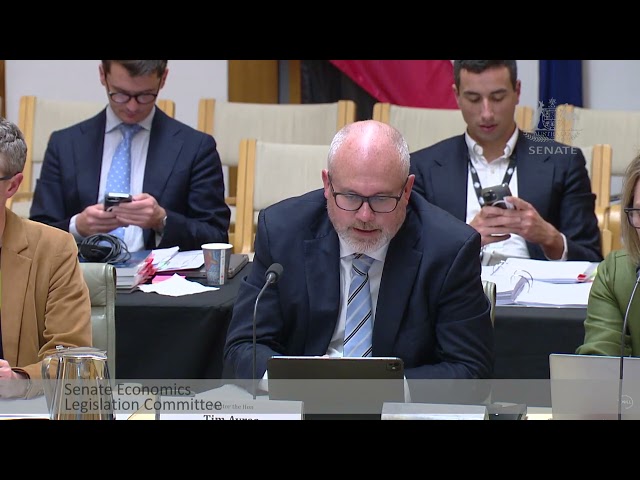
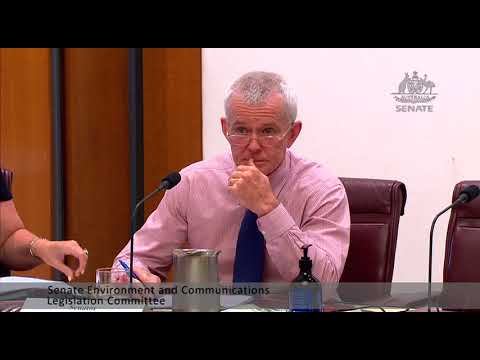
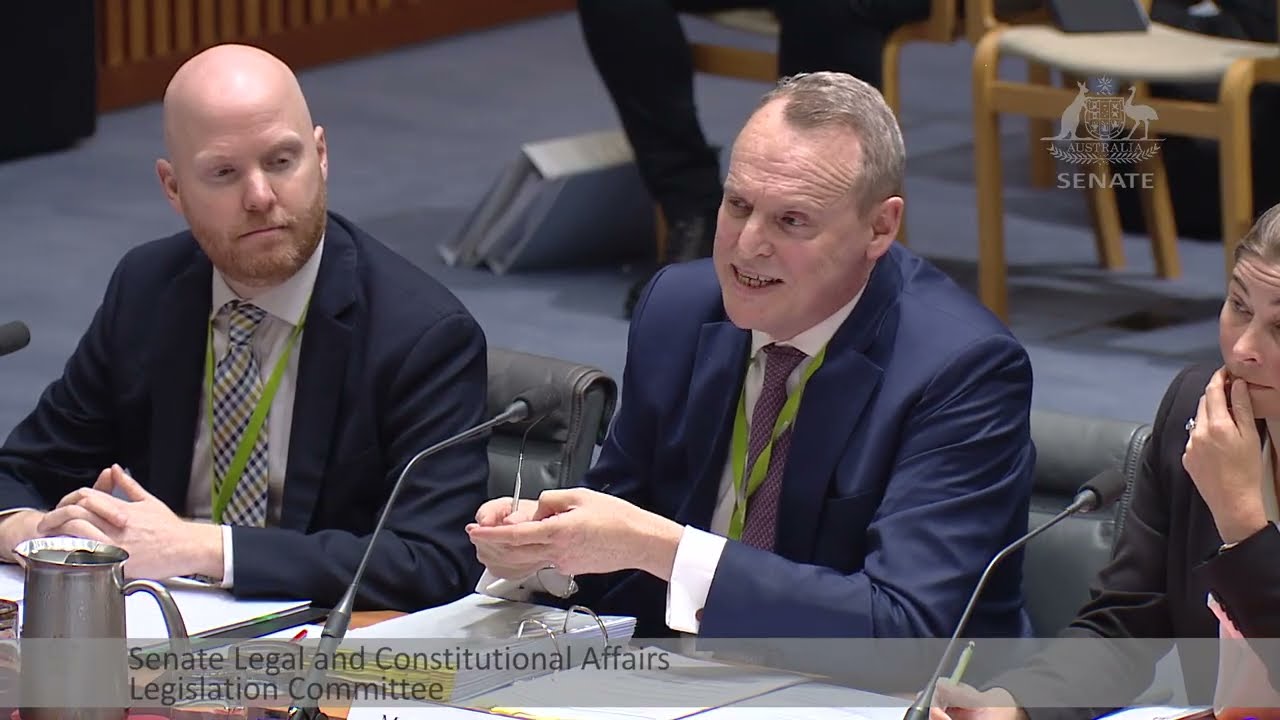
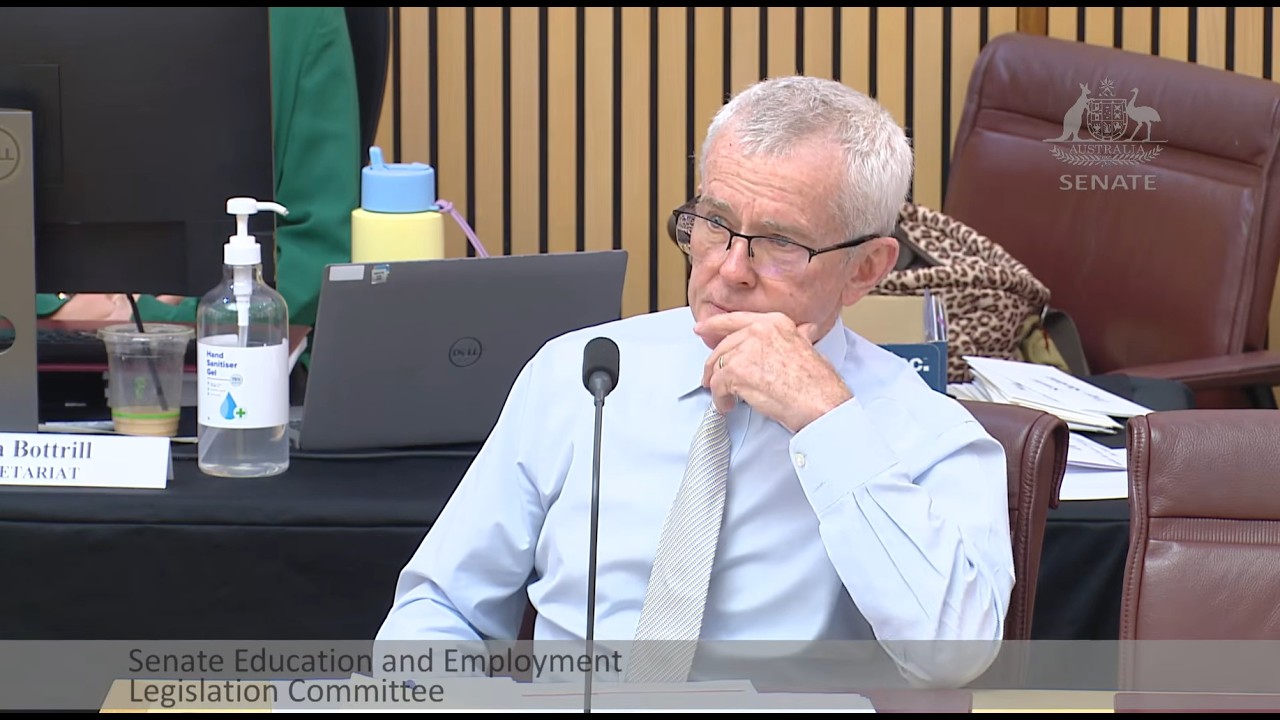
During this Estimates hearing back in February I questioned Dennis Barnes, the CEO of the infamous Snowy Hydro 2.0 that’s estimated to cost taxpayers $12 billion … for now.
This project began without a transparent business case and is currently locked into an anti-competitive contractor structure whilst relying on a cost-plus model that leaves taxpayers carrying the blowouts.
Add years of delays, poor early planning, and constant political blame-shifting, and the project looks less like nation-building and more like a multibillion dollar waste of taxpayer money.
Despite the project’s spiralling costs and repeated failures, the government continues to shift blame rather than accept responsibility.
Barnaby Joyce has openly acknowledged his mistake, yet those overseeing Snowy Hydro 2.0 refuse to show the same accountability.
And it’s you. The Australian taxpayers, that are expected to foot the bill.
One Nation says: it’s time to cut our losses on this white elephant and get back to what works – cheap base-load energy.
Transcript
CHAIR: Thank you. I’ll give the call to Senator Roberts.
Senator ROBERTS: Thank you for appearing again tonight. Good evening, Mr Barnes.
Mr Barnes: Good evening.
Senator ROBERTS: Your principal contractor is FGJV, Future Generation Joint Venture, which is three companies: Webuild, Clough and Lane Construction. Webuild as an Italian company who has across the construction arc of Snowy Hydro bought out Clough and Lane Constructions, so the joint venture is Webuild, Webuild and Webuild. Is that correct?
Mr Barnes: Yes.
Senator ROBERTS: It’s significant because one arm of Webuild is unlikely to find fault or offer a cheaper option than another arm of Webuild. They really have this project in their grip, don’t they?
Mr Barnes: We have a principal contractor called Future Generation Joint Venture. That joint venture was chosen through a competitive process before my time. Circumstances meant that Clough, who went into receivership, I believe, in 2022, was acquired by Webuild at that time. The contractual counterparty for Snowy Hydro has not changed.
Senator ROBERTS: So who’s the contractual partner?
Mr Barnes: Future Generation Joint Venture.
Senator ROBERTS: Which is Webuild, Webuild, Webuild.
Mr Barnes: There are three Webuild subsidiaries.
Senator ROBERTS: That’s right. So the current contract with Webuild uses an incentivised target cost model, also called a cost-plus margin. Is that correct?
Mr Barnes: The important part is the incentivised bit. There are elements of the project which are more complex and challenging, which are on a cost-recovery basis, but is a large proportion of the contract where the contractor Future Generation Joint Venture is incentivised to do a better job on time, on cost, and, if they don’t, then they suffer some penalties.
Senator ROBERTS: But, essentially, it’s cost-plus margin.
Mr Barnes: Elements of it are cost-plus margin; elements of it are incentivised target costs, where the contractor is incentivised to deliver the lowest cost and fastest outcome, and, if they don’t, then they incur penalties.
Senator ROBERTS: Being cost-plus, the higher the cost, the more money the contractor makes through the plus margin part.
Mr Barnes: There is a series of triggers and caps within the contract which mean that the contractor doesn’t continue to earn as the cost of the project increases. In fact, the recovery from the contractor means their return goes down.
Senator ROBERTS: Do you use external auditors to ensure every cost is legit?
Mr Barnes: We have a monthly process conducted by Ernst & Young, who go through every line item and every subcontractor payment and assure those to us.
Senator ROBERTS: So they’re external auditors?
Mr Barnes: Yes.
Senator ROBERTS: This question might actually be good news. How many apprentices and trainees are working on Snowy Hydro? I understand you have a school based apprenticeships and traineeships program.
Mr Barnes: I think the round number—and we can provide the detail on Snowy Hydro as opposed to Snowy 2—is more than 40 people in what we call development programs. That include apprentices, vacation students and graduates—across that spectrum. We can provide the detail. We do produce a report each year with that input. We’re happy to provide that.
Senator ROBERTS: One Nation believes very much in apprenticeships. They used to be a fantastic system, and they’ve been peeled off.
Mr Barnes: I’m a product of an apprenticeship myself, Senator.
Senator ROBERTS: This is my last question. Minister, without reflecting on the performance of Mr Barnes, who is making good progress, you understand that the taxpayers are annoyed that the cost just keeps going up and up under the current model. It started without an open business case or cost-benefit analysis. Costs will continue to go up through 2028. Is that correct?
Senator Ayres: Yes. I think this was a project that commenced under the—
Senator ROBERTS: Turnbull government.
Senator Ayres: Turnbull government, when Mr Joyce was the deputy prime minister. Mr Joyce and that government announced the program. It’s a little bit like some of the dam projects that Mr Joyce constantly talks about. I think he said he was going to deliver 100 dams during the life of the Abbott-Morrison-Turnbull catastrophe—and delivered one.
Senator ROBERTS: Which one was that?
Senator Ayres: I don’t know, but one out of 100—one per cent. A lot of talk, not much water.
Senator ROBERTS: He found it very frustrating, didn’t he?
Senator Ayres: Well, he wasn’t much good. The assessment that was made on Snowy 2.0 was that the cost escalation was partly due to what was described as design immaturity at final investment decision and site conditions and geology, which should have been known at the time. Unlike Mr Joyce and Mr Turnbull and Mr Morrison and Mr Taylor—all these characters—we haven’t covered up—
Senator ROBERTS: You haven’t mentioned Sussan Ley.
Senator Ayres: I’m only pointing at the people who are responsible. I don’t know about—maybe, maybe; certainly Mr Joyce is at the heart of this free-wheeling catastrophe. We haven’t covered up the costs, and we haven’t covered up the delays. What we, as a government, have done is work with Mr Barnes and the team to make sure that this nation-building project gets back on track. It is an important project for our future energy security. Despite the damage of a ham-fisted start, with a focus on announcements and the sort of approach that was taken by Mr Joyce and his colleagues, we are working hard. The project is now 70 per cent complete. It’s still got some quite substantial work to go. You are right to point to work that has been done by Snowy and contractors in terms of apprenticeships. That’s a good contribution. We’re very focused on this project proceeding as quickly as possible in as low cost a way as possible but transparently. We don’t think good public policy is supported by deliberately concealing facts about important national projects like this.
Senator ROBERTS: It did bother me that Prime Minister Turnbull at the time heavily redacted the business case. That certainly did bother me because I wasn’t in favour of it at the start. But its cost has gone from roughly $2 billion, I think, to about $20 billion.
Senator Ayres: I might go to Mr Barnes on the cost questions because I think we should be precise. The cost has escalated significantly, but let’s have some precision.
Senator ROBERTS: We’ve had a lot of imprecisions in the past. Is it worth continuing?
Mr Barnes: The cost approval that was budgeted was $5.9 billion, and the project reset that we concluded in 2023 was $12 billion.
Senator Ayres: I thought the figure was closer to $12 billion than $20 billion.
Senator ROBERTS: With all the extra transmission lines and all the ancillaries?
Senator Ayres: Yes, well these are nation-building projects that are required to deliver an electricity system. I agree with Mr Joyce 1.0, not 2.0 or whatever version he is now. In 2020, he said: The Federal Government has delivered millions of dollars of investment already for renewable energy generation right here on our doorstep in places like Inverell and Glen Innes. He then went on to say: We’ve made massive investments in the New England into renewable energy— I’m passionate about this because it’s where I come from. We’ve made massive investments in the New England into renewable energy, in fact we’re one of the biggest renewable energy hubs in Australia. Just like the Inland Rail, others talked about it for years and I made sure it happened.
Senator ROBERTS: And he now has the courage to admit his folly.
Senator Ayres: In 2021, he then went on to say, ‘In the long term, we understand that there may be a transition to other fuel sources, and we’ve got to make sure that we’re also part of that transition,’ something his constituents agree with. In 2017, he said: With other projects like the Sapphire Wind Farm going ahead— and here he is backing in a wind farm that he was cutting the ribbon at, extolling the virtues of this very important development—
Senator ROBERTS: And he’s had the courage to recognise he was wrong.
Senator Ayres: He said: With other projects like the Sapphire Wind Farm going ahead, it also shows that the New England is leading the way in renewable energy production and I will continue to advocate for the region as a growing power supplier for Australia. Before his decline to where he’s got to now, he said some quite commonsense things, this bloke.
Senator ROBERTS: Well, at least he’s got the strength of character to admit he was wrong.
Senator Ayres: He’s a long way away from common sense now.
Senator ROBERTS: That’s something that you haven’t done, despite the rising cost of electricity.
Senator Ayres: He’s a long way away from common sense now.
CHAIR: Senators, thank you for that exchange. Senator Roberts, I will have to wind you up.
Senator ROBERTS: I’ve finished my questions.