

I questioned representatives from Screen Australia regarding their Diversity, Equity, and Inclusion (DEI) agenda. DEI requirements are not mandated by legislation or the Screen Australia Act, instead they are management-driven KPIs.
I challenged their Gender Matters and inclusion targets, which aims for at least 50% female and non-binary representation in key creative roles, arguing that exceeding 50% disadvantages more meritorious men and ignores true merit-based selection.
Taxpayers are contributing $86 million in the 2026-27 budget, yet Screen Australia’s recoupment of equity investments remains low (ranging from 12% to 32%), indicating poor commercial performance.
I pointed out that overall audience numbers have dropped significantly since 2021-22, questioning whether their focus on ideological targets is failing to deliver what audiences actually want to watch while giving taxpayers less value for money.
One Nation will dismantle government-backed DEI initiatives and equity-focused programs that divide rather than unite, ensuring all citizens are treated equally under the law based strictly on merit.
Transcript
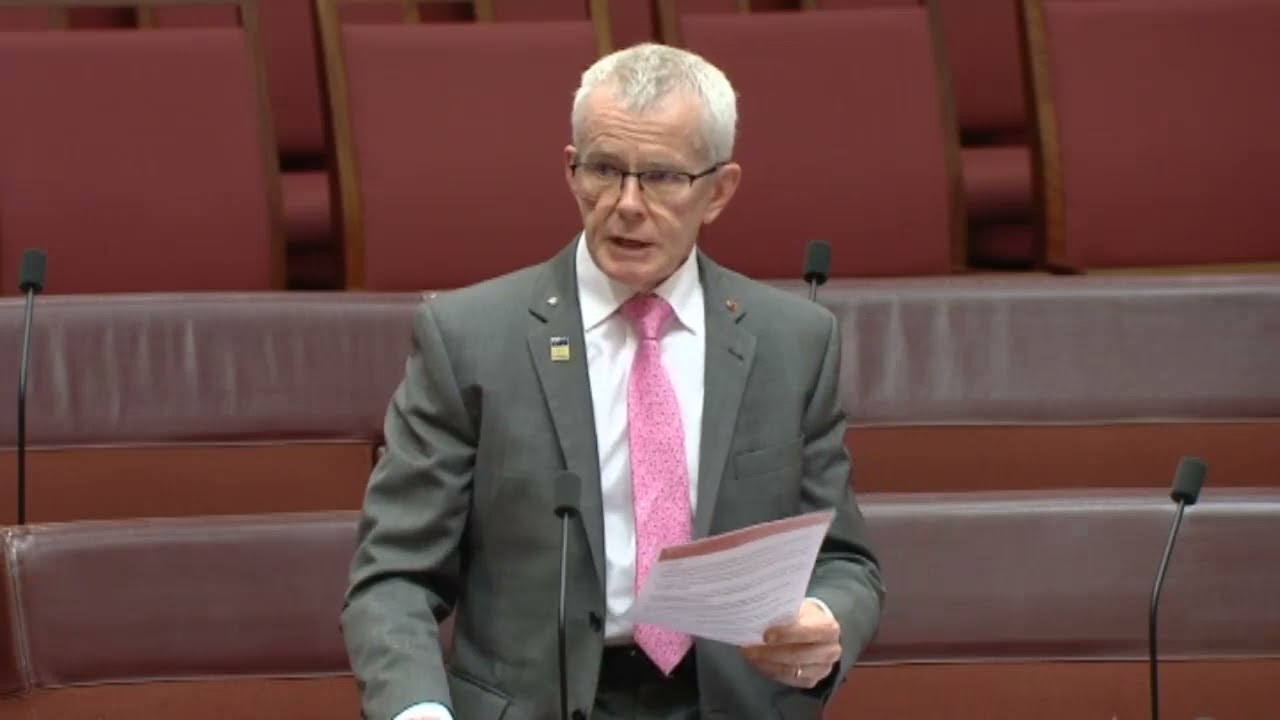
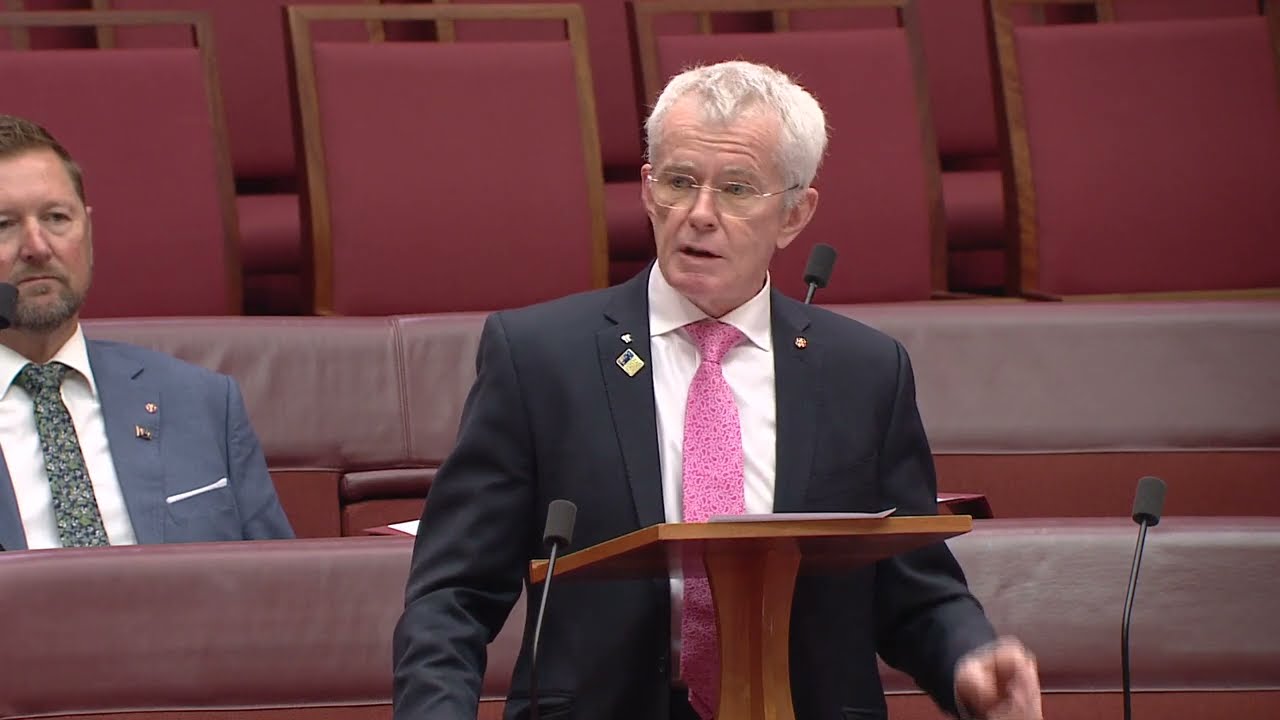
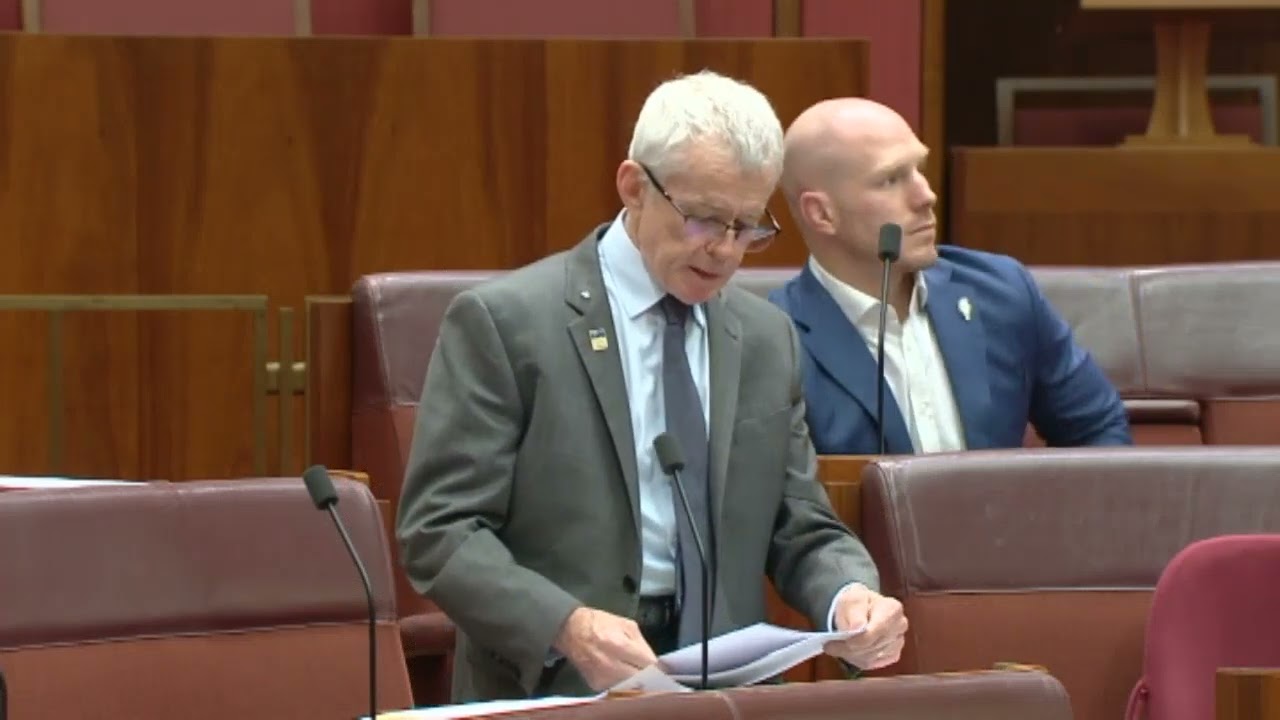
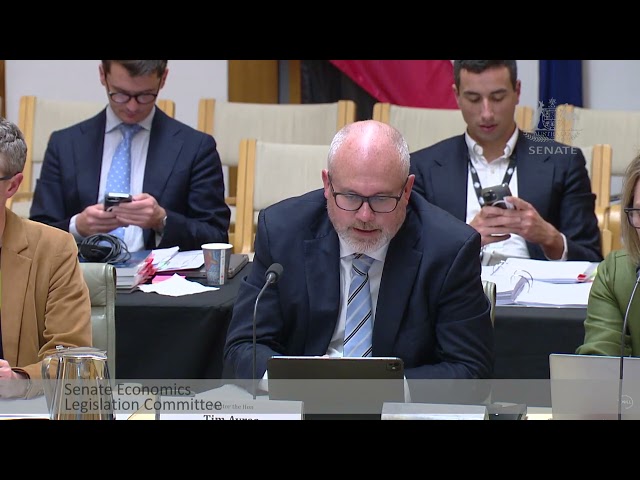
Senator ROBERTS: Thank you for appearing again. My questions go to the DEI agenda of Screen Australia. A producer that used a polite Facebook post to raise the gender imbalance in favour of women in your approved productions and in your management was blocked. These questions are apparently not allowed. Happily, you can’t block me, so we’ll ask some questions. From your corporate plan 2023-27: Screen Australia’s funding guidelines include an Inclusive Storytelling Statement that highlights our commitment to diversity equity and inclusion. The agency has developed a series of programs to provide skills development opportunities for diverse practitioners traditionally under-represented in the Australian screen industry … Screen Australia also has a long-standing commitment to gender equity through its Gender Matters program and KPI. Can you show me where in your enabling legislation this DEI requirement was mandated, or is this a decision taken by the management, the board, the government, the minister, KPIs?
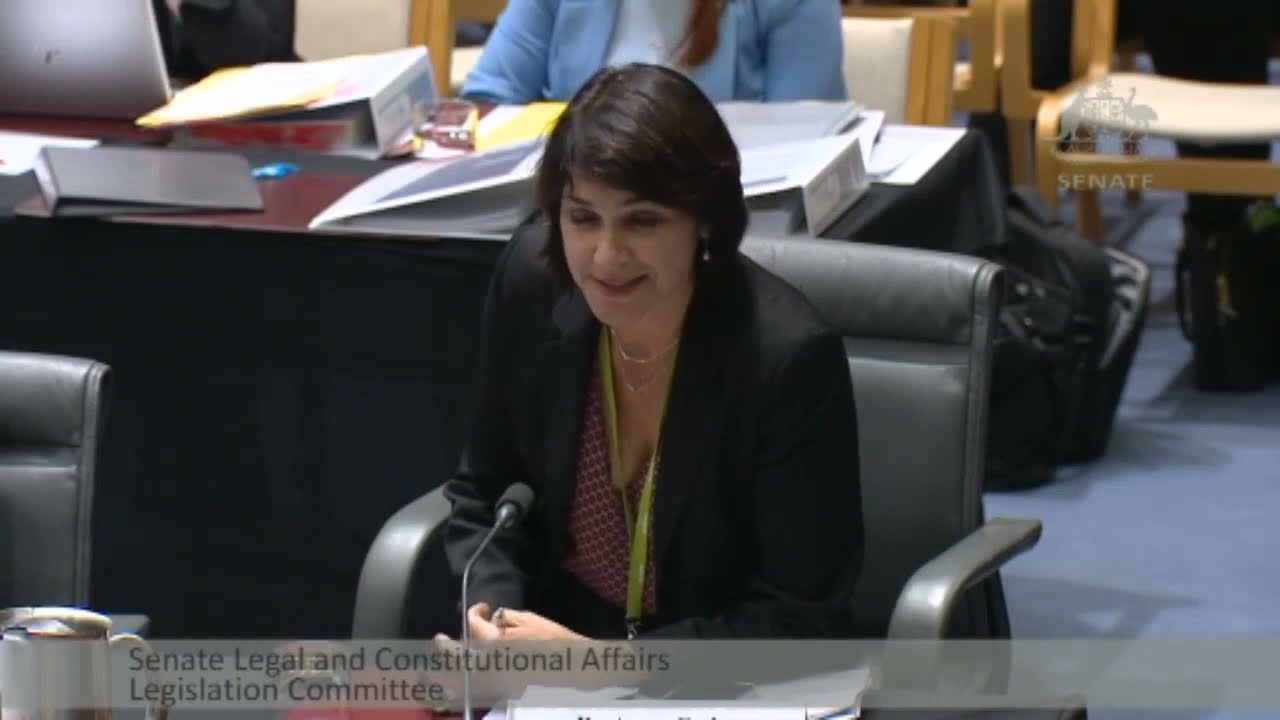
Ms Brunsdon: The screen sector in Australia and globally has traditionally been very white and male. The population in Australia is slightly more than 50 per cent women. That’s not the case in terms of the representation in the screen sector. There are generally equal numbers of men and women in film schools who finish those studies, but they’re then not represented and their stories don’t get told, and stories from a female perspective are not always told. Stories from culturally diverse parts of the country are not always told. Our research tells us that Australian audiences value authentic representation of Australian stories, and that goes right across the community. A lot of the research we’ve done on seeing ourselves, which goes into the representation of parts of the community on screen and behind the screen, tells us that there are parts of the community that are very severely underrepresented, including people with disability, where one in five people in the community identify as having a disability but we don’t see that on screen. We do have programs, like most of the state screen agencies, to develop new stories from different parts of the community. They’re stories that travel. They’re stories that get audiences in Australia and internationally, and that’s one of the reasons that we do that. People like to see themselves, their experiences and their lives reflected in the stories they watch on screen, whether that’s on TV or whether it’s in cinema. The Gender Matters taskforce has been disbanded. The corporate plan that you mentioned has been updated, and we released a new corporate plan last year in April. Our purpose is about supporting a vibrant and viable screen industry that reflects the diversity of stories and the depth of stories from across Australia. So we’re just working with and trying to reflect the community of Australia in the stories that get supported and that get shown.
Senator ROBERTS: Thank you. I didn’t ask you to justify your following of DEI. I just wanted to know if your enabling legislation requires DEI—if it was mandated—or if it’s a decision taken by the management, the board, the minister or the government? Who set your KPIs on this, you or the government?
Ms Brunsdon: We set the KPIs.
Senator ROBERTS: So who set the DEI requirement? Was it mandated?
Ms Brunsdon: There isn’t a DEI requirement mandated, but the functions of Screen Australia under the Screen Australia Act are to support and promote the development of a highly creative, innovative and commercially sustainable Australian screen production industry and support the development, production, promotion and distribution of Australian programs and the provision of access to Australian programs to support the development of screen culture in Australia and undertake any other function conferred on it by the law of the Commonwealth. There are a number of ways that we do that. We’re also required to place an emphasis on documentaries and programs of interest or relevance to children and programs with a high level of artistic and cultural merit, promote the open market as the primary means of support for projects with commercial potential, promote the development of commercially focused screen production businesses and promote the effective, efficient and ethical use of public resources. There’s no DEI component in there. We interpret reflecting these stories to ensure that there is a diversity of stories on screen.
Senator ROBERTS: Could you give me, on notice, your evidence from your research that says DEI improves your capability in all those areas?
Ms Brunsdon: I’ll take that on notice.
Senator ROBERTS: Thank you—and any peer reviewed scientific studies would be appreciated as well. It seems that you’re setting them In looking at your KPIs, the first KPI for 2016-19, at least 50 per cent of production funded projects are to have women in more than 50 per cent of key creative roles. This was achieved at 56 per cent. Is your KPI really ‘at least’ 50 per cent? Surely anything above 50 per cent means less meritorious women are being favoured over more meritorious men. Surely the merit ratio is 50 to 50—or, in your universe, are women better than men?
Ms Brunsdon: Are women better than men? It’s a KPI that we measure over three years, so it’s not that every project has to have women in key creative roles. It’s over the breadth of the projects that we support that we are aiming for that target. And it’s a target; it’s not a rule. It’s something that moves depending on the projects that come in and depending on the creatives already attached to those projects. It’s a target that’s harder to achieve in feature films because they often come with a writer-director from their origination. A lot of TV series that come to us don’t necessarily have all their directors attached, so there’s room for things to move at those times. So it really depends on everything. The population isn’t quite fifty-fifty.
Senator ROBERTS: Slightly more females.
Ms Brunsdon: Slightly more females. That target is about the representation of women relevant to the population and to the community.
Senator ROBERTS: Have you done any work on why that used to be lower? There are some amazing female producers, directors, actresses—or actors, whatever you want to call them these days. In the past, surely for commercial interest, people would have wanted to jump on to make sure that women were involved. They provide a more varied and diverse approach. So why were they underrepresented?
Ms Brunsdon: For a variety of reasons—in the same way that they’re underrepresented in many parts of the economy and many parts of the sector and, indeed, leadership positions more broadly. A lot of women take time out to have children or have other caring responsibilities. It can be more difficult to get back into the sector if you’ve taken time out for those caring responsibilities. That’s certainly one thing. There are a number of research papers that detail this. People find it more difficult to get jobs when they have children because of the hours that this industry takes when you’ve got a project in production. So there are a number of barriers there for people to do that. We’ve recently done some research looking at different methodologies for production—that might be a nine-day fortnight or shorter working hours or eight-hour days and that kind of thing—to try and encourage better working hours for everybody. It’s not just for women or people with caring responsibilities but actually for the whole workforce.
Senator ROBERTS: I think most people would agree from their own experience—it’s not just me—that women are generally better carers. Most families make the decision that their children will be cared for by one of the partners if they can afford it, and that’s increasingly unlikely, sadly, these days, but generally that’s the woman because women are better carers.
Ms Brunsdon: I couldn’t comment.
Senator ROBERTS: I wasn’t fishing. The second KPI from 2019 to 2023 was ‘more than or equal to 50 per cent of key creative roles across development and production held by women’. That was achieved at 55 per cent. Again, tough luck men, because this is all about the women, right?
Ms Brunsdon: Well, the KPI is about female representation, yes.
Senator ROBERTS: Yes. Having achieved the earlier targets, rather than holding them there and looking for projects with merit, you increased the targets. For 2023 to 2026, the KPI requires the female mandate to be expanded to include non-binary, gender-diverse people for a target of more than 50 per cent of key roles of writer, producer or director across funded projects for a three-year average. Is women at 50 per cent a hard floor? Is bringing in transgenders, men living as women, taking jobs off women, or is ‘transgender’ a new protected class to add on top of the 50 per cent reserved for women?
Ms Brunsdon: No, it’s not. The 50 per cent is for women and/or non-binary or gender-diverse people. So it’s an inclusive target of 50 per cent.
Senator ROBERTS: So it should be 50 per cent or more?
Ms Brunsdon: Yes.
Senator ROBERTS: You must be treating it as additional because the latest data shows that female and trans et cetera producers are now at 62 per cent, writers are up to 55 per cent and directors are still down at 49 per cent—almost 50. Apparently, that’s not close to being equal. Overall, it is 56 per cent across all KPIs. Are you going to stop now and start approving projects on merit again?
Ms Brunsdon: We do approve projects on merit. That’s absolutely the very first thing. The target is about tracking the projects in terms of who the key creatives are and making sure that we’ve got that information as we’re going through the year. The results of the target also change every year depending on the projects that come to us. Because we don’t commission projects, we can only respond to the applications that we receive.
Senator ROBERTS: ‘Merit’, do you say? Well, it’s not really, is it? Because there’s a line item in your account for ‘recoupment of equity investment’, REI, which is taxpayers getting a return on our money. If your investment decisions were being made on merit, your commercial returns would show that. I note your returns over the last six years on recoupment of equity investment have ranged from 12 to 32 per cent. Some variation may occur as costs are in one year and returns are in another, so we understand that. Your numbers may be more accurate. Why did the projects you fund fail commercially so frequently? Even when you’ve had a hit, the best year was only 32 per cent of your money back.
Ms Brunsdon: It really depends on the projects, and they’re subject, obviously, to global headwinds and the contraction in the global marketplace for screen content. It depends on the box office, if they’re theatrical feature films in Australia, and it depends how well they sell internationally. Over the last couple of years, it’s become much more difficult for projects to sell, certainly into the US, which used to be a much more stable market, certainly for Australian content. It can’t be relied on because of the contraction of some of the big media players there. It’s very much subject to market conditions, and the market has changed significantly and continues to move fluidly, and that’s not something we have any control over. Some projects do incredibly well. The feature film Talk to Me, which was released a couple of years ago, has recouped many times over what its budget was.
Senator ROBERTS: It was a very good one.
Ms Brunsdon: A very good one. We want more like that. And there are things that perhaps are less commercially focused but still play very well with audiences. There’s a real range of projects that we support and a real range of returns, because the return on investment is not just about the commercial financial return; it’s also a cultural return and an influence return, in terms of whether it is something that’s going to influence people to change their behaviour. There are different reasons that we watch the shows that we watch, that we go to see films that we see, and our reactions to them and our behaviour is a result of that.
Senator ROBERTS: I understand systems change behaviour and language changes behaviour. Could you tell me the behaviours you’re seeking on behalf of the Australian taxpayer?
Ms Brunsdon: We’re not seeking—
Senator ROBERTS: You’re basically changing behaviours, which I understand. So what behaviours are you trying to change?
Ms Brunsdon: We’re not trying to change behaviours. It will depend on the show. There may be documentaries that seek to give people a better understanding of a certain issue or group of people, and to have more empathy around things or just understand their community better.
Senator ROBERTS: Is changing behaviour one of the criteria or one of the KPIs for selecting investment grants?
Ms Brunsdon: No, it’s not.
Senator ROBERTS: How do you do that, then? How do you make sure they change behaviour?
Ms Brunsdon: That’s not something that we can do. We don’t distribute the shows, we don’t market shows and we don’t commission shows.
Senator ROBERTS: Okay. A common measure of a hit screen production is one that returns 2.5 times its production cost. Two times breaks even, including distribution, and the 0.5 on top of two is profit. By that measure, your last hit movie was the movie Talk to Me in 2022, which cost $4 million and returned a whopping $140 million. A great result, but it was unexpected for a small horror film. Nonetheless, it was a good result. It made your results for 2023-24 look good. The next previous hits we can see in your returns are: Lion way back in 2016; The Sapphires in 2012; and Red Dog in 2011, which must have been a very big hit. That was a long time ago. Is this move to DEI in more recent years creating projects that people don’t want to watch?
Ms Brunsdon: No.
Senator ROBERTS: In 2024-25, your total audience was 101.8 million; let’s say 102 million. That’s up from last year, but it’s down on 2020-21, and on 2021-22, which was 140 million. So you’re way down—that’s almost one quarter down. I acknowledge that the platforms are changing from theatre to streaming, and now to TikTok. Can you provide an accurate figure for your audience each year over the last five years, broken into screen, television, streaming and social media, please.
Ms Brunsdon: I’ll have to take that on notice.
Senator ROBERTS: Your 2026-27 budget is $113 million, with $86 million from the taxpayers. What is your projection for grants and for recoupable investments in 2026-27?
Mr Reid: Our budget for 2026-27 is the total expenditure for 2026-27 on page 526 of the Portfolio Budget Statement.
Senator ROBERTS: How much?
Mr Reid: It is $95.9 million in total expenses, and our recoupment budget for 2026-27 is $3.8 million.
Senator ROBERTS: How much from taxpayers?
Mr Reid: From taxpayers, we receive revenue from government of $86 million.
Senator ROBERTS: So that’s the same.
Mr Reid: Yes.
Senator ROBERTS: We’ve got figures of grants of $34 million and recoupment of equity investment of $59 million.
Mr Reid: You’d have to point to where you’re—we do do grants and equity investments. For 2026-27 we’re projecting $34 million in grants and $33.6 million in what we call the write-down in impairment of assets. That’s the equity component that we provide to recipients.
Senator ROBERTS: The first figure, we agree on. What was the second figure?
Mr Reid: It’s $34 million and $33.6 million in investments.
Senator ROBERTS: If your primary objective is to fund Australian content, then the figure in your budgets for grants and REIs, inflation adjusted, would go up each year, but it doesn’t. Wages go up every year, but money going back into the industry is down from a high in 2020-21 of $99 million, which is $118 million in today’s dollars, to $86 million this year. Taxpayers are paying more and getting less out of Screen Australia. Why is that?
Mr Reid: I’m not sure that I agree with the premise of your question, but taxpayers are paying less and we are delivering a lot for the Australian public.
Senator ROBERTS: Can you convince me that taxpayers are not paying more and getting less?
Mr Reid: Your own figures were that, in 2021, we were paying out $90 million and now we’re paying out less. But Australian stories are being produced and watched at a very high rate.
Senator ROBERTS: But the figures don’t reflect that—the profit figures and the returns.
Mr Reid: As my colleague mentioned, Screen Australia does not make all of its decisions based on commercial return.
Senator ROBERTS: Thank you.







Leave a Reply
Want to join the discussion?Feel free to contribute!
Using your first name