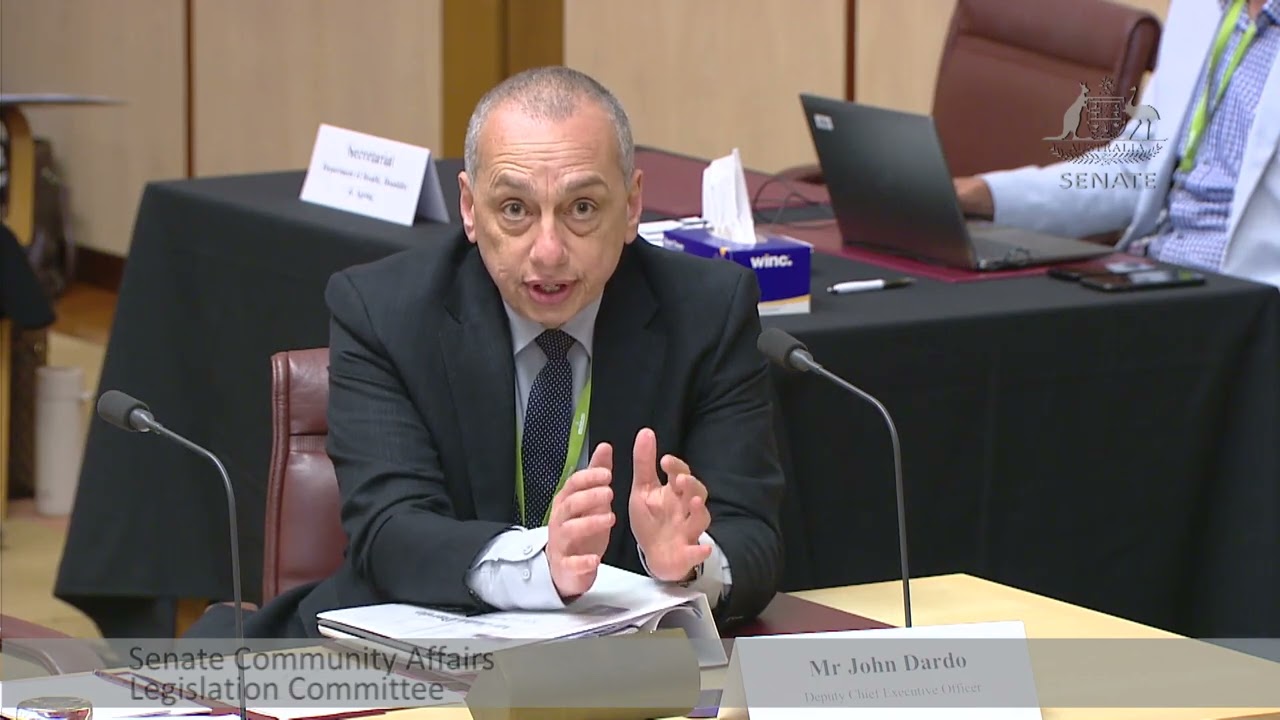
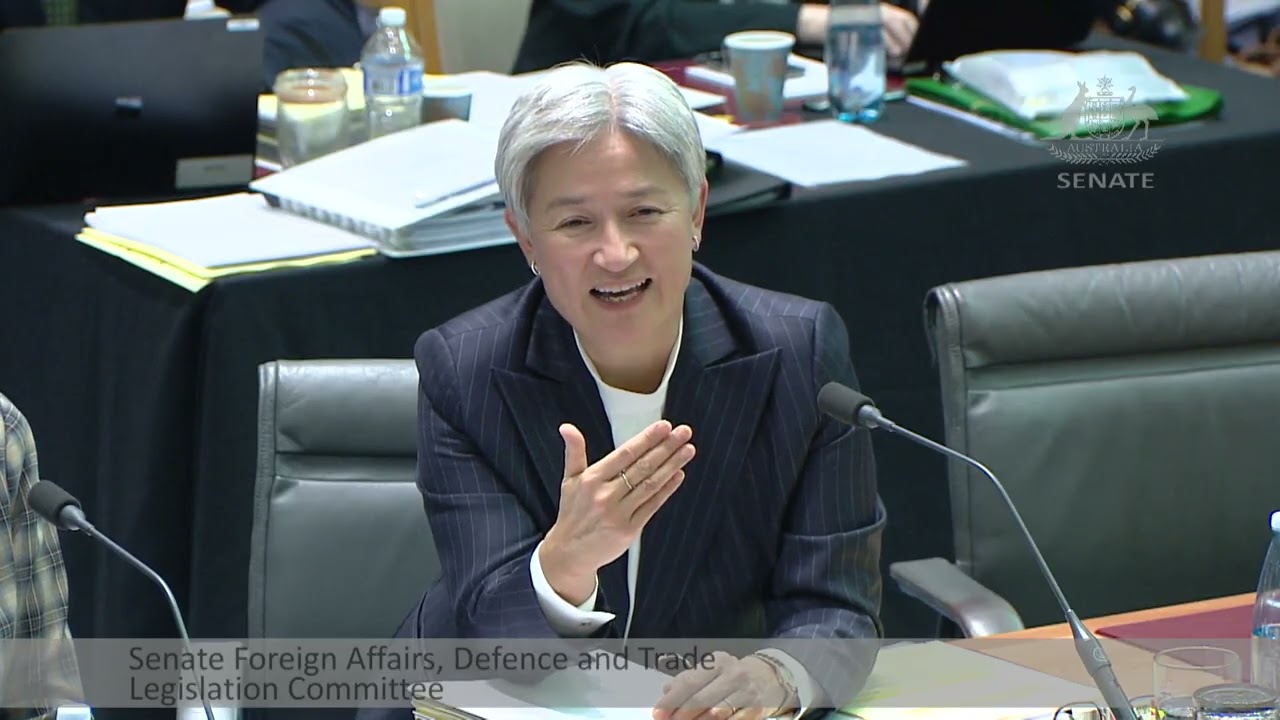
During this estimates hearing, I questioned CSIRO regarding animal experimentation practices and biosecurity measures at the Australian Centre for Disease Preparedness in Geelong.
CSIRO’s response to Question on Notice (SI-173) revealed that in the 2024 calendar year, 248 experiments involved over 1.07 million animals, with a staggering 752,757 humanely killed afterward. Excluding fish, 98,293 animals were destroyed. I requested specific data on these species and the justification for this level of killing.
Dr Taylor defended the research as being vital for border protection, export markets, and human health threats, ranging from observational cattle studies to high-level biocontainment.
I questioned whether this complied with the Australian code for the care and use of animals for scientific purposes. Dr Taylor assured me they comply, claiming that regular independent audits are carried out through a dedicated animal ethics committee.
Holding up aerial photographs of tower structures, I asked if the facility conducts onsite burning for animal disposal or releases exhaust gases. Dr Taylor clarified that they use an international-standard autoclave process to heat-treat all material before release, ensuring no fumes leave the facility and multiple biosecurity redundancies are in place.
I tabled an aerial photo showing two large, blue-green ponds, expressing concern that the colour indicates toxic cyanobacteria and noting pipes leading toward Stingeree Bay. I was told that these are for general stormwater runoff and have “no purpose” in waste handling. They
said all biosecurity water processing happens inside the facility.
Because a water-processing plant is not visible on the aerial shots, I placed multiple questions on notice. I have asked them to provide a full drainage report, clarification on the pond contents, and details on their internal water-processing. Further, I want an absolute assurance that no toxins or bacteria have entered Stingeree Bay.
Transcript
Senator ROBERTS: In the October estimates you took on notice this question: ‘How many times has CSIRO used animals for testing over the last five years and how frequently was the subject destroyed afterwards?’ This is question on notice SI-173. Your response was detailed and came in good time, so thank you very much, it was very prompt. Your answer was as follows: ‘In the 2024 calendar year there were 248 animal experiments involving 1,077,455 animals, and 752,757 were humanely killed afterward. Of these, 645,464 were fish—’ so this leaves 98,293 animals that were not fish— ‘which were killed in animal experimentation by CSIRO in a single year.’ Do you have data on what those animals were and what the experimentation was that justified this level of kill?
Dr Hilton: I’ll pass that question to Dr Taylor.
Dr Taylor: We do use animals in our research. Obviously, we adhere to very strict regulations and guidelines, and we’re a signatory to the transparency of use of animals in research, so—
Senator ROBERTS: Excuse me—is that international or national?
Dr Taylor: National. The type of work within that research ranges from observational studies, such as the videocapture of cattle and those sorts of things, all the way through to areas where, as you say, animals are humanely killed. We use animals in our biocontainment facility at the Australian Centre for Disease Preparedness. They’re, obviously, very important experiments that we undertake, where we do that for the national benefit and the protection of our borders from biosecurity threats, for the support of our export markets and also for preparedness for any threats to human health.
Senator ROBERTS: Did this experimentation occur at the Australian Centre for Disease Preparedness, formerly the Australian Animal Health Laboratory?
Dr Taylor: Some of it does but certainly not all of it. That facility is a highly specialised facility for distinct purposes. Where that work does require that level of biocontainment, then, yes, it does.
Senator ROBERTS: It seems that CSIRO are running a substantial animal experimentation operation at what was the Australian Animal Health Laboratory. Does it comply with the Australian code for the care and use of animals for scientific purposes, which CSIRO co-wrote?
Dr Taylor: Yes, it does, and that facility complies with that. It also complies with a dedicated animal ethics committee that is made up of members independent of CSIRO and that undergoes external review on a very regular basis.
Senator ROBERTS: Is there any independent audit of the procedures?
Dr Taylor: There is regularly, through the ethics committee that undertakes that, yes. Those reviews are available and are part of our obligations with the experimental use of animals.
Senator ROBERTS: Is that independent or just within CSIRO?
Dr Taylor: It’s independent. It’s conducted by a body independent of CSIRO.
Senator ROBERTS: The international trend in animal testing is to replace and reduce animal use. On notice, can you provide the figure for the number of animal experiments and the number of animals which were not fish that have been euthanised after research over the last five years.
Dr Taylor: I’m happy to take that on notice.
Senator ROBERTS: Thank you. Does the facility have chimneys, and are they still in use? If so, for what purpose? We’re looking at pictures of the facility.
Dr Taylor: Can you define what you mean by ‘chimneys’? It does have towers, I guess. Maybe what you’re asking is how the waste from the facility is dealt with. Is that what you’re asking?
Senator ROBERTS: I’d like to know whether you burn things onsite and whether the exhaust gases and products go out the chimney.
Dr Taylor: The Australian Centre for Disease Preparedness is quite a unique facility in that all of the material that is used is treated thoroughly before it leaves the site. What actually happens is an autoclave process, where all material is heated to an internationally recognised temperature that kills everything in it before it is released. So there are no fumes that leave the facility. Everything that leaves that facility has been treated, with multiple redundancies in place.
Senator ROBERTS: I appreciate what you said in your answer. I’m not after the environmental compliance or the production of carbon dioxide; I’m after knowledge—
Dr Taylor: This is security compliance, in fact—
Senator ROBERTS: Yes, that’s right. It’s biosecurity.
Dr Taylor: and it’s part of what makes the facility unique.
Senator ROBERTS: That’s what I’ve worked out. Does it include the disposal of euthanised animals?
Dr Taylor: Yes.
Senator ROBERTS: I’ve tabled an aerial shot of the photo of the Geelong facility. Can you explain what those two large green areas are?
Dr Taylor: Yes; they are bodies of water.
Senator ROBERTS: That’s what we guessed. What is the purpose of these ponds?
Dr Taylor: There is no purpose.
Senator ROBERTS: Why have they got what look to be pipes going through the creeks, in drainage channels on each side, and both of them ending out in Stingeree Bay?
Dr Taylor: I’m not a hydrological engineer, so I am happy to take that on notice. But they are not for the purpose of handling waste from the facility.
Dr Hilton: They are entirely separate from the containment facility. There is no connection between the effluent and the creeks. We’ll take on notice and perhaps provide you with a report about the drainage from those bodies of water, but they would be treated like run-off from lots of other areas around the facility.
Senator ROBERTS: Thank you, Dr Hilton. I’m concerned about the colour, the bluey-green colour—it’s typical of cyanobacteria. I would like to know what is in the ponds, what they are used for and how they are treated when they discharge, because they would discharge.
Dr Hilton: Happy to take that on notice.
Senator ROBERTS: Thank you. I can’t see a water-processing plant anywhere, so I’d like to know why the ponds have what appear to be pipes connected to the drainage lines, and then to the bay.
Dr Taylor: The way the facility is constructed, all water processing happens within the facility and within full biosecurity containment.
Senator ROBERTS: Could you answer on notice what sort of processing and where is the plan?
Dr Taylor: Yes; I’m happy to do that.
Senator ROBERTS: And can you assure me that no cyanobacteria or other bacteria or toxins have been released into Stingeree Bay?
Dr Hilton: We’ll take that question on notice.
Senator ROBERTS: Thank you. And thank you, Chair.