

I asked the department about its decision to allow US beef imports and why so much of the process is hidden behind redactions.
From what I understand, in 2017, the department reviewed biosecurity risks for cattle continuously resident in the applicant country since birth. Then, in 2019, it approved imports of cattle born, raised, and slaughtered in the US. however in 2020, the US asked for something new: permission to export cattle that had been imported from other countries into the US. To justify this, the department commissioned two addendums to the original review.
One addendum was released publicly. The other? Completely hidden.
I asked for its title and a copy. The department refused, saying that I’d have to pursue review options on the FOI. What are they hiding?
Here’s the bigger issue: Australia is extremely efficient at producing beef. The only way US beef becomes cheap enough to compete here is if they import cheaper cattle from countries like Mexico, slaughter them in the US, and then export the meat to Australia. If we only allowed beef born, raised, and slaughtered in the US, they couldn’t compete. Now, by allowing Mexican cattle through the back door, we risk undercutting Australian farmers.
The department insists price isn’t part of their biosecurity assessment and that they only look at disease risk. Yet that’s exactly the problem. We’re ignoring the commercial reality that this opens the door to cheaper imports while relying on foreign assurances for safety.
Strong biosecurity is important, however Australians deserve transparency — not redacted documents and blind trust in foreign systems.
Transcript
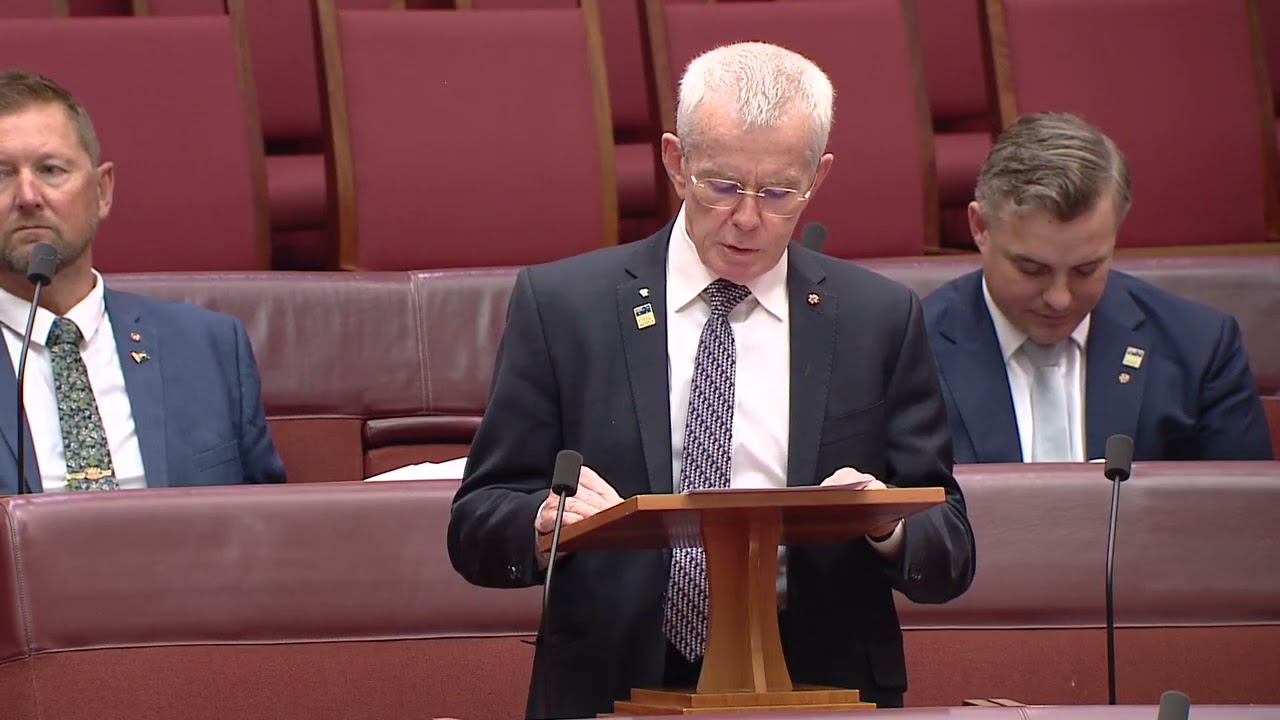
ACTING CHAIR: Senator ROBERTS.
Senator ROBERTS: Thank you for being here again. First of all, I’d like to discuss the decision to allow US beef imports. I’m going to go to freedom of information LEX 34322 for some of this information, which you charged me $600 for and heavily redacted. Thanks for that! I’ll go through my understanding. Pull me up if there needs to be a correction, please. The work the department did in their 2017 review strictly assessed risks from cattle continuously resident in the applicant country since birth. Then a 2019 assessment following on from that review approved the export to Australia of cattle that had been born, raised and slaughtered in the United States. Then, in 2020, the US asked for cattle imported from other countries into the US to be allowed to be imported to Australia via the US. The department then commissioned two addendums to the review. Is that correct?
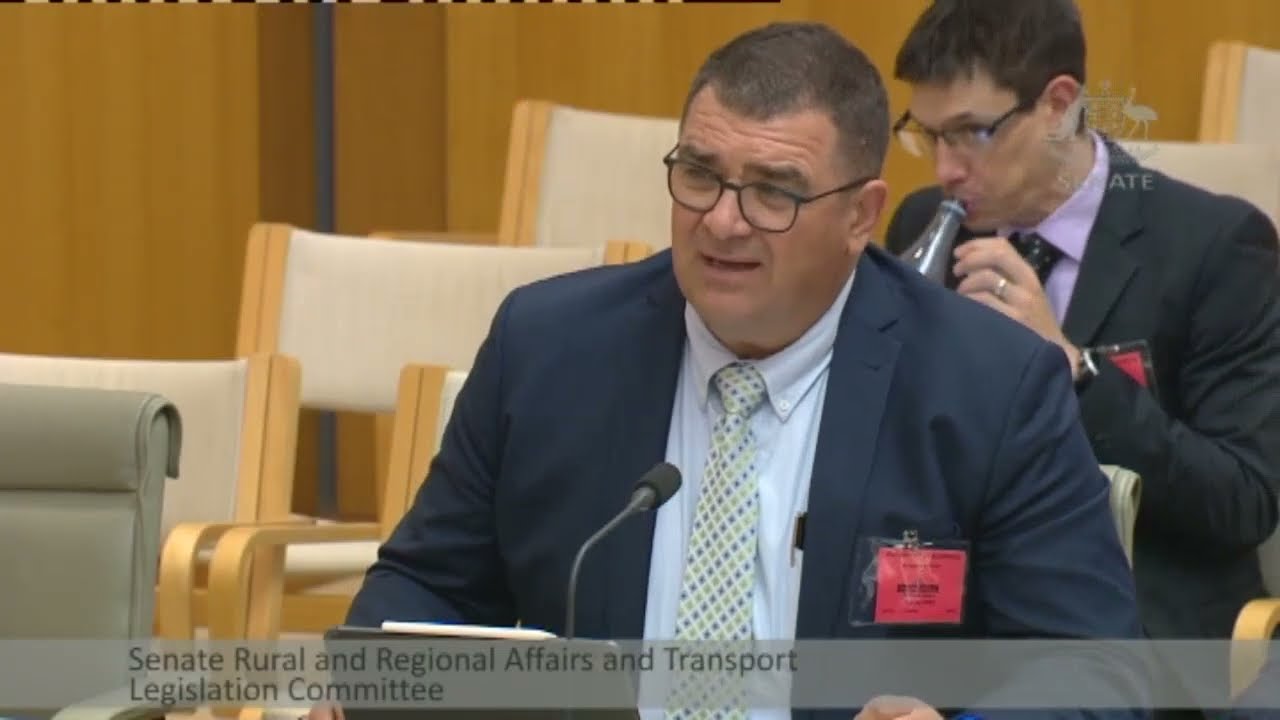
Dr Smith: From what I could hear, that sounded correct.
Senator ROBERTS: Okay. So we have a 2017 review, a 2019 approval for US born cattle, then a 2020 request to allow cattle not born in the US and some additional addendums made to the 2017 review to justify that request. Correct?
Dr Smith: Yes, the original 2017 review was for a number of applicant countries, not just for the US, but that was specifically born, raised and slaughtered in the US. The addendum was to allow for cattle born and raised in Canada and cattle born and raised in Mexico imported into the US, slaughtered and then brought to Australia.
Senator ROBERTS: So you made two addendums to the 2017 review. One was called Final report: risk of lumpy skin disease via fresh bovine skeletal muscle meat from applicant countries, but you redacted the name of the second addendum. Why are you hiding it, and what was the second addendum titled?
Dr Smith: I understand ..that was part of an FOI process and that the decision-maker has recently provided that decision and the reasons for doing so, which you’ve received. I think you’ve also been provided your options for a review, and, if any of those need to be taken further, then you have those avenues to do so.
Senator ROBERTS: You’re saying not only that I can’t get the list of the second addendum but that I can’t get the whole addendum from you?
Dr Smith: I wasn’t the decision-maker on that FOI. I can say that there was an addendum which I referred to in relation to the expanded access. We did do some additional work around the safety of LSD, lumpy skin disease, in skeletal muscle as a separate process. That was also released publicly and deemed that LSD can be safely managed in skeletal muscle imports.
Senator ROBERTS: What I’m asking for is a copy of the second addendum.
Dr Smith: As I mentioned before, I wasn’t the decision-maker in that process. If there is a question around what was provided back to you from the decision-maker, who was an officer in the department, then you have the right to review that decision.
Senator ROBERTS: I have the right as a senator to get a document that I request in Senate estimates.
Ms Saunders: We’ll take that on notice. We don’t have the documents available at this point in time. We’ll have to consider whether we would seek public interest immunity in relation to those documents.
Senator ROBERTS: I was going to mention that. If you disagree, you’ll have to seek PII.
Ms Saunders: Indeed.
Senator ROBERTS: I’m just wondering what you’re keeping from the Senate. The core change, as far as I can see, is that Mexico have said they will certify that Mexican cattle were born and raised in Mexico. That’s to stop, apparently, the risk of cattle being brought up from Central American or South American countries, where lumpy skin or mad cow disease is present, into Mexico and then into the United States and exported to Australia. Mexico is considered some to be a narco-terrorist state. Even if you disagree with that assessment, they clearly have a higher risk of corruption and a financial incentive to lie about these certificates. Why are we changing our entire biosecurity tolerances because of assurances Mexico has given not even to us but to another country? They’ve given those assurances to the United States not to us.
Dr Smith: There were a couple of processes of assessment. FSANZ, the Food Safety Australia New Zealand, did their own independent assessment of Mexico as a country. They also assessed US as a country and Canada as a country. They assessed that their systems, their controls, the ways they managed the BSE risk, which is the mad cow risk, was at the lowest category—category 1—noting that Mexico’s never had a reported case of BSE and that the last case of FMD in Mexico was in 1952.
Senator ROBERTS: Who did that assessment of the risk with Mexican imports?
Dr Smith: That assessment that I referred to was FSANZ, the statutory authority under the department of health. That’s publicly available.
Senator ROBERTS: We’ve reviewed Mexican beef. What about Central American or South American beef?
Dr Smith: We reviewed the importation of eligible cattle from Mexican supply chains, subject to the protocols that we strengthened with the USDA, to ensure that those cattle—live cattle, not beef—that were brought into the US supply chain could be traced back to their property of origin and that they were sourced from TB-free and other disease-free herds. They’ve tested as such, noting that, as I said in evidence earlier, 1.2 million cattle legally come into the US, and have done for decades, and then they become integrated as part of the herd. We’ve not seen any outbreaks of disease or issues in human health or, particularly, beef exports from the US that have resulted in disease.
Senator ROBERTS: So you’re telling me that you have got assurance that cattle from Mexico going to the United States meet your standards. What about cattle that go from South America or Central America into Mexico and then to the United States?
Dr Smith: We’re not assessing beyond Mexico; we’re only assessing those that have been brought into the US from Mexico. But the FSANZ assessment did look at Mexico as a country in and of itself, and they believed that they had the adequate controls to manage, in this case, the BSE risk. We’ve also done a lot of work with the USDA as well to make sure that they have confidence in the system because they need to protect their domestic herd, which is incredibly important for their own domestic consumption. Noting, too, that we import a lot of genetic material from the US, which relies on the same traceability of straws of semen and embryos into Australia—which we’ve been doing for decades—and we’ve never had any cases of diseases as a result.
Senator ROBERTS: So you’re relying on the United States to protect itself from South American and Central American beef?
Dr Smith: We’re relying on the fact that we did a systems audit of the US system, which we’ve relied upon for many years for importation of a number of commodities into Australia, that it has been done safely.
Senator ROBERTS: We’re very efficient with our beef production in Australia. The only way importing US beef gets cheap enough for them to compete with our growers here, is if they’re allowed to import cheaper cattle from other countries, slaughter them in the United States and export them to Australia. It’s true, isn’t it, that if we only allowed beef born, raised and slaughtered in the US, they just wouldn’t be able to compete—yet now we’re allowing countries like Mexico through the back door to undercut Australian farmers. Is that correct?
Dr Smith: I wouldn’t characterise it as that. The cattle that they bring are specific for their needs. They are bringing them into the supply chain mostly as feeder cattle—so steers and spayed heifers—that then get brought into their feedlots. They are fattened up and, essentially, they are then treated as US cattle and they would enter our supply chain for market access to us, subject to the raft of conditions that we put in place. Senator ROBERTS: So you’re confident that Mexican cattle coming into the United States, slaughtered in the United States, is not a way for the Americans to undercut our prices in Australia?
Dr Smith: Our biosecurity assessment doesn’t look at price or competitiveness per se. I note that the price of US beef is quite high at the moment, I’m aware of that, but that is not part of our considerations as part of a biosecurity assessment. We’re not able to look at price comparators or impacts on domestic industries as part of our SPS agreement under the WTO.
Senator ROBERTS: I appreciate your direct answers. So we’re potentially exposed to cheaper Mexican cattle coming into the United States and undercutting us in Australia?
Senator Chisholm: I don’t think that’s accurate.
Senator ROBERTS: How do you know that’s not correct?
Senator Chisholm: Because I don’t think you’ve been able to point to evidence that that’s the case.
Senator ROBERTS: I’m asking if that is a possibility.
Senator Chisholm: There is no evidence that—
Senator ROBERTS: What we’re being told is that only the biosecurity risks are taken into consideration.
Senator Chisholm: I understand that, but there is no evidence that what you’re suggesting is the case.
Senator ROBERTS: I’m not saying that there is evidence. I want to know—
Senator Chisholm: Then you shouldn’t put something like that.
Senator ROBERTS: I’m asking the question if there is a way of doing that.
Senator Chisholm: There is no evidence to support that.
Senator ROBERTS: I’m not saying that. I have got the evidence. I’m asking if that’s a way—I have learnt that it is not a consideration; it’s just biosecurity. That is still an open-ended—
Senator Chisholm: And I’m saying that there is no evidence to support that.
Senator ROBERTS: We’re just going around the merry-go-round.
Dr Smith: Senator, maybe I can help. Commercial matters, as far as what consumers will import, are a matter for commercial operators. If there is a viable commercial market that they can bring product in that meets our requirements under biosecurity, then they are able to do so.
Senator ROBERTS: And if there’s a problem with it, if it’s undercutting Australian beef, then it’s up to our beef growers to draw that to whose attention?
Dr Smith: Yes; but I think it’s unlikely that that’s going to be the case.







Why are we importing any beef at all into Australia? The government seems hell-bent on destroying our agriculture and manufacturing industries. I also do not understand why FOI charges are so high and then why the documents are redacted. It is our money that the government is spending so we have the right to see what deals are being done, with whom, and how much it is going to cost.
Australia first. What happened to our pork industry? Now this government is allowing cheap imports of beef to come into Australia controlling our price in the market place. Note pork imports must be boned out to enter Australia. Beef producers be wary.
It looks like there is a secret service operating to intentionally deceive Australian farmers and graziers. We do not have a shortage of Australian beef, so why are we prepared to allow imports? We have a surplus, which is why we export so much beef. Our exports are sought after because we are free of exotic diseases. Why leave any loopholes for diseases to come into Australia by some backdoor? Do some government officials and politicians want to destroy the high standard that we already have for our exported beef? Are our leaders short of common sense?