

I wanted to get some clarity regarding UN General Assembly Resolution A/80/L.65 and the International Court of Justice’s 2025 advisory opinion. Specifically, whether the ICJ’s ruling is merely advisory and non-binding and that any enforcement action would require another country to successfully prove direct economic harm, something that has never occurred regarding greenhouse gas emissions.
When department officials deferred these questions, Senator Ayres stepped in to shield them. I highlighted that the Paris Agreement is only binding because domestic legislation implements it and that Australia could legally withdraw from it just like the United States did.
I pointed out that UN resolution A/80/L.65 was only backed by 141 out of 193 member states, with major industrial countries like the US, Russia, Saudi Arabia, Israel and Iran opposing it. I challenged the entire narrative, stating that manmade climate change is nothing more than natural temperature variation and cycles – and that the government has swallowed UN “Kool-Aid.”
Transcript
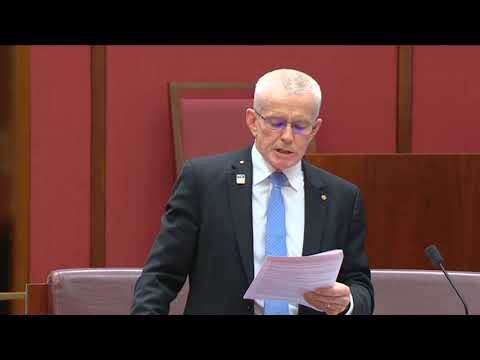
Senator ROBERTS: Thank you for appearing today. I’d like to clarify a United Nations resolution last week on climate change, which was General Assembly resolution A/80/L.65, titled ‘Advisory opinion of the International Court of Justice on the obligations of States in respect of climate change’, dated 20 May 2026. Australia strongly supported the resolution. The resolution welcomes and gives political weight to the International Court of Justice opinion from 2025, affirming states’ obligations under international law to protect the climate system from greenhouse gas emissions, prevent significant harm, cooperate globally and address consequences including potential reparation. It emphasises following through on Paris Agreement commitments. Is that all good so far—all accurate?
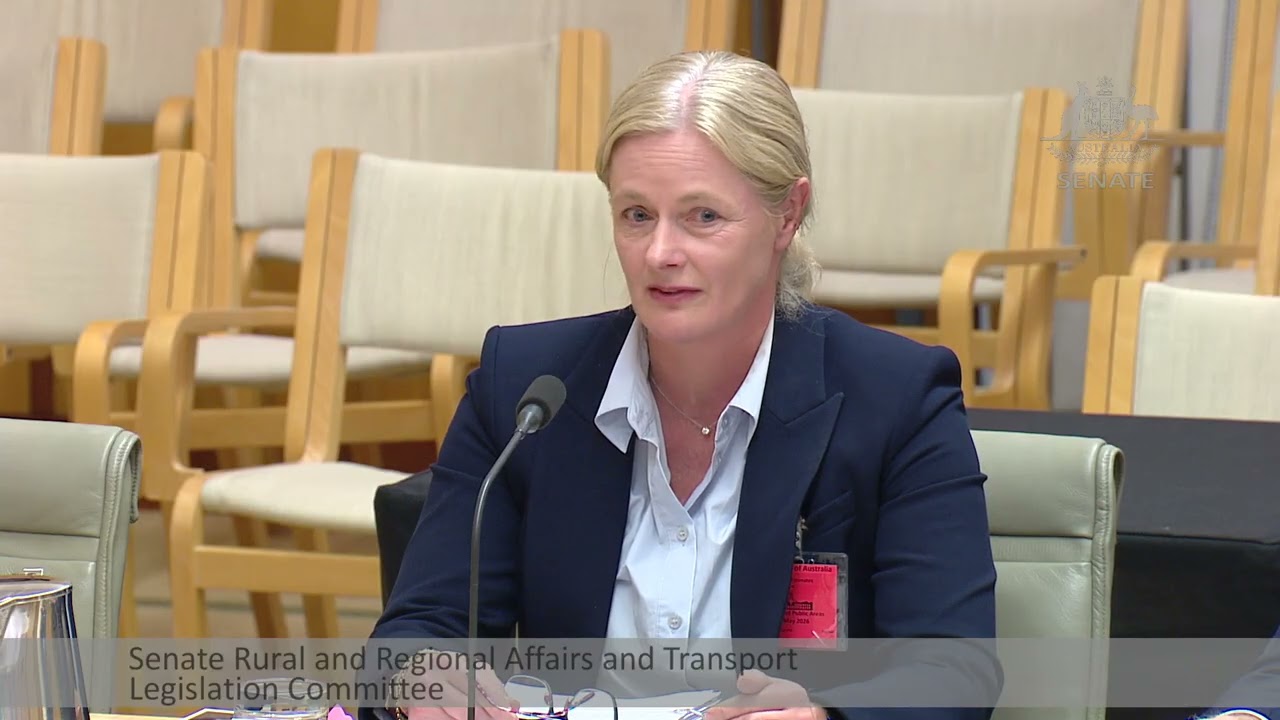
Ms Munro: We understand; yes.
Senator ROBERTS: The International Court of Justice ruling was an advisory, meaning it carried no compulsion. Is that correct?
Ms Munro: It is an advisory opinion. Its impact on international law, though, is still to be tested through the courts.
Senator ROBERTS: I’ll come to that. Isn’t it true that any action taken by the International Court of Justice against a nation like Australia must be brought by another country and, only then, when that country can prove they have suffered economic harm caused by the respondent country they’re seeking restitution from?
Ms Munro: This is getting into the details of how the International Court of Justice works, which is beyond what we in this department can appropriately advise you on. The Attorney-General’s Department, the Office of International Law and the Department of Foreign Affairs and Trade are probably best able to provide you advice on the operation of the law.
Senator ROBERTS: The Attorney-General was yesterday. Wouldn’t it pay you to understand that as well? Could you take it on notice?
Ms Munro: We could take it on notice, but perhaps you should finish your question.
Senator ROBERTS: Is it true no nation has ever sued another, and is that because it is not possible to prove that greenhouse gas emissions are causing another country damage?
Senator Ayres: I think—
Senator ROBERTS: The minister to the rescue!
Senator Ayres: just to assist the officials, it’s hard to see how these officials could answer questions about the legal impact of UN resolutions. I’m not a lawyer. I’m not even really a bush lawyer, but my experience of these questions is that resolutions of the General Assembly rarely have the kind of legal gravamen that you are asking about. On whatever day—the chair might be able to assist me—Senator Wong will be here with a team from the Department of Foreign Affairs and Trade. They will no doubt now be aware of your question and enthusiastically preparing a response for you.
Senator ROBERTS: What a great idea! I’ll just finish off on the questions. The International Court of Justice has never taken action against a country over their greenhouse gas emissions using a proxy, such as access to the international settlement bank, which is controlled by the UN, because they are an advisory body only. If we turn to the Paris Agreement itself, the reason for this resolution—it’s only binding because we passed legislation to implement it, which can be repealed. The Paris Agreement itself is not binding on Australia if we withdraw from it, as the United States has done. Is that correct?
Ms Munro: There are a number of statements in there. Australia has entered into a treaty to join the Paris Agreement. There are provisions, though, under the Paris Agreement, should any one country decide to leave the Paris Agreement.
Senator Ayres: It would just not be in Australia’s interest to do such a thing. It would make our economy smaller, diminish our standing in the world, reduce our energy security, impoverish our people and make us less secure. You couldn’t imagine a more destructive thing to do if you cared about our national interest.
Senator ROBERTS: You’ve swallowed the UN Kool-Aid, haven’t you?
Senator Ayres: That’s the kind of language that you and your colleagues use. We operate in the real world, where there are real jobs and real industry involved that rely upon the government taking an approach that’s in the national interest of Australia, and that is the approach that the government is determined to deliver.
Senator ROBERTS: Can I conclude that UN resolution A/80/L.65 was supported by only 141 out of 193 member states and opposed by some significant industrial countries—the United States, Russia, Saudi Arabia, Israel and Iran, which is no minnow—to make it look like the world still believes the manmade climate change concept is real when it’s nothing more than natural temperature variation and natural temperature cycles. Can I conclude that?
Senator Ayres: What you can conclude is that that’s not the view of the Australian government—
Senator ROBERTS: Thank you.
Senator Ayres: and that, particularly given our country’s exposure to the risks that climate change poses—for our agriculture, for the safety and living standards of our citizens and for the region of the world in which we live with our Pacific and South-East Asian neighbours, the fastest-growing region of the world in human history, where Australia’s economy depends so much on our capacity to export that one in four of our jobs relies upon exports, and where the scale of the opportunity for Australia, in regional Australia in particular, in our mining and resources sector and our manufacturing industries is so large—you would have to have rocks in your head to walk away from sensible efforts to integrate the world’s approach on these questions. We had an experiment with that during the Morrison era. We became less secure, we became unable to engage with our trading partners, and we became weaker and less prosperous as a result. That is not the position of the Albanese government. Our position is to lean in for Australian industry with the biggest pro-manufacturing package of policy measures in our history, to fix our electricity system, which was debauched over the decade before our government took place and got smaller while the country got larger, and to reserve Australian gas for Australian industry. These measures are the measures of an adult government that’s actually in the national interest, not doing what your party and your colleagues in the Liberals and Nationals do, which is import foreign ideology and export Australian jobs. That’s not what we will be doing.
Senator ROBERTS: You’ve made a number of bold statements. I disagree with them. Could you provide me with the scientific proof for each of the key points you made, please? That’s empirical scientific data in logical scientific points that proves cause and effect, a simple thing. You’ve made bold statements. I’d like to see the evidence.
Senator Ayres: I’m sure the officials will be able to come up with something for you on notice.
Senator ROBERTS: Can you take it on notice, please.
Senator Ayres: It’s a well-worn path.
Dr Box: Well, I can—
Senator ROBERTS: Scientific proof being empirical scientific data in logical scientific points, proving cause and effect—human carbon dioxide affecting the climate.
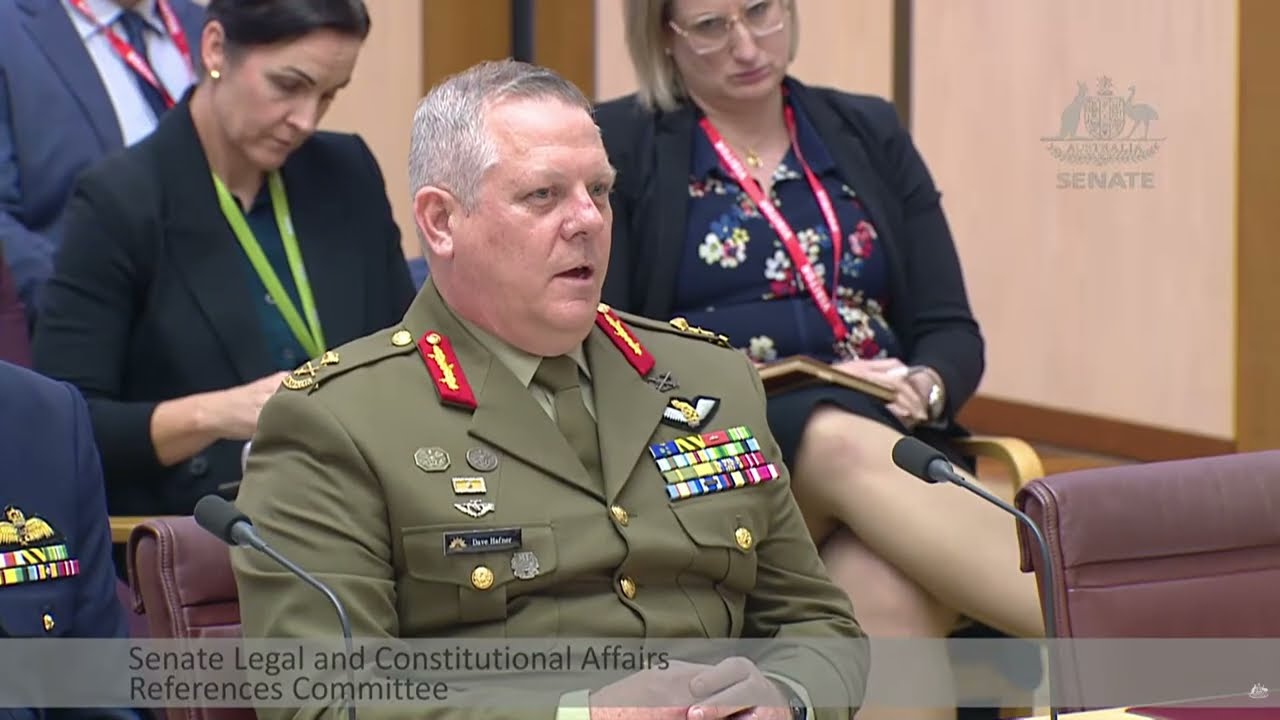
Dr Box: Yes, we can answer it now or we can take that on notice.
Senator ROBERTS: Thank you.






Leave a Reply
Want to join the discussion?Feel free to contribute!
Using your first name