

Once again, I am calling out Fair Work officials.
This time it is for the blatant contradiction between their own statements and the Ombudsman’s findings.
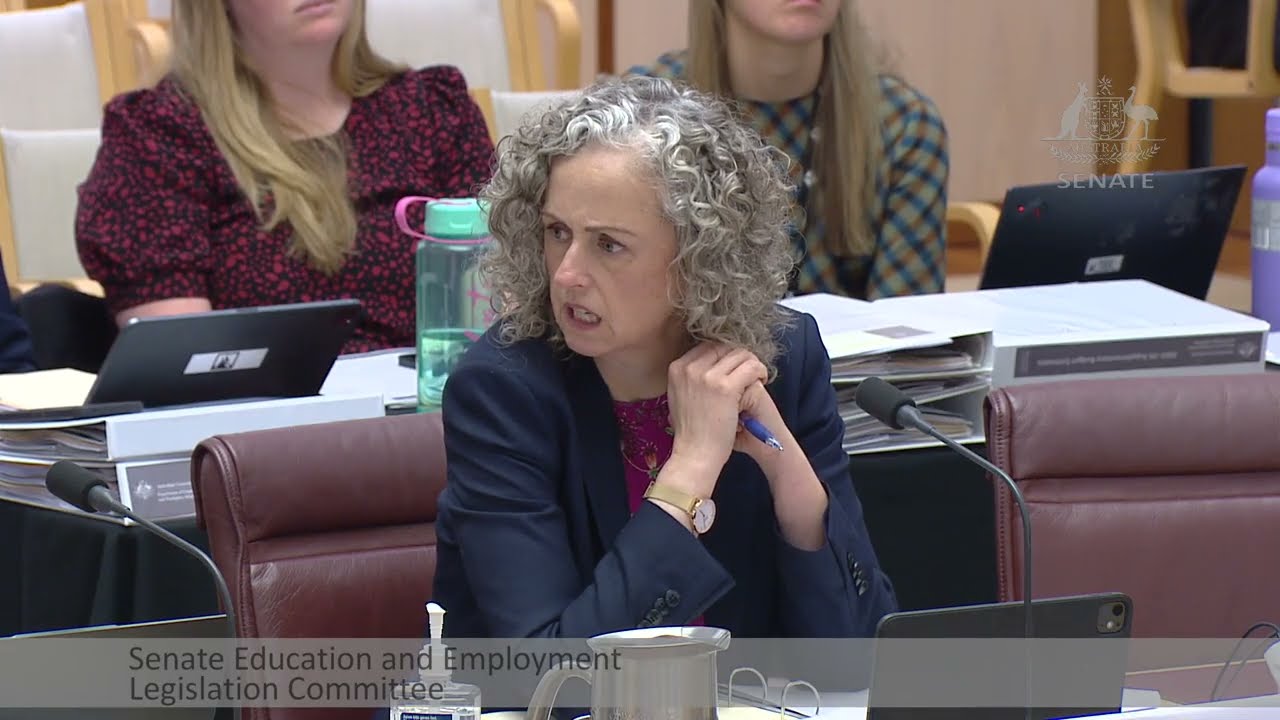
I pushed Mr Furlong to reaffirm that enterprise agreements cannot legally undercut award entitlements — then confronted him with written evidence from the Ombudsman claiming the exact opposite, that an enterprise agreement “overrides” the Black Coal Award.
I pressed further, pointing to the Penny Vickers case to show this pattern isn’t new. Unions and big businesses have used enterprise agreements to “legalise” underpayment before, and only whistleblowers exposed it.
Despite every attempt to deflect, the failure is undeniable. The Fair Work system has allowed wage theft before, it’s allowing it again, and regulators refuse to confront it.
I won’t let them hide behind the process.
Transcript
Senator ROBERTS: Thank you, Chair. Thank you, Mr Furlong, and your colleagues for being here and minister.
Senator Watt: It’s great to see you again, Senator Roberts.
Senator ROBERTS: Same here, Minister Watt.
Senator Watt: We spent a lot of time together last week.
Senator ROBERTS: Mr Furlong, on 9 November 2022, I asked you a question in Senate estimates, specifically:
Can an enterprise agreement remove the entitlements that the Fair Work Act and the National Employment Standards provide employees?
You replied simply, ‘No.’ Clear. So you recall this? Now you are aware, I believe, that the Fair Work Ombudsman has been investigating allegations of the underpayment of coal workers where the enterprise agreements have underpaid in comparison to the black coal industry award. Are you aware of that?
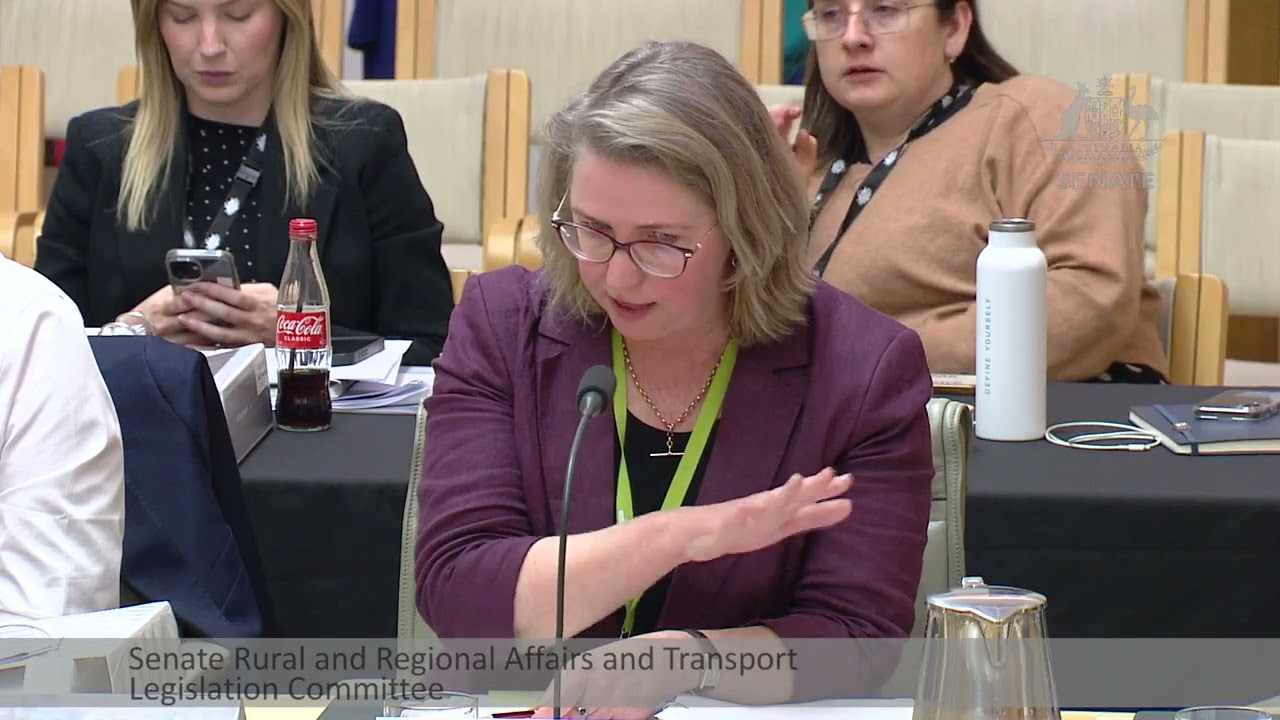
Mr Furlong: I am broadly aware that they were conducting an operation in relation to that, yes.
Senator ROBERTS: I’m not asking to put you on the spot for the verdict.
Mr Furlong: Very broadly, I understand it.
Senator ROBERTS: You are aware. You answered. The ombudsman has recently completed a number of investigations. I will quote from one of those investigations where the ombudsman has stated in writing to the coal worker who lodged the complaint: ‘As the Fair Work Ombudsman has determined that’—the named person’s—’terms and conditions are governed by the’—named labour hire enterprise agreement—’we do not consider that the Black Coal Mining Industry Award 2010 applied’—to the named person’s employment. ‘Consequently’—the named person’s—’wages and entitlements during the relevant period should not be derived from the award but from’—the named labour hire enterprise agreement. Would you agree that on the surface and to an everyday person the Fair Work Ombudsman’s statement that an enterprise agreement overrides the award seems to be in contradiction to your statement that the fair work requirements—in this case, the award—override the EA?
Mr Furlong: I think that they’re actually perfectly consistent. An award will persist unless there is an enterprise agreement that is in place for a workplace. But an enterprise agreement, in terms of the minimum hourly rate of pay, can’t be less than what is stipulated in the underpinning modern award.
Senator ROBERTS: Thank you. That’s what I was looking for. Are you aware of the SDA case involving Penny Vickers?
Mr Furlong: It’s been such a long time since I’ve looked at that case.
Senator ROBERTS: Let me refresh your memory. In 2016, Penny Vickers, a shelf-filler at the giant supermarket chain Coles, exposed huge underpayments of Coles workers. The underpayments occurred because the union, the Shop, Distributive and Allied Employees’ Association, had signed an enterprise bargaining agreement with Coles that ‘legalised’ the underpayment. The independent umpire, the Fair Work Commission, had authorised the agreement which gave it legal cover. Are you aware of that?
Mr Furlong: Yes, I’m aware of the circumstances broadly.
Senator ROBERTS: The union and big business did a deal. The deal enabled Coles to pay workers less than they should have been paid when they worked on weekends. Penny Vickers took on the union and big business giants and successfully had the underpayment deal overturned in the Fair Work Commission. Are you aware of that?
Mr Furlong: Yes, I am.
Senator ROBERTS: And it was not just Coles. I initially thought it had been just Coles. It was not just Coles that had been in on the union deal. Other huge retailers were also in on the deal, including Woolworths, Bunnings, Target, Kmart, Big W and others. Are you aware of that?
Mr Furlong: No. I’m interested to know—and Mr Corcoran might be able to assist you with this—if the application that was brought to the commission was post the nominal expiry date. Mr Corcoran, can you remember the circumstances of the case?
Mr Corcoran: Not completely, but I think it might have been within the nominal expiry date of the agreement.
Senator ROBERTS: Media reports suggest that, by themselves, just three of these big businesses were underpaying workers by around $150 million a year back in 2016. Are you aware this is extreme wage theft well beyond payroll errors?
Mr Furlong: It’s been such a long time since I’ve looked at that or reviewed that decision. I don’t feel like I can reasonably respond to these questions without going back and reading the decision closely.
Senator ROBERTS: This was, of course, a huge scandal that sent shock waves through the retail sector in particular—I can remember it was in the papers once it got exposed—and forced the rewriting of retail enterprise agreements almost across the board. Yet, if it hadn’t been for the tenacity and persistence of one person, Penny Vickers, and of the media, including, I believe, Judith Sloan and Rob Gottliebsen, the underpayments would never have been exposed. Mr Furlong, I put it to you that the Fair Work Act has failed. Doesn’t it need to be replaced with a system that protects workers, protects small businesses and protects the primacy of the employer-
employee relationship instead of protecting the IR club at the cost and harm of workers and the cost and harm of small businesses?
Mr Furlong: As you’re aware, Senator, my role doesn’t extend to matters of policy. Those questions should be addressed to the department in the normal course of things.
Senator Watt: Senator Roberts, I caught the tail end of your question. I’m happy to have a go at answering it if you’d like to put it to me again.
Senator ROBERTS: The Fair Work Act has failed. It’s been needlessly complex over many, many years. It’s not understood by workers. It’s not understood by small business. It’s not understood by many employers without a lawyer. Doesn’t it need to be replaced with a system that protects workers, protects small businesses and protects the primacy of the employer-employee relationship instead of protecting the IR club at the cost and harm of workers and of small businesses?
Senator Watt: I, of course, have a different view about the Fair Work Act, especially after the reforms that our government has undertaken. It’s very clear that, due to the reforms our government has put in place to the Fair Work Act, wages are rising, more agreements are being reached between workers and their employers and industrial action is lower than it was under the coalition. So, in a range of ways, I think that the Fair Work Act has been very successful for Australian workplaces. I know you and your colleagues from One Nation voted against those reforms. I did note, Senator Roberts, on the weekend, the interview with Senator Hanson, where she didn’t support an increase to the minimum wage. Is that a general One Nation position?
Senator ROBERTS: Workers are going backwards. The cost of living is rising faster than wages. Workers are going backwards under your government.
Senator Watt: Actually, I don’t know if you saw this, Senator Roberts, but just today the Fair Work Commission handed down its decision in the annual wage case, which granted a pay rise for the lowest paid workers in the community of 4.75 per cent, which is ahead of inflation. Senator Hanson on the weekend said that she didn’t support an increase to the minimum wage, so I presume that means One Nation doesn’t support that pay rise.
Senator ROBERTS: The Fair Work Commission has made its decision.
Senator Watt: But it sounds like your party didn’t support that.
Senator ROBERTS: Let’s move back to Mr Furlong. I’ve asked this question once. Having listened to me talk about Penny Vickers and the illegal enterprise agreement that was reversed, would you agree that, on the surface and to an everyday person, the Fair Work Ombudsman statement that I talked about, with the black coal mining industry award, that an enterprise agreement overrides the award seems to be in contradiction to your statement that the Fair Work requires, in this case, that the award override the enterprise agreement?
Mr Furlong: I haven’t seen the Fair Work Ombudsman correspondence that you’re referring to.
Senator ROBERTS: I read you quotes.
Mr Furlong: But I haven’t seen it. I haven’t had the chance to review it.
Senator ROBERTS: Would you undertake then, Mr Furlong, to make inquiries of the Fair Work Ombudsman as to why they have taken that view and whether the view is right or wrong and report back to me on this question on notice?
Mr Furlong: I’ll certainly take up the opportunity to read the correspondence, but, in terms of my role at the commission, I’m required to support the president in the efficient operation of the tribunal. I have two statutory roles. I can certainly look at it and read it, but I’m not too sure what statutory power I could rely on to actually make any sort of commentary around whether or not the provisions of the act have been complied with in these circumstances.
Senator ROBERTS: Thank you, Mr Furlong.
CHAIR: Are you ready for me to rotate?
Senator ROBERTS: Yes.
————————————————————————————————————————————
CHAIR: I’m going to go to Senator Roberts—to give you a moment to see if that’s possible. I’ll come back to you after that. Senator Roberts.
Senator ROBERTS: Mr Furlong, I’ve got a constituent who wants to ask you a question, so I’m going to ask it for them. You’ll probably have to take it on notice, because I don’t think you’ll know the answer off the top of your head, based on what you said earlier. Section 134(1) of the Fair Work Act provides:
FWA must ensure that modern awards, together with the National Employment Standards, provide a fair and relevant minimum safety net of terms and conditions …
The use of the term ‘must’ imposes a mandatory legal obligation on the commission. My question is: does the commission have the liberty to bypass, dilute or ignore this statutory duty?
Mr Furlong: I’m happy to provide a detailed response on notice. We—
Senator ROBERTS: Thank you.





🙏
This is the same as the job providers handing out the student start-up loan and the trade support loan all we are earning is a BILL