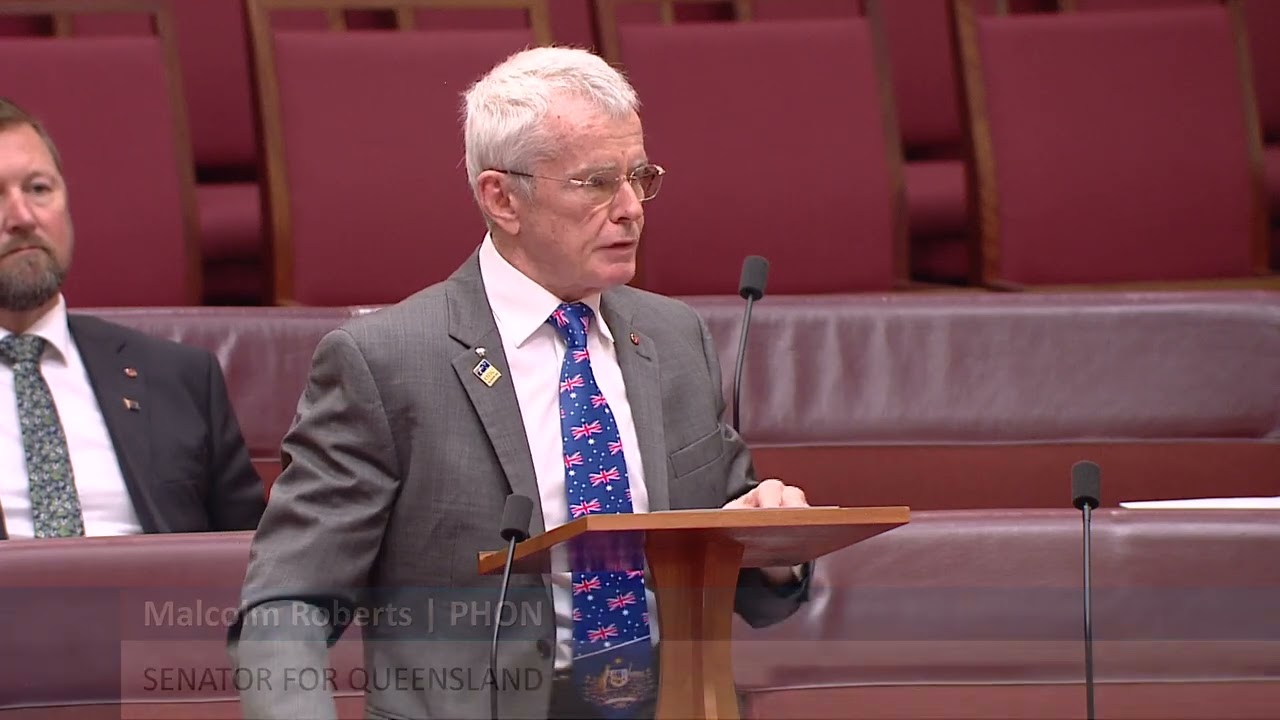
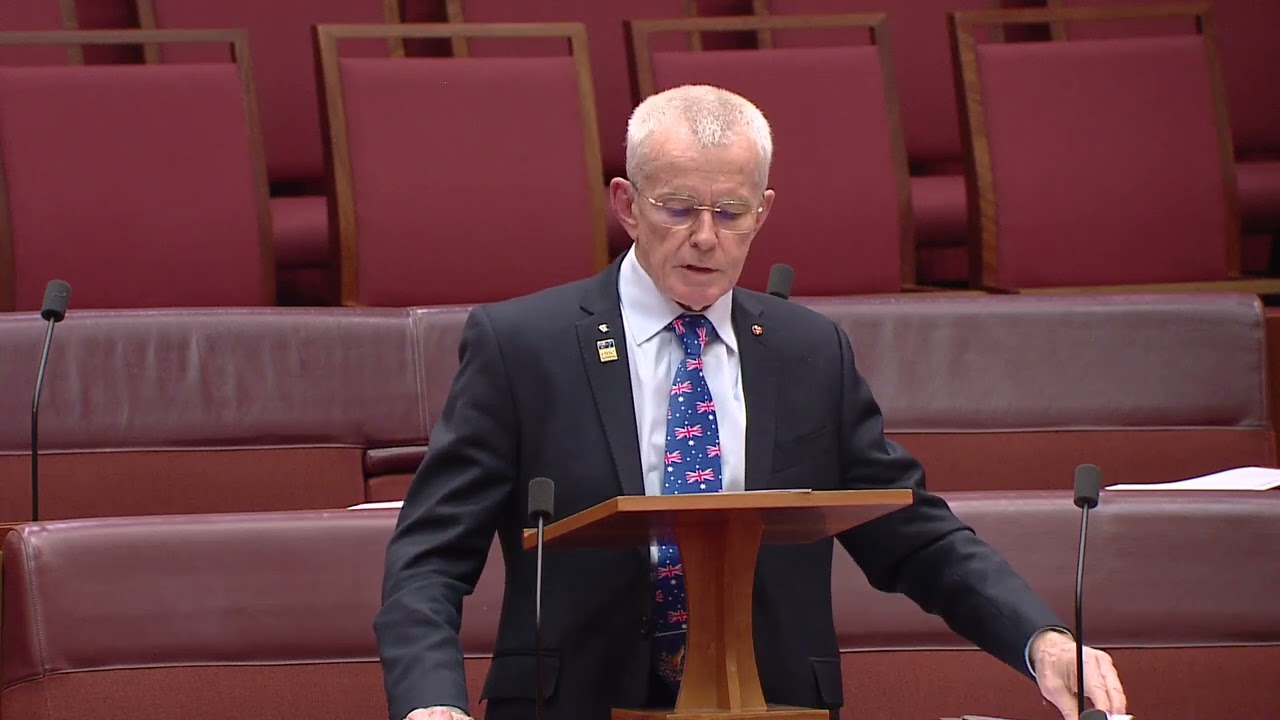
During this Estimates session with the Clean Energy Regulator (CER), I questioned them on the government’s setup with the Clean Energy Council (CEC). The CEC is a private lobby group, yet they appear to act as the “gatekeeper” as to which solar panels can be sold under the renewable energy schemes.
WHY has a private industry group, which exists to advocate for its members’ commercial interests, been given the power to decide which products qualify for government incentives?
I was told the Clean Energy Council (CEC) was originally “named” in the legislation effectively as a co-regulator and have been “tested” against competitors. The Regulator admitted that they worked back-and-forth with the CEC to help their application meet the required standards.
I asked if this process was open and transparent to the public. Their response? Happy to take it on notice and of course, they used the “commercial-in-confidence” excuses.
When questioned on how they manage any bias, the Regulator pointed to “regular cadences of meetings” and “reporting.” To me, this sounds like a “soft” approach to overseeing a group that serves its own members.
The Regulator claims they now have “greater control” and that the CEC is merely a “service provider,” however the reality is that a private lobby group still appears to hold a lot of sway. They are monitoring themselves through an action plan and reporting back to the government.
I am deeply concerned about the conflict of interest here. How can a lobbying body be impartial?
Australian taxpayers should not be sold out by a system where the foxes are guarding the henhouse.
Transcript
Senator ROBERTS: Thank you for appearing again. Why did the Clean Energy Regulator appoint the Clean Energy Council, a private industry lobby group, as the product listing body for solar panels and inverters under the Small-scale Renewable Energy Scheme?
Mr Parker: Thank you, Senator. I well understand the question. I will flip the question to Mr Williamson in a minute, lest he not get asked a question today, which would be unfortunate in his final appearance! The appointment of the CEC was done through a process under the law which involved a competitive bidding arrangement, and CEC won that process.
Senator ROBERTS: Were government ministers involved at the time?
Mr Parker: Ministers set the legal framework. I don’t think it was actually a decision from [inaudible]. We’ll give it to Mark.
Mr Williamson: Senator, to help you with the context, originally in the legislation, the Clean Energy Council had been nominated as the body both to accredit installers and also to list approved components. In the original regulations, they were named, and they were effectively a co-regulator. Minister Taylor, a number of years ago, asked us to do a review with the department of the integrity of the Small-scale Renewable Energy Scheme. Out of that review, there was a recommendation that it be competitively tested, as Mr Parker says, for both the accrediting of installers and the listing of components. We went through a process of going to the market. The Clean Energy Council did not put in an application to continue being the accreditation body, and a new accreditation body was nominated out of that process. As Mr Parker says, for the listing of components, there were a small number of applications, and the Clean Energy Council was determined to be the best of those. The new system, though, is—we have greater control of both the accreditation body and the listing process. They were a co-regulator in the past. Now they are providing a service that we’ve nominated them to do.
Senator ROBERTS: They provide a service to you?
Mr Williamson: Yes. We’re the regulator now. We’re the single regulator, so that co-regulatory model that existed before went with that process. Solar Accreditation Australia, SAA, is the accreditation body, and that has nothing to do with the Clean Energy Council. The CEC is, in fact, still the listing body, but they’re doing that for us, as is SAA for the accreditation of installers.
Senator ROBERTS: What probity checks were undertaken before granting this role to an organisation that actively advocates for its members’ commercial interest?
Mr Williamson: There was an extensive process, and I can pass to Mr Binning, who was involved in that. There was a very lengthy process where a lot of questions were asked of the small number of bodies that applied. Mr Binning was actually the decision-maker, and he did not make that decision until we had done a range of checks of the applications and asked a lot of questions and made a lot of requests for further information. I might throw to you, Carl, to add anything else to that.
Senator ROBERTS: Before you elaborate, what was your role at the time? Who was your employer?
Mr Binning: The Clean Energy Regulator. I was the delegate for the final decision. As I recall, it was a very thorough process run through our procurement. There was probity advice along the way. A preliminary decision was made. Under the act, we were required to publish that decision. A range of submissions were made in relation to the proposed decision. Those comments were than taken into account, and a final decision was made against the criteria that were established for the process.
Senator ROBERTS: That’s fairly loose, but it was a long time ago. How does the Clean Energy Regulator manage the inherent conflict of interest in allowing an industry lobby group to control product eligibility for government incentives?
Mr Binning: We do that through the ongoing governance of our arrangements. We have a regular cadence of meetings and reporting to us. In that reporting, what we’ve really sought to do over the last 18 months—there are two issues that really run intention through that product-listing process, if you like. On the one hand, we are looking for those assessments to of course be comprehensive and rigorous, and that requires that new products, as they come into the country, are compliant with the standards that have been established for those products, whether it is solar panels, inverters, batteries, solar water heaters et cetera. Most of the feedback we got from industry was associated with long wait times for the processing of applications. We’ve had less concerns, relatively speaking, with the rigour of the process and greater concerns with ensuring that the assessments are processed in a prompt and efficient manner. We’ve been working quite closely with the CEC to ensure that there is no compromising of the integrity of the process but that their ability to process applications has been improved.
Senator ROBERTS: Is the process open to inspection from the public?
Mr Binning: I’d have to take the detail of that on notice. I wouldn’t say there’s anything that overtly precludes that, but there would be the usual commercial in confidence and those sorts of arrangements. I’m happy to take it on notice and provide advice.
Senator ROBERTS: I’d appreciate that, and if you could provide the specifics around that on notice. Has the Clean Energy Regulator assessed whether this arrangement complies with Commonwealth probity standards for regulatory functions? I assume there are some.
Mr Binning: As I said, we have a procurement team at the Clean Energy Regulator. They closely observe the process, and the decisions were made consistent with the requirements that are set out in the act. If my recollection is correct—and I think it is—this process is largely governed by the requirements that are set out in the regulations and in the act. Mr Williamson can probably add to this.
Mr Williamson: The government and the minister at the time wanted to work within amendments within regulations.
Senator ROBERTS: That was Mr Taylor.
Mr Williamson: Correct. To work within the regulations and amend the regulations to give effect—and not to have to go back and amend the act—limited the way in which this could be set up. It wasn’t set up strictly as a procurement but rather as a nomination that required us to go through a set of statutory steps to go out to the market on a number of occasions. Then, as Mr Binning said, with decisions both on the product listing and the accreditation of installers, we had to say that this was our proposed decision and invite further comments. It was a statutory nomination process, but we did actually follow Commonwealth procurement and probity arrangements.
While it wasn’t strictly a procurement, we did follow such arrangements in arriving at the decision on the nomination process. It took a very long time. The reason it took a long time was to make sure that the applicants were bringing their applications up to a standard where we could make a decision and get a body for each process over the line. It wasn’t fast because those initial applications weren’t adequate to make a nomination. There was a very iterative process with those who applied to make sure that, ultimately, they had put in a satisfactory bid where Mr Binning could make a decision and say, ‘That passes muster.’
Senator ROBERTS: What governance framework exists to ensure that decisions made by the Clean Energy Council in its regulatory capacity are impartial and not influenced by its lobbying activities?
Mr Binning: As I indicated, after awarding the role to the Clean Energy Council, an action plan around the service that they are providing has been established. There is a regular reporting arrangement which ensures, as I said, that they’re meeting the various performance targets that have been established.
Senator ROBERTS: Does the Clean Energy Regulator audit or review the CEC’s product listing decisions? If so, how frequently and what were the findings? Or do you just have meetings?
Mr Binning: I would say that we certainly closely scrutinise their performance under the requirements of the agreement that we have in place with them. In addition, we closely observe, monitor and interact with the Clean Energy Council around issues that arise or any industry intelligence that we receive. We will regularly be in contact with the CEC team to check and verify the processes that they are undertaking.
Mr Williamson: I can add to that. We have also taken samples ourselves. Through separate arrangements with others, we’ve arranged to actually grab samples of products that have been listed and get them tested ourselves. That was both pre and post the nomination of the Clean Energy Council.
Senator ROBERTS: That still happens.
Mr Williamson: I believe that happens in batches every now and again. There are limits to the funds we have for this, but we have sampled it because some have claimed that companies may have had a golden sample taken and production runs may subsequently be of a lower quality. We have done that, and, as part of the listing process, the CEC also does more real world sampling.
Senator ROBERTS: Thank you.