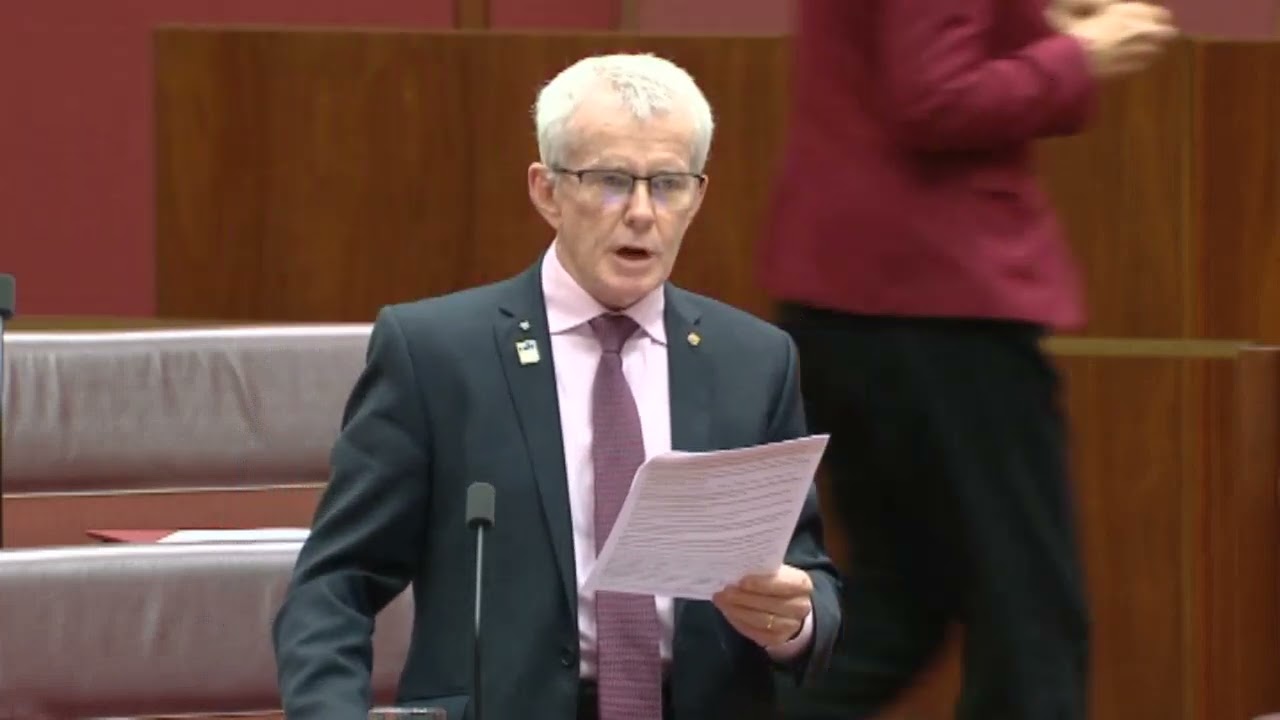
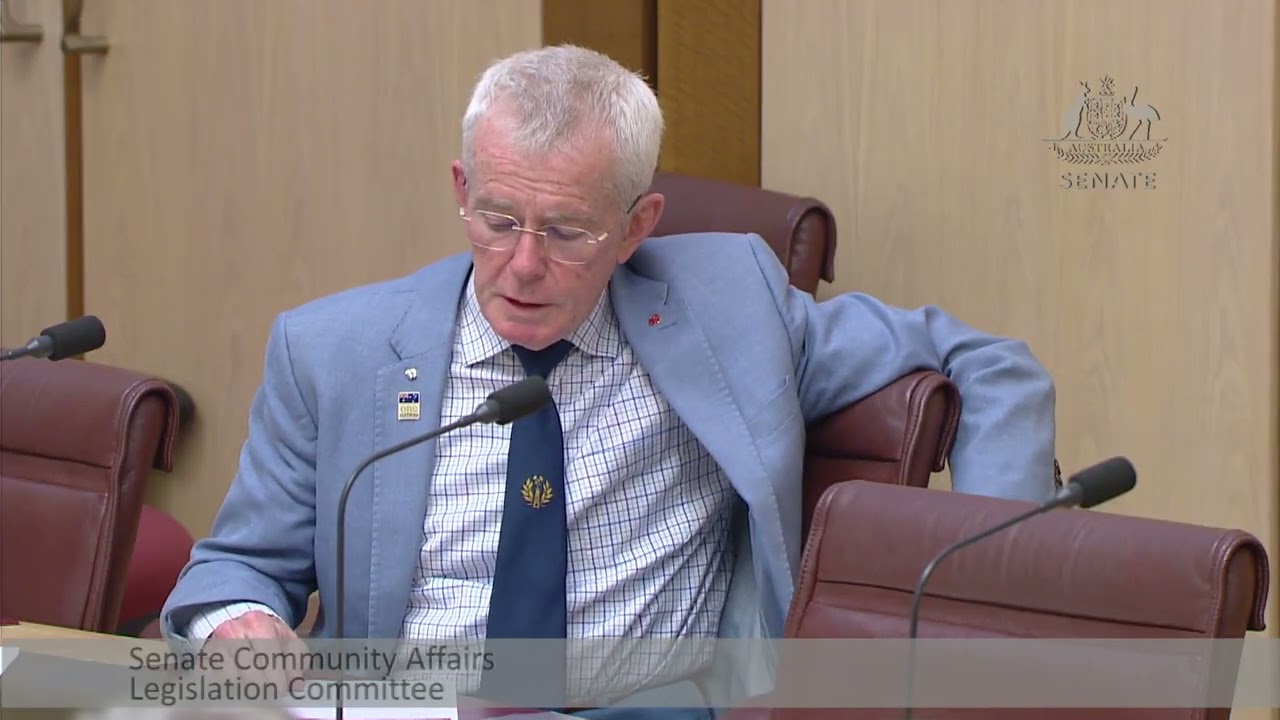
During this estimates session with the Administrative Review Tribunal (ART), I asked questions regarding the scale of visa appeals they are reviewing – and it’s worse than expected.
Migration cases now make up 56% of the entire tribunal workload, with student visas alone accounting for 35%. The backlog is astonishing.
77,938 migration cases, 52,452 student visa cases, and 130,983 cases overall waiting for hearing. Protection visas add another 37,830, and even NDIS reviews are climbing.
The tribunal admitted its receiving around 90,000 applications a year, but is only funded to finalise 60,000, meaning the backlog grows by 30,000 every year.
When asked when this backlog is expected to be cleared, the answer was blunt and honest. On present numbers, they have no reasonable expectation.
The tribunal is drowning. A system meant for genuine review is being overloaded, under-funded and pushed beyond capacity, while taxpayers foot the bill for backlog that grows every single day.
Much of the fault lies with Australian universities, who aggressively market their degrees by promising students a fast track to permanent residency. This is often done through third-party brokers employed by the universities.
How long will the Government let the Tribunal drown before doing its job and and fixing this mess?
Transcript
Senator ROBERTS: I may have heard, on the tail end of what Senator Cash was saying, you going through some categories, so, if I do, forgive me for repeating them. Which is the largest category of applications for review currently before the tribunal? I think you said it’s student visas.
Mr Hawkins: Yes. It’s in the migration case load. I hope you’re going to be wearing a maroon tie tomorrow!
Senator ROBERTS: State of Origin.
Senator CASH: I’ll even agree with that, as a Western Australian!
Senator ROBERTS: I’m supporting coal today!
Mr Hawkins: The highest case load is migration and the student visas within that.
Senator ROBERTS: What would be the proportion of migration and then the proportion of that that’s students?
Mr Hawkins: If I can say, migration is 56 per cent of our total case load. Within that, students represent 35 per cent of our total case load.
Senator ROBERTS: How many of these applications are waiting for hearing?
Mr Hawkins: Waiting for hearing, which is cases on hand—in migration we have 77,938 on hand. We have 52,452 student visas on hand. Across the total tribunal we have 130,983.
Senator ROBERTS: Wow. No wonder you’re ‘aware’. What are the other major categories for review before the tribunal?
Mr Hawkins: Our biggest case loads are working, skilled and investment visas. We have 13,983 on hand. For protection, we have 37,830, which is 29 per cent of our on-hand case load. For NDIS we have 7,136, which represents five per cent of our case load.
Senator ROBERTS: Although that’s only five per cent, I heard you say that you’re worried about that because of the potential for growth.
Mr Hawkins: Only from the sense of the media talk of what reforms are going to happen. As there’s nothing legislated, I can’t comment any further. As I said to Senator Cash, I’m alert but not alarmed.
Senator ROBERTS: Could I get, on notice, a breakdown of all the categories and their numbers?
Mr Hawkins: Of each list that we have?
Senator ROBERTS: Yes.
Mr Hawkins: I can do that for you.
Senator ROBERTS: Thank you. You’ve given me the total. This question could be difficult: When do you envisage this backlog will be reduced to an acceptable managed workload? What is a well-managed workload?
Mr Hawkins: I guess a manageable case load is what we are funded to achieve. If it’s 100 per cent case load that we want to achieve, we need to have 100 per cent funding. As I explained to Senator Cash before, an issue we have with our funding is that we do actually have a cap in it, which is based on our ability to accommodate members to be able to do that work. At the moment our cap is 345 FTE of members, which is equivalent to about 60,000 finalisations, but we’re receiving about 90,000.
Senator ROBERTS: There are 90,000 coming in, so you’re going backwards 30,000.
Senator CASH: Every year?
Mr Hawkins: Yes.
Senator ROBERTS: What’s the reason for that?
Mr Hawkins: Because we have a cap on our ability to accommodate members at the moment. As I also explained to Senator Cash, some of the initiatives that the Senate has been able to give us, such as being able to do student visas as a decision on the paper, will give us some flexibility as to how we accommodate our members. We might be able to have a number of members being able to do those types of cases from home because there’s no hearing involved. We have an initiative that every member in the tribunal will do 10 per cent of their case load as a student visa. So we’re trying to make inroads in that way as well.
Senator ROBERTS: When do you expect the backlog to be cleared?
Mr Hawkins: On present numbers, I don’t. I cannot have a reasonable expectation.
Senator ROBERTS: Minister, any comments to add?
Senator Green: Is there a question, Senator?
Senator ROBERTS: Yes. The tribunal are saying that they’ve got a workload that is increasing, not decreasing.
Senator Green: I think, as Mr Hawkins alluded to in the comments he made, probably before you entered the room—apologies, Senator Roberts—it’s a demand driven funding model. We’re currently considering applications for additional members because we do acknowledge that more members definitely are required. Applications have been received for additional deputy president and senior member recruitment rounds, and the department can take you through the process for those rounds. As Mr Hawkins has alluded to, the Senate has also made some changes to the way that student visas are being considered so they can be considered on the papers, and there are regulations that are imminent to allow that to happen.
Senator ROBERTS: How many members of the tribunal are there?
Mr Hawkins: We will have 423 members as at 1 July, representing 347.5 FTE.
Senator ROBERTS: So you’ll be able to tell us more at supplementary estimates in November?
Mr Hawkins: I certainly will.
Senator ROBERTS: So it’s early days. Is there any way of getting a handle on the cost of each review to the taxpayer?
Mr Hawkins: It’s a very complex formula because every matter is different. For example, a social security matter might take a day; a complex tax matter could take two weeks. So it’s very difficult to determine a cost per decision. We could calculate it on an average basis across each decision, and I could share with you a unit cost which shows that this tribunal today is more efficient than it’s ever been.
Senator ROBERTS: Would you do that, please?
Mr Hawkins: Let me just find the appropriate note. This is allowing for CPI adjustment and a weighted cost per unit. In 2025-26, year to date, our unit cost is $2,250.88.
Senator ROBERTS: That’s for a hearing?
Mr Hawkins: Yes. To give you an indication, in 2020-21 it was $3,053, and in 2015-16 it was $2,769.
Senator ROBERTS: So it’s coming down?
Mr Hawkins: Yes. Where we have to be most efficient is, again, in that funding model, because we are receiving 91,000 applications a year, but we can’t just do the 60,000 that we’re funded for. At the front end we still have to deal with the 90,000 in some way. There are case management events that take place. There’s outreach with those 90,000 cases. Also, it’s very difficult to calculate unit costs because unit costs might be based on a finalisation, but in fact we’re touching matters, all matters, that come in our front door. Of those 130,000 matters that I mentioned before, there are touchpoints all through that process that we can’t account for until it’s a finalisation, so it’s a very complex calculation.
Senator ROBERTS: Minister, I won’t ask the tribunal for an opinion but I’ll ask you: is there any work on alternative systems and processes? I’m not suggesting we should do that, but it sounds pretty overwhelming.
Senator Green: I think we’ve taken you through some of the steps that we’re implementing to assist the tribunal with its work. Obviously, merits review is a really important part of responsible and accountable government. Applications that are made, as you know, are made when an applicant disagrees with a reviewable decision; for example, when the government denies someone a visa—or a student visa, in this example. We’re looking at all of the different ways that we can reduce the workload but also provide the tribunal with the resources that they need to be able to make these decisions.
Mr Hawkins: You yourself, Senator, have been facilitating that through the Senate with the reforms that you’ve given us; for example, the decision on the papers. I mentioned before that the parliament has given the president powers to authorise registrars to handle matters more expeditiously. I think Senator Cash before was alluding to what more we can ask for, and perhaps there is space in the decision on the papers area for us to consider into the future, but at the moment we’re going to master the powers that we have.
Senator ROBERTS: So we should know more by the November supplementary estimates. Is this process of using the Administrative Review Tribunal for appeals being exploited by those wishing to stay in Australia who have no right to be here?
Mr Hawkins: That’s not a matter for me to answer.
Senator ROBERTS: Minister?
Senator Green: There are a range of cases and reasons why people make applications. I’ll take that as a comment from you, Senator, rather than a question to me.