

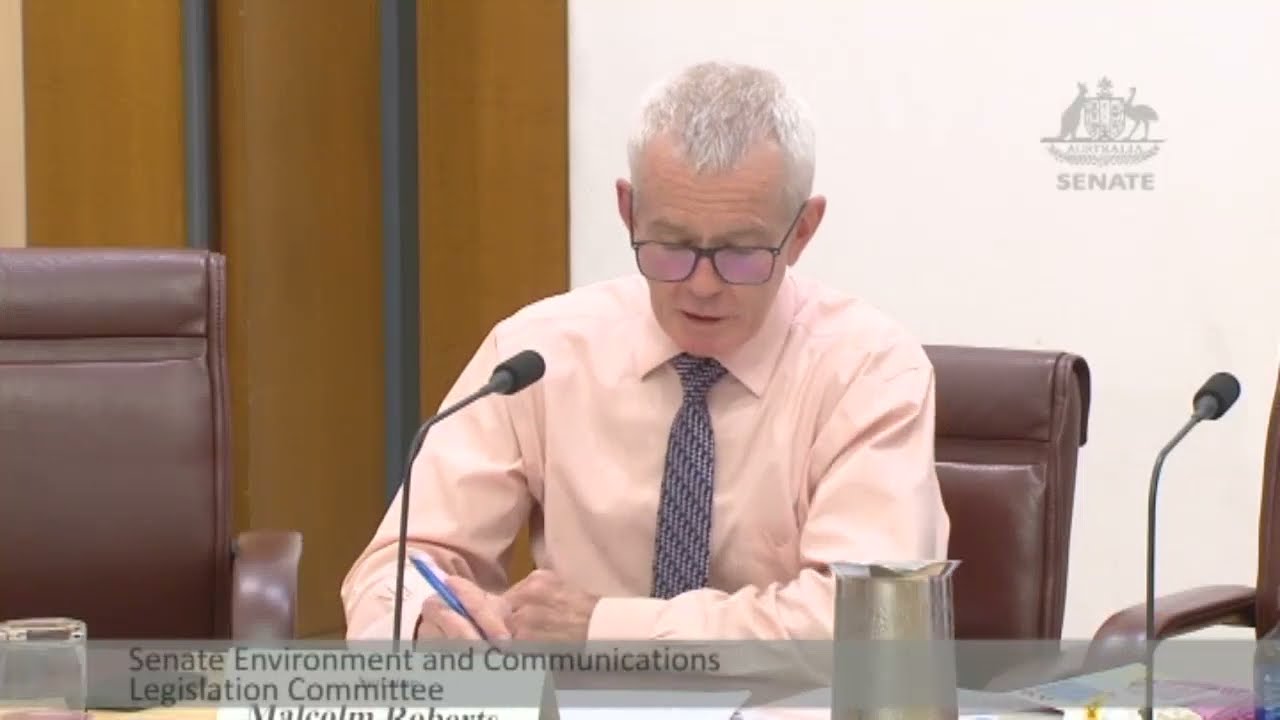
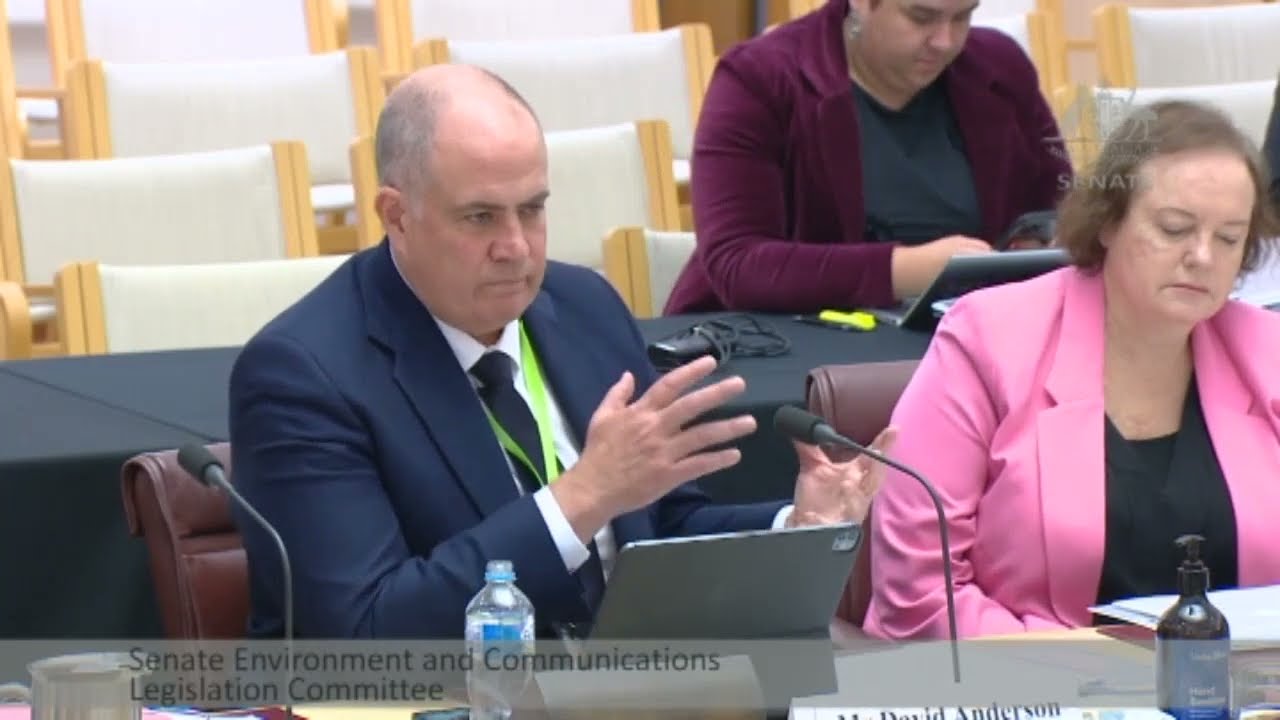
This is my exchange with ABC representatives and Minister Green regarding bias, accuracy, and fairness.
I raised a podcast appearance by the ABC Chair where he criticised One Nation’s approach to choosing which journalists and media outlets we engage with, labelling it “undemocratic” and a “dark and dangerous place,” noting that this pejorative phrasing has uniquely targeted my party.
I pointed out that politicians across all parties routinely give interviews to trusted journalists and use written statements or text messages for others, to prevent their words from being manipulated. I questioned why One Nation exercising this standard discretion is treated as uniquely improper.
I confronted officials over biased and insulting commentary from prominent ABC commentators such as Patricia Karvelas implying One Nation is an “illegitimate” political force and guest panellist Niki Savva labelling our party as fundamentally “racist and bigoted” – without any pushback from the taxpayer funded network.
The mainstream media is increasingly being seen by the public as partisan mouthpieces. Why should taxpayers continue to fund a $1.3 billion public broadcaster in an era of abundant independent digital media?
A One Nation government will strip the ABC of public taxpayer funding for its broader operations, pushing it into a subscription-only or commercially funded broadcaster where it’s supported only by those who choose to watch or use it. This does not include regional and rural areas, as local and regional radio provides an essential service to people in these locations.
Transcript
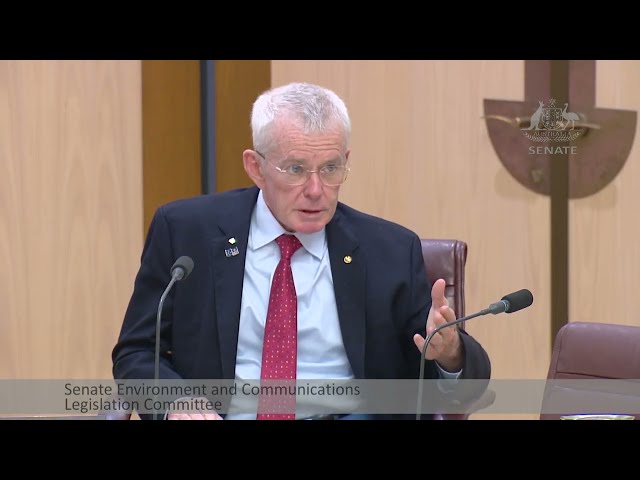
Senator ROBERTS: This is a slightly long question, although it is important to be accurate as the public’s perception of ABC independence or bias is central to your role as a public broadcaster. Mr Williams, the Chair, on the Poll Position podcast around 23 May this year was asked about an incident when ABC employees were removed from a press conference in the Farrer electorate and a separate incident in South Australia where a staff member continued to shout questions at Senator Hanson after the press conference was over. Your reporter was asked to shut up, for which the party apologised and the staffer involved apologised. The interviewer’s question to Mr Williams included the statement that One Nation were picking and choosing who we let attend our press conferences, calling it pretty undemocratic. Mr Williams’s response was: Well, I would endorse that view—that it’s undemocratic— I think if you’re going to choose who you talk to and who you don’t talk to, you’re in a dark and dangerous place in democracy. And I think politicians are accountable to the people and they don’t get to pick who’s going to question them. Mr Marks, can we agree that this is an accurate summary so we can move on to the questions?
Mr Marks: I think you referenced a journalist who was told to shut up. I’m not aware that was our journalist.
Senator ROBERTS: No.
Mr Marks: Sorry, I thought you said it was an ABC journalist.
Senator ROBERTS: That’s what I thought. Sorry.
Mr Marks: No, it wasn’t an ABC journalist. I’m sorry; it was my understanding.
Mr Fang: I don’t believe it was either.
Senator ROBERTS: My apologies for that mistake, but I’m getting to the key question, which is Mr Williams’s response.
Mr Marks: I think Mr Williams’s response refers to the importance in a democratic society of informing the audience. The audience must come first. In doing so it’s important that all parties of prominence and otherwise as well—people who have an impact in our political system—are able to bring views, opinions and statements from those parties to the public. We operate on the basis that the public must come first. To the extent that our people who turn up to do the job are deprived of their ability to inform the public, I think that can be a problem. That’s something that we need to keep investing in, the importance of making sure that the public are informed about everything that has to do with what happens in this place.
Senator ROBERTS: Your budget is around $1.3 billion. What’s the exact number?
Mr Marks: Here’s an answer for Ms Kleyn.
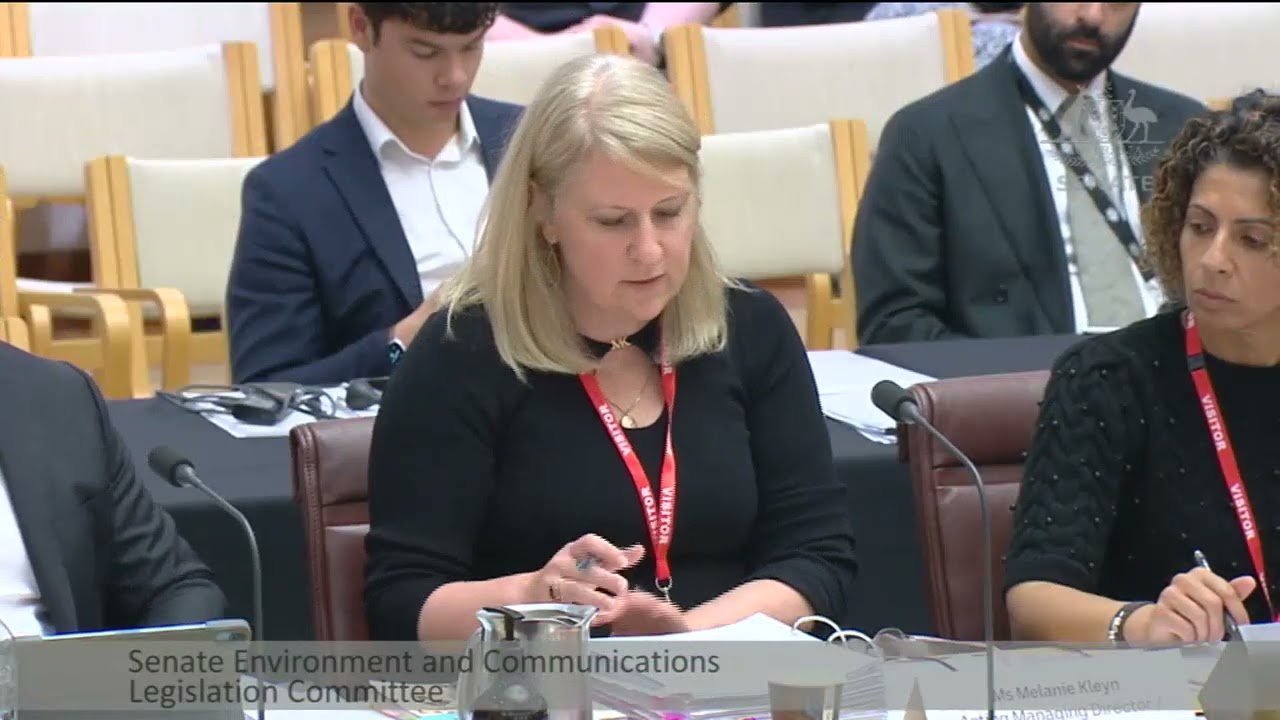
Ms Kleyn: Yes, that’s correct. The exact number in FY26 is $1.229 billion.
Senator ROBERTS: Value and accuracy—you left out the word ‘accurate’ public interactions?
Mr Marks: Sorry. Accuracy comes first. Accuracy goes to impartiality. Accuracy is the most important standard that we operate by.
Senator ROBERTS: We’re agreed—good. My questions go to value, accuracy and compliance with the ABC Charter. Every day in this place politicians give interviews to journalists they trust and emailed press statements or text messages to those they don’t trust to prevent their words being manipulated. Isn’t it true that One Nation’s actions are about lack of trust in the quality, accuracy and motivation of ABC reporting, a discretion we’re entitled to exercise and is exercised every day in this place by all parties?
Mr Marks: I won’t comment as to the motivations behind any One Nation action. That’s obviously a matter for you and your colleagues.
Senator ROBERTS: I can tell you we think we’re getting reported in a very biased way.
Mr Marks: We have an obligation, as you say, to report matters accurately and we have an obligation to report matters impartially. If anyone has a concern about our performance on those metrics, we are more than happy to have a conversation about that. In fact, I am endeavouring to do that, without much success, at the moment. That also comes with the expectation that policies, people et cetera should be subject to scrutiny. That is the journalistic process. Yes, we have to report accurately and we have to impartially, but also the notion that people should be subject to scrutiny and questions when performing all of the functions that happen in this place, I think, is a really important principle that goes along with that.
Senator ROBERTS: I would agree. Minister, isn’t it true that in this place parties give interviews to journalists they trust and send written statements to journalists they don’t trust?
Senator Green
: It’s not really a question for ABC estimates, but I’ll answer it for you to assist you. Members of both parties of government give interviews to a range of news outlets and they invite a range of news outlets to their press conferences because that public scrutiny is important, particularly if you are promoting yourself as a party that not only has policies that could be formed in government. What we are now seeing is that your party has a primary vote that means you may now be the new opposition. It’s important that every member of parliament is scrutinised by news outlets, whoever they may be. I’m not going to pass a judgement on which news outlets are more trusted or least trusted. I think the judgement of Australians is that, when you turn up to this place and you’re asked a question, you should answer it.
Senator ROBERTS: What about the judgement from Mr Williams when he said that, if you’re going to choose who you talk to, you’re in a dark and dangerous place?
Senator Green: I’m not going to comment for the Chair. I think that’s a question for Mr Marks.
Senator ROBERTS: Doesn’t the fact, Mr Marks—
Senator Green: Are you in a dark and dangerous place?
Senator ROBERTS: No, I’m not.
Senator Green: There we go.
Mr Marks: I think the answer to that question is what I referred to earlier, which is that it is very important that we perform our role accurately and impartially, but with due inquiry, due inquisition and due curiosity in everybody who operates in this environment to ensure that we are informing the public of the things that are important to them and relevant to them and the things that are of interest to them. I have no doubt at the moment with the way that the political landscape is forming that things that are happening within your party are of interest to Australians, and it is important as the ABC that we’re able to inform them, and it’s important that we’re able to engage with your party on the basis that we’re able to serve the public. I think that’s a very important function for us to fulfil.
Senator ROBERTS: The public want fair engagement and impartial engagement. Doesn’t the fact that Mr Williams highlighted us doing that, in terms of responding verbally to interviewers we trust and responding in text messages to interviewers we don’t, without mentioning that other parties do that as well show that he is biased against One Nation? He tried to say we are the only ones doing it; that’s the clear implication of that leading to a dark place for democracy.
Mr Marks: You’re referring to a podcast that I haven’t seen, so it’s difficult for me. I can only talk about the quotes that you’ve referenced and the quotes I’ve seen in the press, and I can’t talk to Mr Williams’s motivations in that particular podcast. All we can talk to is facts, and the facts are the ABC currently is the most trusted media organisation in the country, according to the public. We have strong editorial principles and practices that are very important that we operate; I agree with you on that. We have the most robust complaints handling process that’s available in the media in this market that’s available to people who view they’re not being treated fairly in that process. We can always do better; there is no doubt about that, and that is our constant aim. The principle of informing the public and being very vigilant in doing that is the most important principle we abide by. I think not being able to engage fully with all political parties in that process inhibits our ability to do that effectively and I think that is a problem.
Senator ROBERTS: Again you missed the word ‘accurate’—to inform people accurately. A search of Mr Williams’s media statements shows he has not used the phrase ‘dark and dangerous place’ in previous media comments around any other party, just One Nation. How is using a pejorative like that in keeping with your need to maintain a perception of independence and accuracy?
Mr Marks: Again, I can’t comment on Mr Williams’s motivations. I know he is a passionate advocate of democracy and I know he’s a passionate advocate of informed democracy. I know he’s a passionate advocate for accuracy and impartiality. Maybe he gets some of the words wrong, but they are his motivations, which I think we’re all agreed with in this place. Did he get every word right? It doesn’t sound to me necessarily based on your assessment; because I haven’t seen the podcast or listened to the podcasting questions, it’s hard for me to comment.
Senator ROBERTS: Let’s move on to a topic you raised a minute ago, policies. Mr Williams said in the podcast: Perhaps their concern is because they are such a policy-free zone, but I say that objectively, not in any spirit of partisanship. One Nation has statements. It doesn’t have policies. However, our website has many more policy statements than the Liberal or Labor parties. Some of our policies have been copied by both the Liberal and Labor parties and by other parties. In the last election we used fully costed policies and are releasing even more detailed policies at the moment. Why is Mr Williams perpetuating an internet falsity to denigrate One Nation?
Mr Marks: Again, Mr Williams is the Chair of the organisation. I am the editor-in-chief. There is separation of powers between the board and Mr Williams, who represents the board as Chair, and me as editor-in-chief. They were comments made by Mr Williams. They don’t reflect the views of the ABC. As you say, it is important that the policies of One Nation are subject to the same interrogation as every party’s policy and they should be treated equally, accurately and impartially.
Senator ROBERTS: We welcome that. We love it. Our gas policy is getting plaudits everywhere. That’s fantastic. Patricia Karvelas allowed her strong bias against One Nation to show through in the Farrer election program. She stated: It was actually people like Ron Boswell … who campaigned to put One Nation last … you’ve got the most conservative people who believed it was a big and dangerous mistake to legitimise One Nation and to embolden One Nation. She also stated: Here we’ve had … Angus Taylor make a deliberate decision to preference One Nation above the independent, which tonight could really be one of the reasons they get across the line and that will legitimise them. Patricia Karvelas also stated: I used the term earlier on … the permission structure—if they are able to win their first lower house seat, that begins the process of legitimising them. She’s clearly implying that we’re illegitimate. How is this acceptable commentary? It’s clear bias and it’s insulting and denigrating and it’s hurting the ABC and that $1.3 billion that the taxpayers are investing in your corporation.
Mr Marks: I’m going to disagree with you in relation to that particular broadcast, which I’ve gone back and watched a few times. If you watch that broadcast in its entirety, Patricia Karvelas also makes a number of other comments. She says that there’s no better poll than an election. She says that this is the result of 30 years of work by Senator Hanson to lift the party at this stage. She says that this is a major political shift. She says that this is a major win for One Nation. In the comments that you’re referring to, which are a selected part of that whole broadcast, she’s referring to comments that were made by Senator Boswell—I’m not sure in what era or what time—that refers to the politics. Remember Ms Karvelas is a political analyst. That refers to the political decision to preference one party over another and what the outcomes of that might be. If you listen to the broadcast as a whole, I think you can be in no doubt that broadcast was accurate; it was impartial. We would stand by Ms Karvelas’s comments when taken as a whole across the broadcast. Do you want to add anything that I might have missed in that?
Mr Fang: No, I think you captured it. Senator, you read out some more of Patricia Karvelas’s analysis that has been quoted in some other places, including the reference to Senator Boswell. I think Patricia Karvelas was making reference to previous politics around One Nation and around the Liberal and National parties’ approach to One Nation in the past, and that was contextualised across the coverage.
Senator ROBERTS: Anyway, we can all celebrate Senator Whitten, because the ABC has now given us the blessing of legitimacy. The next day on the Insiders program—
Senator Green: I think Angus Taylor did that. Maybe the people of Farrer did that.
Senator ROBERTS: The next day on the Insiders program regular panellist Niki Savva made the statement that the ‘Liberal Party, in preferencing One Nation, was aligning with a party which, at its core, is racist and bigoted’. When comments like this are not corrected—they’re not factual, they’re dishonest—when your staff are not told to keep commentary to factual matters, how can you whinge about us not empowering you to take another swing? This isn’t journalism. The ABC is creating a dark space through political advocacy.
Mr Marks: I’ll ask Mr Fang to respond to that particular instance.
Mr Fang: You’re referring to comments made by Niki Savva on the Insiders program. She’s not an ABC staff member. Insiders is a panel show where various journalists—
Senator ROBERTS: She is being legitimised by being your guest.
Mr Fang: are brought on to express their opinion. It’s pretty clear to the audience that was her opinion and not the opinion of the ABC.
CHAIR: Senator Roberts, I’m going to have to—
Senator ROBERTS: Last question. A couple of years ago I had a conversation with a retired person who had been a miner in the Pilbara in the 1980s. He said back in the eighties all they had in terms of entertainment broadcasting was ABC Radio and ABC TV. He says nowadays we can go anywhere in the world, get podcasters, get independent news sources, private, government—a huge range. So, why do we need the ABC?
Mr Marks: It’s a really good question and it’s a question that we occupy ourselves with constantly, looking at that changed competitive environment.
Senator ROBERTS: We can give you some help with policies if you like.
Mr Marks: I don’t think we’re here for policy. I think we’re here to create an organisation that should be the universal source of accuracy, that should be the place of due impartiality, because a lot of the context that you refer to is actually an increasingly divisive and more perspective driven media environment. Our role in that environment has to be—and this is why it’s so important that we meet our editorial standards—that we are the place that should be the source of truth, the place where people know, even though they’ve heard a lot, they say, ‘I’m going to go to the ABC and see what they have to say about those facts.’ That’s No. 1 when it comes to news and current affairs. No. 2, why do we need the ABC? When it comes to children’s programming, nobody else in the country or in the globe is servicing Australian children other than the ABC. When it comes to emergency broadcasting, the ABC carries unique responsibilities for ensuring the dissemination of information about emergency matters both through the ABC and through other third-party channels in relation to issues of national importance. When it comes to telling Australian stories, whether that be comedy, whether that be documentary, whether that be adult drama, whether that be entertainment shows, increasingly it is the ABC that is becoming the home of those Australian stories and becoming the supporter of the independent production sector. Many medium and small businesses all around the country rely on commissions from the ABC to function. When it comes to Australian music, we are the one big supporter of Australian music that exists still today. We operate on the basis where our channels cover more than 50 per cent music across Triple J, Classic Country, Double J—various channels, all very focused as big supporters of Australian music. Again, it is an environment where most other music services are very globalised. If we really want to invest in what is the nature of Australian social cohesion, what is the nature of the Australian story, who are our Australian characters, that is our responsibility; we take that very seriously. Without us, a lot of that would be lost and lost forever and subject to a globalised environment. I actually think we have more in common than not. I actually think we’re all in it for the same reason: to ensure that Australian stories are connected with Australian audiences, and that is a big part of my function. We talk a lot in this room about news and current affairs, and there will always be views and perspectives on the quality, editorial strength, accuracy and impartiality of our news and current affairs. We accept that’s part of the exercise, that’s part of our attendance here today, but we do a lot more than that and that lot more, I think, can often be underestimated.
Senator ROBERTS: I look forward to the day when the ABC achieves the standards you’re talking about.
Mr Marks: Wish me good endeavours to achieve the best possible vision of the ABC that we can. We are going to have to reposition ourselves into the competitive environment that you mentioned. It means doing things differently. It sometimes means choosing to do different things. I think it will mean partly being more distinctive at times and partly doing more detail in other environments. We need to be able to be changed to reflect the different competitive environment that you’ve identified.
Senator ROBERTS: I put it to you that the free, independent people’s media is rising because the mainstream media, the mouthpiece media, is now being seen through by people increasingly all over the world.





Leave a Reply
Want to join the discussion?Feel free to contribute!
Using your first name