

Why are taxpayers bankrolling art projects that cross the line from “expression” into outright extremism?
Creative Australia admitted to funding nearly $100,000 for events linked to an artist who has publicly praised a listed terrorist organisation and celebrated violence.
We also learned that $48,000 went to an exhibition that mocked public figures and pushed divisive political messaging, followed by another $318,000 from the department for the same project.
Everyday Australians are sick of seeing their money poured into insider art projects that promote radical politics instead of strengthening community culture.
One Nation get’s labelled as “divisive” for asking when taxpayer funding will start serving Australians, not ideology.
Labor keeps batting accusations back and forth like a game of political tennis, but we’re not here to play – we’re here to get answers for taxpayers.
Transcript
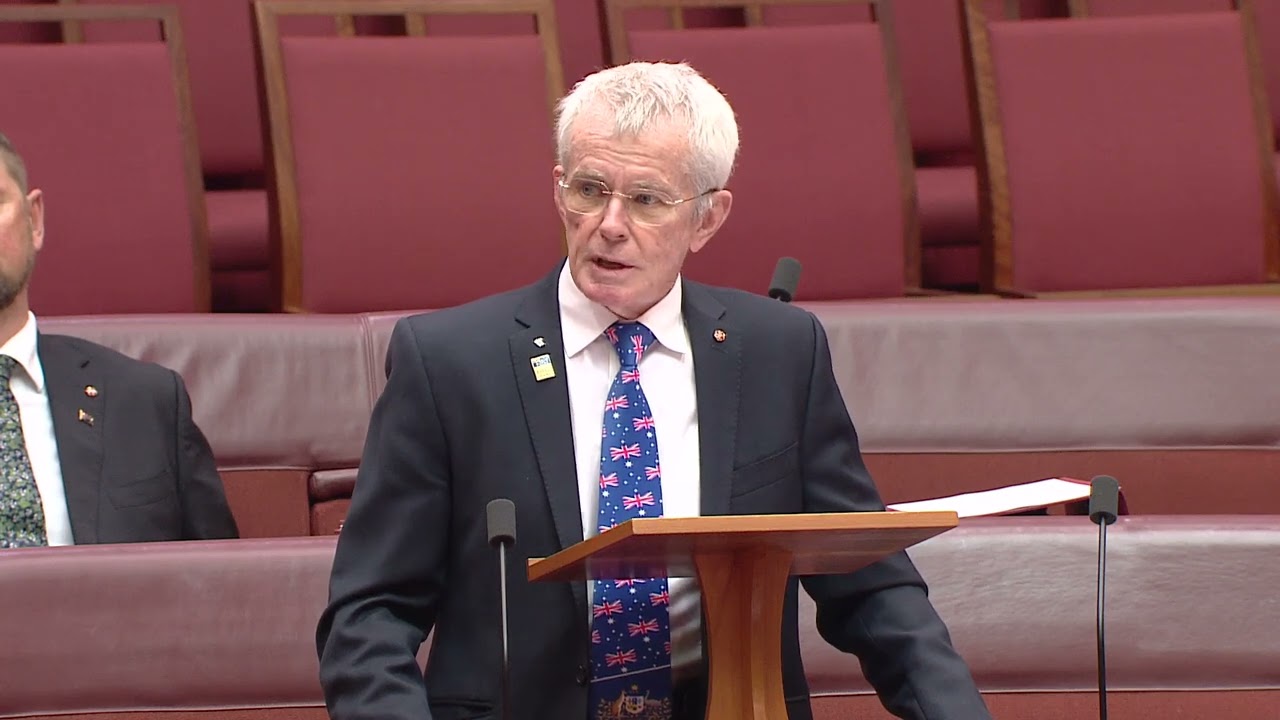
Senator ROBERTS: You gave $1.692 million to Diversity Arts Australia, DARTS, which is the national voice for ethnocultural and migrant racial equity in the arts, cultural and creative industries. Their primary focus is ‘advocacy, research and brokering connections for women and DEI related purposes’. Why are taxpayers funding advocacy groups to influence government policy? Where’s the arts funding here? This is advocacy, research and brokering connections. Why are taxpayers funding advocacy?
Mr Blackwell: One of the functions of Creative Australia is to support Australian arts practice that reflects the diversity of Australia. I’m not sure about the amount of funding over what period you’re referring to, but that may well be activities that allow us to perform this function.
Senator ROBERTS: Minister, why are we funding this? The primary focus is ‘advocacy, research and brokering connections’. Why are we funding advocacy? Basically, advocacy is funding advocacy groups to influence government policy. Where’s the art?
Senator Green: I’m not familiar with that project, so we’d have to take it on notice. I don’t know if the officials from Creative Australia have more information for you about what that project or that organisation is doing. Obviously, some organisations are funded for a particular project, so they might have some more explanation for you.
Mr Blackwell: We do, actually. Thank you, Minister. Diversity Arts Australia are a delivery partner to service the organisations under the community, arts and cultural development stream of our funding. Those organisations that we classify as delivery partners provide services to the arts sector. They strengthen the arts sector, and they allow the arts sector to leverage more value through that connection. That is the connection through to the arts sector and how we would then fulfil that function to support Australian arts practice that reflects the diversity of Australia.
Senator ROBERTS: You used some nice buzzwords in there—delivery, diversity, leverage. But you didn’t tell me why you’re funding advocacy. Advocacy is not art.
Mr Blackwell: No, but it’s advocacy for the arts. It’s not lobbying; it’s advocacy for the arts.
Senator ROBERTS: Why are you funding that?
Mr Blackwell: Because that’s part of our remit.
Senator ROBERTS: Thank you. Does your system for accountability for grants include the concept of a responsible person, RP? Can you give a quick explanation of that, please?
Mr Blackwell: Sorry; could you repeat the question?
Senator ROBERTS: Does your system for accountability for grants include the concept of a responsible person, and could you give a quick explanation if it is?
Mr Blackwell: I would say that we have a responsible process for issuing our grants from start to finish.
Senator ROBERTS: Does that incorporate a responsible person for each grant?
Mr Blackwell: Could you define ‘responsible person’ for me?
Senator ROBERTS: I’m asking you if it includes that. It doesn’t sound like it does.
Senator Green: Perhaps you need to provide the context of what you’re referring to—the agreement or the consideration of the application. You may have to give us a guide on what you’re referring to.
Senator ROBERTS: Perhaps it’ll come out in the more detailed questions.
Senator Green: Yes.
Senator ROBERTS: You gave $197,500 to a recipient called Click Ink Inc. for the Bankstown Poetry Slam. They describe themselves: We actively work to dismantle barriers of access, power, and representation. We prioritise the voices of those most affected by, and disaffected with, systemic oppression. They say: ‘We fight for anti-imperialism, solidarity with Aboriginal sovereignty and our Muslim, Arab and migrant communities.’ That’s the end of the quote. Events include ‘They call me the good Muslim’, ‘I am Palestinian’ and related pro-Palestinian events. My question is simple. Why are taxpayer dollars funding propaganda? This isn’t art; it’s politics.
Mr Blackwell: I would say that it is art. I’d have to disagree with you. I would say that it is art. Poetry slams are a common and popular form of artistic expression in this country.
Senator ROBERTS: I’ll go through the quote again: We actively work to dismantle barriers of access, power and representation. We prioritise the voices of those most affected by and disaffected with systemic oppression. They say: ‘We fight for anti-imperialism and solidarity with Aboriginal sovereignty and our Muslim, Arab and migrant communities.’ This sounds like it’s very divisive and pushing an ideology, not art. It doesn’t bother you?
Senator Green: Art can be political or non-political. You might not like that type of art, but it might be what other people choose to express. It might be a form of expression for them, or there might be an audience for that type of art. I think it’s wrong to say that art can’t be political or shouldn’t be political in some sort of way. Otherwise, we might have a lot of pictures of fields but we wouldn’t have any generation of debate or discussion through the use of art. Are you suggesting that there should be no politics in any songs, music, plays or artistic expression?
Senator ROBERTS: You’re saying it’s okay for your government to push ideological issues as politics.
Senator Green: No, that’s not what’s happening here.
Senator ROBERTS: That is what’s happening.
Senator Green: No. This is funding for artistic expression projects. I thought One Nation was the party of freedom of expression, so I’m a little confused about why you would want to stifle people’s views even if you don’t agree with them and even if you don’t agree with the art. You might not want to go to the poetry slam, but it doesn’t mean that art can’t be political in some way.
Senator ROBERTS: We are not in favour of government funding government propaganda and government ideology.
Senator Green: But you are in favour of freedom of expression, aren’t you?
Senator ROBERTS: Correct, but not funded by government necessarily.
Senator Green: Only when it suits you.
Senator ROBERTS: Not funded by government.
Senator Green: Only the freedom of expression that you—
Senator ROBERTS: You’re defending propaganda from your own government.
Senator Green: No, it’s not propaganda. The views of the artists might not support our government, but we don’t think that that is a reason why particular art shouldn’t be supported. To make my final point for your next question, the law that was passed in 2023 made it very clear that the government has no role in the funding decisions so that any type of government that might be in power can’t influence the independent funding decisions to alleviate the particular issues that you’re talking about.
Senator ROBERTS: That’s where I’m heading—accountability. Here’s an example. The registered person for this organisation—presumably, it’s registered with you. I don’t know who it’s registered with. The registered person for this organisation is Bilal Hafda, who said on social media that ‘any Australian who fails to support Palestinians who attacked Israel is a white supremacist’. Another registered person is Sara Saleh, who celebrated the Hamas terrorist aerial attack on Israel on her social media. Is there any rule in your grant guide that precludes grants from being used for political purposes?
Mr Blackwell: In our funding agreements, we have conditions. If you give me a moment, I’ll find it. Our funding agreements have a condition that says that ‘it is a condition of your funding that you comply with all applicable state, territory and Commonwealth work, health and safety and antidiscrimination laws’.
Senator ROBERTS: That’s it?
Mr Blackwell: And we refer them to Safe Work Australia and the Australian Human Rights Commission for more information on those applicable laws. So that is—
Senator ROBERTS: So celebrating terrorists is okay?
Mr Blackwell: I—
Senator ROBERTS: I’ll go on. Ali Al Haj Hussein, who is also known as the Poetic Ninja, has won multiple awards at the Bankstown Poetry Slam. He has praised Hezbollah—declared terrorists—as ‘men of God’, praised the 7 October murders as ‘just the beginning’, promised to ‘drag the Israeli people to the deepest pits of hell’ and used an implicit threat of violence in a poem at the Sydney Writers Festival, where he called for the downfall of the western empire and all its debauchery, including in a general context the same 2SLGBTQQIPAA community your grants are advancing. Does this sound to you like a great day out for the family to listen to poetry? This isn’t art or free expression. It’s an incitement to violence against the Australian community. Why are you funding it?
Mr Blackwell: I can tell you, in terms of the funding, the grant was $98,000—
Senator ROBERTS: Nearly a hundred thousand dollars.
Mr Blackwell: and the project summary, which was funded, was monthly themed poetry slam events; the grand slam championship, Real Talk; high-school poetry programs; the National Youth Poetry Slam; and the development of the Brave New Word Youth Poetry Festival at the Powerhouse Museum. That’s what we funded.
Senator ROBERTS: You are funding multiple awards for someone praising a terrorist group and wanting to drag the Israeli people to the deepest pits of hell—an implicit threat of violence.
Mr Blackwell: I’m not aware of that quotation.
Senator ROBERTS: Well, you are now. Moving on to the artist Kait James and her Red Flags exhibition, this was partly funded by Creative Australia with a grant of $48,000 on 28 November 2023. As the title suggests, this exhibition decided certain people and events were red flags to the Aboriginal community and proceeded to insult these people and events using a series of pennants and tea towels. One Nation leader, Pauline Hanson, was mocked, and Captain Cook had his eyes crossed out and was called a c-u-n-t. This is kindergarten art. You talk about not being political, Minister. Why does everything you or Creative Australia fund which could be considered political aim to promote radical causes, including radical Islam, and attack conservatives and everyday Australians? Where’s the balance? This is divisive, and it’s pushing a Marxist ideology. Why are you funding only one side?
Mr Blackwell: In regard to Kait James’s Red Flags, we funded it for $48,000 under an arts project grant for the development of the artwork. We weren’t involved in putting on that exhibition. The grant has been acquitted. Within that, there is content which we would say falls into freedom of artistic expression. It may offend some people, Senator, but not necessarily all people. There may be satire in it. All of these things form part of artistic expression.
Senator ROBERTS: Minister, the Department of Infrastructure, Transport, Regional Development, Communications, Sport and the Arts contributed $318,000 to the Red Flags exhibition, the same one I just raised. Was the criticism of a political rival the quid pro quo for making such a large grant, and what pot of taxpayer money did that grant come from? Where did the money come from?
Senator Green: First of all, to make it clear, the funding was provided through Creative Australia. It’s not a decision of government; it’s a decision of Creative Australia. But I take your point. The art is not to my taste, but people are entitled to express their views in different ways. I note that viewers of the exhibition were provided a warning about the fact that the art depicted themes and images related to historical and ongoing systematic racism and discrimination and included critique of the artist’s perspectives and strong language. Viewer discretion was advised, so certainly people who wanted to view that art were given fair warning. As I said, it’s not something that I necessarily would consider. I wouldn’t have done it myself, and it probably isn’t something I would go to see, but people are entitled to respect the views of individuals and to present their views in different ways.
Senator ROBERTS: Coming back to your answer, Creative Australia gave a grant of $48,000, which Mr Blackwell confirmed.
Senator Green: Yes.
Senator ROBERTS: I’m advised that the Department of Infrastructure, Transport, Regional Development, Communications, Sport and the Arts contributed $318,000 to the Red Flags exhibition. That would seem to me to be outside the Creative Australia funds. So where did that money come from? What pot of gold in the department did that money come from?
Senator Green: You are correct. Sorry; I thought you were talking about the grant from Creative Australia for the development of the exhibition.
Senator ROBERTS: No—the $318,000.
Senator Green: There was funding under the Office for the Arts, who were with us a bit earlier. Apologies; those officials have left. You won’t be able to ask them about the funding.
Senator ROBERTS: I can ask you, though.
Senator Green: Yes, but I’m not an official, so I will have to take it on notice if I don’t have enough information for you.
Senator ROBERTS: Thank you. When you come back with your answer on notice, could you tell us whether or not this was political quid pro quo for a political rival.
Senator Green: Definitely not. I don’t need to take that on notice. I can tell you with 100 per cent confidence that we don’t fund art because we want to attack One Nation. We can do that if we just walk up to the press gallery.
Senator ROBERTS: For ministers, it’s much cheaper to walk up to the press gallery, hey?
Senator Green: You should go up to the press gallery! They can ask you some questions.
Senator ROBERTS: I’m used to it. Minister, everyday Australians are sick of taxpayers’ money being spent on insider projects and social engineering. We had embarrassment from your government yesterday on this. When will your government listen to them?
Senator Green: We do listen to Australians. We’ve just finished consultation on the most recent cultural policy. It’ll be the first time Australia’s ever had two national cultural policies in a row. You will remember the release of the Revive cultural policy. So we do give Australians an opportunity to give us feedback on what our cultural policy should be. We’re making sure that that development of that policy takes into consideration all of those views.
Senator ROBERTS: Why do you push ideologically driven, divisive policies that split the Australian community?
Senator Green: I think that’s what you and One Nation do, Senator—respectfully—and unfortunately we’re seeing that more and more from the Liberal and National parties as they try to join you in that fight.
Senator ROBERTS: Thanks, Minister. Thanks, Mr Blackwell.







Thanks you for exposing this. Our own government is funding these radicals. We need to clean out the legal authorities who should issue accountability. Keep up the good work.