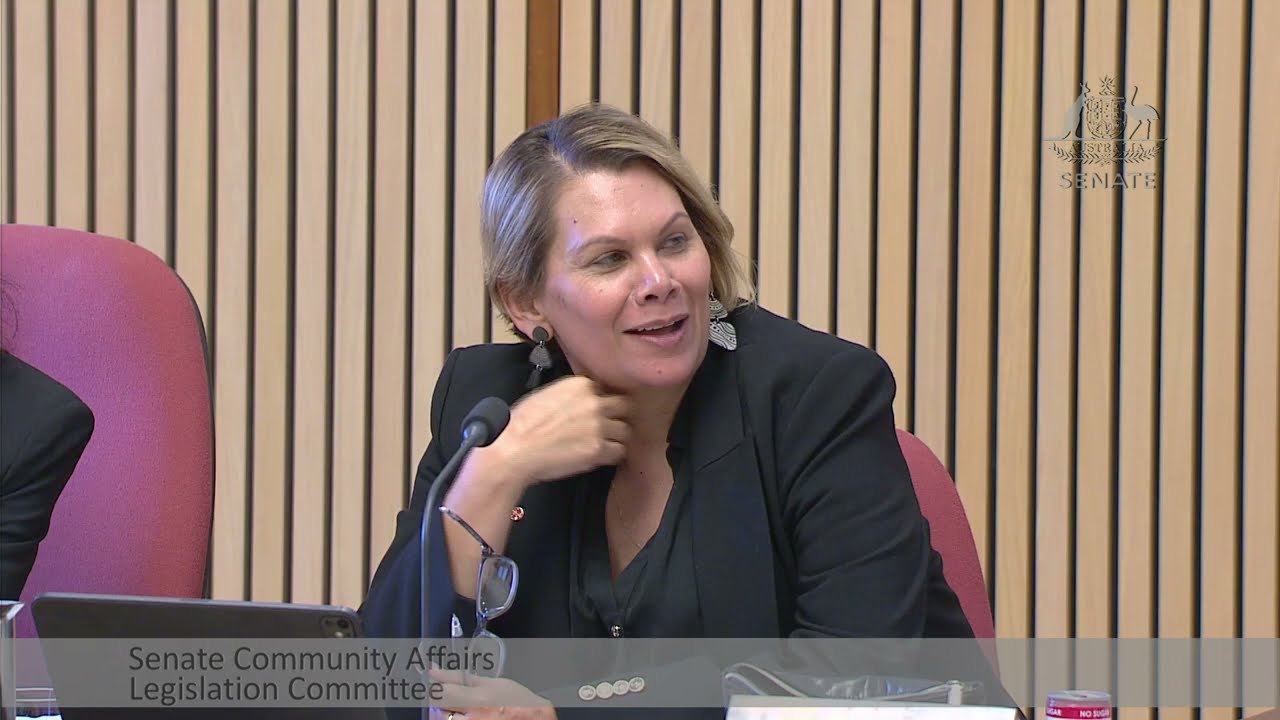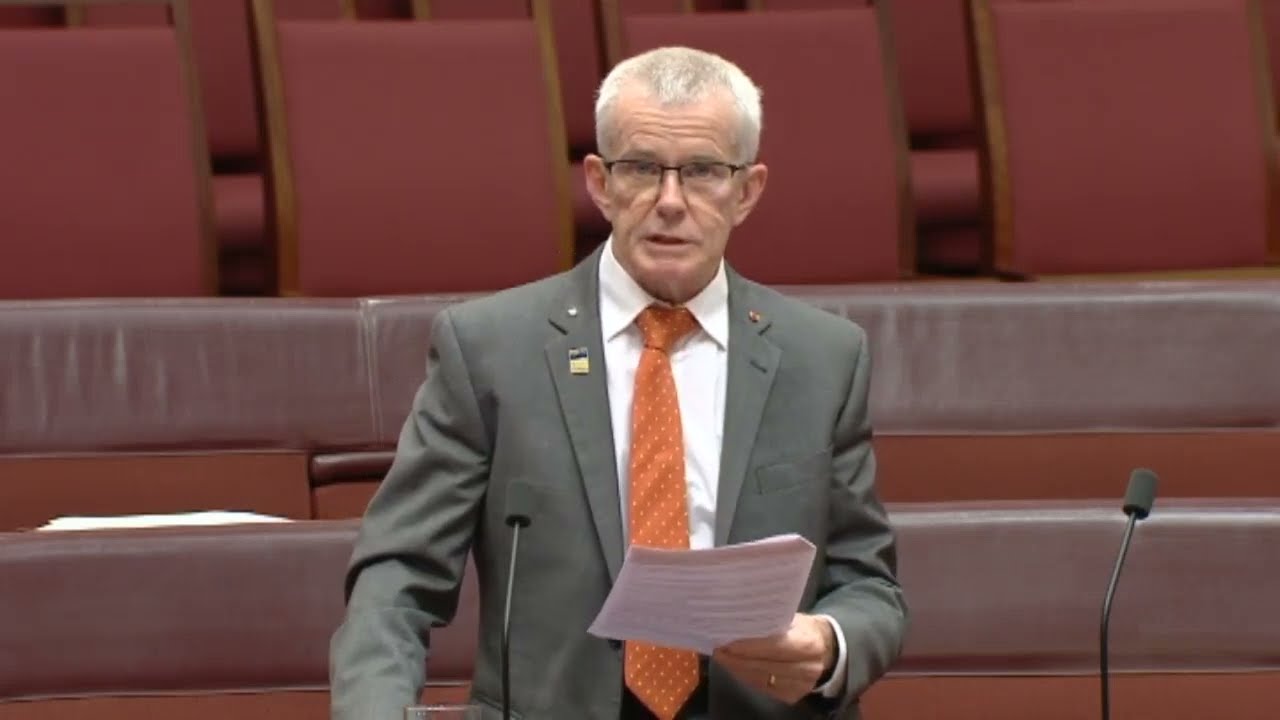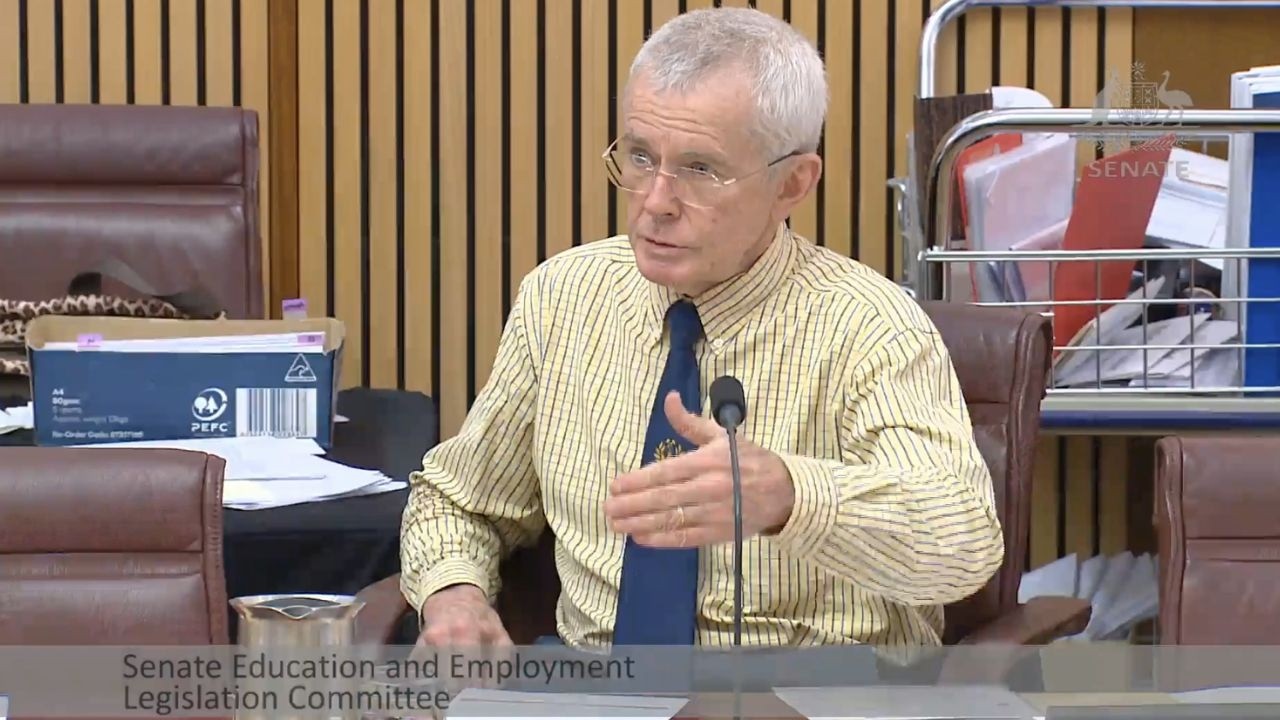

During my questioning of Australian Institute of Family Studies Director Ms Neville, I asked about the agency’s funding, definitions of family, and research focus.
The AIFS operates on an annual budget of approximately $23 million, consisting of a $4.7 million departmental appropriation and around $18 million in government-commissioned revenue.
I questioned Ms Neville on whether broadening the definition of “family” to include diverse structures, single parents and kin risks making the term meaningless. I also asked whether the institute’s remit has evolved since its establishment under the Family Law Act 1975.
I raised several concerns regarding the agency’s reporting on relationship dynamics and domestic duties, referencing Australian and international statistics on work hours, commutes, and divorce rates among different coupling types.
I’m not sure if this agency has left me confident they are genuine in providing data for Australian families. What I am sure of is that One Nation believes in promoting traditional family units rather than narratives of victimhood.
Transcript
Senator ROBERTS: Thank you for appearing, Ms Neville. The name of your agency is the Australian Institute of Family Studies. Could you please define ‘family’.
Ms Neville: Families have been taken to include many diverse forms in contemporary Australia. It may include married, cohabiting and de facto relationships, but it might also include blended families, stepfamilies, same-sex families, families with disability and other families representing a range of different population groups.
Senator ROBERTS: Thank you. That’s clear. Your income is composed partly of government allocations and partly income from commissioned research. Could you please provide your total budget, how much is allocation and how much is earned income?
Ms Neville: AIFS receives a departmental appropriation of around $4.7 million per annum and in the order of about $18 million in commissioned revenue.
Senator ROBERTS: So the total budget is about $23 million?
Ms Neville: The commissioned revenue amount varies from year to year.
Senator ROBERTS: But this year it’ll be $23 million?
Ms Neville: Correct.
Senator ROBERTS: What percentage of earned income is on behalf of a client who’s also in government or government funded?
Ms Neville: All of our commissioned revenue is for government clients.
Senator ROBERTS: Thank you. Your agency was created in 1980 under a provision of the Family Law Act 1975, section 114B, which sets the functions of the director of the Australian Institute of Family Studies as: … to promote, by the conduct, encouragement and co—ordination of research and other appropriate means, the identification of, and development of understanding of, the factors affecting marital and family stability in Australia, with the object of promoting the protection of the family as the natural and fundamental group unit in society … Do you believe the work you do is in keeping with the protection of the family as the natural and fundamental group unit in society?
Ms Neville: I would take the view that AIFS is concerned with the family as the fundamental unit in society and that we take great care to explore factors that support family wellbeing, as well as the relations between families and societal institutions. Our remit has continued to evolve since we were established under an amendment to the Family Law Act in 1980.
Senator ROBERTS: In what way has your remit continued to evolve? Is it by legislation changes or society or—
Ms Neville: Primarily by virtue of being commissioned by government departments to perform research and evaluation that is broadly in line with our remit.
Senator ROBERTS: So other departments and agencies from the government have shaped what you’re doing?
Ms Neville: Where it aligns to our purpose and our function, yes, that’s right.
Senator ROBERTS: However, you’ve redrawn the meaning of ‘family’ to include any blood relative—’kin’, I think, is your word—divorced families and care by others. Your definition of ‘family’ is, in short, anything comprising two or more people, who don’t even need to live together. Are you making the word ‘family’ meaningless?
Ms Neville: I don’t accept that characterisation, no.
Senator ROBERTS: I take it that you’re saying no. The explanatory memorandum to the Family Law Act provides further context in stating the reason for your agency was to provide eyes on the quite substantial changes made to the Family Law Act to assess the impact of it on families. That was a big concern because it was introduced in 1975, I believe, by the Whitlam government—Attorney-General Lionel Murphy. So this would have been soon after. The fundamental assumption in your enabling legislation is that divorce may be the enemy of family. Does the Australian Institute of Family Studies consider divorce as having a negative impact on family? Feel free to define or interpret ‘impact’ as you choose.
Ms Neville: The then government’s decision to introduce no-fault divorce had a very significant impact in terms of responding to latent demand for divorce. There was a huge spike in the number of applications for divorce in moving from the previous state based arrangements to the establishment of the family law system at a federal level. So there was a significant change that occurred, which was the government’s decision, and AIFS was established to monitor the changes to families in the wake of that significant decision. We have continued to monitor those trends, including the diverse forms of family that we now find in Australian society.
Senator ROBERTS: Thank you for that perceptive observation about no-fault divorce. You mentioned the words ‘significant changes’, so I’m just clarifying; I’m not trying to put words in your mouth. Are you saying divorce doesn’t affect families because a single mum and a child are still a family and the single dad by himself, who was formerly in the married family, is still family, even if he doesn’t live with his with his family or children? Is that correct?
Ms Neville: Single-parent families are a form of family, most certainly.
Senator ROBERTS: Thank you. I charted the evolving reasons the Australian Institute of Family Studies has provided for rising divorce rates. Your 1999 research report titled ‘Towards understanding the reasons for divorce’ talked about rising divorce rates linked to social changes such as greater female economic independence, shifting expectations of marriage from duty to personal fulfilment, and declining stigma around divorce. By 2012, which was just 13 years later, the explanation had moved to separation dynamics, including family violence, conflict and relationship quality. Have I missed a clear statement from you on the causes of divorce since this 2012 statement? If I have, what was it, please? Has there been a newer statement than 2012?
Ms Neville: Senator, are you referring to AIFS research in 2012? It’s not clear to me what you’re referring to there.
Senator ROBERTS: The evolving reasons the Australian Institute of Family Studies has provided for rising divorce rates. Have you made any changes or additions since 2012 report?
Ms Neville: We produce facts and figures resources that draw from ABS and census data that provide roughly annual updates on patterns of divorce and separation. So, yes, we continue to monitor those trends.
Senator ROBERTS: Thank you, Ms Neville. That’s your core mandate. Your report titled ‘Couple relationships in Australia today’, dated March 2026, mentioned marriage rates and duties or responsibilities but not divorce. I noted it included the mandatory inclusion of overseas data showing men don’t do enough housework. Why didn’t you use Australian data, including your own HILDA data, which shows the difference is explained by fathers commuting much longer and working longer hours out of home than mothers where both are working full time? Why don’t you put balance into these anti-father digs sprinkled through your work?
ACTING CHAIR: Senator Roberts, I wonder if we could maybe rephrase some of the questioning. Ms Neville is trying to answer your questions, but there’s an awful lot of emotive language in there.
Ms Neville‘s here to answer questions about the work of the Australian Institute of Family Studies.
Senator ROBERTS: We’re not using Australian data with a clear explanation and instead are preferring overseas data. Is that putting balance into your work?
Ms Neville: Senator, I’m not sure what data you’re referring to.
ACTING CHAIR: Maybe you could give us a reference, Senator Roberts, to one of the reports.
Senator ROBERTS: I can’t. I’m sorry. I’ve got this much stuff—
ACTING CHAIR: It’s very difficult for the witness to respond to—
Senator ROBERTS: Hang on, here it is.
ACTING CHAIR: assertions as opposed to data.
Senator ROBERTS: I have it here. The University of Melbourne published a study in 2024 which said that mothers working full time do 1.5 hours a week of extra housework above fathers working full time. One and a half hours is less than the extra hours a man works or commutes to support his family. There’s no substance to the housework female victimhood argument that the AIFS promotes.
ACTING CHAIR: Again, Senator Roberts, you’re asking the witness to respond to somebody else’s report that she may or may not have read and certainly is unlikely to have in front of her.
Senator ROBERTS: Well, if you’re comfortable responding to it, do so. If not, don’t worry about it.
Ms Neville: I was just going to say I can’t comment on research produced by the University of Melbourne, Senator. I’m not familiar with it.
Senator ROBERTS: Thank you.
CHAIR, do you have the graphs that I sent around?
ACTING CHAIR: Yes. You are at the point where I’m going to need to rotate the call.
Senator ROBERTS: I’m almost done.
ACTING CHAIR: Alright. The graph has been circulated.
Senator ROBERTS: Let’s drill down on the graph. This is USA data.
ACTING CHAIR: Again, we’re in Australia.
Senator ROBERTS: Fifty-first state!
ACTING CHAIR: No, Senator Roberts, we most certainly are not.
Senator ROBERTS: Good. This USA data, which you also use, shows the different divorce rates by type of coupling. This shows lesbian couples have a 20-year divorce rate of 59.1 per cent, as against male-female marriages, at 39.3 per cent, and gay male marriages, at 29.3 per cent. These are significant differences that must have a reason, which you would have come across during the AIFS’s 45 years of study of families. Can you explain the difference, please.
ACTING CHAIR: Again, Senator Roberts, I’m going to tell you that you have provided some American data to Ms Neville, and we’re here to talk about the Australian Institute of Family Studies in Australia.
Senator ROBERTS: Do you cover this topic?
Ms Neville: I have not seen this graph before.
Senator ROBERTS: No, forget the graph for a minute. Do you cover this topic?
Senator Ayres: I do think, Senator, that it’s utterly legitimate to ask the witness questions about reports that the institute has prepared and issued, evidence that they have collected or relied upon and the way that they allocate their funds, but I think it is hard to ask for an opinion from a witness about a graph that’s been prepared by somebody else and that they haven’t seen before.
Senator ROBERTS: Yes, I can appreciate that view, Minister. Eighty per cent of the Australian Institute of Family Studies’ income comes from earned income and commissioned studies, four times as much as our budget allocations. I was just wondering if Ms Neville can talk about the research in Australia, if you’ve done any research in Australia on this topic.
Ms Neville: I personally haven’t undertaken research on this topic, Senator. I am happy to refer you to our facts and figures publications, which do produce trend data about changes in patterns of separation, divorce and marriage.
Senator ROBERTS: Minister, section—
ACTING CHAIR: Senator Roberts, I am going to have to rotate the call.
Senator ROBERTS: Last question.
ACTING CHAIR: Last question.
Senator ROBERTS: Minister, section 114C of the Family Law Act provides you with the powers of direction to undertake specific activities within these functions and set priorities for them. Have you provided the Australian Institute of Family Studies with any directions regarding the operation of their functions?
Senator Ayres: That would be a novel power for the minister for industry to have.
Senator ROBERTS: Yes. I mean the minister you represent.
Senator Ayres: I have certainly not provided any of that kind of direction. It’s very unlikely that—
Senator ROBERTS: Has the minister provided it?
Senator Ayres: Given some of the questions that you’ve asked about the differential role of people pulling their weight at home, I reckon you’re on your own there, Senator.
Senator ROBERTS: One Nation thinks it’s time to promote families, not victimhood.