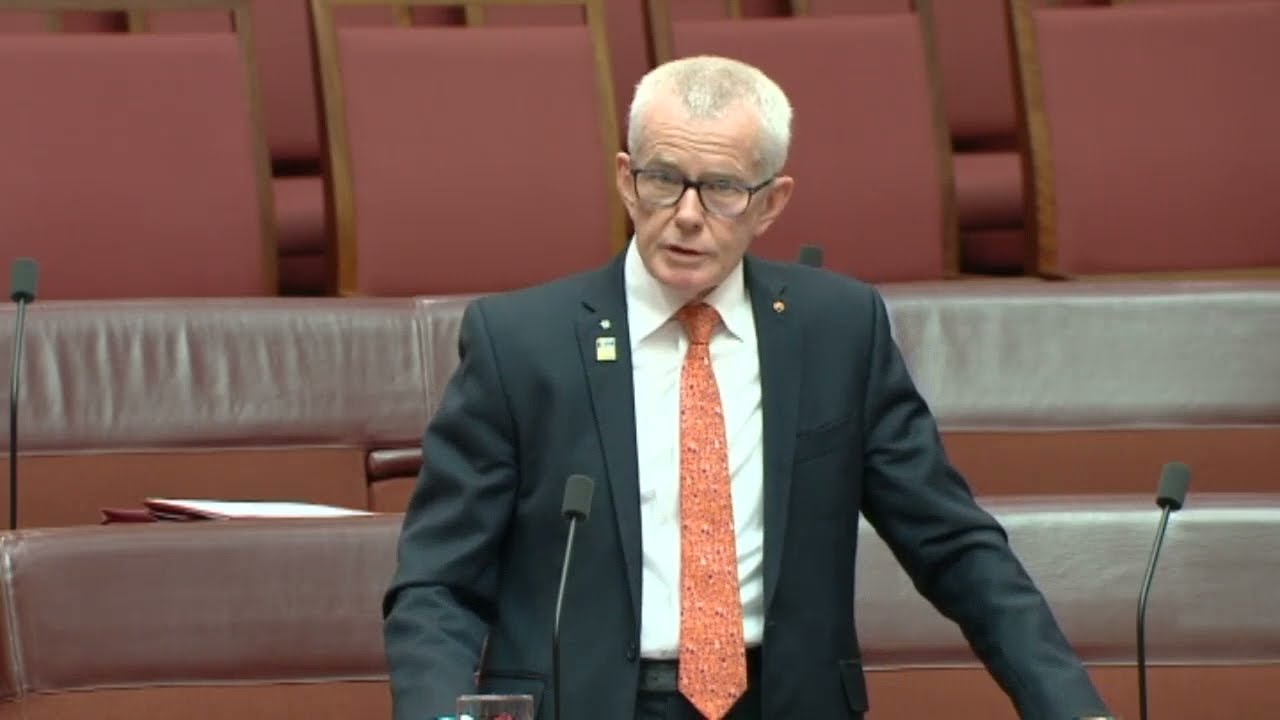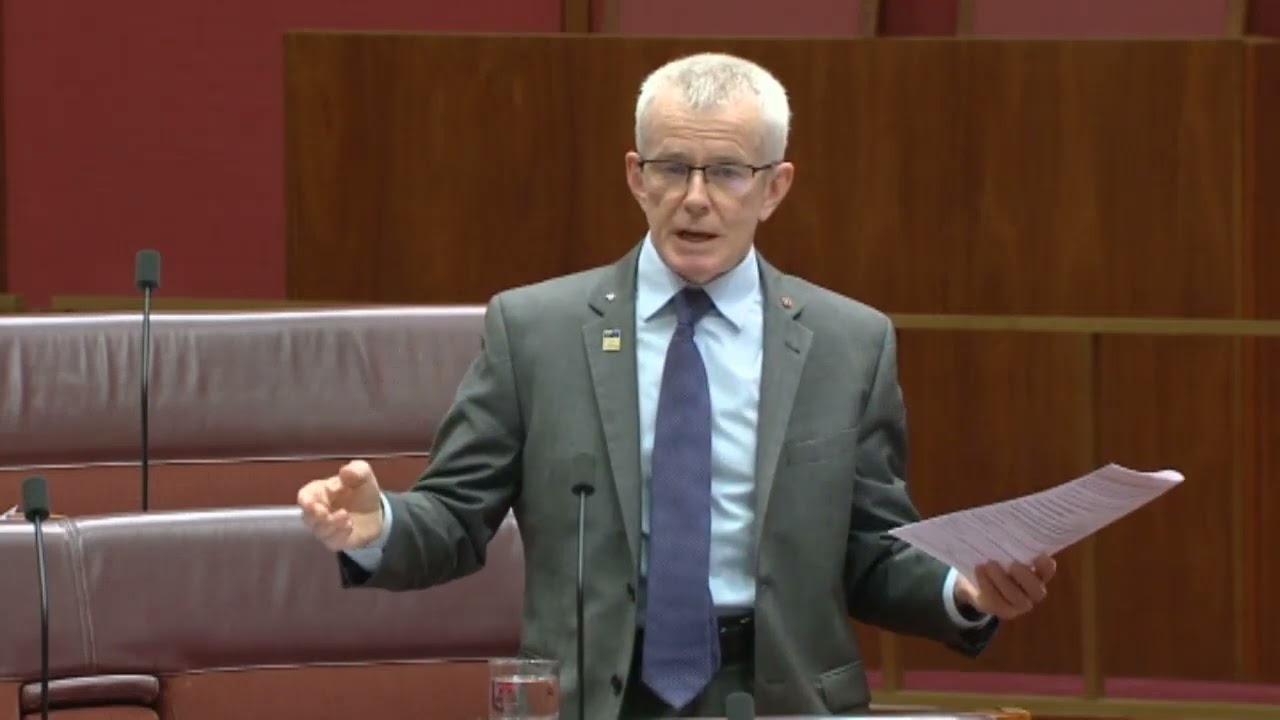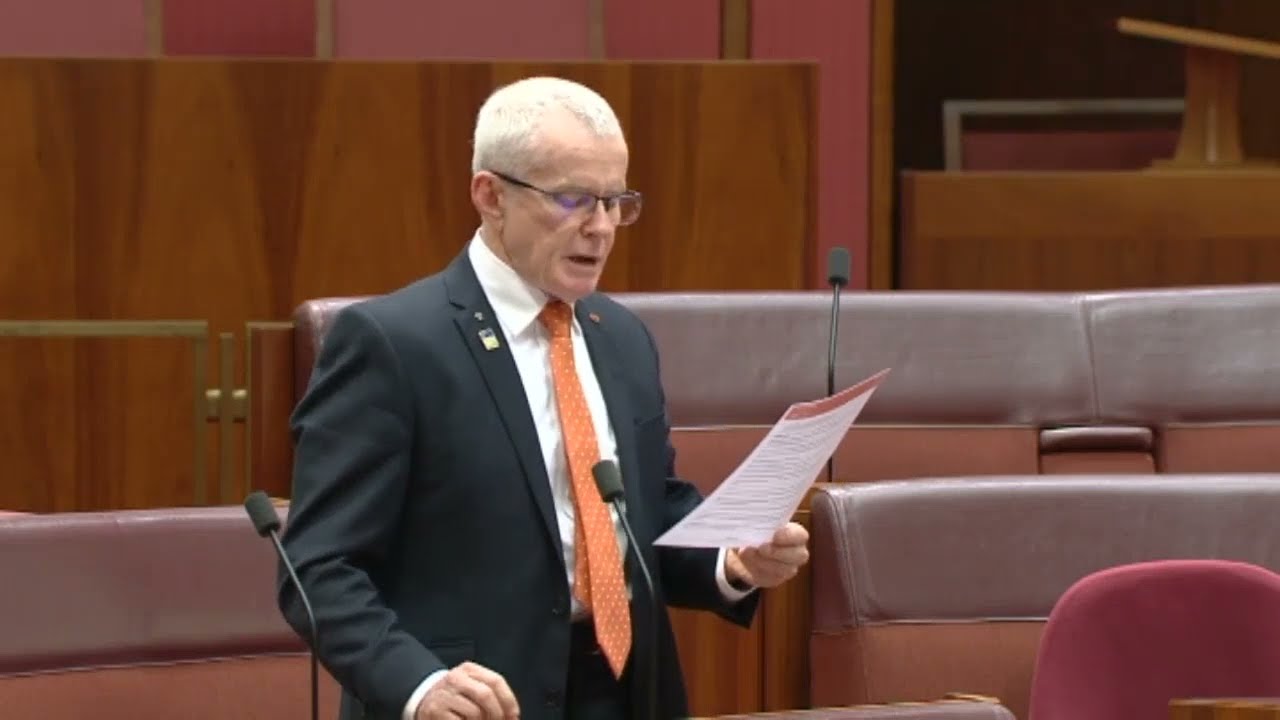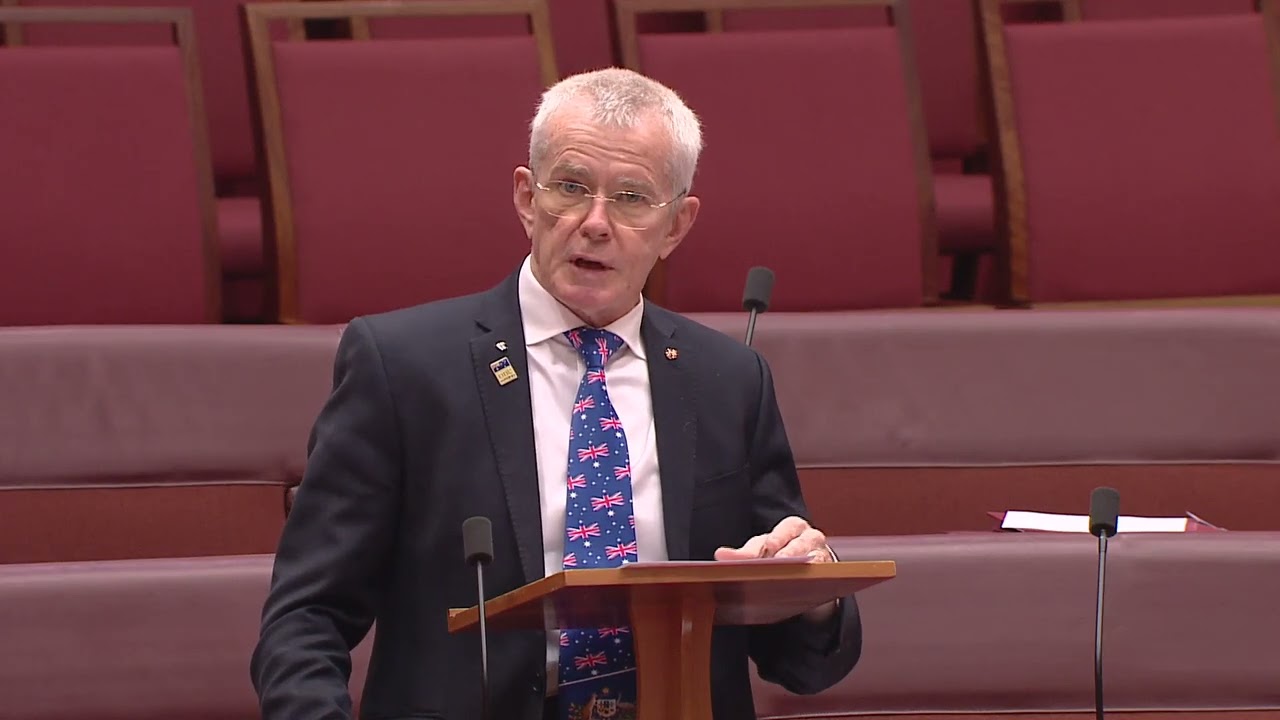

The Defence Amendment (Parliamentary Joint Committee on Defence) Bill 2025 shifts defence review responsibilities to a new joint committee. Although it creates an odd dynamic for the remaining foreign affairs and trade committee, I agree that a dedicated committee is necessary.
The AUKUS alliance is the largest infrastructure spend in our nation’s history. Taxpayers deserve respect and absolute transparency, especially when everyday Australians are struggling.
Right now, there is a distinct public perception that this submarine deal is simply too expensive, particularly while the government concurrently executes a $3 billion fire sale of defence assets to fund its runaway spending.
I asked the Minister a direct question: Why wasn’t this asset sale run past the new committee? Minister McAllister gave a predictable answer, claiming you can’t refer current decisions to a committee that hasn’t been established yet. As it stands, membership on this new committee is subject to a cosy agreement between the Labor and Liberal party whips. This “uniparty” ticket effectively locks out the 50% of Australian voters who do not support either of these parties.
When I questioned why membership was restricted this way, the Minister claimed the Prime Minister would appoint non-government members in consultation with parliament. I must ask: Is this the same Prime Minister who gutted my staff while leaving compliant crossbenchers alone?
Too often, our committee system is a sham designed to protect the government’s narrative rather than find the truth. We saw this with the Select Committee on Information Integrity, which was nothing more than a Labor-Greens stitch-up designed to deplatform critics of net zero and control political speech like a totalitarian regime.
I moved an amendment to guarantee wider parliamentary representation, which would ensure automatic inclusion of Labor and Liberal parties and guaranteed seats for minor parties, including One Nation, the Nationals and the Greens.
With trillions of taxpayers’ dollars on the line for defence spending, we need deeper scrutiny, not a bipartisan shield to keep the public in the dark.
Transcript
Senator ROBERTS: The Defence Amendment (Parliamentary Joint Committee on Defence) Bill 2025 takes defence review from the Joint Standing Committee on Foreign Affairs, Defence and Trade and puts those responsibilities into a new joint committee on defence.
I have two questions for the minister, but I want to speak a bit more before putting those questions. Aside from this leaving a rather strange committee comprising trade and foreign affairs, this is a necessary measure. AUKUS is the largest defence or infrastructure spend in Australian history. Oversight of this program is absolutely essential. There’s a perception amongst the public that the submarine deal associated with AUKUS is simply too much money at a time when the public are struggling, and the government is coincidentally selling off $3 billion in defence assets to fund its profligate spending. That decision should have been run past the new committee, surely. Why wasn’t it?
One Nation supports the AUKUS alliance, yet more respect should have been shown to the taxpayers to explain the spend, and more oversight on that spend was needed. That is why One Nation is moving a motion today to amend the bill to include wider representation on the committee. My amendment includes a place on the committee for at least one representative from each minor party—One Nation, the Nationals and the Greens. The ALP and the Liberal Party are represented automatically.
There’s a perception that the committee system is not designed to get to the truth but, rather, to get to the government’s version of the truth. We’re seeing this process at the moment with the sham Select Committee on Information Integrity on Climate Change and Energy, which was established to prove that the critics of net zero are all lying and need to be shut up and deplatformed with misinformation and disinformation legislation. That’s the purpose. It’s a Greens and Labor Party stitch-up to control political speech in the finest traditions of totalitarian regimes throughout history, and we can see that in operation in every hearing of that committee.
Having representatives from every parliamentary party will ensure that all political opinions are represented on the committee and that witness lists and inquiries conducted by the committee reflect a diversity of perspectives. The uniparty unity ticket on major issues is making the public feel that they’re just not being listened to, that the people are not being considered. It’s not an Australian law that there shall not be taxation without representation, yet this Labor government is making One Nation’s many supporters wish there were such a law here. The government is to spend several trillion dollars on defence by the time a submarine contract is completed. This needs wider and deeper scrutiny for the taxpayers’ benefit and for the nation’s benefit. Membership under this bill is subject to agreement between the government and the Liberal Party whips. Isn’t that cosy?
Senator Shoebridge: Doesn’t that make you feel safe?
Senator ROBERTS: Yes! That may serve to keep out the other parties unless the bill is reworded to protect the interests of the one half of Australian voters who currently do not intend to vote for the uniparty. You’re leaving out 50 per cent of the population. My amendment includes the votes of people who didn’t vote for the uniparty. Minister, my first question is: why is the membership of the committee expressed in a way that would allow only two parties to serve on the committee at the discretion of those same two party whips?
Senator McALLISTER: That inaccurately describes the legislation. The legislation sets out provisions for the appointment of government members and non-government members. As is the case presently for the PJCIS, the Prime Minister of the day would make an assessment in consultation with the parliament about the specific appointments for the non-government members.
Senator ROBERTS: Is that the same prime minister who took the staff of some of the crossbench, decimated our staff, actually intervened and sacked some of my staff, gutted our staff, and left the other crossbench alone because they generally vote with him? Is that the same prime minister? And why was the decision to have a fire sale of defence assets not run past the new committee? Surely bypassing the committee and just waiting a short while would be in the interests of the community.
Senator McALLISTER: The intention in establishing this committee is to provide a forum for oversight of a range of matters, and the scope of the committee’s work is set out in the bill. I think, self-evidently, it would not be possible to refer decisions that are being taken now to a committee that is yet to be established, and the establishment of the committee depends on the debate that we’re having in the Senate right now.
Senator ROBERTS: Minister, who selects the additional members?
Senator McALLISTER: This is set out in the legislation, but the Prime Minister consults with recognised political parties in the House of Representatives. I will seek clarification, but it is also the case that the members of the Senate are appointed by resolution of the Senate on the nomination of the Leader of the Government in the Senate.
Senator ROBERTS: So, as Senator David Pocock said, it’s a stitch-up.
Senator McALLISTER: I think it’s an unusual proposition to put here in the Senate chamber that a vote of the Senate is an illegitimate way to appoint a committee.
Senator ROBERTS: Only on candidates that the government puts forward—what could go wrong!
The TEMPORARY CHAIR (Senator Sterle): There are other amendments. If there are no further questions to the minister, Senator Roberts, do you want to put your amendments? Do you wish to speak to them?
Senator ROBERTS: I’ve spoken enough, thanks. I move my amendment on sheet 3634: (1) Schedule 1, item 2, page 6 (line 22) to page 7 (line 6), omit subsections 110ABA(2) and (3), substitute:
(2) The Committee is to consist of up to 13 Committee members and must include at least:
(a) 2 Senators who are Government members; and
(b) 2 members of the House of Representatives who are Government members; and
(c) 2 Senators who are Opposition members; and
(d) 2 members of the House of Representatives who are Opposition members; and
(e) 1 Senator or member of the House of Representatives from each minority party. Note: For more detailed provisions on the appointment of Committee members, see Division 5. (3) In this section: minority party means a party that:
(a) is not part of the Government or the Opposition; and
(b) has at least 5 members in the Parliament.
The TEMPORARY CHAIR (Senator Sterle): The question is that One Nation amendment (1) on sheet 3634 be agreed to. The committee divided. [13:25] (The Temporary Chair—Senator Sterle)