

Schedule 4 of The Aged Care Legislation Amendment (Aboriginal and Torres Strait Islander Aged Care Commissioner and Other Measures) Bill 2026 was added to address the government’s secret rollout of AI algorithms to assess aged-care applications. For the past year, human assessors were strictly prohibited from overriding computer decisions (even when clinically wrong), leading to under-assessments, long waiting lists and a sixfold surge in appeals, with elderly Australians dying before their reviews were resolved.
One Nation believes that although AI can be used for background legwork, it must never be allowed to make final, unreviewable decisions over human lives. We will legislate to ban fully automated government decision-making.
This AI decision-making system is part of a broader pattern of attacks by the Albanese Government on our elderly, including:
❌ Reducing health insurance rebates, pushing up to 75,000 pensioners into the public system and costing taxpayers approximately an extra $2 billion annually.
❌ Attempting to impose co-contributions on basic personal care (which they were forced to roll back).
❌ Increasing means-tested accommodation fees and daily living costs for retirees.
❌ Creating backlogs through the Support at Home framework.
❌ Raising Centrelink deeming rates by 0.5%, effectively reducing pensions based on assumed, unearned interest.
❌ Capping allied health services for older veterans at $5,000 (which the Senate successfully blocked).
Basically stealing money from pensioners!
Finally, I foreshadowed a second reading amendment regarding Voluntary Assisted Dying. While VAD is legal across all Australian states, state laws currently force aged-care facilities to allow external VAD practitioners onto their premises.
My amendment does not restrict VAD access for individuals; rather, it protects the freedom of conscience and religion for faith-based aged-care providers by allowing them to conscientiously object and opt out of facilitating VAD on-site, provided residents are informed and assisted with transfers to participating facilities. Based on the sensible South Australian model, this ensures respect for differing moral convictions in our community.
Transcript
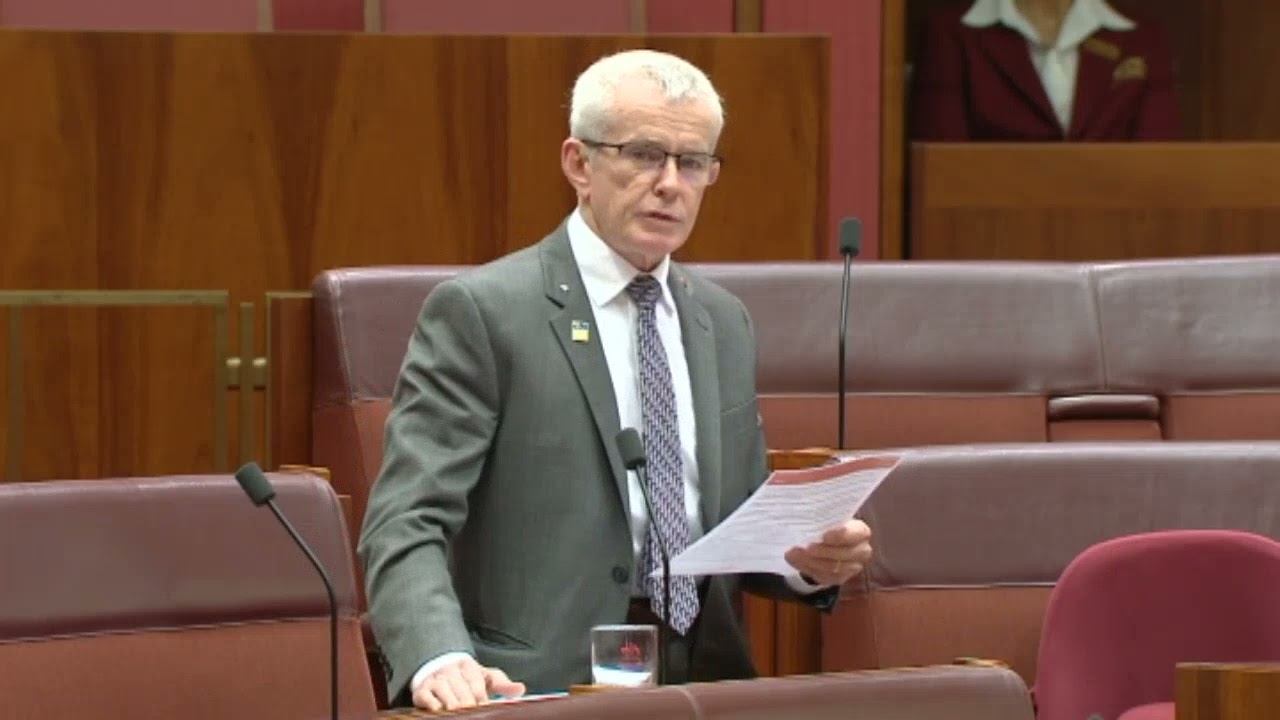
Senator Roberts: The Aged Care Legislation Amendment (Aboriginal and Torres Strait Islander Aged Care Commissioner and Other Measures) Bill 2026 amends the Aged Care Act 2024 to, firstly, establish yet another permanent statutory office, the Aboriginal and Torres Strait Islander Aged Care Commissioner, within the Aged Care Quality and Safety Commission; secondly, to incorporate temporary modifications made to the Aged Care (Consequential and Transitional Provisions) (Aged Care System Modification) Rules 2025 into the Aged Care Act and Aged Care Rules 2025 and repeal the instrument; and, thirdly, to vary arrangements concerning refundable deposits, including their use while an individual awaits a means-test assessment, the ability to transfer deposits between providers and the treatment of deposits in aged-care means-testing. One Nation is in support of these long-overdue changes. Fourthly, it will make other administrative and regulatory amendments concerning direct-care staff, local government providers, specialised residential care homes, residential care subsidies, fee advice notices, deemed decisions and the recovery of Commonwealth overpayments.
This bill has been referred to two committees for reporting—the second because the government added a new schedule late in the passage of the bill. Both reports recommend the bill be passed. I note once again that the Labor government has packaged something we do agree with—the improvements and technical clean-up in schedules 2, 3 and 4 of the bill—with something we do not agree with, the Aboriginal and Torres Strait Islander Aged Care Commissioner. This is designed to force One Nation to oppose the bill and, in so doing, provide social media fodder for the ALP and the Greens at the next election. They want to claim One Nation opposed reforms to help our elderly. It’s a wedge, another bloody wedge—one of the many wedges this cynical Labor government have used lately to entertain themselves while everyday Australians continue to go backwards. You don’t care about the people.
One Nation has moved an amendment on sheet No. 4177 to remove the Aboriginal and Torres Strait Islander commissioner provisions and leave the remainder of the bill intact. One Nation opposes discriminating against Australians based on physical characteristics, including ethnicity, age, sex, sexual orientation and disability. Positive discrimination is still discrimination. It seeks to present a morally superior position which inevitably fails in a perfect storm of cost escalation, empire building, self-interest, mission creep and unexpected consequences that the taxpayers pay for.
According to the Guardian newspaper, Aboriginal children in Australia have historically been murdered at roughly three times the rate of non-Aboriginal counterparts—three times. Aboriginal children experience rape at five times the rate of non-Aboriginal children, a figure that’s underreported to the point of official data being useless—bloody useless. Aboriginal children are being left in squalor without adult supervision. All of this is under the watchful gaze of the virtue-signalling elites who advance bills like this and then crack open the chardonnay to celebrate how worthy they are. This government and state governments won’t stop Aboriginal children being raped and murdered, yet they have the money for a dedicated Aboriginal aged-care commissioner and their staff. This will of course lead to more regulations and higher costs for everyone. The entire idea, of course, will have no KPIs—not one—to measure progress, because for Labor it’s not about the outcome; it’s about feelings.
We do not need an Aboriginal and Torres Strait Islander Aged Care Commissioner. We need our aged-care system to support everyone that it’s tasked with supporting. A One Nation government will send its attorney-general into Aboriginal communities, along with ministers for housing, health and infrastructure, to fix the crime and the structural problems behind these heartbreaking, unacceptable statistics—unacceptable to most Australians but not the government.
We will create jobs to restore the future of Aboriginal communities, using mining and value-adding of raw production, including in agriculture. We will oversee Australia’s largest infrastructure project, the northern rail crossing from east to west, part of the national rail loop, to bring rail transport, water, electricity and the internet to remote communities. That’s our idea of helping the Aboriginal community, not this window dressing BS.
Anyone who thinks this is a good idea need only look at Closing the Gap. A measure there intended to reduce the life expectancy gap between Aboriginal and non-Aboriginal Australians has in part failed, completely failed, with life expectancy in recent data getting worse for Aboriginals, not better. An analysis of government outlays over the first eight years of the strategy alone, from 2008 to 2016, calculated that total combined spending towards meeting the Closing the Gap targets exceeded—wait for it—$130.2 billion. The source of that data is Adam Creighton in the Australian quoting the Productivity Commission data on 12 February 2018. The Productivity Commission estimated in 2017 that federal government spending on Aboriginal affairs was $25 billion a year. I see nothing to suggest that that number has been going down since then. And then add the state spending.
I hope the Senate will realise it’s time to change course on the Aboriginal industry. Stop funding more parasites in consultants, academics, lawyers, bureaucrats and larger top-end supervisors. Instead, directly fund the communities where it’s needed. I’ll say it again. This is what we’re advocating: instead of the parasites getting the money, let’s get it to the communities, to fund the communities, where it’s needed directly.
Moving on, the new schedule 4, added in the House of Reps, makes changes to take account of criticism of the government’s use of AI for decision-making. Applications for aged care have for the last year been determined using AI, not human beings. The Albanese government implemented a system last year which featured strict prohibition of human override. Expert, qualified human-needs assessors were explicitly barred from altering or overriding the algorithm’s outputs, even when they knew a decision was clinically wrong. Second was the systemic under-assessment of vulnerable people. Critics noted that the rigid computer program frequently failed to capture the complex realities of ageing, leaving vulnerable older Australians without adequate funding or essential homecare packages. Without their packages—so much for care! Third was the lack of consultation and transparency. The automated tool was introduced quietly with no public consultation, no industry trials and no transparency regarding the underlying algorithm—no openness; just a secretive AI. Fourth was the severe bureaucratic backlogs. Appeals against robodecisions ballooned sixfold after the system rolled out, meaning many elderly citizens faced extensive waiting lists, with some tragically dying before their reviews were resolved. Robo decision-making is a counterproductive efficiency measure, and I wonder about the real motivation for robo decision-making.
This Labor government has declared war on the elderly. Just listen to these: removing their health insurance discount rebate, forcing more elderly Australians into the public health system and, in the end, costing taxpayers at least $2 billion more a year in public health to save $350 million on the rebate. That $2 billion figure is likely conservative, with up to 75,000 elderly Australians being forced to give up private health, almost double the government estimate—your estimate, doubled. The Albanese government tried to introduce co-contributions on personal care for aged pensioners. This was so badly received that the government backed down—you backed down—and agreed that vital personal care, like bathing and dressing, would not require out-of-pocket fees. Increased costs for capital and daily living—self-funded retirees and part pensioners must pay significantly higher means tested fees for everyday accommodation, capital contributions and clinical assistance.
The Support at Home mess—the government absorbed existing homecare packages into the new Support at Home framework. Seniors groups have heavily criticised the measure for severe package backlogs, long wait times and plans to fold the entry-level Commonwealth Home Support Program into it, which critics say threatens independent living in regional and remote communities. The government lifted social security deeming rates by 0.5 per cent—half a per cent!—which means that, even if pensioners’ bank accounts are not yielding high interest, Centrelink now legally assumes they are anyway and adds made up unpaid interest to their income, reducing their pension. That’s what you’re doing. You’re basically stealing money from pensioners. For older veterans reliant on specialised treatments, the government produced a $5,000 annual cap on allied health services. Older veterans who require year-round support were told to pay for it themselves—’Just pay for it yourself’—a measure that the Senate forced the government to withdraw. It’s no wonder the government wanted to use robo decision-making to deflect the blame for this attack on elderly Australians away from themselves—cowardly, dishonest, a lie.
Schedule 4 in this bill will help in improving rules around robodecisions. It must be the law that any decision taken using AI be subject to human review. A One Nation government will introduce legislation to prevent computerised decision-making anywhere in the government. AI can do the legwork, sure. It should never, though, be used to make a decision, let alone make final decisions that a qualified staff member cannot overturn when an error is detected.
I foreshadow second reading amendment 4176, which has been advanced in response to many constituent concerns around the expansion of and advocacy for voluntary assisted dying. Voluntary assisted dying is now legal in all states. Nothing in our amendment advocates against voluntary assisted dying occurring. It simply seeks to protect aged-care providers who have a conscientious objection to providing voluntary assisted dying services on their premises. A religious objection is the most common conscientious objection. New South Wales, Queensland and South Australia have a law in place which explicitly regulates institutional objections. They mandate that residential aged-care facilities must not block external voluntary assisted dying practitioners from entering the premises. Because an aged-care room is legally considered a resident’s home, facilities are required to allow all stages of the voluntary assisted dying process, from consultations to death, to take place onsite. In Ontario and British Columbia, provincial governments in Canada have removed the right for aged-care facilities and hospitals to refuse voluntary assisted dying. This is very troubling to me, and it’s troubling my constituents. Our amendment seeks to provide support for aged-care facilities with encouragement that they’re not alone and to hold the line and uphold their convictions.
This amendment is not about voluntary assisted dying as much as it’s about freedom of conscience and freedom of religion. Currently, in South Australia, healthcare providers can opt out of voluntary assisted dying if they advise residents that the facility does not offer voluntary assisted dying. This allows the resident a transfer to a facility that does offer voluntary assisted dying. My amendment reflects this sensible compromise. The South Australian model works and should be the national model. In the very difficult, emotive space of euthanasia, it’s very important to respect the differing views in the community and to allow residents to choose a non-voluntary-assisted-dying facility if they so want and for providers to opt out of voluntary assisted dying if it conflicts with their values. I ask the Senate to support my amendment 4176.






Leave a Reply
Want to join the discussion?Feel free to contribute!
Using your first name