

I acknowledge that the Office of the eSafety performs effective work against child sexual exploitation and abuse material and adult exploitation material. However, I challenge the Commissioner’s controversial overreach, and high legal costs.
Given that the Commissioner is stepping down soon, I asked whether the government would save money and depoliticise the office by leaving the role vacant and focusing strictly on core harm-reduction. Senator Green rejected my assertions and confirmed the government will maintain the role.
I highlighted positive data from the periodic transparency report showing that platforms like Snapchat are rapidly improving their takedown response times. When I asked which media companies are dragging their chain, the Commissioner and her staff detailed their actions against X Corp, Telegram and takedowns of dangerous chat apps like OmeTV.
I questioned the oversight of Bluesky and its self-run age gates, noting its growing popularity, including use by the ABC, though the agency deemed it low risk for now.
I asked about the legal outcome against X, asking how many times X been taken to court. Their answer? Twice: the Wakeley matter as well as a case around CSAM, which was successful. I finished up asking for a complete list of all court cases involving X.
Transcript
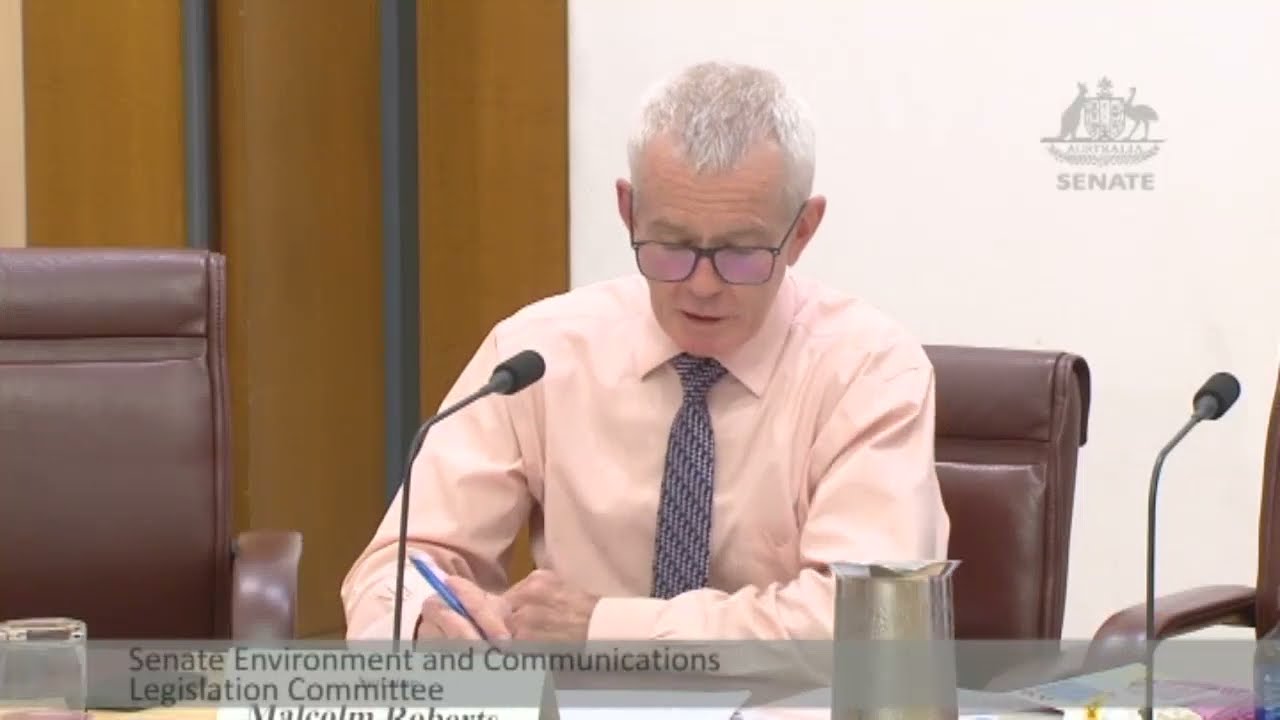
CHAIR: Senator Roberts.
Senator ROBERTS: Thank you for appearing again. Mr Fleming, don’t take it too hard that we haven’t accepted your invitation yet for a briefing. We’re very, very keen to do so. We’ll do it when we can. We’ve had a few things in the middle.
Mr Fleming: We’ve got a card here for you, Senator. Just for you.
Senator ROBERTS: Farrer by-election and a few other things. Minister, my first question is to you. My question is to the office of eSafety, underscore, the duality of the agency’s performance. On one hand, their work in combating child sexual abuse material and adult exploitation material, including revenge pawn and deepfakes, is effective and deserving of respect—and we’ve said that repeatedly. On the other hand, the performance of the eSafety Commissioner attracts substantial controversy for pursuing matters that are not exploitation or harmful in nature, accompanied by substantial legal costs and high-profile losses around overreach, as well as excessive overseas travel. My question is: the eSafety Commissioner has indicated she will not remain in the job when her term expires next year. Will you consider banking a saving here by not replacing the Commissioner, and, in so doing, depoliticise the office so they can get on with their core role of acting against child sexual exploitation and abuse material and other exploitation material.
Senator Green: I strongly disagree with the assertions that you’ve made about the work that the eSafety Commissioner has done. We will not be closing down the eSafety Commissioner role or the role that the eSafety Commissioner in the future might play. It is playing an incredibly important role, as you indicate, managing an ever-changing online space. This government has chosen to have a particular focus on the harms that young people are facing online. We would not be able to implement this really important work, which is so important for parents and young people, without the extraordinary efforts of the eSafety Commissioner.
Senator ROBERTS: I agree with you that the office has been doing a great job, but you didn’t answer my question. Let’s move on.
Senator Green: I did answer your question.
Senator ROBERTS: That’s a no, then. One Nation will do that. Next question.
Senator Green: Okay. A policy—
Senator ROBERTS: The second periodic transparency report on child sexual exploitation and abuse material, published in February 2026, lists the efforts of the office to work with online media companies. Each time I read one of these reports, I see that there has been material progress on the part of big tech to get better at taking this material down, and that’s in part from your efforts and the efforts of other similar agencies worldwide. We acknowledge that. As an example, Snapchat is now responding to takedown notices in 11 minutes, which is down from 90 minutes. Well done.
Senator Green: Thank you.
Ms Inman Grant: I think it’s down to four minutes now.
Senator Green: That’s even better.
Senator ROBERTS: Wonderful. Are there any media companies that are dragging the chain in respect of child sexual exploitation and abuse material that you would like to highlight in this session?
Senator Green: Good question.
Ms Inman Grant: We took action, as you would be aware, against X Corp. in 2023. We issued an infringement notice. They did not pay. We were in three years of litigation with them and had a successful outcome. They were fined. They ultimately admitted liability, and they have to pay costs. There are others that we’re closely looking at, such as Telegram, but we’ve also used our legal codes to tackle OmeTV, initially, which is a chat roulette site. The holding company is called Bad Kitty’s Dad, and it actually pairs paedophiles with children. They didn’t respond to our notices. So we used our app store powers, working very hard initially with Apple and then with Google, and they have actually deplatformed both developers and similar apps, at least 100 of them. We’ve also taken action against two major nudifying services—
Senator ROBERTS: What sort of services?
Ms Inman Grant: Nudifying, or declothing, services. We’re seeing child sexual abuse material being generated in schools and elsewhere every week. It often starts as an innocuous school picture or social media post that’s harvested. They have powerful LLMs on the other end, and you can basically—the one that we took action against last week said, ‘Just give us an image, a body type and the age of the image you want generated, and we can do it for you in seconds.’ This particular platform had 50,000 service calls per month by Australians, and the other had 100,000 per month. We’re limiting the availability of these tools that can easily help generate child sexual abuse material.
Senator ROBERTS: Thank you. Currently, BlueSky must comply with basic online safety expectations, and they have a self-run minimum age gate. Is this correct?
Ms Inman Grant: Yes. They’ve also self-assessed as an age restricted social media platform, so they are subject to the social media minimum age. We will continue to ensure that they are complying with the age assurance requirements, both as part of the age restricted material codes and as part of SMMA.
Senator ROBERTS: How do you check that they’re complying?
Ms Inman Grant: We check through the legally enforceable notices we were just talking about, in terms of both data and looking at systems and processes, but we have other ways of checking as well—through reporting and through other means.
Senator ROBERTS: Okay. I’ll come back to that later. I note you consider BlueSky now to be low risk because they have 50,000 calls and 40,000 local users, yet the ABC have now moved the bulk of their posting to BlueSky. How closely are you monitoring the platform, and at what point do they become a serious risk?
Ms Inman Grant: They’re under our sights now, in the context of our codes and our standards and our social media minimum age. Of course, we sort of look at the fundamentals. I don’t think they’re more perilous than some of the other major social media companies that we’ve seen. There is no indication—unless there’s anything else, Ms Snell, you’ve seen in the course of the enforcement taskforce looking into their work. Ms Snell: Senator, no, not at this stage. We use a range of intelligence to determine which providers or services to focus on. That includes reports we might receive through our various complaint schemes, inquiries that we receive through our inquiries and also reports of complaints under our codes and standards. At this stage, we don’t have information that suggests we should have an investigation into Bluesky at the moment.
Senator ROBERTS: I note this week, Commissioner, you finally won a case against X, dating back to their response to takedown notices in the early days of the Musk takeover. The award was $100,000 in costs and a $650,000 fine, which is substantially less, I understand, than the huge fines that you threatened—$650,000 a day over 38 days. That should have been $24.7 million that you asked for. Is that correct?
Ms Inman Grant: This was using the fining powers or the infringement notice for the basic online safety expectations, which is not the $49.5 million you might be thinking of, but it’s up to the courts to determine the overall cost. This one is a big win because we won in the Federal Court and then we won in the appeals court and we finally got them to admit liability. You may have missed this, but we’re one of the only regulators in the world that’s now had a successful case against X.
Mr Fleming: Just to follow up on that, the maximum penalty under that section that the Commissioner spoke about is $687,500. So the penalty that we were awarded, which was awarded by the court by consent, was 94.5 per cent of the maximum. I think that reflects the seriousness in which the court—
Senator ROBERTS: Thank you. Are there any other cases over a failure to take down material pending against any other social media or tech company?
Ms Inman Grant: I think there are a few cases still pending. They’re judicial reviews mostly.
Ms Snell: Do you mean: is there outstanding compliance with notices to remove content? Is that what you’re asking about or is it information notices?
Senator ROBERTS: No, have you taken any other cases to court? Ms Snell: I don’t believe we have any on foot in relation to responding to notices at this point in time.
Ms Inman Grant: We took two cases, but the other cases that are pending have been taken against us, and you would expect that we would defend those.
Mr Fleming: I think you’ll get a sense, from the way we took this case, that compliance with notices is an important issue for us. If there’s further noncompliance, you’d expect to see a similar response.
Senator ROBERTS: How many times have you taken X to court?
Ms Inman Grant: Twice—the Wakeley matter as well as this successful outcome around CSAM. Again, there are other pieces of litigation where I believe they took action against some of our provisions through judicial reviews mostly.
Mr Fleming: I think there are six cases.
Senator ROBERTS: Six cases with X?
Ms Inman Grant: That X took against us.
Mr Fleming: The majority of those are ones that X have taken against us, challenging the use of our powers.
Senator ROBERTS: How many of them have had an outcome?
Mr Fleming: A few of those have had an outcome. Most of them have had an outcome. There’s one that’s in court tomorrow. I think that gives you a sense of the stance that some platforms take in relation to some of our powers.
CHAIR: Senator Roberts, if it’s going to be a bit longer, I can come back to you after the break.
Senator ROBERTS: It should be five minutes.
CHAIR: I might come back then. We’ll break now for our dinner break—
Senator ROBERTS: Before we go, can I just finish up on that question?
CHAIR: Yes.
Senator ROBERTS: Could I have on notice, please, the list of cases against you and the cases you’ve taken against someone else and the companies involved.
Mr Fleming: Just to clarify, is that all cases or is that cases involving X?
Senator ROBERTS: X court cases.
Mr Fleming: Yes. We’ll take that on notice.
Senator ROBERTS: Thank you.
CHAIR: Thank you very much. We’ll now suspend for our dinner break.





Leave a Reply
Want to join the discussion?Feel free to contribute!
Using your first name