

This Estimates session is with representatives of the Commonwealth Environmental Water Office regarding the management of environmental water in the Murray-Darling Basin.
I asked is there a specific target for “lotic flow” to improve river health. Dr Banks clarified that they do not operate on a rigid velocity target; instead, they work with available South Australian entitlements and return flows to design hydrographs that achieve outcomes like native fish movement and Lower Lakes connectivity.
Referring to historical CSIRO and South Australian environment reports, I pointed out that the Murray-Darling Basin naturally experienced extreme boom-and-bust cycles and was not historically perennial. Dr Banks acknowledged this natural variability while emphasising that they must operate within a heavily modified and regulated system designed for irrigation and town water supplies.
I referenced a 2023 report that states that environmental water extended flowing water habitat by 46 days into autumn. I argue that this makes the river unnaturally wetter than its pre-settlement state. They explained that these flows aim to improve native fish movement and health as systems transition out of summer, taking upstream and downstream benefits into account. Specific details will be provided on notice.
In my opinion, maintaining high, constant river levels or “toppings” saturates hard clay banks and causes severe erosion, tree root collapse, and siltation. Why was water-level variability reduced by 10% in 2022–23. Officials responded to this saying that reducing variability was primarily aimed at “slowing the rate of flow recession.” Mr Johnson stated that scientific analysis on the Goulburn River indicates environmental water has provided a net benefit to riverbank health rather than causing erosion.
I pointed out that the Murray-Darling Basin Plan requires a minimum of 2,000 gigalitres (GL) per annum on a three-year rolling average, claiming that actual flows over the barrages reached 5,200 GL in 2024 and 4,400 GL in 2025. I asked why water velocity and volume sent out to sea are vastly exceeding targets? Is environmental water being wasted at the expense of farmers?
The Department maintains that barrage flows are minimum requirements necessary to maintain critical connections between the Lower Lakes and the Coorong, manage salinity, and allow fish passage from the sea. While exact total barrage figures for those specific years were taken on notice, they did say that Commonwealth environmental water contributed roughly 700–900 GL to South Australia barrage flows during the 2024–25 period.
Transcript
CHAIR: Senator Roberts, you had one more block. I would very politely encourage brevity.
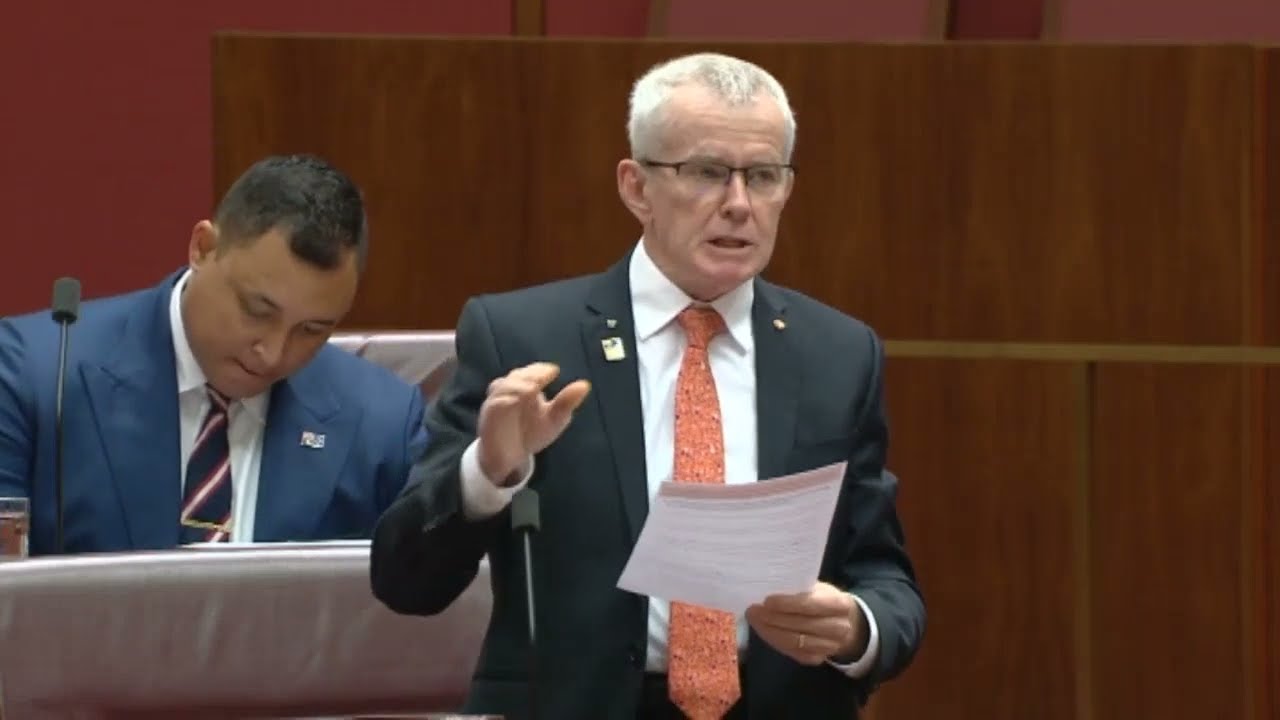
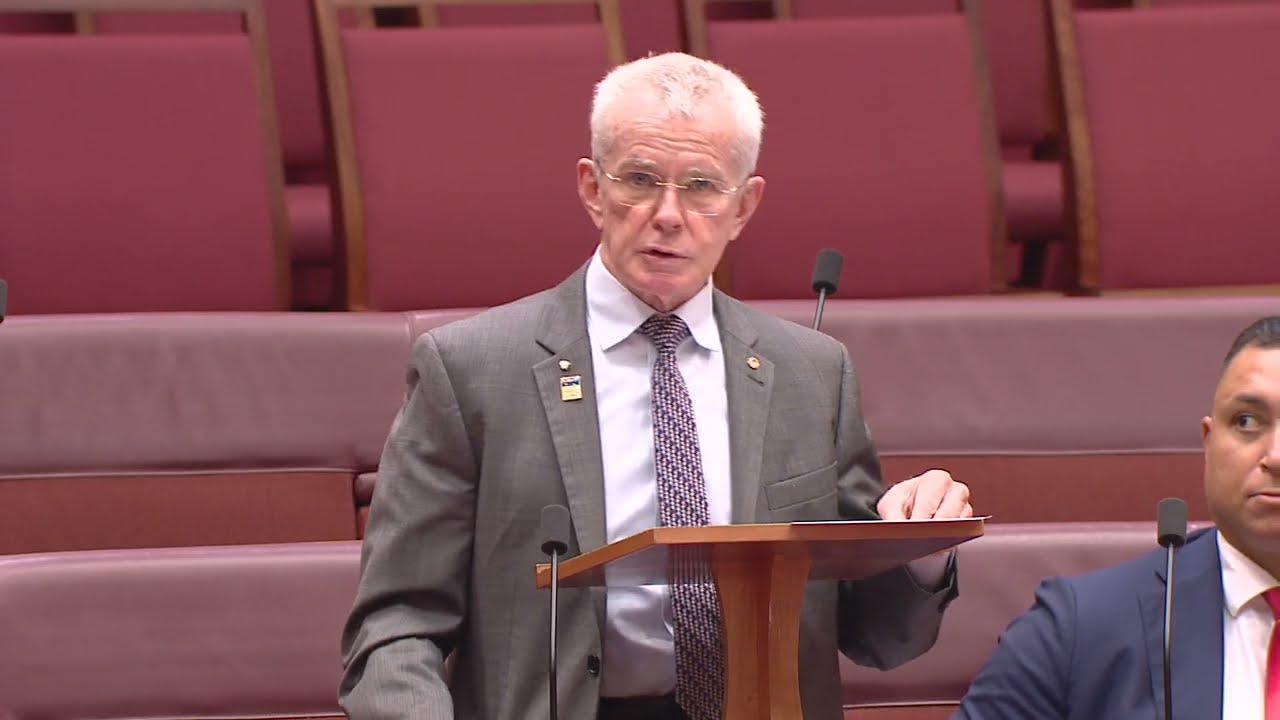
Senator ROBERTS: I’m trying to. David Farley was here just four days after being elected to represent Farrer in the recent by-election. But this line of questioning—it’s very, very important to him—is on water. These are our questions, but I’m prepping for David to get here. This line of questioning goes to the effectiveness of environmental water as against alternative uses, like growing food and fibre to feed and clothe the world. I want to compare your performance over time and raise important issues to form part of the next Murray-Darling Basin Plan. Two publications I’m referring to are the Lower Murray 2022-23 summary report: Commonwealth Environmental Water Holder science program (flow monitoring, evaluation and research), commonly called the Flow-MER program, dated July 2024, and the Lower Murray 2019-24 summary report on the same program, dated July 2025—the most recent version. On the Lower Murray, I’ll start with the concept of flowing water habitat called ‘lotic flow’. This is the concept that improving the velocity of water—something above 0.3 metres per second—improves river health, producing environmental benefits around fish spawning, oxygenation, nutrient levels and connectivity. What is your target for lotic flow, expressed as a target velocity on how many days of the year?
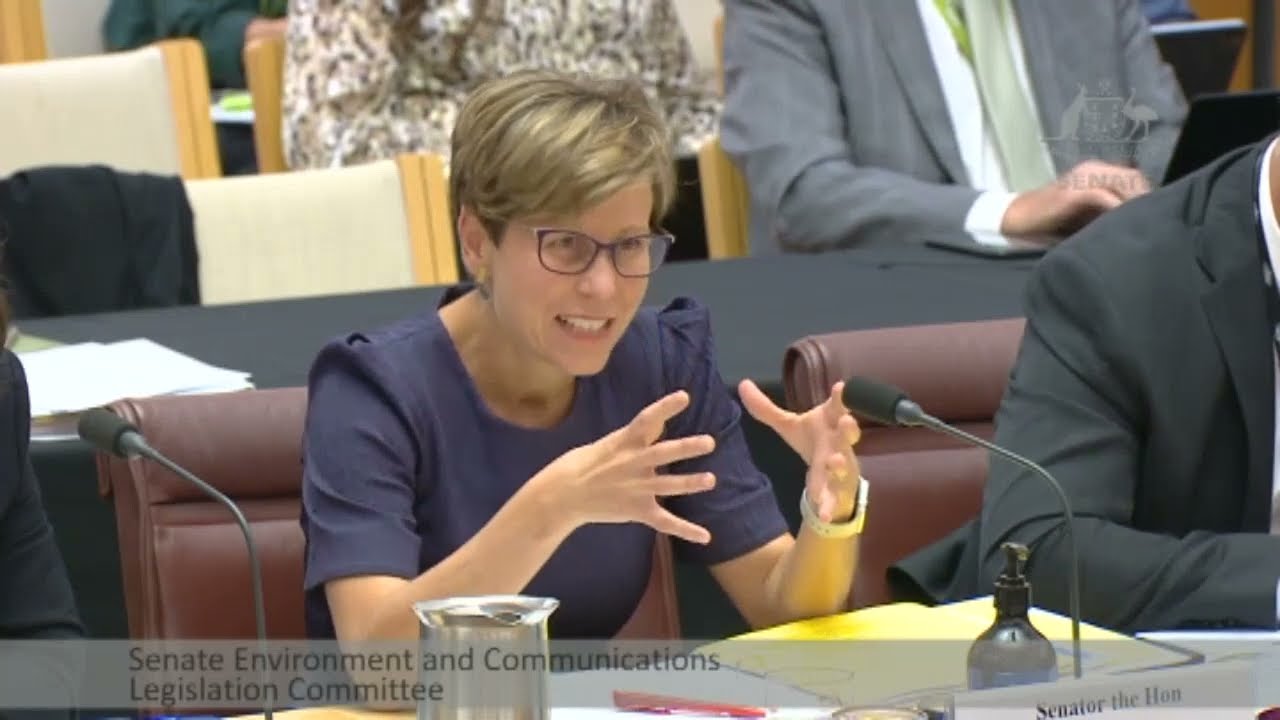
Dr Banks: We don’t have a specific target. We basically work on the volume of water that is available within the Lower Murray—our South Australian entitlements—and the water that we have available that comes from return flows. What we do is we’ll design a hydrograph, working with our state partner agencies to achieve a whole range of different outcomes for the environment. That includes native fish—trying to increase flow through a period of time, which then will get the fish to move—as well as other targets down in that area, like the level of the Lower Lakes and trying to ensure connectivity between the Lower Lakes and the Coorong, which is a really important part of the health of that system more broadly.
Senator ROBERTS: So your targets are volume?
Dr Banks: Not so much. We have a volume of water available to us which comes through the allocation frameworks that are set up by the states. Then, based on the volume of water that we have available in our accounts, we will then design hydrographs, working with South Australian government officials to achieve the outcomes that we’re aiming for. As I say, that might be a pulse flow, which not only provides that flow habitat that native fish rely on but also increases the likelihood that native fish will start to move through the system and improves productivity within the system, which also helps them build condition.
Senator ROBERTS: What’s the heads of power you’re using for this volume metric? Is it specified in the Murray-Darling Basin Plan or regulations?
Dr Banks: Basically, my role as the Commonwealth Environmental Water Holder is to manage the Commonwealth’s environmental water holdings to protect and restore the environmental assets of the MurrayDarling Basin. Like irrigators, we have allocations that are made available to us through the state allocation frameworks, and that varies from year to year. We go through a planning process each year where we will produce a water plan for the year, and then we’ll adaptively manage our water through the water year, which will depend on conditions and what’s happening both in the upper catchments and in the lower Murray and the Lower Lakes.
Senator ROBERTS: Thank you. Is this explanation that I’m about to read of the ecosystem along the MurrayDarling basin before Western settlement accurate? It came from the CSIRO, and Environment South Australia has a similar page. ‘The Murray-Darling system, especially its lowland and lower sections, was naturally highly variable and often behaved like a semi-arid or dryland river system before European settlement and regulation. It was not reliably perennial like many European or North American rivers. Ecosystems and species evolved with extreme boom-bust cycles driven by climate, not constant flow.’ Is that accurate?
Dr Banks: I think it is a reflection of the boom-and-bust cycle within the Murray-Darling Basin more broadly, where we’re reliant on rainfall to generate flows in the northern basin, for example. But I think we’ve also got to recognise that we’re working in a highly modified system, a highly regulated system which has been modified to support irrigation and town water supplies, and that’s happened over many decades.
Senator ROBERTS: I’ve tabled a paper here: ‘Australian non-perennial rivers: global lessons and research opportunities’. The Murray and Darling rivers were never perennial rivers. I’ve circulated the paper to that effect. The annual flows were highly variable along the Murray, starting with flooding during the spring rains and thaw from September through to November and then falling to low levels depending upon local rains. By autumn, the period when you unnaturally flooded recently, the river would have been very low. These are called pulse flows. Can we agree on that aspect of the science, which informs my next question?
Dr Banks: We certainly try and reinstate those pulse flows. We know that there are some systems—the Goulburn River, for example—where much of the flows has been reversed. The seasonality of flows has been reversed. So you’re getting higher summer flows to meet the demands for irrigation, and then what we do is try and improve those flows during the winter-spring period, which is the more natural timing for environmental water or water to be flowing down that system.
Senator ROBERTS: Could I have the scientific basis for that on notice, please.
Dr Banks: Sure.
Senator ROBERTS: Thank you.
Dr Banks: You referred to a number of our Flow-MER research reports. We’ve been supporting that research for well over 10 years now, and it’s very comprehensive. All the reports, including annual synthesis reports, are available on the website for everyone to review.
Senator ROBERTS: I note your 2024 release claimed credit for the following. It said: … from late March to early May 2023, Commonwealth environmental water extended the duration of flowing water habitat by 46 days. This extended the summer flow period well into autumn, when the flow would naturally have slowed dramatically. What’s the logic of extending the flow into autumn when the river would have naturally slowed in the period before Western settlement? Your remit is to restore the habitat, not make it wetter than it was naturally. Why?
Dr Banks: I don’t know the specific watering flow that you’re talking about, but, like I indicated earlier, what we certainly aim to do is, within a highly modified and regulated system, try and use the environmental water that we have available to us to try and reinstate some of those more natural flows. The flow heights that we can achieve go to the timing, the duration and the constraints within the system. It’s all focused on achieving good outcomes for native fish, in particular, but also to maintain those lower lake levels as we move down the system. I might just ask my colleague to add to that.
Mr Johnson: I can’t remember that specific flow event, but it’s probably very similar to a flow that we’ve done just this past autumn. For example, we’ve just provided a pulse flow down the Goulburn River in autumn. That was primarily around targeting outcomes within the Goulburn Valley itself—being able to support native fish movement and generally improve the health of that system as it comes out of the summer period. Those flows then continue down into the lower Murray and then can provide that benefit further downstream. It is not necessarily always the case that we’re delivering water purely for a downstream outcome. It can be that we’re targeting that upstream valley and then having that flow continue down to provide benefits further downstream.
Senator ROBERTS: This question is on notice, please. How much of your environmental water was used to create that 46 days of unnatural man-made flow in March to May 2023, and, in any year since then, where there’s been an attempt undertaken to extend the period of high flow.
Dr Banks: Yes, we’ll take that on notice.
Senator ROBERTS: The next aspect of the success criteria you’re using is river-level variability. You claim to have reduced water-level variability by 10 per cent in 2022-23. Your 2023-24 report doesn’t provide data for the 2023-24 report. This is a significant area of debate. It’s One Nation’s position that maintaining the river at a commonly called ‘topping’ at the top of the riverbank has led to saturation of the hard clay shell that protects the bank from erosion, and this causes erosion. You’re actually causing erosion. We’ve been listening to the farmers down there. I’ve visited the areas myself. Letting the flow drop to allow the riverbank to dry and harden is an essential, natural process to protect the bank in times of flood. Why are you pursuing a constant river flow target when the Murray-Darling was never constant, and, in so doing, you’re contributing to bank erosion? I’ve got photos here showing tree roots and trees collapsing. You’ve probably heard of it.
Dr Banks: I think a really key feature of the use of Commonwealth environmental water is that we can introduce variability. We’re not looking to meet constant flow heights for long periods of time. We’ll generate a flow to a particular height for a period of time, and then we’ll have a nice gentle recession on the back of that. So—
Senator ROBERTS: Why did you reduce variability by 10 per cent in 2022-23?
Dr Banks: Again, I don’t know exactly what piece of information you’re referring to, but what I can tell you is that there’ll be certain instances where, for example, for river operations in some of our rivers, the river will go up and down to meet irrigation orders within the system. What we do there is we do try and smooth out those flows, and, the reason for that is you can send a false cue to native fish. The river starts to rise, the fish might start moving and then it suddenly drops again. What we do is smooth out those flows to try and minimise the interruption of those sort of behaviours of the native fish—
Senator ROBERTS: The banks are being destroyed and the river is being silted.
Dr Banks: In terms of erosion, I’ll get my colleague to go through the Goulburn because we’ve got really good scientific evidence that shows that the water we deliver in that system is not contributing to erosion. It’s actually that change in the seasonality of water, where there are low flows during summer—and constant flows—that is causing that erosion.
Mr Johnson: Specifically on the matter you raised, Senator, Commonwealth environmental water reduced water level variability by 10 per cent, but that was mostly aimed at reducing the rate of flow recession. The idea of that is, again, not to have the water levels drop away too quickly, because it’s that rapid decline in flow rates that often relates to the bank remaining wet and subsequently slumping. If you can slow those rates of recession, that means you’re going to reduce the rate of erosion, or bank slumping. As Dr Banks said, we have seen that in the Goulburn River as well. We’ve got a whole series of very detailed scientific analysis on the riverbanks, which shows that Commonwealth environmental water has actually been a net benefit to riverbank health.
Senator ROBERTS: I’m getting to the core of this bracket of questions. In your push for unnatural environmental water outcomes, one statistic stands out: the flow over the barrages and out to sea. The plan calls for a minimum of 2,000 gigalitres per annum on a three-year rolling average, with a minimum of 650 gigalitres in any one year. How much water was sent out to sea in the last three years, please?
Dr Banks: We’ll have to take that on notice. Certainly, maintaining connection between the Lower Lakes and the Coorong is really important. It supports a number of fish to move from the sea into the river to breed. Again, what we’re doing is working within a highly modified system and maintaining those connections. There was a period between 2014 and 2021 where it was only because of Commonwealth environmental water that those connections between the river and the Coorong, or the sea, were maintained. It was like three out of a seven-year period. So a really important part of improving the salinity in those systems, and in the Coorong as well, is ensuring that we retain that connection between the Lower Lakes and the Coorong.
Senator ROBERTS: This is the one target that has actually been set by the Murray-Darling Basin Plan, and you don’t know what it is—or do you not want to say what it is? The figure I have for 2024 is 5,200 gigalitres. That is more than 2½ times the target; it’s 2.6 times the target. For 2025 I have 4,400 gigalitres. Now, remember the target is 2,000 gigalitres on a three-year rolling average. In two years, the flow to sea was almost five years worth of flow. Why have you chosen to increase water velocity beyond natural pre-Western-civilisation levels and beyond planned specs? Why?
Mr Johnson: Maybe I will go back through the numbers. We don’t have them for every year, but I do have them for the 2024-25 water year: Commonwealth environmental water contributed more than 700 gigalitres of flow through the barrages to the Coorong.
Senator ROBERTS: What was the total going out the barrages?
Dr Banks: The total barrage flows for the 2024-25 year were around 900 gigalitres. I can get the exact figure, but it’s around that 900-gigalitre figure. I think the other thing to note, on that, is that they’re minimum requirements. It’s not a focus on what the maximum flow is. That’s the minimum requirement for flows into the Coorong.
Senator ROBERTS: We have the figure here. For 2024, 5,200 gigalitres was measured going over the barrages. For 2025, it was 4,400 gigalitres.
Mr Johnson: That doesn’t—
Dr Banks: We can report on what Commonwealth environmental water went down there. As my colleague—
Senator ROBERTS: What was the total water?
Dr Banks: We’ll take that on notice. What I can say is that, in 2024-25, about 975 gigalitres of Commonwealth environmental water was provided down into the South Australian Murray, and, to 31 March this year, about 741 gigalitres of environmental water has been delivered to South Australia.
Senator ROBERTS: I’d like to know the total water going out of the barrages out to sea.
Mr Sullivan: We’ll take it on notice.
Senator ROBERTS: Thank you. This is my last question on the Murray-Darling Basin. The Murray-Darling Basin Authority is now buying back more water for the environment despite the huge amount of water you’re already sending out to sea. Has water for the environment turned into water to waste so farmers don’t get it?
Senator Watt: No.
Senator ROBERTS: Can I ask one brief set of questions on the grid?
CHAIR: Which grid?
Senator ROBERTS: The national water grid.
CHAIR: Are you able to put them on notice? We are trying to get on. Is that okay?
Senator ROBERTS: Yes, that’s fine.
CHAIR: Thank you, Senator Roberts.







Leave a Reply
Want to join the discussion?Feel free to contribute!
Using your first name