

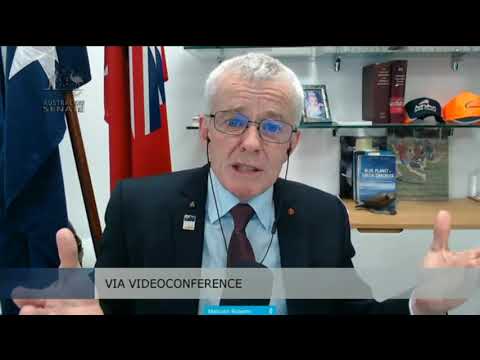
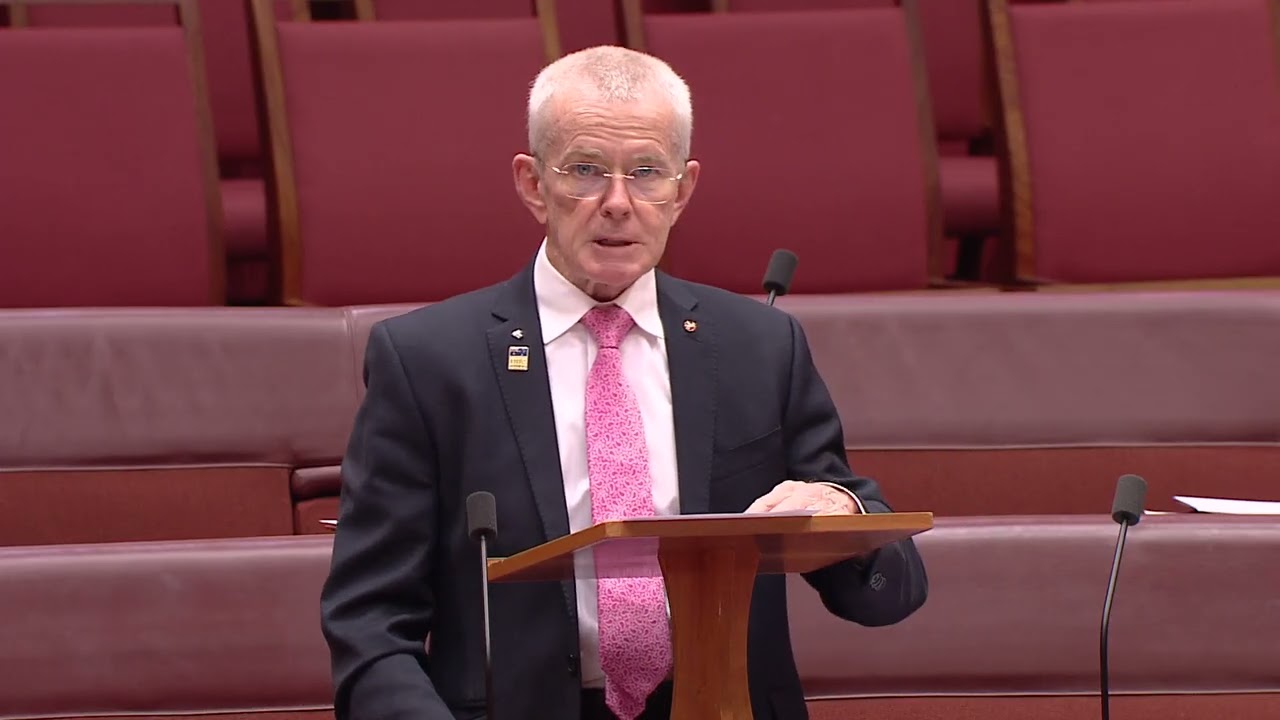
I questioned officials to clarify the implications of UN General Assembly Resolution A/80/L.65, which Australia supported on 20 May 2026, regarding the International Court of Justice’s (ICJ) 2025 advisory opinion on state climate obligations.
I noted that the ICJ’s opinion is purely advisory and non-binding. Department official Mr McCarthy confirmed the court cannot take direct action against a nation on its own accord; any dispute must be brought by another state. I raised whether any nation has ever successfully sued another over greenhouse gas emissions due to the impossibility of proving direct economic harm, a point Mr McCarthy took on notice.
I expressed the point that international agreements like the Paris Agreement are not self-executing. Mr McCarthy confirmed that treaty commitments do not automatically take effect in Australia without parliament passing legislation, in other words meaning we retain the sovereign ability to repeal those laws or withdraw, just as the US has.
I questioned whether the resolution, which gained support from 141 of 193 UN member states, is simply a political attempt to maintain the narrative on man-made climate change, which I contend is driven by natural cycles and inherent natural variation.
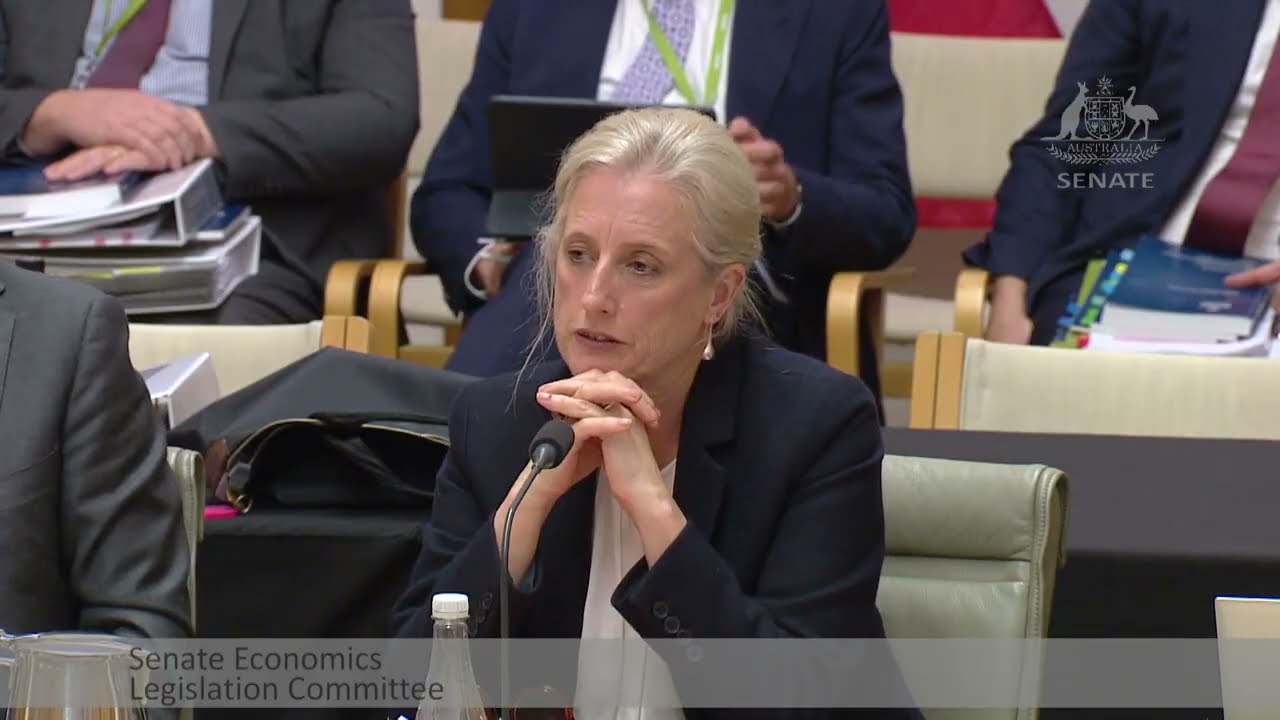
Of course, Foreign Minister Penny Wong dismissed this, noting that 141 states represent an overwhelming majority and that my views on climate change are not shared by most of the world.
Transcript
Senator ROBERTS: Minister, good morning and thank you for appearing.
Senator Wong: I have to be here, Senator Roberts, but thank you for thanking me.
CHAIR: It’s a Senate order.
Senator ROBERTS: I’d like clarity on the United Nations resolution from last week on climate change, which was General Assembly Resolution A/80/L.65, titled ‘Advisory opinion of the International Court of Justice on the obligations of states in respect of climate change’ and adopted 20 May 2026. Australia strongly supported the resolution. The resolution welcomes and gives political weight to the International Court of Justice opinion from 2025 affirming states’ obligations under international law to protect the climate system from greenhouse gases, prevent significant harm, cooperate globally and address consequences, including potential reparation. It emphasises following through on the Paris Agreement commitments. Is that correct so far? Thank you. The International Court of Justice ruling was an advisory, meaning it carried no compulsion. Is that correct? I can see your head nodding. That’s fine. Direct answers are appreciated. Isn’t it true that any action taken by the International Court of Justice against a nation like Australia must be brought by another country and only when that country can prove they have suffered economic harm caused by the respondent country they are seeking restitution from? Is that correct?
Mr McCarthy: The International Court of Justice is a judicial body. As such, it doesn’t take action against a state. It makes judgements which—in this case, it was an advisory opinion, so it’s not binding—are statements of law. Whether there was an action to be taken would be a decision for one state against another state. It’s not a relevant prerogative of the court itself.
Senator ROBERTS: Is it true that no nation has ever sued another, and is it true that this is because proving greenhouse gas emissions are causing another country damage is not possible?
Mr McCarthy: Apologies, the first part of your question was that no nation has ever—
Senator ROBERTS: Sued another country on this topic, sorry.
Mr McCarthy: You’re adding the qualifier ‘on this topic’. I’d have to take that on notice. I suspect the answer is no, but I’d have to take it on notice.
Senator ROBERTS: Thank you. The International Court of Justice has never taken action against a country over their greenhouse gas emissions using a proxy such as access to the international settlement bank, which is controlled by the UN, because they are an advisory body only, which you’ve confirmed.
Mr McCarthy: We’re conflating, I think, two concepts here. They’re a judicial body; they’re not an advisory body. In terms of the question of the international court taking action or not taking action, it’s not in its prerogative or its remit to take action or to not take action. It makes decisions. Sometimes they’re in the resolution of disputes between individual states, and sometimes it is in—as it was in this case—an advisory opinion.
Senator ROBERTS: Thank you for clarifying. Turning to the Paris Agreement itself, the reason for this resolution from the International Court of Justice—the Paris Agreement is only binding because we passed legislation to implement it, and that can be repealed. The agreement itself is not binding on Australia if we withdraw, as the USA has done. Is that correct?
Mr McCarthy: Treaties are not—the term is ‘self-executing’ in Australian law. When Australia signs a treaty, it is a binding commitment under international law, but that commitment is only given effect through the passage of legislation through the Australian parliament. In other words, our treaty commitments don’t self-execute. They don’t take effect within Australia without the passage of Australian laws.
Senator ROBERTS: I was correct—despite not being a diplomat or a lawyer.
Senator Wong: The parliament has to approve through the JSCOT process, which occurred with the Paris Agreement.
Senator ROBERTS: I’m not saying it didn’t occur.
Senator Wong: No, I wasn’t pushing.
Senator ROBERTS: Can I conclude that UN resolution A/80/L.65 was only supported by 141 out of 193 member states to make it look like the world still believes man-made climate change is real, when it’s nothing more than natural cycles and inherent natural variation?
Senator Wong: I think that’s a political statement. ‘Only’ meaning the overwhelming majority—that’s the first point I’d made. The second point I’d make is that your views about climate change are well known. They are not shared by most of the world.





Leave a Reply
Want to join the discussion?Feel free to contribute!
Using your first name