

During this session with Australia Post, I raised concerns from local outlet operators like Kylie in Agnes Waters, who face increasing operational pressures.
Australia Post confirmed that while they are not actively cutting over-the-counter services, telecommunications companies, government agencies, and banks are driving down physical transactions by raising manual fees, pushing digital channels, or pulling services like Western Union.
Addressing the abrupt closure of the Coleambally Post Office, Australia Post explained it resulted from a licensee walking away without notice. To maintain local parcel, mail, and expanding financial services, they partnered with the town’s pharmacy, a co-location model now operating across 82 locations nationwide.
I confirmed that ANZ officially joined Bank@Post on October 1st, bringing the total number of participating financial institutions to 81.
There is a need for physical over-the-counter banking in the bush. One Nation we will establish a People’s Bank to provide a full range of banking services to everyday Australians using the Bank@Post system. This will make Post Offices profitable again and improve banking options for all Australians.
Transcript
Senator ROBERTS: Here’s an email from the Agnes Waters Post Office in Queensland: ‘Hi, my name is Kylie. I managed this outlet for 14 years before buying it 18 months ago. We are 1½ hours from the next nearest full-service post office. In my community, our post office is the only practical point of access for banking, bill payment, retail, parcel services and government related business. This business is under significant pressures from several areas of operation’—which I’ll now ask about. Are BPAY options being reduced inside Bank@Post?
Mr Graham: No, they’re not. What we are finding is that telecommunications companies are encouraging their customers to digitise payment as opposed to going into a branch and paying over the counter—indeed, people are now incurring penalties or higher costs. One telco in particular has increased its fee for those people paying manually over the counter, which is a deterrent to those customers, because they’re trying to encourage them to pay online.
Senator ROBERTS: Is Western Union being withdrawn? I think you said it is because—
Mr Graham: It is being withdrawn. After a thorough review in relation to the risk of that product, we have decided, with the support of the licensees, to withdraw that product. But we have done an arrangement with Western Union that the individual licensees can have an agreement directly with Western Union to continue providing those services. We’ve also highlighted to those licensees the risks in relation to that service.
Senator ROBERTS: Are government and agency services available over the counter reducing in number?
Mr Graham: They are reduced in number, through no action of Australia Post but through the actions of those agencies or those governments by making it available only through a digital channel, or increasing fees for over-the-counter transactions, or, indeed, removing the service altogether. For example, in the Northern Territory, the NT government has removed the ability to provide that service over the counter at a post office. That service is only available at a Northern Territory government office. We are continuing to work with the NT on reintroducing those services to an over-the-counter service.
Senator ROBERTS: The retail structure that once supported LPOs has been replaced with a new system, I’m told, that provides less profit for the post office. We’ve spoken about this before. They must have lost revenue. When I go into a post office, no matter where it is, there’s less merchandise available for sale. Do you accept that change has cost LPOs revenue and profit.
Mr Graham: No, I don’t. The LPOs have a licence to go and sell whatever product they think is appropriate for their post office. In our corporate post offices, yes, we have reduced the range quite a lot. We no longer sell air fryers or electric guitars or whipper snippers or flat-screen TVs. When we did sell them, we sold them at significant loss. We have focused on five key categories, based on significant surveys from our customers about what they want to buy in a post office, including greeting cards, and travel is a big one because we obviously provide passport renewal. We provide travel insurance and other things related to travel, cheap mobile phones and SIM cards, and then a small range of general merchandising. But we continue to provide the licensees with access to Australia Post products. As I said in my earlier statement, with things like photocopy paper or our greeting cards, we have dramatically increased the margins available to licensees through our collective purchasing power and are making those available as an Australia Post branded product. The product’s called JoyUp—that’s not my choice; I’m not a marketing person—but the licensees have the ability to put whatever product they feel they can sell within their Post Office. Indeed, I’ve been to many licensed post offices where there’s a broad array of products that they make money on.
Senator ROBERTS: There’s nothing to stop them putting their own arrangements in place?
Mr Graham: Provided it complies with Australian safety standards and Australian copyright standards, correct.
Senator ROBERTS: I’ve got Kylie’s letter in front of me. I was going to read some out, but in the interests of time I won’t do that. Kylie talks about uncertainty around contract terms making it hard to plan for the future. Is this something you’re familiar with?
Mr Graham: No. Again, if it’s a licensed post office, it’s a perpetual licence. As I said, we have been in consultation with the licensed post office council and both licensee associations to look at modernising the agreements we have in place around commissions. These were set up many, many years ago and, again, aren’t really fit for purpose, and both licensees agree. We continue to be in consultation as to how we can modernise those agreements and look at things like creating a larger fixed fee to provide greater sustainability and greater certainty. However, I go back to the previous comments—the nature of a post office, and how it is used today, is dramatically different from how it was 10 years ago, even five years ago. We continue to work with licensees in relation to the sustainability of these outlets, but it is challenging.
Senator ROBERTS: Well, I’ve been watching, in the last 10 years—since I’ve been in the Senate—just how dramatically your letter traffic has gone down. Your parcels are picking up, but you’ve got increased competition. So your traditional services are now a small proportion of your overall services.
Mr Graham: Correct. As I said, 60 per cent of the reason someone goes into a post office today is parcel related; next is Billpay, then Bank@Post and then things associated with passports, but all three of those are in decline.
Senator ROBERTS: And there’s a huge community impact from a post office being shut.
Mr Graham: Indeed. I’ve been to regional towns where the licensee has handed back the post office. Again, as Senator Henderson mentioned, in the case of Tathra it’s been in place for 123 years. It’s been in place for that long because it was one of the stops where Cobb & Co used to refresh the horses. That’s how we ended up with post offices in these small country towns. But, again, that community is using that post office for eight transactions a week.
Senator ROBERTS: So why did Coleambally Post Office close? I understand it was out of the blue, sudden, and now the only service is the pharmacy, running the mail service—with no attempt on your part, apparently, to reopen the location. I checked, and the population at Coleambally in 2016—that’s the latest figure I could get— was 1,330. So it’s not a tiny town, and it’s an irrigation area, which means there should be good money around.
Mr Graham: Yes, I agree. We literally had no notice, nor did the town. The licensee literally walked away— put a lock on the doors and didn’t come back—and we continued to pursue that licensee. We immediately set about ensuring that people could get access to mail and parcels, because that was the priority for the town. We worked with the local pharmacy, who stepped up to the plate and was able to provide those services under a CPA arrangement. We continue to work with that pharmacy. Indeed, we met with council again this week to look at how we can reintroduce financial services, and we are committed to doing that in Coleambally. But this is a good example of what happens when a licensee vacates with no notice. We are as blindsided as the community. We recognise that Coleambally requires these services, and we’re working with the community to make sure these services are available. We do see the association with pharmacies as a good partnership. Pharmacies, like Australia Post, are a trusted brand in the community. They have extended opening hours. Unlike Australia Post, most of them open seven days a week, generally. They, also, are under threat from changes within their and are looking at additional foot traffic to generate sales. We now have 82 post offices in conjunction with pharmacies. It’s proven to be a successful model, which is why, when Coleambally came up, we immediately defaulted to talking to the local pharmacy, with the support of the pharmacy.
Senator ROBERTS: So you’re in partnership with some pharmacies in some areas?
Mr Graham: With 82 pharmacies, yes.
Senator ROBERTS: What do you say to rural customers who say that your level of care about the plight of rural customers is a scandal? How far is it to your local post office?
Mr Graham: I live in the city. My local post office is probably 1½ kays, two kays.
Senator ROBERTS: What do you say to customers who are concerned about the plight?
Mr Graham: We agree with their concerns. That’s, again, why we’re happy to have the regulatory commitment of 2½ thousand post offices in regional, rural and remote areas. We do have some significant difficulties, particularly in the remote locations where we continue to fund a presence because it’s the right thing to do, and we’ll continue to do that. Again I call out the difficult nature of these licensees and their viability. Where a town has a need, we will make sure we satisfy that need.
Senator ROBERTS: I want to touch on banks quickly. Freedom-of-information requests revealed part of the terms for the government to approve a ANZ’s acquisition of Suncorp Bank was for the ANZ to make the best endeavours to join Bank@Post on commercial terms for a minimum of three years. Can you provide the date they joined so I can ensure that they at least stay for the three years?
Mr Graham: I’m pleased to say that, after some intensive negotiations, we convinced ANZ to join. Their original premise was that they didn’t have a lot of customers interested in the service. However, they were active from 1 October last year as a member of Bank@Post, and we have seen a significant activity with ANZ customers in relation to using those services both in metropolitan areas and regional areas. Again, this has provided an additional income stream to licensees because, obviously, ANZ was not part of Bank@Post previously.
Senator ROBERTS: How many banks now participate in Bank@Post?
Mr Graham: We have 81 financial institutions and banks participating. Obviously the big four banks are the bulk of the transactions, but there are 81 institutions, credit unions, smaller banks and other financial services in relation to which we can perform over-the-counter services.
Senator ROBERTS: I think the only question I’ve got left is: will One Nation get into government and create a people’s bank using Bank@Post for a full range of banking services before you shut down every branch in the bush?
Mr Graham: Well, first of all, we are not shutting branches in the bush. We have no intention of being a full service bank. We believe that the over-the-counter services we provide are a valuable community service, and we will continue to sustain those services. Moving from an over-the-counter service provider to a full bank is a large undertaking and not one that we are considering at Australia Post.
Senator ROBERTS: Thank you very much for attending. Thank you for your answers and punctuality.
CHAIR: Thank you, Senator Roberts.

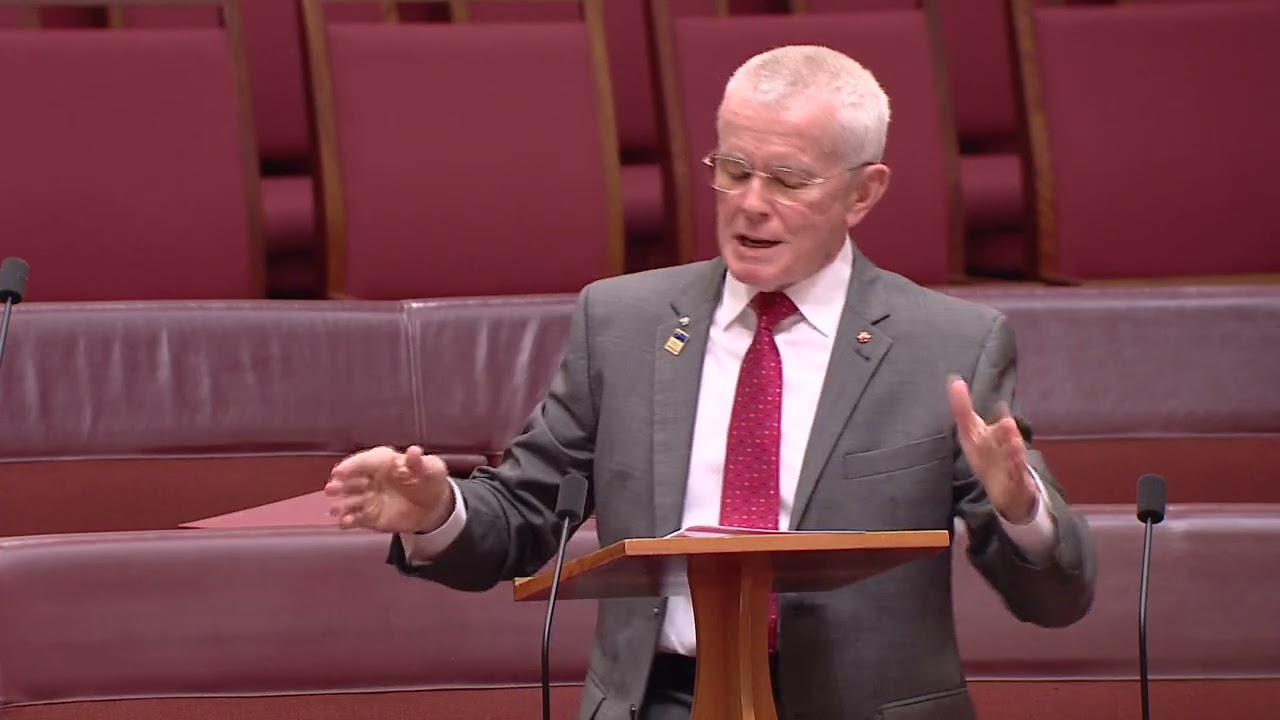




.jpg "National Security Must Comes First")
Leave a Reply
Want to join the discussion?Feel free to contribute!
Using your first name