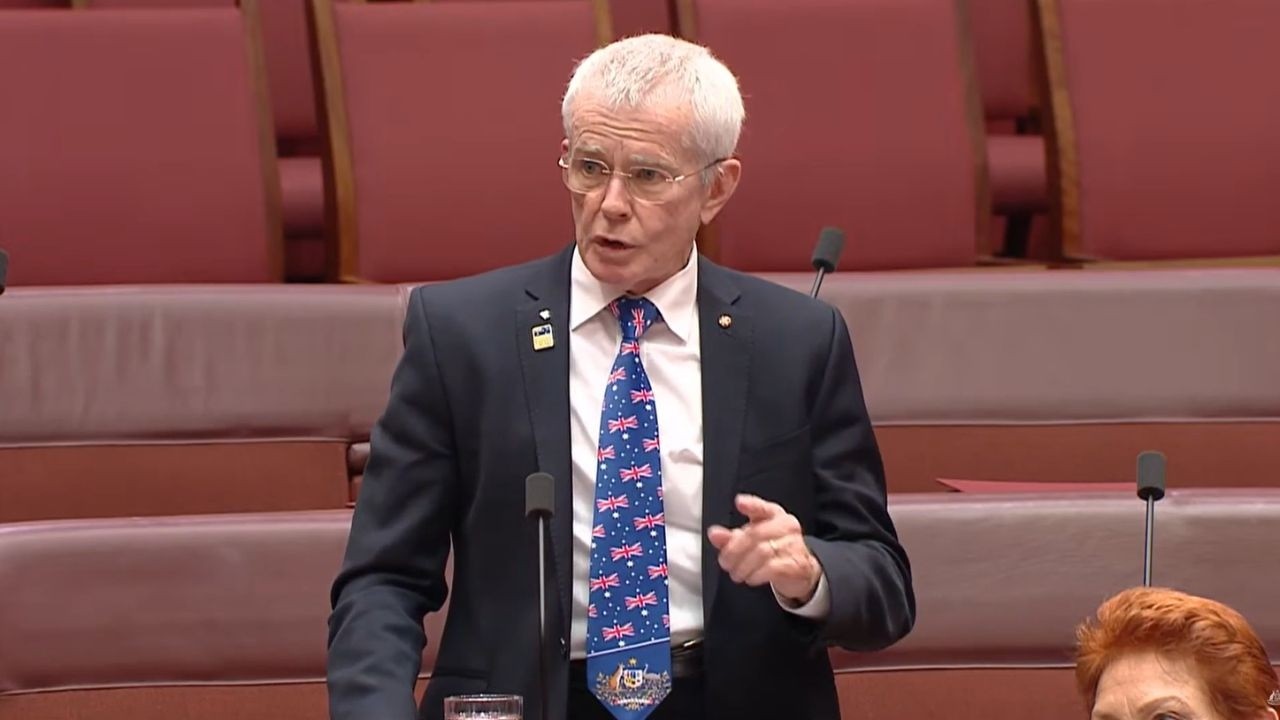
During Question Time, I asked Finance Minister Katy Gallagher for the real bottom line on Snowy Hydro 2.0.
Not just the construction cost. I asked for the true total to taxpayers: interest on the debt, transmission lines, endless maintenance, and the required wind and solar replacements.
The response? Labor admits they don’t even know how much it will cost or when it will be finished. A recent ANAO audit confirmed there is no reliable system to track future costs, no completion baseline, and no quality data.
Originally pitched as a $2 billion project, it’s already blown out to $42 billion — and that’s just a fraction of the final bill. When you factor in the full life cycle costs and the massive grid overhauls needed, taxpayers are staring down at $100 billion plus in costs for a project that will lose money every year, and provide a tiny amount of electricity at a totally unaffordable price.
Yet, Labor refuses to cancel it.
Reliable, low-cost clean coal power stations could secure our energy grid today without bankrupting the nation, however Labor remain fixated on Net Zero at all costs and hardworking Australians are paying the price.
It’s time to stop the waste and put cheap, reliable power first.
Transcript
Senator ROBERTS: My question is to the Minister for Finance, Senator Gallagher, regarding the cost to taxpayers of the Snowy Hydro 2.0 scheme. Minister, can you inform the Senate how much Snowy Hydro 2.0 will cost to complete, including cost of construction; capital costs through to the end of the financing cycle, meaning interest on the debt; maintenance through the same period; the cost of transmission lines dedicated to this project, including maintenance; and, finally, the industrial wind and solar installations, including cyclical replacement, needed to generate the power? In short, if it’s built and it’s paid off, how much all up is this thing going to cost?
Senator Gallagher: I’m happy to update the chamber with the information that I have available to me on Snowy 2.0. I think you’ll remember that, when we came to government, we inherited a project that was having significant difficulties. If you remember, I think former prime minister Turnbull announced this project and said it would cost $2 billion. It had not had a business case done. There had been no scoping done. There had been no surveys done of the geological environment that the project was going to be built in, and so there was a significant reset probably in the first couple of years of our government, and that increased the project total cost to in the order of $12 billion. Currently, the Snowy board is undertaking a cost reassessment for the total project cost. We have not received that work yet. It is due to the government towards the end of July. I would say that Snowy 2.0 is more than half built. It is an important project for the nation in terms of the security and stability of our energy grid. It is an important project, but, as to any further reassessment of the costs, the information that I have are the ones where we took that initial reset to properly scope the project, get it back on track and work with the organisation to deliver the project when it was raised to $12 billion.
The PRESIDENT: Senator Roberts, first supplementary?
Senator ROBERTS: The Australian National Audit Office audit released this month found significant shortcomings, including no reliable system to track future costs, no base line for project completion and no quality data with which to work these things out. In short, we don’t know how long it’s going to take and how much it’s going to cost. Just like the uniparty’s net zero, there’s no plan. Minister, will you cancel this project?
Senator Gallagher: No, the government will not do that. As I said, it is an important project. I think I saw a figure that said it was 72 per cent complete, but I will correct that if I am wrong. I can’t find that number in front of me, but I was reading some documents about Snowy Hydro on the weekend. In relation to the ANAO report—I should say this because you didn’t—it did say that the management of the project has been partially effective and there were, I think, five or so recommendations which outlined deficiencies in some project governance arrangements. Snowy 2.0 has accepted, I think, the vast majority of those recommendations. It is an important project for the stability and security of our energy system. It’s an important project to get done, but it has been a troubled project from the beginning, including when it was so poorly implemented initially by those opposite.
The PRESIDENT: Senator Roberts, second supplementary?
Senator ROBERTS: Labor appears to be upset about Senator Whitten signing a contract to sell his shares in September 2023, almost two years before his Senate nomination. Minister, at what point do you accept that a clean coal power station provides cheaper power, much more of it, than this fantasy project costing taxpayers hundreds of billions of dollars, perhaps a trillion, before it’s paid off? When will you give up this fantasy?
Senator Gallagher: Again, Senator Roberts, this project is important for the security and stability of the energy grid. In relation to coal-fired power stations, there have been none built in this country for decades, and, indeed, under the former government, I think there was $3 million allocated to Collinsville to explore that. I don’t know what happened to that and where that project ended, but we heard nothing from it. The market is not building new coal-fired power stations. They’re not. If they were able to deliver the energy that you say they would be able to do in a way that you want them to do, the market would be investing in them. They’re not. The market is investing in renewables because it delivers cheaper and more reliable energy. We’ve seen that, indeed, in some announcements that Minister Bowen has made in recent times about the wholesale price of electricity coming down because of the amount of renewables in the system.