

I recently asked questions about the government’s decision to cut the private health insurance rebate for seniors. Senator Green and government officials said that the rebate will now be based solely on income rather than age, aligning support across all cohorts. The government expects to save $3 billion from this measure, which it says will be reinvested into aged care and public hospitals.
It’s estimated that 3.1 million people will be affected, experiencing an average rebate reduction (and effectively a premium increase) of $250. Additionally, it’s predicted that approximately 44,000 people may drop out of private health insurance entirely.
I expressed my concern that forcing seniors into the public system would worsen existing hospital shortages. Amazingly, I was told that the impact on the public system would be minimal (less than 1%) and spread out. It was also highlighted that $24.4 billion was being invested into the public health system, adding that workforce and bed management are ultimately the responsibilities of state and territory governments.
I accused the government of punishing seniors to fund wasteful spending and a “socialist agenda.”
Senator Green rejected this statement, framing the move as a necessary offset to fund record investments in aged care.
Transcript
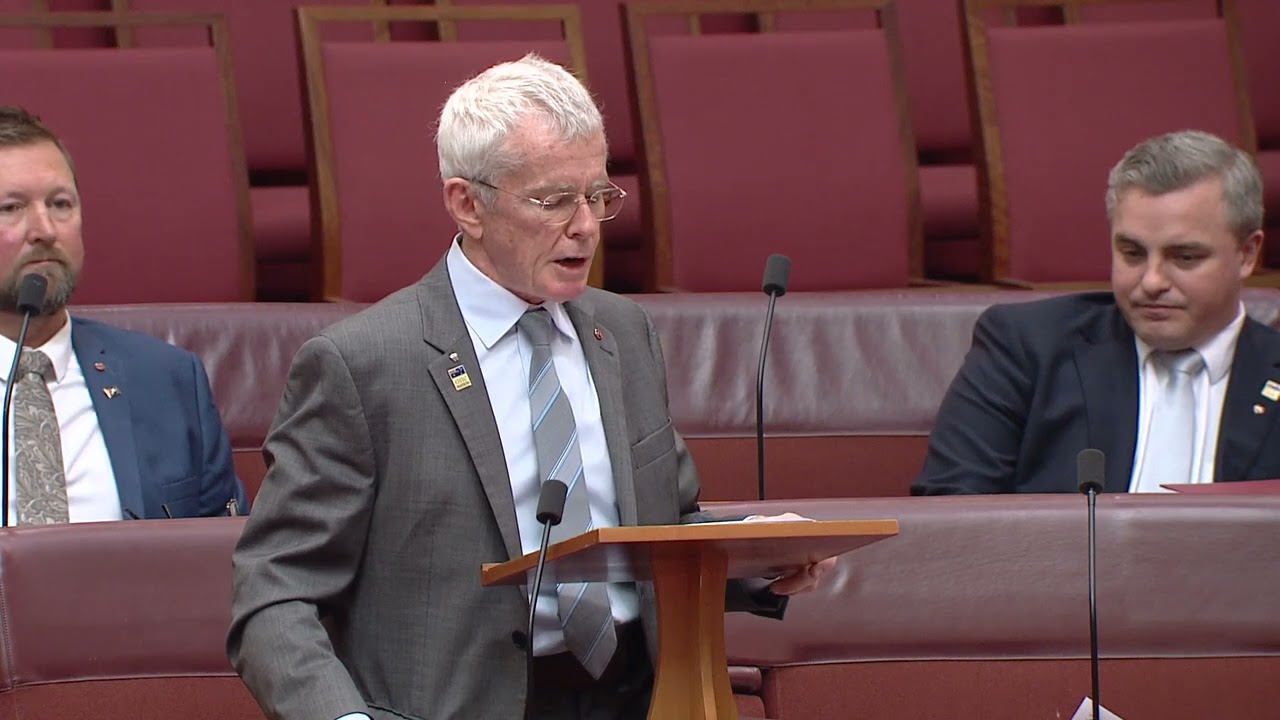
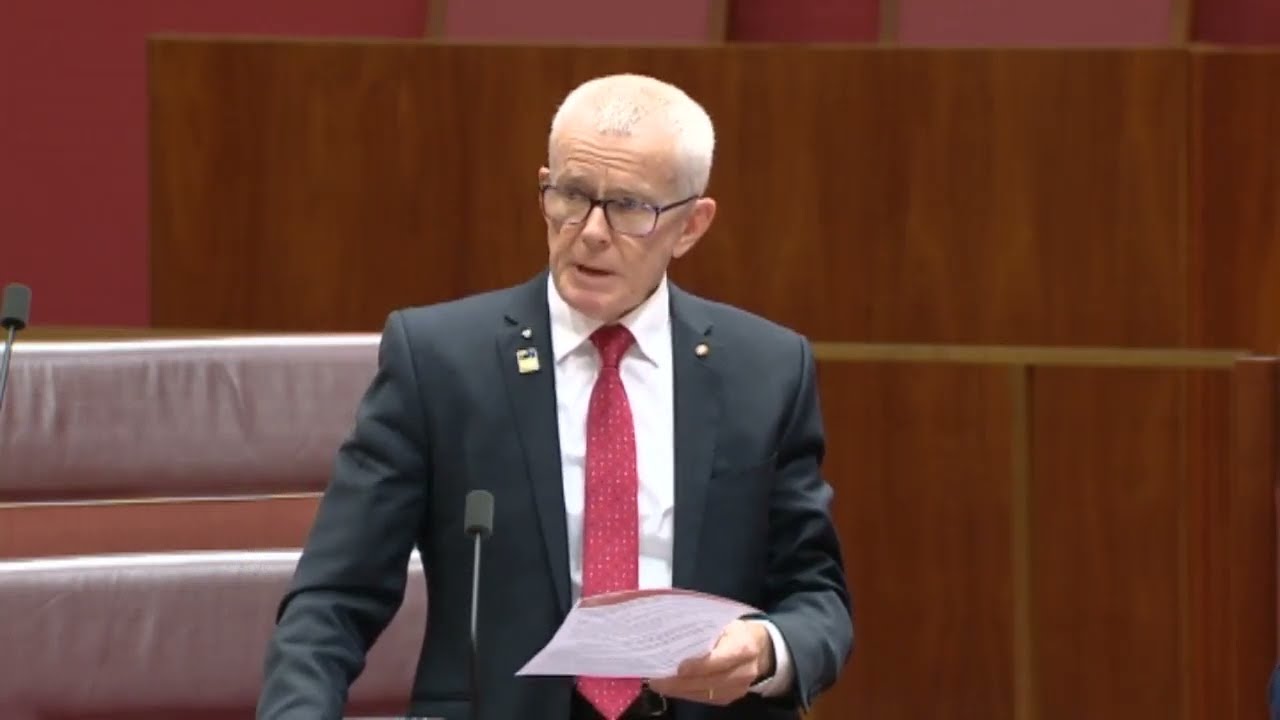
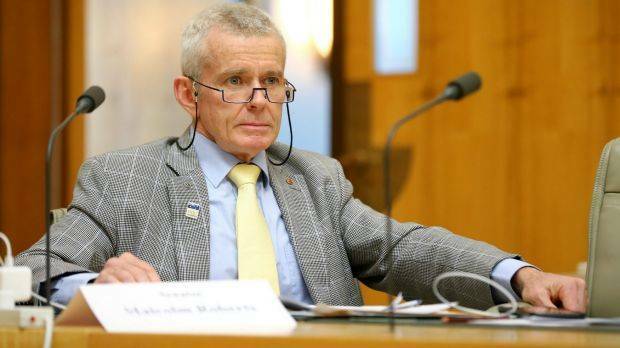
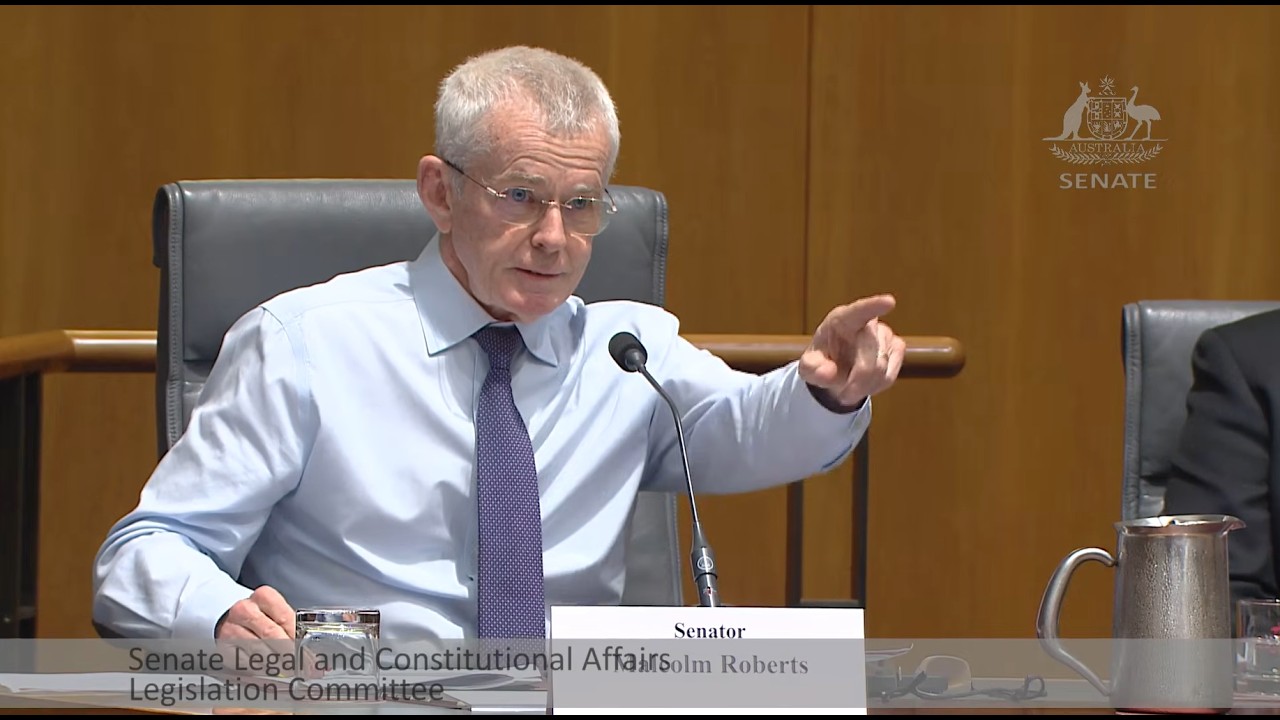
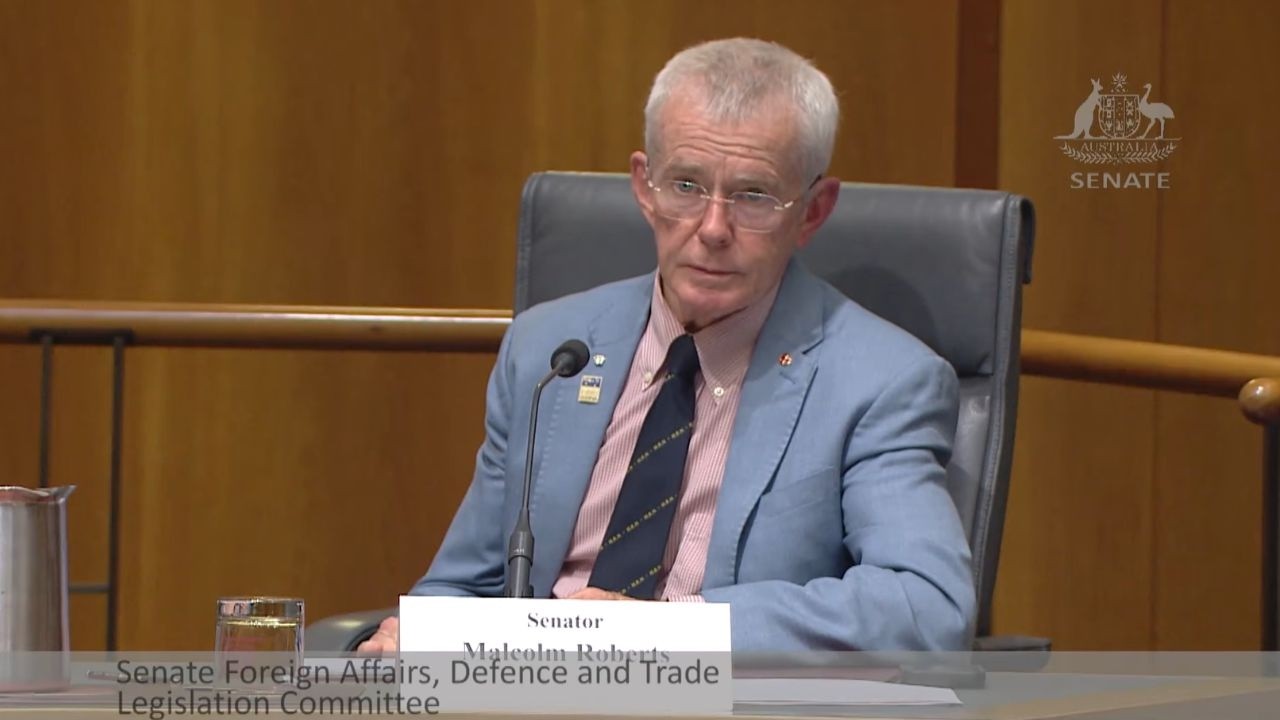
Senator ROBERTS: I want to talk about the private health insurance rebate being cut. It was announced in the recent budget that the rebate for premiums paid by seniors towards private health insurance would cease; why? Is this a socialist agenda, Minister?
Senator Green: No, it’s not. We did go through this quite lengthily this morning. I don’t plan to add too much to what the minister had to say in response to questions from Senator Ruston, other than to reiterate that, under the proposed changes, all Australians will now receive the same private healthcare support based on their income and not on their age. What we’ve set out is that, through this budget and as a consequence of this decision, we will be investing over $3 billion in delivering more aged care beds, more packages and better care for older Australians.
Senator ROBERTS: I’d like to get on to some specifics after this next question. Why does the government wish to punish seniors, most of whom have chosen to opt out of the public health system and pay premiums to receive private health treatment, by now wanting to make them pay even more than they currently pay?
Senator Green: I reject that assertion in your question. We are investing a record amount of funding into improving the healthcare system, particularly for aged care and older Australians, and that’s why we’ve made this decision. Of course, as you will stand up in the Senate many times over the next couple of months and decry the spending from our government, we know that it’s important to offset decisions that we have to make. That is why we have said that this decision will benefit older Australians through the aged care system.
Senator ROBERTS: How can you deny that older Australians on private health cover will not be paying more?
Senator Green: We’ve gone through this at length this morning. If you have a question about the impact or the policy decision, I will direct that to the officials. But I can say to you that, through this budget, we are making record investments in healthcare and aged care
Senator ROBERTS: And older Australians will be paying more, which is a point that I’ll get to in a minute, and this is during a cost-of-living crisis. Currently, how many seniors, effectively, will be forced to pay more for private health cover or enter the public system? Do you have any modelling?
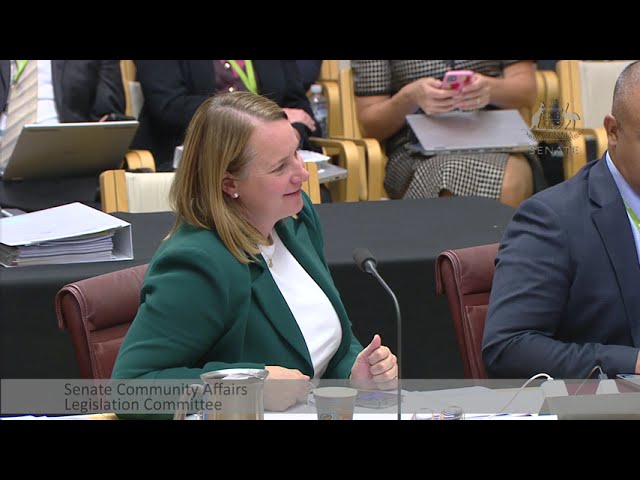
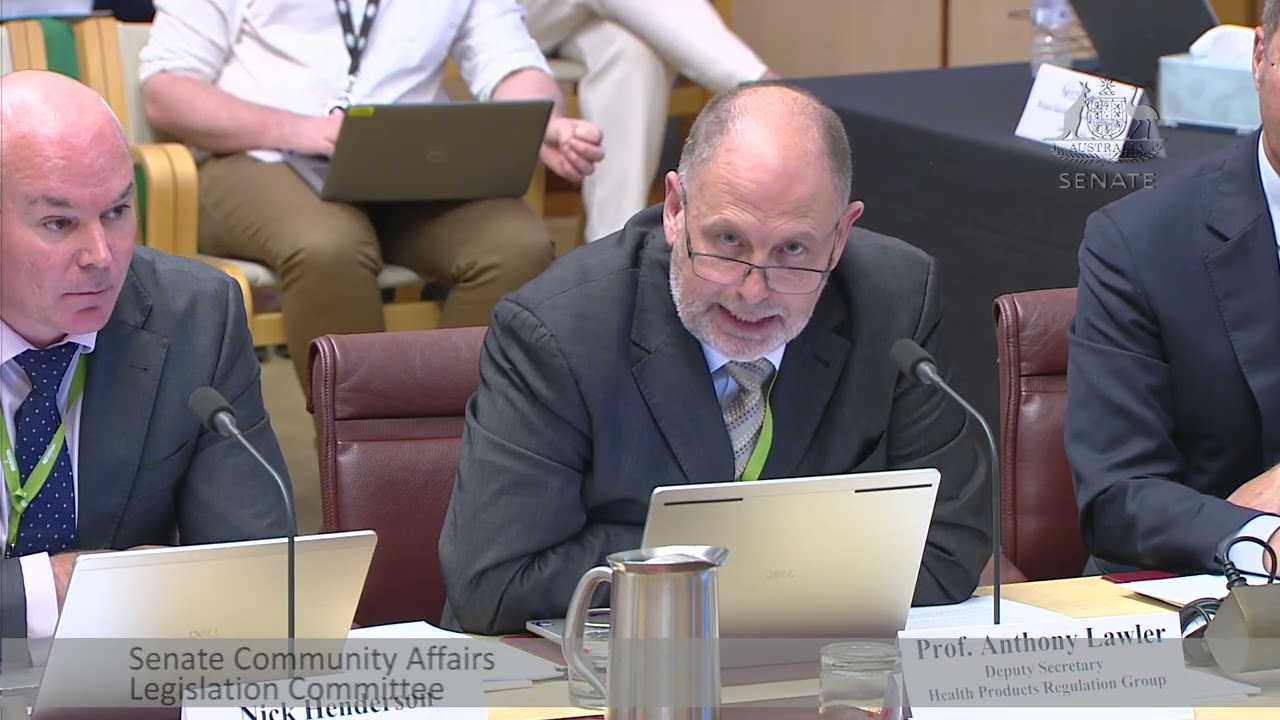
Mr Hawkins: As we discussed this morning, 3.1 million people will be affected by the change in the rebate. We also put on record—we talked about this at length this morning—that our modelling would suggest that potentially about 44,000 might drop out of having cover and, therefore, would then no longer engage with the PHI system.
Senator ROBERTS: That’s what I was after. What would be the effect of the extra load being placed on the public health system? Hospitals are already short of beds now.
Mr Hawkins: As I’ve said, our modelling would indicate that it’s a less than one per cent impact on the public health system and, again, as we went through in quite a lot of detail this morning, that would be spread across the system, with not everyone needing to use the system at any one time. Also, we might find that people decide to opt out of PHI but then self-fund any care that they need.
Senator ROBERTS: We’re already critically short of beds in many hospitals due to mass immigration. Post COVID injections, cancer detection has increased dramatically. Cancer deaths have decreased, because of treatment. But the available beds have decreased. This is going to add more strain to the public health system.
Ms Street: An additional $24.4 billion has also been invested into the public health system, bringing it up to $220 billion over the five years. So, yes, there might be some ‘additional’ but, as we’ve said, it would be less than one per cent. We think that estimation is at the higher end, because we do think, potentially, people will self select into private, or they may be people who are less likely to use the services anyway, so a number of factors contribute to that number. So we think this investment and this measure will have a minimal impact on that element.
Senator ROBERTS: What would be the total value of the extra premiums raised by those who choose to stay in the private health system?
Mr Hawkins: We’ve calculated that there will be an average impact of $250 on those who will have their rebate reduced. Everyone was to have access to the rebate, but it’s the size of the rebate that is reducing, and our average calculation is about $250.
Senator ROBERTS: How much does the government plan to save by refusing to rebate premiums for older Australians, or by cutting them back?
Mr Hawkins: By cutting the rebate, we are looking at $3 billion.
Senator ROBERTS: Has the government modelled the extra cost to the public system by absorbing older Australians, who are more likely to require major healthcare in their elder years?
Mr Hawkins: No, we do not have that specific level of modelling. But as I’ve said, we have looked at and modelled what we think the impact would be, and that’s under one per cent.
Senator ROBERTS: What about the chronic shortage of beds, doctors, nurses, specialists and allied health professionals in public hospitals?
Senator Green: That’s veering a little bit into outcome 1, Public hospitals. But I’ve got Caitlin O’Brien from our public hospital team here, if you want to talk about the investment that the government is putting in through the NHRA agreement that we’ve put in place. Do you want to cover that?
Ms O’Brien: As Ms Street has said, an additional $219.6 billion over five years has been invested into the state- and territory-run public hospital system. Your questions in relation to workforce capacity and beds are best directed to state and territory governments who, under the National Health Reform Agreement agreed on 30 January, are very clearly listed as the stewards of their system.
Senator ROBERTS: Would you not have assessed that, though, before making the changes?
Ms Street: As we’ve indicated, we think the ‘additional’ is less than one per cent, and we think that estimation is at the higher end. So, in terms of the fiscal impact, it will depend on the services that people need and the conditions that they’re seeking treatment for.
Senator Green: The officials have made this point but, again, we’re investing almost $25 billion into the hospital system over the next five years.
Senator ROBERTS: Minister Clare O’Neill said, reportedly, that the budget is deliberately hitting older people. It’s a tax grab because you’re paying for so much waste in government.
Senator Green: I don’t think that’s what Minister O’Neill would have said. I think you might be verballing her.
Senator ROBERTS: I’m just going on reports. It is a fact that the budget is also hitting young people. What I’m getting at is that this is a cover for the massive waste within your government spending, and now you’re going to ask older people to share in that.
Senator Green: No. We are making record investments in once-in-a-generation reforms in aged care and healthcare. That includes investing almost $25 billion into public hospitals, funding the states and territories to do the very important work that they do in making sure that the public hospital system is free.
Senator ROBERTS: It’s a fact, Minister, that older people will be paying more.
Senator Green: We’ve changed the rebate so that now it’s means tested, so it’s based on income now. We can take you through how that might impact certain cohorts, but we have changed the rebate so that now it is means tested on income.
Senator RUSTON: On a point of clarification, Minister, you just said that you’ve changed the rebate so that it’s means tested on income. Are you suggesting that it’s currently not means tested on income?
Senator Green: No, that’s not what I said.
Senator RUSTON: You just did say that.
Senator Green: I’m not going to go back over the evidence that Senator Gallagher gave to you this morning. What I’m saying to Senator Roberts is that there is a means test for the rebate that is based on income.
Senator RUSTON: Now?
Senator Green: How semantic do you want to get?
Senator RUSTON: You just said that it is now going to be means tested. It has always been means tested.
ACTING CHAIR: I think, as the secretary has said, it is ‘solely’.
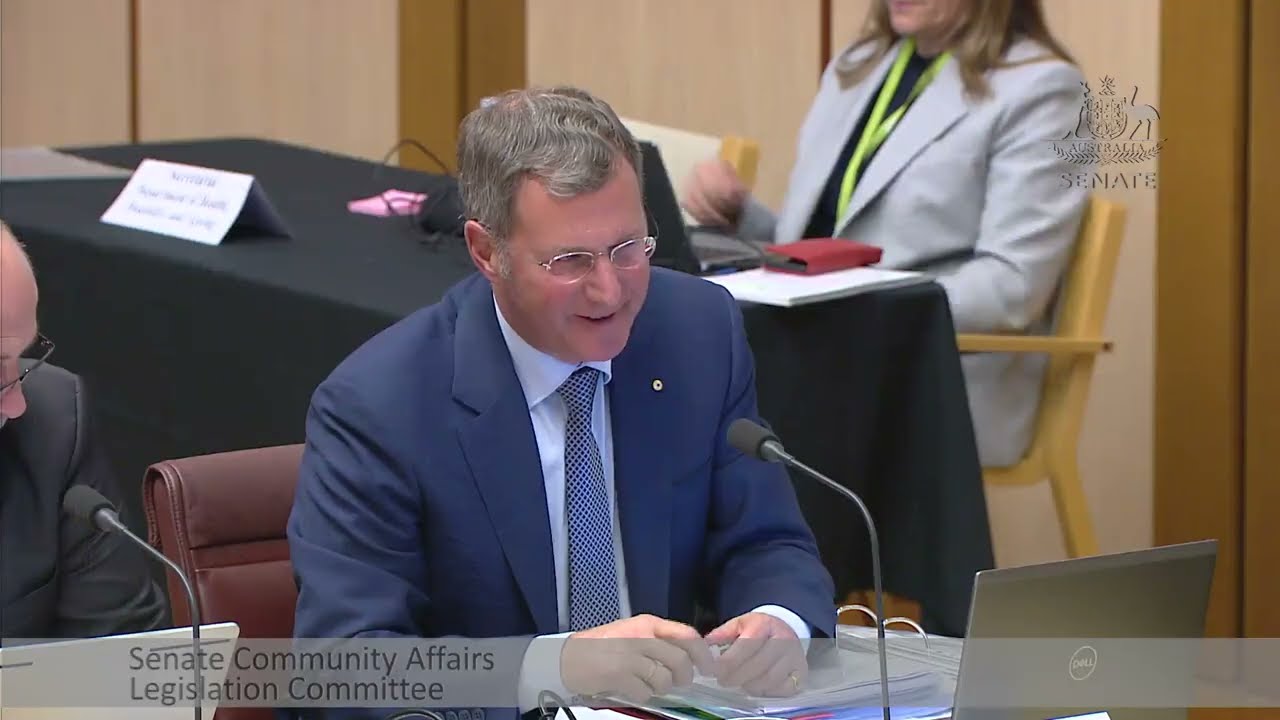
Mr Comley: ‘Solely means tested’. In fact, it hasn’t always been means tested.
Senator RUSTON: It was means tested prior to this change.
Mr Comley: I think it was, but it was not means tested on introduction in 2000.
Senator RUSTON: It has been means tested up until now.




Leave a Reply
Want to join the discussion?Feel free to contribute!
Using your first name