

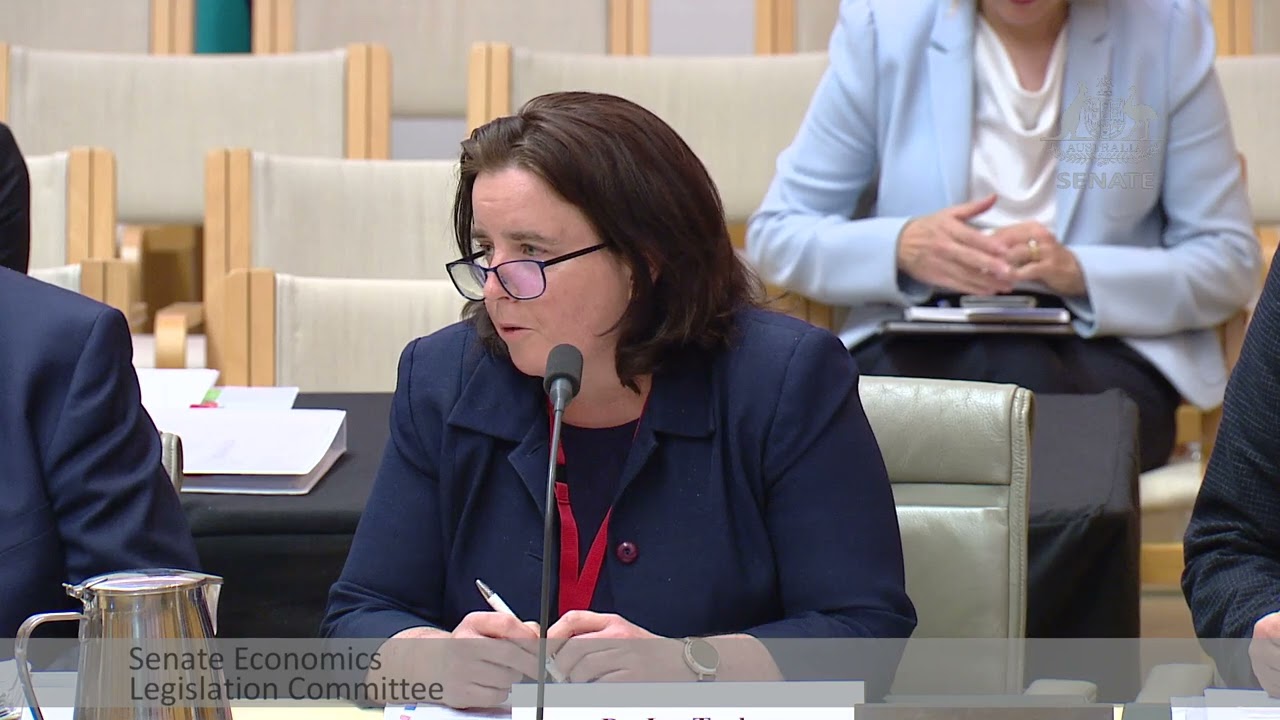
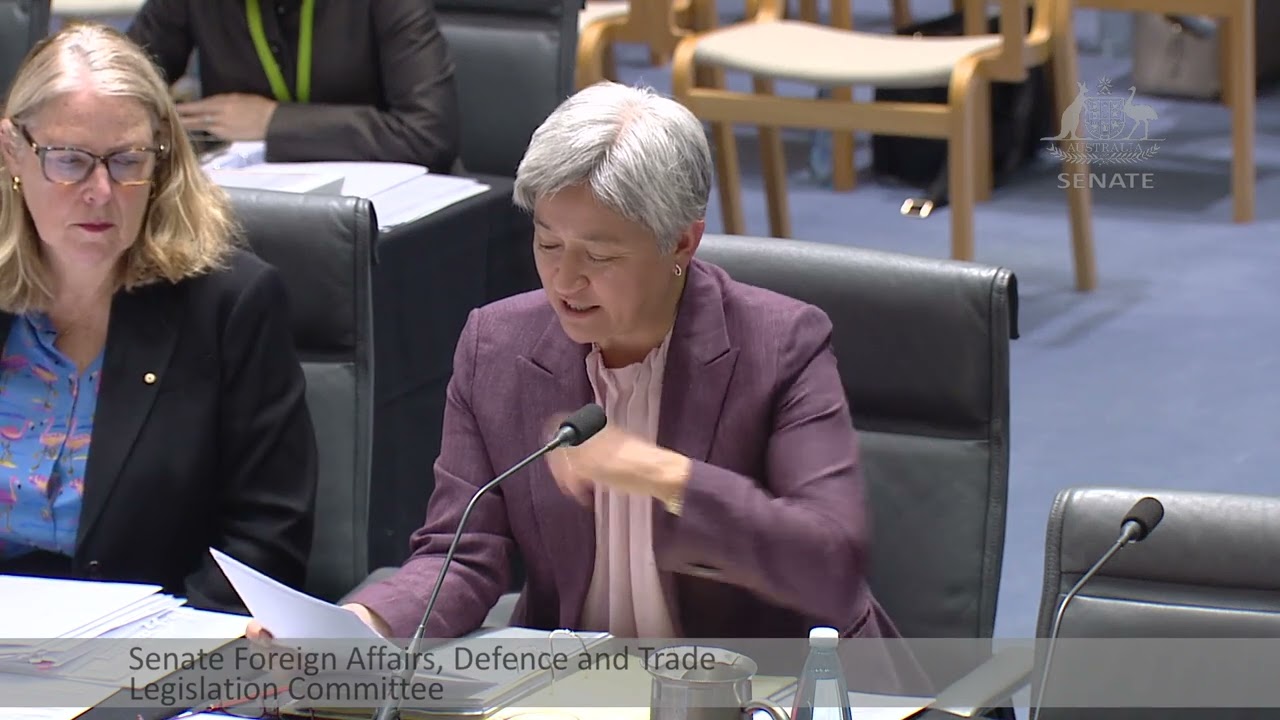
During last week’s Senate Estimates, I questioned Minister Chisholm and Acting Secretary of the Department, Ms Justine Saunders, regarding the ongoing mismanagement of the Fire Ant Eradication Program in South East Queensland.
Despite them saying that the Department has been working closely with Queensland operatives, both Minister Chisholm and Ms Saunders claimed they were unaware of any issues within the program. They stated that they had seen no evidence of mismanagement by those on the ground in Queensland.
When asked directly about what might constitute a “reasonable excuse” for the program’s failings, they declined to comment—which would suggest that such a determination should be a matter for the courts.
In light of this, I am calling on anyone with evidence of mismanagement or misconduct by program officers to urgently send it to both Minister Chisholm and Ms Saunders.
— Senate Estimates | October 2025
Senator the Hon Anthony Chisholm
Assistant Minister for Agriculture, Fisheries and Forestry
PO Box 6100
Senate
Parliament House
Canberra ACT 2600
Email: senator.chisholm@aph.gov.au
Ms Justine Saunders
Acting Secretary
Department of Agriculture, Fisheries and Forestry
GPO Box 858
Canberra ACT 2601
Email: justine.saunders@aff.gov.au
Transcript
Senator ROBERTS: Okay. I’d like to move onto fire and a broad overview of the federal government exercising to ensure the states are successful because we’re using federal funds in the National Fire Ant Eradication Program.
Ms Sawczuk: We’ve been very closely monitoring the delivery of the program as the chair of the national management group, and also as a key party to all of the governance program and the technical committee. We have also been working with Queensland, and the program specifically, by providing compliance and enforcement officers some assistance around communication.
Senator ROBERTS: You’ve been providing them to Queensland?
Ms Sawczuk: Yes, we have.
Senator ROBERTS: What are their duties?
Ms Sawczuk: To provide, for example, assistance on a compliance and enforcement framework, noting that there were a number of detections of importance; having a look at the compliance and enforcement activities done around that; and also working with the program to assess the triggers and the risks, if any of them are being met as a result of the detections. We’re also working with them to strengthen communications. We’re looking at the messaging that is getting out, particularly some of the success stories but also some of the targeting of the right messages. And because we are the national management group committee chair, we’re providing some advice on governance and cost-sharing arrangements. We work very closely with them to monitor the program, given that there is a significant investment, but also given that we do have that national coordination role in the governance.
Senator ROBERTS: That’s where I’d like to go with this. We do provide a lot of federal taxpayer money for this Queensland program—it’s largely Queensland. Is this government aware of the overreach and intimidating tactics being used by the states and of breaches of regulations on pesticides, particularly in South-East Queensland? I’m sad to say that they’re forcing their way into properties and causing fear and distress to landowners, upsetting women and terrifying crying children? Are you aware of that?
Ms Saunders: No, we’re not.
Senator ROBERTS: That’s going on; that’s right. Since when is it okay for gates and fences to be broken down with a police presence, threatening those with reasonable excuses who withheld consent to strangers forcing their way onto properties with a view to unlawfully spreading poison when there is not a fire ant within cooee— this is in breach of pesticide regulations. Are you aware of that?
Ms Saunders: No.
Senator ROBERTS: This is exactly what happened recently at Beechmont and Laidley and other places, when property was damaged and officers behaved like criminals in a home invasion while trespassing on private land. The violence came from the officers, not the landowners. I’ve talked with the landowners. Are you aware of that?
Ms Saunders: We’ve got no evidence to suggest unlawful conduct or misconduct by the program in undertaking the compliance activities.
Senator ROBERTS: Can I send you evidence?
Ms Saunders: Of course.
Senator ROBERTS: Thank you. Are you aware that a property owner may obstruct and refuse access to officers if they have a reasonable excuse?
Ms Saunders: Sorry, can you repeat the question?
Senator ROBERTS: Are you aware that a property owner may obstruct and refuse access to officers—that’s fire ant eradication program officers—if they have a reasonable excuse?
Ms Saunders: To be honest, I don’t know the specifics of the legislation under which the program operates, in terms of the compliance enforcement. They’re state laws, and the question is better directed at the state government.
Senator ROBERTS: The Biosecurity Act says that they can have a reasonable excuse and then they cannot go onto the property.
Ms Saunders: We’re not applying the Commonwealth Biosecurity Act in relation to this program.
Senator ROBERTS: No, state.
Ms Saunders: I’m not familiar with their legislation.
Senator ROBERTS: Do you think it’s a reasonable excuse to obstruct when a resident has an illness such as asthma or other respiratory ailments confirmed by a medical certificate as likely to be made worse by exposure to toxic chemicals, particularly when being sprayed?
Ms Saunders: I don’t think it’s appropriate for me to comment on facts that I’m not familiar with and/or are the responsibility of a state jurisdiction.
Senator ROBERTS: Minister, is it a reasonable excuse to obstruct when the chemicals present represent a threat to domestic animals—dogs, cats, birds—if they are exposed to the toxic chemicals?
Senator Chisholm: I’m not aware of those circumstances.
Senator ROBERTS: Is it a reasonable excuse to obstruct when the chemicals are not being administered according to the safety requirements under the permits issued by the APVMA?
Senator Chisholm: Again, I’m not aware of any existence of that.
Senator ROBERTS: Thank you for your truthfulness. It’s very helpful. I’m not trying to have a ‘gotcha’ moment. This is very serious in Queensland. Why is aerial application of pyriproxyfen occurring on a wide scale on areas where no fire ants have been identified, ever, when the permit number PER87728 clearly states by way of restraint: DO NOT apply as a preventative measure for Red Imported Fire Ant control. Are you aware of that?
Ms Saunders: No.
Senator ROBERTS: Is it a reasonable excuse, Minister, to obstruct when the administering authority has already disastrously polluted a significant waterway in the Samford Valley—you’d be familiar with the beauty of that valley—near Brisbane, killing extensive native marine, reptile and insect species?
Senator Chisholm: I’m not aware that’s the case, Senator ROBERTS.
Senator ROBERTS: Is it a reasonable excuse to obstruct when the chemicals have already been shown to not discriminate between insects and have already wiped out thousands of native ants and native bees and their hives?
Senator Chisholm: I’m not aware that’s the case.
Senator ROBERTS: You’re not aware. By the way, I’m not expecting you to be aware. Thank you.
Ms Saunders: Also, nor do we have any evidence, Senator, that’s the case.
Senator ROBERTS: No. I’ll get people to contact you about it. Where is the environmental safety research that has been done to establish the safety of humans and our native birds and small animals when poisoned insects form part of the food chain? Is there any?
Ms Saunders: I’d have to take that on notice.
Senator ROBERTS: Okay. Who is responsible for determining what constitutes a reasonable excuse?
Ms Saunders: That’s a state matter. You’d have to ask the state government.
Senator ROBERTS: Shouldn’t it be up to a court to decide this crucial question?
Ms Saunders: Once again, that’s a matter for state government.
Senator ROBERTS: Will the Department of Agriculture, Fisheries and—what’s the other ‘f’?—Forestry step up to pay compensation to those affected by the misapplication of the fire ant eradication program in Queensland thanks to the use of federal funds? Are you responsible?
Ms Saunders: I’ll repeat my comments. No, they are matters for the state.
Senator ROBERTS: Thank you for your direct answers. I’ll get someone to contact you.







Dear Senator Malcolm Roberts,
I gave my ‘Conditions of Entry’ to the National Fire Ant Eradication Program Co-ordinator Jessica Azzopardi prior to her teams planned treatment schedule, I asked her about the scheduled day and told her that we were having an early Christmas with my son and his two very young children that day and that date was not going to suit and if they could reschedule for just after Christmas, with which, she refused. Jessica and her team arrived despite me explaining that it wasn’t a suitable time and that I hadn’t been given ample time to read all of the information. I handed them my ‘Conditions of Entry’ to which Jessica replied…’We don’t sign any contracts. I explained to her that I had proof of one that a member of her team had signed. I asked about our rights and was told that ‘We’ do not have any rights, and if I didn’t let them bait my property, they would fine me $14000 and come back with the police. For approximately 45 mins in the hot sun, while nursing my baby grandson, I was harassed, bullied, coerced, humiliated and brought to tears in front of my two young grandson’s. Jessica did not show any compassion, she simply called to her worker and told him to get the bolt cutters to cut the chain on my gate. I had told them that they could not spread their toxic bait on my property. They ignored me and said we are only here to bait today. I sobbed as I watched them bait my property with free range chicken’s, horse’s, sheep and dogs, not to mention our abundant wildlife. I felt violated. My husband had to hold back the horse’s from trying to eat the corn from their bait distributors. The untrained workers distributed bait through our water courses, on our meat ant nest, near our native beehive and around our dams that contain fish and crustaceans. It then poured 3,5 inches of rain 3 hours after baiting. I cried for weeks after, I felt so defeated and depressed. I wondered how I could be abused like this in my own home. It broke my heart. I will never trust them ever. I was treated like a criminal for tryimg to protect my family and property. At the time, our property was not even in the treatment zone by their updated map.
I have video evidence backing up their miss management on fire ants. They dis regard human rights and property rights when they force their way thru your gate and cut ocled gate chains and more… please find this following link for instagram, its my first hand experience with them using the local police to intimidate locals… https://www.instagram.com/reel/CzaGZkbSUWF5SfBw7ANyqjgR0p8PY4ZaWh7EA40/?igsh=MWJiazExcDI2dmgzNQ==
Mal, once again you are the ONLY one representing us.. Thank You!!!
Hi Senator Malcolm,
I am in a predicament also regarding the fire ant program.
The fire ant team came onto our property without consent and did their treatment.
They have come again recently to perform another treatment.
We made them aware that a number of our chickens died and they stopped laying after the treatment, they showed no concern at all and are still aiming to come onto our property for ongoing treatment.
I have never seen a fire ant in this area or anywhere else for that matter.
Please feel free to contact myself.
Kind Regards
Kevin Parker