

Using ‘child safety’ to restrict social media is a dangerous path for Australia
There are some policies so unworkable, so obscene, and so detached from reality that the public may be forgiven for thinking they will never come to pass – even after the Senate approves a bill.
Banning Australians under 16 from social media was an idea pitched by former Liberal Leader Peter Dutton and formalised by Prime Minister Anthony Albanese before the Federal Election.
Then it was forgotten…
The policy had a strange birth, following a tiny frenzy of media articles which sprung up out of nowhere describing a ‘social media bullying epidemic!’ A ‘crisis’ that vanished from the headlines once digital censorship had been cheered into the agenda by politicians desperate to talk about anything other than energy, migration, or debt…
These articles briefly reappeared when criticism against the original bill reached its peak, painting those who dared to oppose online censorship and intrusive biometric identification as being insensitive to the ‘plight of children’.
It’s not clear who is pulling the strings.
However, on more than one occasion the media has pitched a ‘crisis’ peddled by ‘experts’ that was ‘solved’ at a politically opportune time.
Call me a cynic, but something’s up. Another agenda disclosed to a select few, perhaps?

The under 16 ban will enter the real world in December, with children already being advised to ‘download their profiles’ and delete social media apps.
Some parents believe having the strong-arm of government in the living room will help, although it is more likely this interference will create an acrimonious social rift between generations that is far worse than the ‘you don’t understand my music’ sentiment.
‘I used the government to ban you from talking to your friends…’ is hardly expected to help strained relationships between parents and children.
Every generation has a desire to preserve the world they grew up with, and I understand a lot of people are hostile to social media and its uncertain future.
This is often because media entities describe the online world as a ‘sewer’. To them, X, Facebook, and YouTube represent an army of keyboard critics and free market competition.
The media present a narrow view of a sprawling advancement which has become as integral to civilisation as the roads our truck drivers use to deliver food.
Social media is one technological creation to which we must adapt – or accept – as we did with the invention of the internet itself.
Banning children from what has become a fundamental tool for future business could saddle them with a disadvantage on the global scale and deny them opportunities.
Australia’s eSafety Commissioner has evolved from the late Christopher Hitchens’ warning about ‘who gets to decide what I can read’ into the more sinister ‘we will decide which libraries you can enter’.
While regulator might not be burning books, they are definitely smacking children that try to read them.
Worse, this expensive regulatory mess will solve nothing. It may even be used to create additional restrictions on adults as part of a larger crackdown on freedom.
Certainly, it is already spawning censorial bureaucracies to watch over us…
As the eSafety Commissioner menacingly advises, ‘We’ve only used our formal powers 6% of the time.’
The demonisation of the digital world is a philosophy the major parties share.
Opposition Leader Sussan Ley made her position clear at the National Press Club:
‘Another area that demands stronger government intervention is the protection of our children from devices and technology. We have allowed the smartest people in the world to make billions of dollars by peddling addictive technology to children and it is shortening their childhoods. Parents need government in their corner.’
Do they?
Do parents want government in their homes, holding the strap?
That is not something I hear from the community.
I’ve never had a parent lean on my shoulder and exclaim, ‘Gosh! If only we had MORE government!’
It is terrible to watch the Labor and Liberal parties treating young people like helpless sheep – herding them into government-moderated holding pens until they have endured 16 years of uninterrupted brainwashing from the education system.
Re-making bright, eager, healthy children into docile sheep.
These are children who know more about the Digital Age than every single adult drafting the under 16 ban.
Not a ‘ban’, apparently…
‘Calling it a ban misunderstands its core purpose and the opportunity it presents,’ said the eSafety Commissioner.
‘We’re not building a Great Australian Internet Firewall, but we are seeking to protect under 16s from those unseen yet powerful forces … it may be more accurate to frame this as a social media delay.’
Later she contracts herself and adds: ‘Children have important digital rights to participation.’
This is not only about Australia. The eSafety Commissioner was adamant that this regulation was both ‘bold’ and ‘leading the world’.
‘Global collaboration is what we have to be doing. The internet’s global. We know laws are national and local and that’s why we’re the founders of the Global Online Safety Regulators Network – as we’re much stronger together. A lot of these companies are as large and wealthy as nation states so we need to band together with like-minded countries.’
A ‘United Nations’ of Digital Censors operating above government to control global speech…?
Astonishingly, that did not make it to the headlines.
Cutting Australian children off from the outside world leaves their minds to be poisoned with government-scripted paranoia. These are the fears and terrors of Parliament. Once mistrust has been sown against alternative media sources that contradict policy – only then, apparently, can young Australians be ‘safely’ released into the digital wilderness to become crusading activists policing the digital realm on behalf of the government.
This is how you create neurotic, ideological busy-bodies championing government policy.
It is not how you support young Australians in their experience interacting with and shaping the digital realm.
Listening to the eSafety Commissioner, Julie Inman Grant, give her recent speech at the Press Club in Canberra, it appears her ‘advice’ is being crafted from two positions: a grievance regarding her brief employment at Twitter (now X), and the belief that a global framework of eSafety bureaucrats should control the flow of information online.
Julie Inman Grant, who once introduced herself as the ‘censorship commissar’ (quoting Elon Musk) described her interaction with the tech giant as a ‘war’.
‘I made a strategic decision to withdraw here … let’s face it, the war is going to be much longer and more extended.’
That was in 2024.
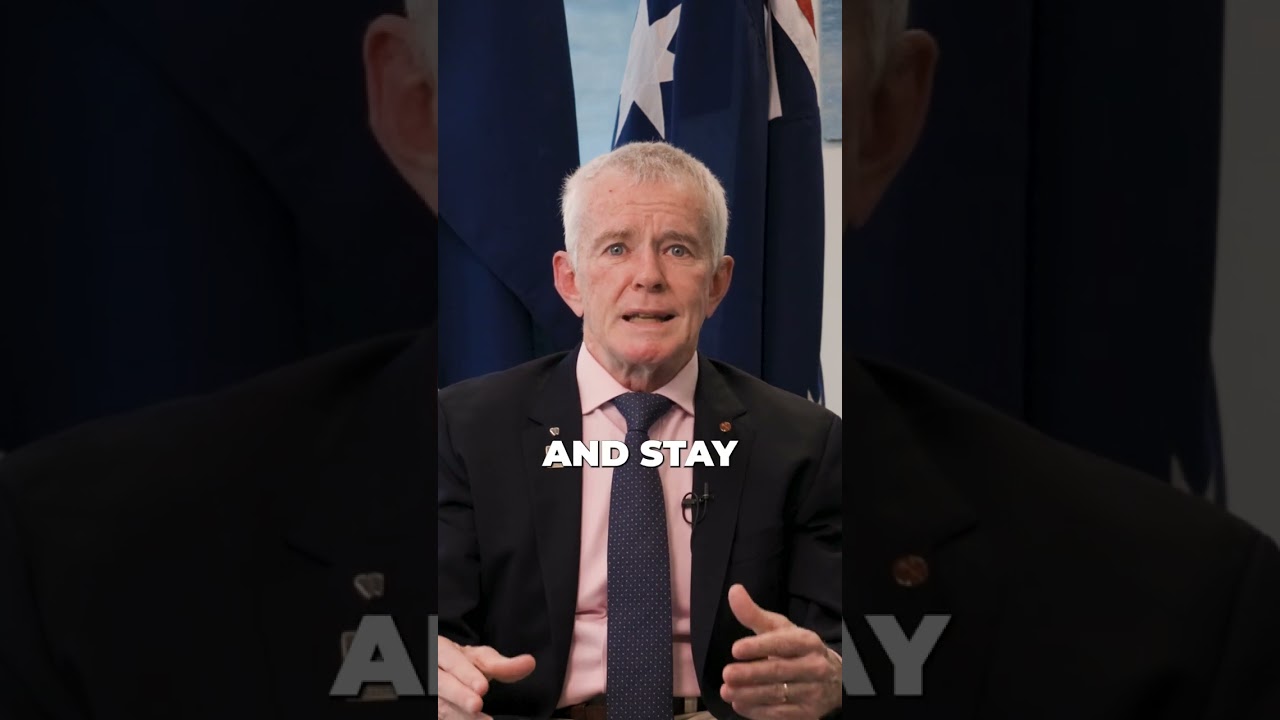
As an elected Senator, I find it extremely concerning and distasteful to hear the eSafety Commissioner openly pitch the regulation of digital media as a ‘war’ which insinuates that social media platforms are hostile foes rather than private companies providing an extraordinary advancement of technology and – for the first time in human history – a global platform for real-time speech between the peoples of the world.
While speaking to the Canberra Press Club, the eSafety Commissioner pitched her argument by comparing social media to a beach.
‘There are indeed treacherous waters for our children to navigate, especially while their maturity and critical reasoning skills are still developing. And this is where we can learn so much from tried and tested lessons of water safety that Australia pioneered. From the backyard pools to the beach, Australia’s water safety culture is a global success story.’
Pardon me, but the eSafety Commissioner appears to be confused.
Australian children under 16 are not banned from pools and beaches. Nor are they indoctrinated into a cult of terror surrounding water.
‘A mixture of regulation, education, and community participation that reduces risks and supports parents keeping their children happily and safely frolicking in the sea. Picture any major beach in Australia and [it] will likely include the familiar sight of yellow and red flags fluttering in the breeze, children splashing in the waves, and lifeguards standing watch. Parents keep a watchful eye too, but are quietly confident in the knowledge that their kids will be okay. Not because the ocean is safe, but because we have learned to live beside it.’
Aside from the insult of using an Australian beach scene to sell censorship to children, her focus on community adult presence as a safety measure side-steps wildly from her comments later where she says: ‘…the difference will be that they are grouped more with their peers rather than – you know – billions of people around the world that are adults and kids and strangers.’
Are communities good or bad?
The eSafety Commissioner doesn’t know because she cannot get her messaging straight from one breath to the next.

Too much focus has been placed on the (manageable) problems unavoidable in a revolutionary technology development and not enough said about the extraordinary benefit that comes with opening up the world’s information, opinion, debate, and minds.
Of course, there will be a period of adjustment.
For children and parents.
That is not an excuse for regulators to reach into the cradle and suffocate social media in its crib.
This attitude would have seen Rome’s stone tablets smashed, Alexandria’s libraries burned, and the printing presses of Europe fall silent. All to ‘protect’ people from unregulated knowledge.
And it is not as if the internet is an unregulated ‘Wild West’ as claimed. There are many laws – most of which go unenforced for reasons that remain a mystery to the public – that deal with most of the examples the eSafety Commissioner offers as justification.
Deep fakes, blackmail, underage sexual content, harassment – these are all crimes.
We would support an investigation into how many of these reports authorities leave unanswered.
These failures are domestic. They are related to Australia’s weak criminal justice system, not Silicon Valley CEOs who are being used as scapegoats to disguise the irresponsible failure of ‘soft-touch’ sentencing.
Peer-based bullying, which makes up the bulk of tragic youth suicides, is largely due to school peers known to both the parents and teachers. These terrible stories almost always reveal the systemic failure of the education system which has shied away from punishing bullies and removing them from the school environment.
Before banning children from the internet, we should find out why schools have lost control of students.
Banning under 16s from social media also has the potential to turn the government into the worst schoolyard bully.
Imagine a class where only one person is under 16. All of their peers are on social media – except them. Differences are what drives exclusion, and in this case the government is creating an insurmountable social divide that will expose untold thousands of children to a friendship disadvantage.
And what of children who struggle with school?
The eSafety Commissioner said at one point, ‘…a vision the Prime Minister had of seeing more kids kicking the footy. That’s what we plan to help measure in…’
Not all kids ‘kick the footy’.
The children who do not fit in with their school peers often engage with small international niche creative communities. These children make school bearable through their social media friendships in the same way my generation had pen pals or friends in other clubs and areas.
Cutting children off from their best friends online is worse than bullying. It is cruelty.
Despite what is suggested by regulators, these children will not ‘just move to other platforms’. One Australian child cannot compel international children to change to another unregulated social platform because that is not how reality works. They will simply be excluded and forgotten.
This is before we consider sick children who live at home or in hospital and for which social media is the thread that connects them to the world.
Social media lived peacefully side-by-side with the Millennial generation, who are now in their 30s-40s.
How is that possible?
No doubt it had something to do with the rigour of their education and domestic environment which provided the balance lacking in schools which routinely engage in public activism – dragging children onto the streets as pawns in adult political games.
When the education system decided to focus on politics, it began to see free speech and the platforms that facilitate critical thinking, live news, and global knowledge as ‘dangerous’.
School eSafety programs spend much of their time obsessing about which sources of news can be ‘trusted’, although it is never made clear when educators were handed the task of ranking news organisations in the minds of children.
Who gets to decide which news outlets are ‘trustworthy’?
The hypocrisy of National Press Club host Tom Connell informing the audience that they could watch YouTube and follow the conversation on X cannot be overstated.
In 2025, the news unfolds on social media – much to the frustration of the legacy media.
World leaders correspond via Truth Social and X.
The eSafety Commissioner is effectively banning children under 16 from the news – from the world – and from their friends.
Imagine if she had insisted children be banned from reading newspapers ‘for their safety’.
It’s the same thing, yet the danger is easier to recognise in the latter.
Our children deserve protection – protection from the expansion of government into the role of parenting.






I am so over the current Government’s lack of response to families where children are concerned! The Education Department and Government were never meant to be Nannies! Isn’t it more valuable to focus on helping family units to be the best they can be? Even if that means family, supportive education. Hard working parents get exhausted but their children should not be alienated and forced to grow up too quickly for convenience. This society IS robbing kids of their fundamental rights, to what end? More DV, more hateful fuelled, violent crimes, and most sickening – more fodder for the paedophiles, ever lurking, (social media absence won’t be a deterrent). 🙁 Help families learn, world turmoil or not, HOME should be a safe and supportive place, no matter what. Ask yourself, what is a family units and how should it function effectively?
The government only has the duties conferred on it by the people. NO ONE gave it the duty or the authority to regulate ANY user’s online access. Parents are the best ones to know what their children should or should not do. Instead of wasting time and money raising smokescreens concerning restrictions to social media (eg digital id bill), suffocating free speech (eg, Billboard Chris) and making Australia a third world country (with net zero and so-called “renewables”).
Digital id is yet another thin end of the wedge to ram another method of control on us. We are more surveilled and controlled these days than even Germany was in the 30s. Child safety is a subterfuge for this move, it is not the real reason.
While Australia started off as a penal colony, it was not one when I was a kid but it has become one again in the last 5 years.
I’ve noticed over the decades how the Australian government wether it be Labor or liberals chipping away removing the rights from the parents , this all started during the 70’s with smacking the child . It empowered the child to think there’s no punishment for what I do , following generations also given easier responsibilities growing up as in time the internet distraction would introduce an indroctrination that finally changed the old world of the family unit , all whilst other countries aren’t doing this . The Australian government has chewed over ways to gain quicker easier access for controlling its population at an early age starting with pre schoolers and its been so well thought out over time nobody was ever aware that it took place . This hasn’t been done for the betterment of families but for evil intent . The e safety dept was set up to interfere in the lives of people along with many other government departments and its all being done with an evil ultimatum down the track . Every country seems to have its own control agenda depending on what it’s population do they don’t like and Australia’s is to stick its nose into your family business to find ways to cause chaos and destroy it at all costs .
Well written ; I had to read it twice ,,
A big read about another master plan cunningly thought out with great precision . Instigated by our politicians putting another nail in the coffin to control an advancing civilisation unknowingly led like lemmings throughout the duration of their lives . But can it be stopped ? Crime and corruption organised by world leaders who made laws to end the death penalty/capital punishment for the benefit enabling them exclusive rights to create this socialist dystopia .