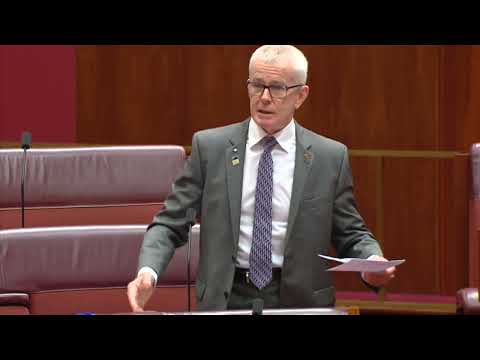
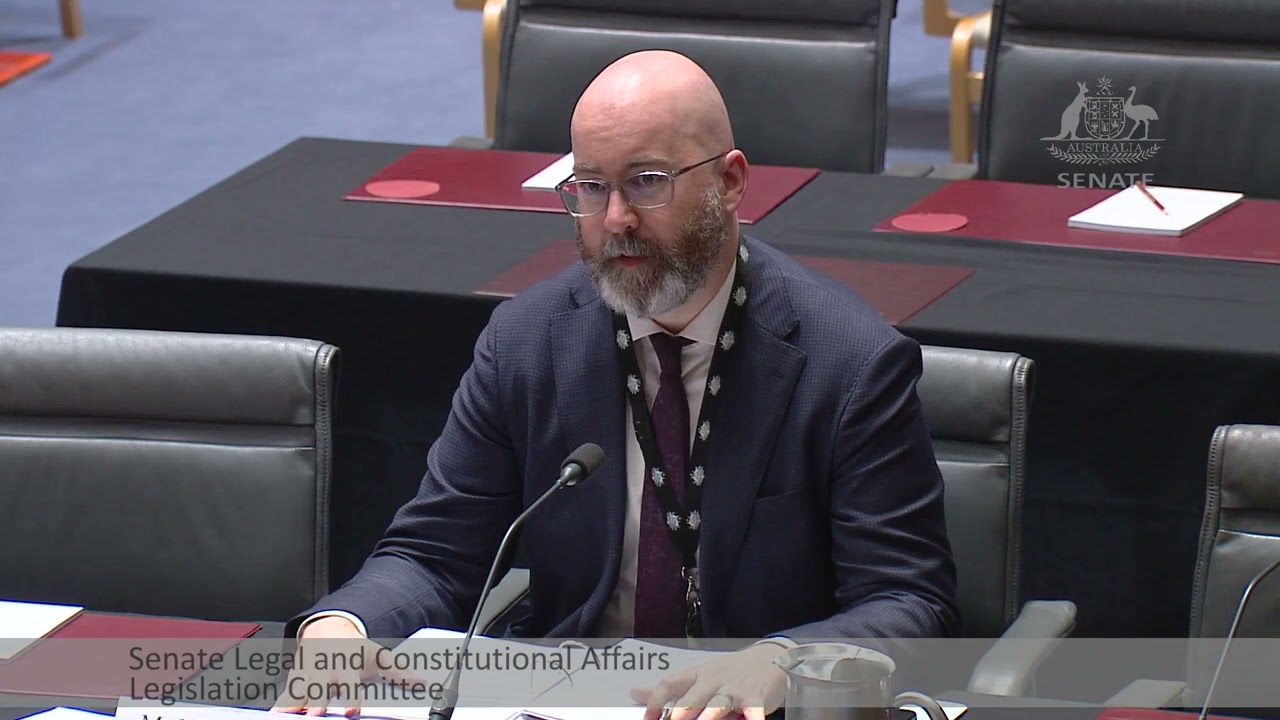
At Senate Estimates, I raised my ongoing concerns with the Department regarding Mr Robert Pether, an Australian engineer who was unfairly jailed in Iraq and is now being held under a travel ban that prevents him from returning home to Australia. His situation is dire — he is severely unwell, homeless, unable to work, and has very limited resources.
I asked what assistance the Australian Government is providing and was told he is receiving consular support. I was also informed that the Government is actively engaged with Iraqi authorities, and that his plight has been raised by the Prime Minister, the Minister for Foreign Affairs, and the Australian Ambassador — most recently in September this year.
Let’s hope the Iraqi authorities are listening.
— Senate Estimates | October 2025
Transcript
CHAIR: Welcome back. It’s good to see you, Minister Farrell. I know you’re just here briefly. The call is with Senator ROBERTS till two o’clock.
Senator ROBERTS: Thank you for appearing today. I’ve got four topics I’d like to discuss. I’ll go through them one at a time, of course. The first topic is Mr Robert Pether, who was jailed in 2021 on fraud charges in Iraq, which the UN described as an arbitrary detention. I have two very short questions but a long preamble to set the scene and make sure I’m on the right track. Mr Pether is a mechanical engineer. He went to Iraq to rebuild its central bank headquarters in Baghdad. A contract dispute between the bank and his employer, CME Consulting, landed Mr Pether and his Egyptian colleague, Khalid Radwan, in prison after the bank accused the men of stealing money from the project. After being held without charge for almost six months and then subjected to a speedy trial, the two were each given five-year jail sentences and slapped with a joint fine of $17½ million. A 2022 UN report determined that the case contravened international law and that Mr Pether and Mr Radwan had been subjected to ‘abusive and coercive interrogations’. The International Chamber of Commerce’s Court of Arbitration ruled that Iraq’s central bank was at fault in the dispute with CME and ordered it to pay $13 million to the company. Mr Pether was finally released from jail late at night in June. He is fragile, in very poor health and not receiving proper medical treatment. He has limited means and has been homeless in a foreign country. I have two simple questions. Robert Pether is in poor health, is homeless and is being prevented from leaving the country. When will the Australian government bring him home?
Ms McGregor: Firstly, I want to acknowledge the immense toll that Mr Pether’s detention and travel ban have had on him and his family. We are working tirelessly to secure the lifting of that travel ban that is on him. We very much welcome the release of Mr Pether on bail earlier this year. We will continue to provide consular support to him and his family, including continuing that advocacy for him to be able to leave Iraq.
Senator ROBERTS: What specific action has the Australian government taken to have Mr Pether returned to Australia and his family, given that his health is now severely compromised?
Ms McGregor: We remain engaged with Iraqi authorities, as I said, to advocate for Mr Pether to depart Iraq and be reunited with his family. We continue to provide consular assistance. Any ongoing legal matters in relation to that particular travel ban are, of course, a matter for Mr Pether, but I would say that we have consistently advocated for Mr Pether at all levels since his detention in Iraq in 2021. More than 240 representations have been made by Australia, including by the Prime Minister and the Minister for Foreign Affairs. Most recently, on September, the foreign affairs minister raised his case with her Iraqi counterpart in the margins of the UN General Assembly. The Australian ambassador in Iraq has also raised Mr Pether’s case with the appropriate officials in Iraq, including the Prime Minister and the President.
Senator ROBERTS: Thank you. It’s a disturbing case. What about his health and his welfare?
Ms McGregor: We continue to provide support for his health and his welfare. I don’t want to go into details of that, out of respect for his privacy, but we are continuing to engage with him regularly to receive updates on his situation