

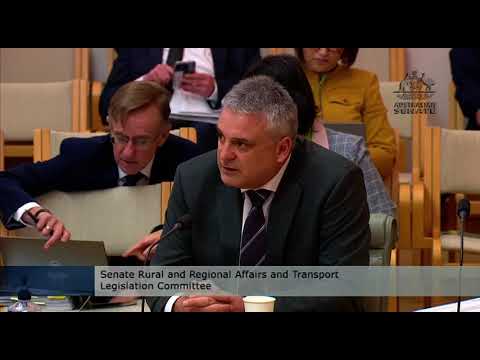
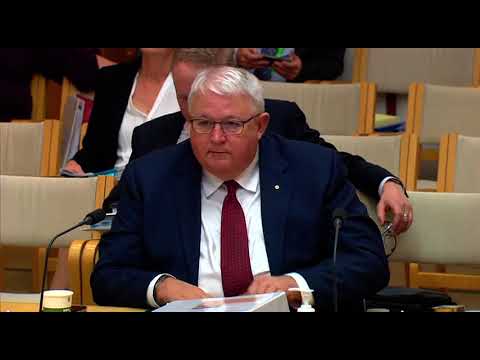
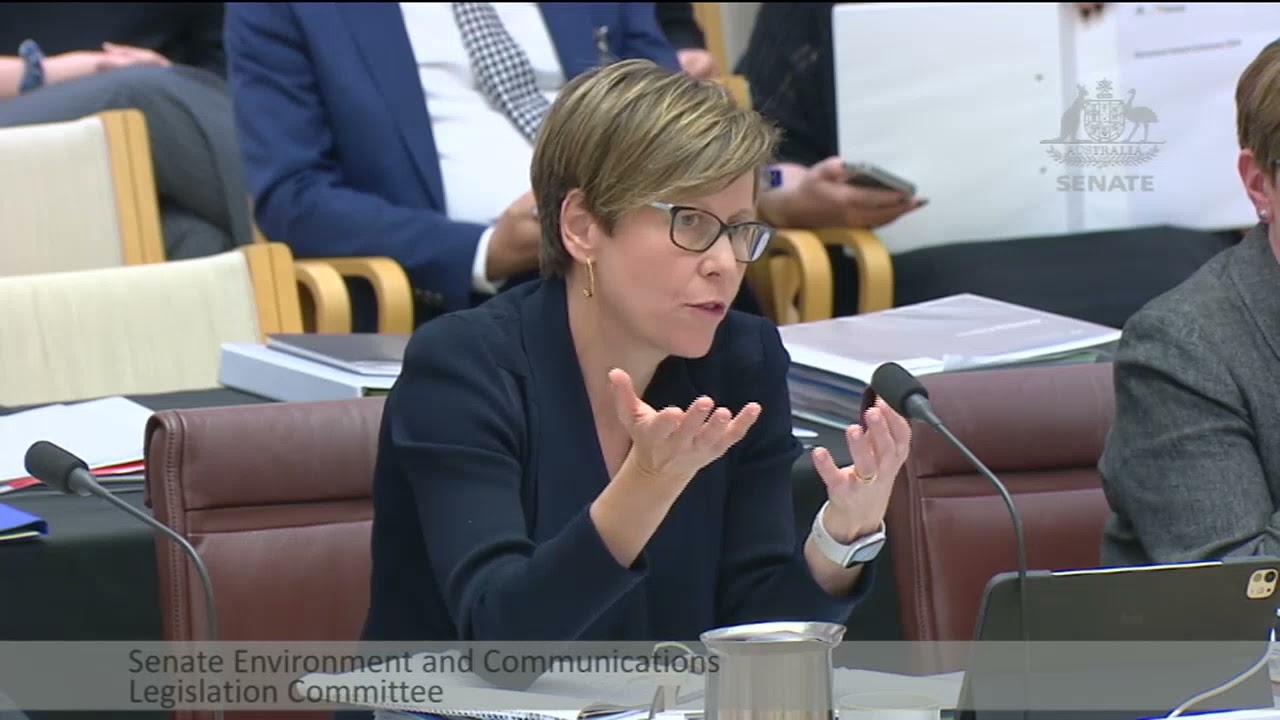
During this session, basic answers were provided, but little interest was shown in understanding the potential environmental catastrophe at hand. I was simply referred to the department’s submission to the fire ant inquiry. When I posed questions, Officials showed minimal interest in providing answers. They frequently redirected questions to the Department of Agriculture, Fisheries and Forestry and appeared unaware of the gravity of the issues raised. Some of the questions were taken on notice, but I was offered little substantive information.
It was clear that they were not fully informed on their responsibilities and showed little genuine concern for environmental protection.
Transcript
Senator ROBERTS: I’d like to ask questions about fire ant treatment in Queensland. Are you aware of the many complaints that have been made about the administration of the National Fire Ant Eradication Program in Queensland, which has already resulted in massive environmental damage in the Samford Valley near Brisbane, but it also concerns residents in Currumbin, Boonah, Gatton and other places in South-East Queensland?
Dr Fraser : The Australian government lead for the National Fire Ant Eradication Program is the Department of Agriculture, Fisheries and Forestry. So, while I’m aware of some of those complaints and, broadly, on stakeholder interest in this really important issue, for some of those more detailed questions you may get some more comprehensive responses from that department.
Senator ROBERTS: I’ve been in touch with RRAT, and I’m going to be asking questions of them tomorrow for the reasons you just mentioned, but I’d like to continue because this is an environmental matter. It’s a catastrophe in the making. Is the aerial dumping of toxic insecticide by helicopter into a creek system a breach of the Environment Protection and Biodiversity Conservation Act 1999? This is exactly what has happened recently into Dawson Creek and Samford Valley, which I visited and sighted, and there’s no life in the creek.
Dr Fraser : I’m not aware of whether that’s an issue under the EPBC Act or of the specifics of that. What I would say is that the treatments that are used in the fire ant eradication program are specifically targeted to those ants, and they’re approved by the APVMA, the Australian Pesticides and Veterinary Medicines Authority, who conduct a very rigorous scientific assessment prior to those approvals.
Senator ROBERTS: I’ve seen what they’ve done in Dawson Creek and Samford Valley. It’s wiped it out. There’s nothing moving in the creek, nothing at all—no life. We’ve had similar complaints in other areas. Are you aware that independent water testing of the creek showed massive toxic pollution of the local waterways, not due to previous pollutants or other pollutants?
Dr Fraser : Again, I’m not familiar with the details of these issues. They’ll be best handled by the agriculture department.
Senator ROBERTS: Will this government halt the funding of the dangerous spraying of chemicals into our waterways until at least an independent environmental risk assessment is completed? I guess that’s a question for the minister.
Senator McCarthy: I’ll certainly take on notice your concerns in regard to Dawson Creek. What I can say is our government would never want to pollute any particular area with any ill will. I think—
Senator ROBERTS: I’ve got no doubt of that at all.
Senator McCarthy: So I just want to go back to the assertion in your question.
Senator ROBERTS: There is no assertion whatsoever.
Senator McCarthy: Okay, thank you.
Senator ROBERTS: All I want to know is will you stop the funding that’s polluting Dawson Creek and other areas until an independent environmental risk assessment is completed?
Senator McCarthy: I can take that on notice.
Senator ROBERTS: According to residents, there are serious conflicts of interest with the previous Queensland government. Dr Fraser, why was the program allowed to distribute huge quantities of poison into pristine environment with no environmental risk assessment completed beforehand, and why is it funded?
Dr Fraser : To take your last question first, the program has been funded because red imported fire ants are one of the world’s worst invasive ant species. If this species remains unchecked in the South-East Queensland area and beyond, it could cover up to 97 per cent of Australia. It would wipe out huge numbers of birds, mammals and other species and cause enormous destruction to agricultural industry throughout Australia, human health and infrastructure. It is possibly one of the worst invasive species Australia has experienced, and the overseas experience is those catastrophic impacts I just spoke about. Hence, the commitment of the Australian government and the increased funding commitment by the Australian government to deal with this pest.
Senator ROBERTS: Could you take it on notice and provide us with the evidence backing up what you just said, please? We’ve got very concerned residents in my home state, and they have talked to people overseas, including people in Texas—fire ants are now quite common across the United States—and there’s very little damage at all. So if you could just take it on notice to provide me with the evidence to back up your claim.
Dr Fraser : I don’t need to take that on notice. We have provided information on that, including scientific references in our department’s submission to the red imported fire ant inquiry, and we also appeared as witnesses at that inquiry as well. So that information is on the public record as part of our submission, but it is much more broadly on the public record and documented in the scientific literature, including for the United States.
Senator ROBERTS: Thank you. Are you aware of the damage to the environment that’s already occurred through the mismanagement of this program in Queensland?
Dr Fraser : No, I’m not.
Senator ROBERTS: Are you aware that 21 years ago there was one fire ant nest at the port of Brisbane and now they are in Northern New South Wales and all over South-East Queensland?
Dr Fraser : I’m not familiar with that.
Senator ROBERTS: The program is failing.
Dr Fraser : The program has been hugely successful in limiting the spread of red imported fire ants from the South-East Queensland region. The rate of spread in Australia is miniscule compared to the rate of spread in countries like China and the US, where this species is wreaking havoc.
Senator ROBERTS: How does spraying toxic chemicals in valleys with no fire ant nests helping to stop the spread of fire ants?
Dr Fraser : I’m not aware of those detailed accusations.
Senator ROBERTS: Are you aware of the dead wildlife—including native ants and whole hives of bees—illness to pets and the massive loss of the marine life yabbies in the creek that have already occurred since baiting commenced?
Dr Fraser : No, I’m not.
Senator ROBERTS: Are you aware of the threats to human health posed by these chemicals used to treat land?
Dr Fraser : No, I’m not, but I am aware of the threats posed to human health posed by red imported fire ants.
Senator ROBERTS: People have water tanks—they’re not on the reticulated water system—that use their roof. They’ve got toxins on their roof. Spraying over houses with humans in them. This is what’s going on.
Dr Fraser : Again, I’m not familiar with these issues, and I would also not claim that toxic chemicals do not have impacts beyond the target species; however, it’s a risk management approach that is taken in dealing with these invasive species.
Senator ROBERTS: Does the risk management include sloppy and indiscriminate helicopter usage?
Dr Fraser : You’re aware that I won’t know the answer to that question.
Senator ROBERTS: Are you aware that S-methoprene is not approved for use in the UK, because of high-risk environmental concerns?
Dr Fraser : I’m not, but, as I’ve stated, I’m not an expert in these matters.
Senator ROBERTS: What compensation will be made for the damage already caused by this ill-considered program.
Dr Fraser : I don’t know.
Senator ROBERTS: Minister?
Senator McCarthy: I’ll take that question on notice.
Senator ROBERTS: Why are properties in Queensland and many valleys still being poisoned when it has been established that there are no fire ants present?
Mr Knudson : A number of your questions go to the implementation of this program, which, as Dr Fraser has laid out, is a program of the Department of Agriculture, Fisheries and Forestry. We’re just not positioned to give you informed answers on those questions.
Senator ROBERTS: This has become an environmental issue, with all due respect, Mr Knudson. That’s why I’m asking questions here as well as Agriculture.
Mr Knudson : What Dr Fraser has laid out is, ‘Here’s the environmental risk et cetera,’ but the specifics on the implementation of the program are a matter for the department of agriculture. I’m just trying to say I think your energy and effort would be best focused on the department of agriculture.
Senator ROBERTS: I have plenty of energy—tonnes of energy!
Mr Knudson : I have seen that many times.
Senator ROBERTS: What we’ll be doing is going into Agriculture and holding them accountable as well, but this is an environmental catastrophe—a human catastrophe.
Mr Knudson : That’s what Dr Fraser has laid out that. We’re not saying that there are no impacts from the program; what we are saying is that it’s a really significant environmental issue that we’re trying to contain. What Dr Fraser has laid out is that there is significant evidence that the program has been effective in containing the growth and spread of red fire ants.
Senator ROBERTS: Residents in Queensland would disagree. Let me ask my last two questions. Given that the eradication of fire ants has failed over the last 30 years in Australia and we have spent almost a billion dollars, is it time to stop this program and try to find another, environmentally safe and responsible management solution?
Dr Fraser : The program hasn’t failed. The program has been successful in curtailing the spread of red imported fire ants by any measure, including against overseas measures.
Senator ROBERTS: Which department appropriates the money to Queensland, and what monitoring and audit measures are there?
Dr Fraser : There are extensive monitoring and auditing measures. As for which department appropriates the money to Queensland, that would be a question for the department of agriculture.
Senator ROBERTS: It’s not your department?
Dr Fraser : No, it’s not.







It seems that most of the current problems, such as fire ants, fire blight in apples, the banana mould, white spot on prawns etc are because we let too much crap come into the country. It makes no sense that we import apples, oranges and cherries etc when we produce them ourselves. In recent decades we have had farmers ploughing their orchards into the ground because we let overseas products come in and they can’t compete because of all the regulations they have to follow. Some years ago a friend of my parents said he had to get out of the dried fruit business because while he had to follow all the health regulations, the same product coming in from Turkey was exempt. How does that make sense?
So fire ants are the result of government ineptitude in letting anything in. But they prevented Australian citizens coming home during the recent scamdemic because they were a “biosecurity risk”. There is enough bovine excrement in that little lot to fertilise 1000 acres!
I thought this problem had structure and solutions put into place, back in late 1990s’ (or earlier) in Queensland??
It seems that issues like fire ants and other environmental problems are swept under the carpet because this government only wants to waste our tax dollars on useless other pet projects , as our hobby government don’t give a rats ar$e .
I can remember when fire ants were known to be in the Burnett Region and now they are in Gold Coast marching south .
This government are not allocating funds appropriately and running the country as is necessary of a government .
Block their access to spending our taxes and kick these despicable lowlifes out .