

I have consistently asked the government and its bureaucrats for a straight answer on the total cost of reducing Australia’s carbon dioxide emissions to meet their targets, yet no one can provide it. I’ve heard figures ranging from hundreds of billions to $1.9 trillion, but Australians deserve to know the real number. We need transparency on what these policies will cost compared to doing nothing at all.
I made it clear what I’m asking about: the costs of wind and solar generators, transmission lines for scattered renewables, shutting down coal, restrictions on livestock, bans on petrol and diesel engines, and the impact on vehicles like the V8 LandCruiser. These are sweeping changes that will reshape our economy and lifestyle. Officials agreed to take my question on notice, but the fact that they cannot answer upfront is deeply concerning.
I also raised the issue of rising electricity prices and subsidies. Net zero policies are driving up power costs, threatening industries like aluminium smelting. The government then uses taxpayer money to subsidise vulnerable consumers, adding another layer of expense. I want to know the total cost of these subsidies and interventions. Australians need the full picture before we continue further down this path.
Finally, I challenged the minister on what Australians call the “ute tax,” which is hurting vehicles like the V8 LandCruiser. He denied its existence but admitted the government introduced fuel efficiency standards, this is just a net-zero tax in disguise. He claims these standards will save consumers money, but I remain concerned about their impact on vehicle choice and affordability, especially for regional Australians. These policies are not just about efficiency—they are part of a broader net zero agenda that is increasing costs, threatening jobs, and changing our way of life without honest disclosure of the consequences.
Transcript
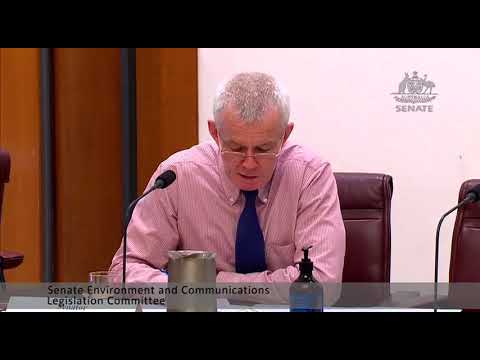
Senator ROBERTS: Thank you for being here again. It seems to me that everyone in government and the bureaucracy is incapable of telling people how much reducing Australia’s carbon dioxide—
CHAIR: I will stop you right there. We will be respecting the people sitting at the table. Would you like to rephrase your question?
Senator ROBERTS: I can’t get an answer from the government or the bureaucracy on how much it’s going to cost in total overall for cutting Australia’s carbon dioxide production to meet your targets. Why is that? I’ve heard everything from a couple of hundred billion here or there to $1.9 trillion. What is the number?
Mr Fredericks: Senator, I know we’ve had this discussion before. I think the generality of your question makes it very hard for us as officials to answer it in any meaningful way. We always want to try to assist you because your questions as a senator are legitimate.
Senator ROBERTS: Thank you.
Mr Fredericks: If there’s a way you can in some way refine it, we can have a crack. Otherwise, if you think it would be better to put it on notice, and we can give you a response on notice, I’m happy to do that.
Senator ROBERTS: Thank you, Mr Fredericks. I will accept your invitation. I’m talking about all the costs of wind, solar generators and power lines needed for the scattered wind and solar; the killing of coal; the killing of the farting cows; the banning of petrol and diesel engines; and the killing off the V8 Toyota LandCruiser. How much is it all going to cost Australia to get to where you somehow think we’re going to be in 2050 compared to just letting Australians be? What is it going to cost to do all of that versus what does it cost to do nothing?
Mr Fredericks: Senator, I think if it’s okay with you, we’ll take that on notice. Because you’ve given some specificity, we are in a position to be able to describe, as it appears in the budget, costs associated with some of the measures you just described. We can legitimately do that. We will take that on notice and do that.
Senator ROBERTS: Excuse me. So you understand what I’m asking now, even though I haven’t named every single component? There are a hell of a lot of components that I would like to know the cost of.
Senator Ayres: I think, Senator Roberts, that Mr Fredericks has said that they will answer it as far as they can. I can say to you that in your question were a couple of assertions. Killing off the V8 Toyota LandCruiser is not an initiative of the Albanese Labor government. Killing the Australian auto industry was an initiative of the Morrison, Abbott and Turnbull governments. International auto makers now make vehicles. Australia doesn’t make cars anymore because they killed the industry. That is not something that can be costed, Senator. It’s the economic harm that is done by coalition governments to Australian manufacturing that is entirely the responsibility of Mr Hockey—I saw him featured in the newspapers yesterday; it was a pretty interesting article— Mr Abbott, Mr Turnbull, Mr Morrison and Mr Frydenberg. All these characters thought it was an act of total genius to kill 40,000 jobs and Australia’s capacity to make cars. You can see that there is a contrast with this government. There is $2 billion, for example, in your home state of Queensland, to back the aluminium sector so that investment is sustained in Australia. The aluminium sector is going through their own process. You might not like it. They have just on the back of that announcement—
Senator ROBERTS: I’m not asking about the aluminium sector.
Senator Ayres: I know you like the aluminium sector. You might not like the fact that they are shifting to a lower carbon profile. They have on the back of the Albanese government’s investment in the aluminium sector. It has given them the confidence to invest themselves $2 billion in renewable energy capability in Queensland. That’s more jobs for Queensland with a government that has a local content plan for the renewables sector, which will mean more engineering, more structural steel and more jobs in Queensland.
Senator ROBERTS: Minister, the key issue in producing aluminium in Queensland is the prices.
Senator Ayres: I didn’t interrupt you, Senator. I’m just trying to make the point that some of the assertions you make go to things that are not what the government is up to here. The government is up to supporting Australian manufacturing and Australian industry and rebuilding a modern electricity grid so that we are competitive for the future.
Senator ROBERTS: Thank you.
Senator Ayres: That’s what we’re up to. The fruits of that are most starkly evident in regional Queensland at the moment, where 5,000 jobs are sustained in Gladstone and Central Queensland because of that one announcement and investment in new renewable energy capability. The alternative is the plan that these jokers have for nuclear reactors that will force the aluminium sector offshore just like the auto industry was forced offshore.
CHAIR: Minister, I will ask you to refer to our colleagues respectfully.
Senator Ayres: What did I say? I’m sorry.
CHAIR: You called them jokers.
Senator DUNIAM: We don’t normally joke about things. In the vein of respect—
Senator Ayres: My friends over here.
CHAIR: Thank you very much, Minister. I appreciate that.
Senator Ayres: Sorry, Senator Roberts. I took a side track.
Senator ROBERTS: Gladstone is under threat because of both this government and the previous government’s passion for net zero. That’s why it’s under threat. Electricity prices are the key ingredient to an aluminium smelter. I happened to live in the Hunter Valley when the alumina smelter at Kurri was built. I know that it has shut down and others are under threat now because of electricity prices and the conversion to net zero. I would also like to understand the subsidies, the support, and what that is going to cost. We have these net zero policies increasing the cost of electricity. We then have the government milking the taxpayer and electricity users to subsidise people who are vulnerable. I would also like to know that specifically.
Senator Ayres: I want to make two observations about that.
Senator ROBERTS: By the way, Minister, you introduced the ute tax. That’s what is hurting V8 LandCruisers. Did you not?
Senator Ayres: I want to make a few observations about this. Firstly, Senator, the most disturbing thing I’ve heard this morning is your assertion that you were around in the Hunter Valley when the Kurri smelter was built. I cannot believe it. You look so youthful.
Senator ROBERTS: I used to go to school at Kurri.
Senator Ayres: Really there’s cognitive dissonance there. I am going to have to adjust to this idea.
Senator ROBERTS: I went past the Kurri aluminium smelter on my way to Kurri High School every day.
Senator Ayres: I once persuaded somebody who didn’t come from the Hunter Valley that there were two towns in the Hunter Valley—one called Kurri and the other called Kurri.
Senator ROBERTS: Wagga?
Senator Ayres: Indeed. That’s right. Senator—
Senator ROBERTS: Did you or did you not introduce the ute tax that is killing V8 LandCruisers?
Senator Ayres: Well, there’s no arrangement called the ute tax. You know it. If people want to buy LandCruisers or any other kind of vehicle, they are very welcome to. The broader point, though, is that because the questions you ask go outside the scope, apart from the assertions that I don’t agree with and the ones like your relative age that I can’t reconcile myself to, we will take those questions on notice. The department will do their best to look within the scope of their responsibilities to answer on the cost of measures. I will—
Senator ROBERTS: It is disturbing that you are now qualifying Mr Fredericks’s answer.
Senator Ayres: I think I’m saying exactly the same thing as Mr Fredericks; that is, we’ll take those things on notice and they will answer to the extent that they can.
Senator ROBERTS: That they can? Senator Ayres: Yes. They can answer questions that go to the scope of the department’s activities. If you want economy-wide measures—even if you end up at PM&C or Treasury—you will find that a very substantial number of these investments is private investments. They are encouraged or facilitated by developments in the international market and developments that the Australian government is supporting. You mention government support. We unequivocally support Australian manufacturing. The biggest program factor—
Senator ROBERTS: It is being called by your policy of net zero.
Senator Ayres: is the biggest pro-manufacturing package in Australian history to back investment in areas such as critical minerals, iron and steel and aluminium. It is backing current jobs and prospective investment. It is the kind of thing I would have thought your political party would support. The alternative is zero in industry policy and forcing important industries such as the auto industry offshore, which is what my friends over there, in the era they want to go back to—the Morrison period.
Senator ROBERTS: We’re very pleased, Minister, to say our policy—
Senator Ayres: The Morrison period, where they want to go back to, had 40,000 jobs gone. I think it’s a very strong contrast and one that I’m very happy to talk about over the coming weeks and months.
Senator ROBERTS: Our policy is to end net zero and restore manufacturing. Do you admit, Minister, that a Toyota V8 LandCruiser simply cannot survive under your vehicle emissions rules and that you effectively killed it off?
Senator Ayres: I can answer in terms of my own practical experience. I went in to work this morning. There were all sorts of vehicles on the road. Some of them were old vehicles. Some of them were new ones. Some of them had been purchased new. Some of them had been purchased second-hand. The government has, as we canvassed a bit earlier before you came in—
Senator ROBERTS: Minister, everyone can see you on TV.
Senator Ayres: But you came in—
Senator ROBERTS: Everyone can see you answering this question.
Senator Ayres: The government has introduced a set of fuel efficiency standards. Before that, Australia was operating on the basis of standards that had been developed in the 1970s. We were the dumping ground for vehicles just like the Russian economy and a couple of other places around the world that hadn’t taken this step. It’s in the interests of—
Senator ROBERTS: I’m deeply concerned about Australians.
Senator Ayres: It’s in the interests of people having to buy less fuel. It’s cheaper for people when there is a vehicle efficiency standard. It means that cars aren’t overusing petrol or diesel. It costs less to get from one place in regional Queensland to the other because you are using less fuel. That’s a good thing. It’s a good thing for consumers. It’s a pity that we don’t have an automotive manufacturing sector in Australia that would be able to take advantage of those things as well and build LandCruisers, Hiluxes and all sorts of things for the Australian market and the international market. We lost that opportunity because of previous—
Senator ROBERTS: Power prices are rising too high.
Senator Ayres: Because a previous government decided to force the auto industry offshore.
CHAIR: We will move on.
Senator ROBERTS: Thank you. Thank you, Minister.





Ny understanding is that “Net ZERO” was recently rfmeoved from the Australian Federal Agenda. Senator Action in South Australia reports that this was achieved?