In the July sitting, the Albanese Government introduced the Health Legislation Amendment (Improved Medicare Integrity and Other Measures) Bill 2025. Most of the bill was a tidy-up of poorly drafted health legislation from the previous parliament.
However, one section was slipped in — a new power allowing the Therapeutic Goods Administration (TGA) to declare a drug shortage based merely on the suspicion of a future shortage. This would then enable the approval of drugs that haven’t been properly tested or assessed.
The TGA already has a similar power with a higher threshold for approval. This new legislation appears to be nothing but a pretense to give the TGA sweeping authority to bypass safety testing and scrutiny for new drugs. Even under the current “higher bar,” Section 19(1) has been used to approve 135 current drugs and 600 expired or lapsed ones — a total of 735 approvals of new drugs – or versions of drugs in two years.
I asked the Minister to provide an example of how Australians might be disadvantaged without these new powers. The Minister couldn’t answer. So I must ask — who actually wrote this? It clearly wasn’t the Government.
One Nation will repeal Section 19(1) and ensure that every new drug is subject to proper safety testing and full regulatory oversight.
Watch the video and see for yourself how clueless this Government is.
Transcript
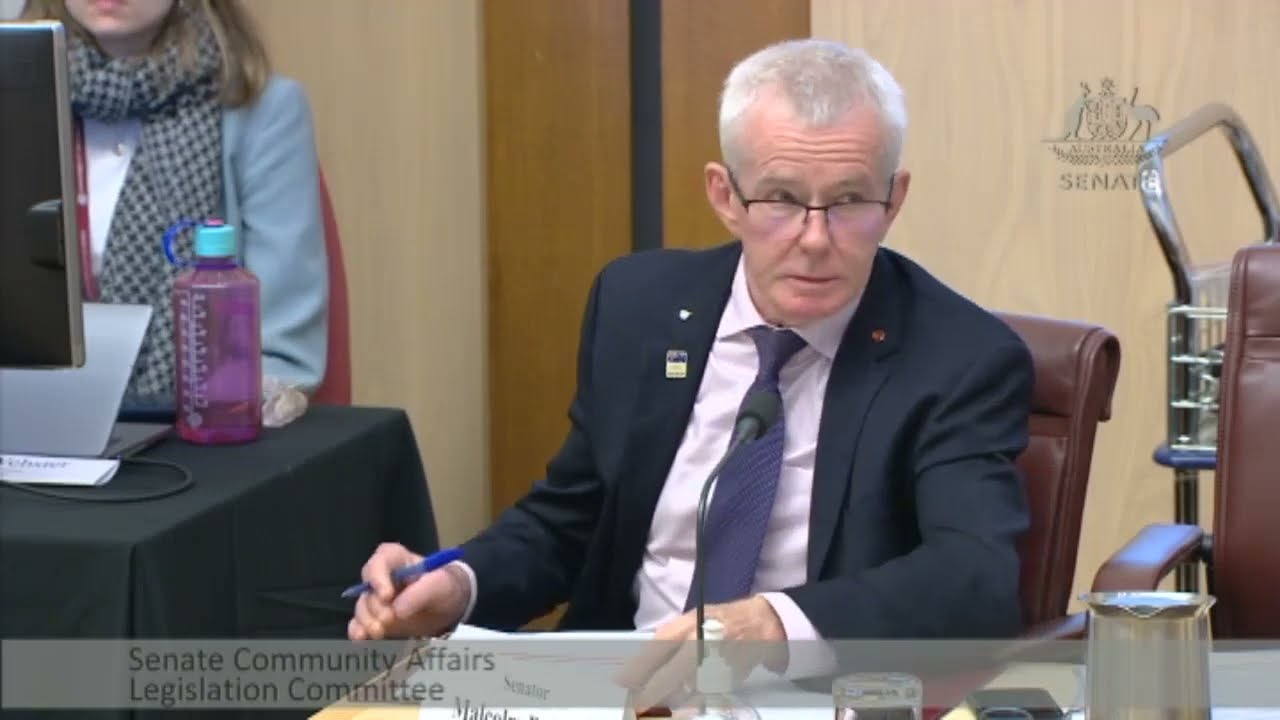
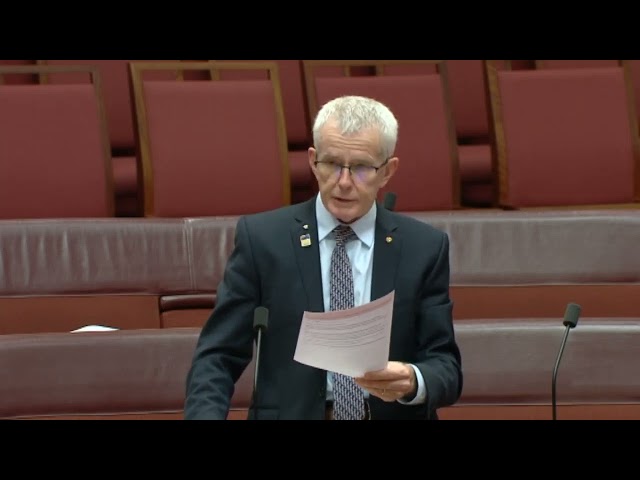
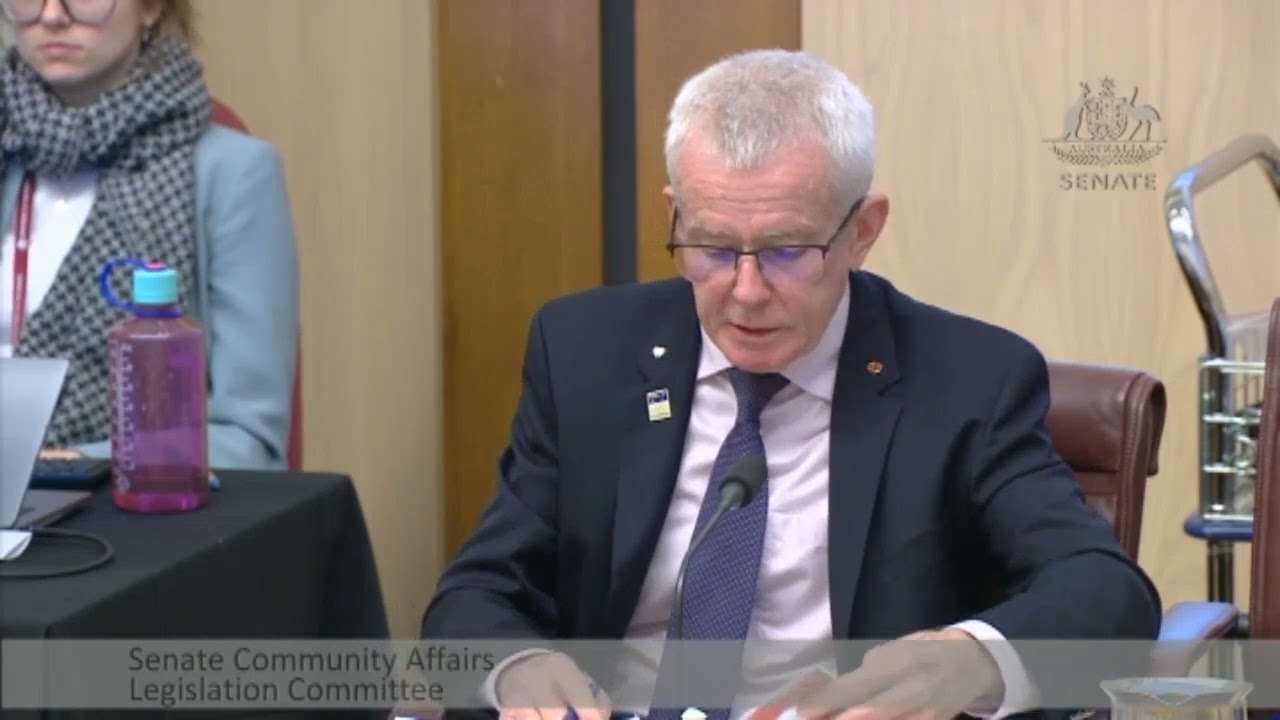
Senator ROBERTS: Minister, the existing wording of section 19(1) already allows the TGA to approve the use of a drug that is not registered or approved in Australia, in the event of a shortage. That power has been used for 135 current approvals, and for 600 expired and lapsed approvals, for a total of 735 approvals of new drugs or versions of drugs in two years. Why do you need new powers when the existing wording is clearly no barrier to approval?
Senator McALLISTER (New South Wales—Minister for the National Disability Insurance Scheme): Thanks for the question, Senator Roberts. The advice that I’ve been provided is that the amendment goes to the ability to act in advance of a shortage arising—knowing that a shortage is coming towards us down the pipeline rather than being required to wait until the shortage actually arises. It will allow the government and the authorities to get ahead of shortages in relation to pharmaceuticals.
Senator ROBERTS: Thank you, Minister. Minister, can you provide an example of a situation where this new power would be needed because the old wording did not provide for that situation?
Senator McALLISTER: Senator Roberts, I think I’ve explained the principle, which is that from time to time we know that shortages of pharmaceuticals do arise. They arise because of interruptions to global supply chains or, sometimes, an interruption in a particular facility’s manufacturing capability. That disruption doesn’t immediately translate into a shortage, but we know, logically, that it will at some moment. These provisions allow us to get ahead of that situation.
Senator ROBERTS: My previous question was theoretical, to understand the process that informed the legislation. This question, Minister, is not theoretical: in what situation has the existing wording of section 19(1) failed to provide a good outcome for everyday Australians? Could you give me a real example, please?
Senator McALLISTER: There are multiple shortages that are managed by the TGA, and we want to be in the best possible position in the future to be able to manage them as they arise.
Senator ROBERTS: Just one example, please, Minister—not a theoretical one, not a hypothetical; just one concrete example of where this has been needed in the past and was not available.
Senator McALLISTER: Senator, it’s not my intention to trawl over previous decisions and circumstances, but it is the case that, from time to time, we can see in advance the potential for a shortfall, and we want to give the TGA the best possible opportunity to be able to intervene and make sure that the medicines that Australians need are available.
Senator ROBERTS: That seems to be confirmation, Minister, that it has not happened in the past. There’s no need for it.
Senator McALLISTER: That doesn’t follow from the advice I’ve provided to you, Senator Roberts. There are shortfalls from time to time in medications that are important for Australians. The TGA presently acts to manage those and works very actively. We want to make sure that, in future, they have all of the tools available to them to be able to do that, and we consider this to be an important amendment that will assist the TGA in that task.
Senator ROBERTS: Minister, thank you. You say that there are examples, but you won’t give me any, so let’s move on. Under this new low bar for approval, a pharmaceutical company would be tempted to avoid applying for a regular approval, which is expensive and time consuming, when they could just have their drug waved through under a spurious scarcity rumour—not fact but pending scarcity. Minister, what safeguards are in this legislation to ensure that big pharma does not create a false scarcity story to avoid making a normal authorisation application?
Senator McALLISTER: The TGA relies on intelligence; the TGA does not rely on rumours. The premise of your question is incorrect. It remains my position, as I’ve explained a number of times now, that it’s really important that we are able to act when we are aware of a forthcoming shortage or the possibility of a shortage of critical medicines. Australians rely on the availability of these, and it’s an important function that the TGA serves in protecting the supply chain.
Senator ROBERTS: Minister, this is getting to be disappointing. You keep telling me there are many examples and it’s concrete, but I don’t get anything. Let’s move on. Minister, under this bill, is there a time limit for the approval, and, if so, can the approval be renewed at the end of that period, creating what is, in effect, a permanent approval where they just keep extending it?
Senator McALLISTER: Senator Roberts, when you’re speaking about an approval, which particular approval are you referring to? Obviously, the legislation canvasses quite a range of different approvals.
Senator ROBERTS: Any temporary approval.
Senator McALLISTER: The advice I am provided is that the approval, by its nature, is temporary and expires as the shortage is resolved.
Senator ROBERTS: So, if the shortage is not resolved, is there a time limit for that approval to be enforced? If there is, can it automatically be renewed—in other words, granting a bypassing of the normal full regulatory approval process?
Senator McALLISTER: I appreciate the senator waiting while I obtain advice. I want to give accurate information to the Senate. The advice I’ve been provided is that these are statutory criteria that need to be met for any approval, and the TGA would need to be satisfied that those statutory conditions were met. However, it is the case that, ordinarily, these circumstances resolve themselves, so we do see shortfalls from time to time, and they are generally resolved over time. Our interest is making sure that any short-term shortages or impacts on Australians can be managed and that the TGA has the tools to do so.
Senator ROBERTS: So, Minister, is there a time limit and is it automatically renewed if the shortage continues beyond that time limit?
Senator McALLISTER: The advice that I have is that the approval would be provided with a time limit. That doesn’t prevent a reconsideration of the same questions, but it would be against the same criteria that I referred to in my earlier answer to your question.
Senator ROBERTS: So it’s highly likely we would just continue. The TGA has already approved certain drugs, including the product Pfizer sells as a COVID vaccine—their word. It’s already been approved for full TGA approval based, according to the TGA, on the safety profile data experienced during emergency use authorisation. Minister, will this legislation provide yet another way big pharma can make an end run around Australia’s longstanding authorisation process?
Senator McALLISTER: No. That’s a very leading question. The purpose of the legislation is set out in the explanatory memorandum and in other documentation around the bill, and there has been a Senate inquiry into the bill. Our objective is to make sure that Australians have the medicine that they need, even when shortfalls arise globally, and that we are in the best position to manage any consequences when we do see interruptions to global supply chains.
Senator ROBERTS: Of the 735 drugs granted authorisation under the existing legislation, how many are now subject to an application for full approval or have been approved based, according to the TGA, on the adverse events profile of the drug during approval under section 19(1) in the same way Pfizer’s Comirnaty was?
Senator McALLISTER: I am not in a position to confirm the numbers that you’ve cited in your question, nor do I have information about the numbers of applications on foot in various processes administered by the TGA. Perhaps you might like to think about another way of getting to the information that you’re interested in.
Senator ROBERTS: I will ask again and will try and break up the question: of the 735 drugs granted authorisation under the existing legislation, how many are now subject to an application for full approval?
Senator McALLISTER: As I indicated to you, Senator, I don’t have that information with me, nor would you expect me to. It’s a very detailed question.
Senator ROBERTS: Okay, I won’t continue with the other breakdowns of the question. Let’s move on to the next question. Does a drug approved under section 19(1) also go on the Pharmaceutical Benefits Scheme and, if so, does the normal negotiation on price still occur, or do we just pay whatever the drug company wants us to pay?
Senator McALLISTER: Thank you for waiting, Senator Roberts. I was seeking advice, again so that I can provide you with accurate information. The advice I have is that the standard process is for a medicine or product to be listed with the ARTG first before being considered by the PBS.
Senator ROBERTS: Thank you, Minister. The TGA have been enjoying unrivalled, unquestioned and unaccountable power since the start of COVID. Minister, why is the government extending the powers of the TGA again, with a bill that provides zero parliamentary oversight of the new powers?
Senator McALLISTER: I don’t agree with many of the propositions that are embedded in your question, Senator Roberts. I think I’ve been really clear about the purpose of the bill, or at least the elements which you’re asking me about now. Your very first question was: why do we need these additional provisions and abilities for the TGA? The answer is: from time to time we see shortages arise, where interventions are required to protect the interests, particularly the health interests, of Australian consumers. We want to make sure that the TGA has the capacity to manage these kinds of shortfalls.
Senator ROBERTS: Thank you, Minister. I appreciate what you just said; I don’t agree with it at all, because the TGA has run roughshod over the people of Australia when it comes to health. They are not held accountable. We need to return, in my opinion, to the days when the department of health approved or did not approve a drug and then the department could be held accountable to the parliament. That’s not the case for the TGA. It completely bypasses the parliament. So I foreshadow my amendment to introduce a provision to the existing legislation that any approval issued under this legislation must be by way of legislative instrument to allow parliamentary scrutiny. We, not the TGA, represent the people. The TGA has so many close contacts and close conflicts of interest with big pharma. It gets 96 per cent of its revenue from big pharma. Minister, why is there so little parliamentary oversight of our health bureaucracy?
Senator McALLISTER: Senator Roberts, I think you and I have different views about the level of oversight. The TGA is part of the department of health. The department of health appears regularly at Senate estimates. There are also a range of forums in which the parliament may ask questions about these issues, including, of course, in this place, in our own question time. Our government is committed to scrutiny, and I simply disagree with the proposition that you have made in your question just now.
Senator ROBERTS: You’re welcome to disagree, Minister. I’m sure that you welcome my disagreement. We saw the previous head of the TGA, Professor John Skerritt, retire from the TGA and, eight months later, get a job on the board of Medicines Australia, the big pharma medical lobby in this country. We also see that the TGA gets 96 per cent of its revenue from big pharma. That is a reason why we need to take the approval of drugs away from the TGA. Big pharma is not trusted, and, by association and due to their COVID mismanagement, we don’t trust the TGA anymore. I move One Nation amendment (1) on sheet 3379 as circulated:
(1) Schedule 2, Part 6, page 22 (line 1) to page 23 (line 22), omit the Part, substitute:
Part 6 — Therapeutic goods approvals
Therapeutic Goods Act 1989
52 Subsection 19(1)
Repeal the subsection, substitute:
(1) The Secretary may, by legislative instrument, grant an approval to a person for the importation into, or the exportation from, Australia or the supply in Australia of specified therapeutic goods that are not registered goods or listed goods:
(a) for use in the treatment of another person; or
(b) for use solely for experimental purposes in humans;
and such an approval may be given subject to such conditions as are specified in the instrument.
Note: For variation of an approval for use of the kind referred to in paragraph (1)(b), see subsection (4B).
(1AAA) A legislative instrument made under subsection (1) must set out the reasons for the approval.
53 Subsection 19(4B)
Omit “by notice in writing”, substitute “by legislative instrument”.
Senator RUSTON (South Australia—Deputy Leader of the Opposition in the Senate): I would like to make a couple of comments on the contribution that Senator Roberts has just made in relation to his amendment to this particular bill. I probably would have a great deal of sympathy with Senator Roberts’s position, particularly after the comment made by the government that they’re committed to scrutiny. I don’t think anything could be further from the truth, when we’ve seen the amount of times that transparency has been denied in this place. In fact, this morning we had a half-hour contribution about the refusal of this government to be transparent when it comes to the NDIS. So I certainly have a great deal of sympathy with Senator Roberts in relation to the lack of scrutiny of their actions that the government are largely prepared to allow this parliament and the Australian public over their time in government.
But, in saying that, I understand that one of the most critical issues facing Australia in recent times has been drug shortages, for a number of reasons, of medicines and treatments coming into Australia. As a legislature, whilst safety and efficacy are at the forefront of every decision we make in relation to providing treatments and access to treatments for Australians through the necessary processes that exist within the department of health—and that includes through the TGA—one of the things we must always do is make sure that there is quick access because we know that so many Australians rely on treatments.
When there are shortages, the government must be able to act with some haste to put supplementary or substitute treatments and medications in place to ensure that Australians are not denied the life-saving and life-changing treatments they often rely on. At no time should safety ever be compromised for Australians, but we do understand that many Australians rely on the agility of our health department and its agencies to do that. But we acknowledge the lack of scrutiny and the lack of transparency that have become a hallmark of this government.
Senator McALLISTER: I’d like to indicate the government’s voting position. As I understand it, Senator Roberts’s amendment seeks to essentially require certain decisions to be made by way of a legislative instrument rather than by notice of writing. The government consider that this would be unnecessarily burdensome and would deprive the TGA of the flexibility that is necessary to manage the health interests of Australians, and we won’t be voting in favour of Senator Roberts’s amendment.
The CHAIR: The question before the chair is that amendment (1) on sheet 3379, moved by Senator Roberts, be agreed to.