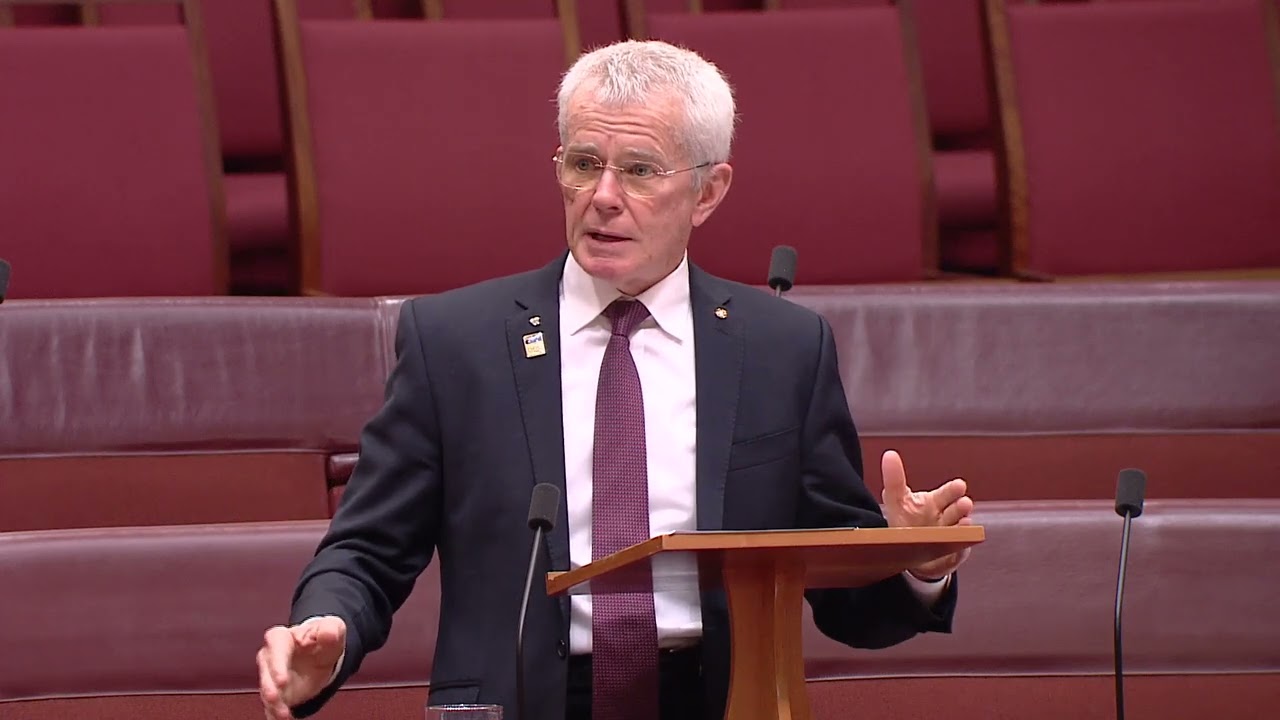
During this Estimates session with the Fair Work Commission (FWC), I asked questions comparing award rates of pay with those in enterprise agreements (EAs). I was told that EAs use a multifactor approach on a case-by-case basis, with no strict requirements.
Mr Furlong said that a key issue in comparing EAs with the Award in the coal miner cases was that the Award did not include provisions for casual employees. I pointed out that it appeared the FWC could authorise an EA “on the papers”—that is, on written material only—when the employer and union were in agreement, even if the arrangement cheated workers due to a cosy relationship between the parties.
— Senate Estimates | October 2025
Transcript
Senator ROBERTS: Thank you, Chair. Thank you for appearing again. It’s good to see you, Mr Furlong!
Mr Furlong: You too, Senator.
Senator ROBERTS: I have a series of questions for understanding the relationship between awards and Fair Work Commission endorsed and authorised enterprise agreements. Does the Fair Work Commission have a requirement to ensure that pay rates under enterprise agreements are, at minimum, the same as or higher than pay rates under the appropriate competitive award? I’ll be specific: if an award requires a cleaner to be paid $30 an hour as a full-time employee, could the Fair Work Commission endorse or authorise an enterprise agreement that paid the same cleaner $25 an hour as a full-time employee?
Mr Furlong: As we’ve traversed several times before, if an application is made to the commission to approve an enterprise agreement, the Fair Work Act requires the commission to approve the agreement if it is satisfied the requirements in sections 186 and 187 of the Fair Work Act have been met. This includes a requirement that the agreement passes the better-off-overall test.
Senator ROBERTS: Passes the which test?
Mr Furlong: The better-off-overall test.
Senator ROBERTS: The BOOT; yes.
Mr Furlong: Yes. In terms of the minimum rate of pay, the agreement cannot provide less than the base rate of pay in the applicable award. In terms of penalty rates, it’s a holistic view of it. It won’t be a line-by-line analysis.
Senator ROBERTS: So an enterprise agreement could not pay less than—if it’s a straight enterprise agreement and doesn’t roll over and everything else, it could not pay less than the award rate?
Mr Furlong: In terms of what the minimum rate of pay is, yes.
Senator ROBERTS: Thank you. There are no tricks in here; I’m just trying to learn. Do you agree that when calculating a full-time employee rate and adding all entitlements, holidays, allowances etcetera that generally you would add around 19 per cent of the full-time rate?
Mr Furlong: I can’t comment on that, Senator. It’s members of independent statutory office holders, members of the tribunal who apply the better-off-overall test in what they consider and, ultimately, approve in agreements. I can’t talk about what they—the legislative scheme provides the things that they need to consider before approving enterprise agreements, but it is a case-by-case basis.
Senator ROBERTS: Taking that cleaner again, the one on 30 bucks an hour, by adding entitlements of 19 per cent to the effective pay rate, the benefit would be around $35.70. So if it’s not 19 per cent, what percentage would they use?
Mr Furlong: I think what they would do is look at the underpinning modern award and then consider that whilst they’re considering the enterprise agreements in front of them for approval, and then they’ll make a determination based on those two documents and on the relevant case law—whether or not it satisfies the better off overall test and the other pre-approval provisions. On that basis, a member will make a determination if the agreement should be approved and whether or not the agreement should be approved with undertakings.
Senator ROBERTS: So there wouldn’t be any requirement to pay the casual cleaner at least the award rate plus 19 per cent? There wouldn’t be any hard and fast requirement?
Mr Furlong: There’s no hard and fast requirement that—I understand where we’re heading to—if a modern award does not contain a casual rate of pay, then it doesn’t preclude an enterprise agreement containing casual rates of pay.
Senator ROBERTS: Say that again?
Mr Furlong: If the underpinning modern award does not prescribe a casual rate of pay that does not preclude an enterprise agreement being approved that does contain a casual rate of pay.
Senator ROBERTS: How do you think the Fair Work Commission would assess whether or not the enterprise agreement was not paying less than the award, if it was a casual?
Mr Furlong: In the approval decisions, the members outline their reasons for approving or dismissing applications for enterprise agreements. In relation to the Chandler Macleod agreements that I think we’re referring to here, I think it was—
Senator ROBERTS: I’m referring to a lot of them, but, anyway, keep going.
Mr Furlong: The members, including the senior deputy president who approved a number of these agreements, outlined the reasons for the decisions to approve those instruments—those enterprise agreements—at the time. I can provide copies of those decisions on notice, if that would be of assistance.
Senator ROBERTS: That would be of assistance. The Fair Work Commissioner or the member, as you call them, so long as she or he has valid reasons and lays them out in writing, they could approve a casual rate of pay less than the award rate of pay—a permanent employee’s rate of pay under the award, a casual rate for a casual employee could be less than that.
Mr Furlong: I can’t talk to the decisions of members of the commission. Those decisions stand for themselves. Whilst I’m trying as hard as I can to be helpful, the decisions of members to approve enterprise agreements rest with the member who makes the decision. Obviously, their reasons for approving or, as I said, dismissing those applications are outlined in the decisions.
Senator ROBERTS: So, so long as the decisions are justified, that’s it?
Mr Furlong: No. There are appeal rights. If an enterprise agreement has been approved, and there is an aggrieved party who has standing to have that decision reviewed, then they can certainly do that, and it will be reviewed by a full bench of the commission. But, ultimately, if the agreement has passed its normal expiry date— they continue to operate until they’re replaced or repealed—then a party or person who’s covered by that enterprise agreement can make an application to the commission for that industrial instrument to be terminated, at which point they will return to the terms and conditions of the underpinning award.
Senator ROBERTS: We’ll get to an appeal later but, just for now, does an appeal require going to the court?
Mr Furlong: In the first instance, the appeal will be made to the Fair Work Commission, and then it will be dealt with by a full bench of the Fair Work Commission that will be constituted, generally, by three members.
Senator ROBERTS: Are you aware of Fair Work Commission endorsed or authorised enterprise agreements that pay employees: (a) below-the-base award full-time rate; or (b) below-the-base full-time rate plus entitlements or below the casual award rate?
Mr Furlong: I’m not personally aware of instances that are occurring. We approve somewhere between 4,000 and 4½ thousand enterprise agreements a year. The process for approving enterprise agreements is the application is made. It is then reviewed by an expert team, a specialist team, who hold skills and specialist knowledge around the assessment of enterprise agreements. They complete a checklist and then give that checklist and other supporting documentation to a member. The member, with all of that information available to them, will then do a number of things. The agreement, as made, will appear on our website to invite contradictors. If there’s another party or someone who has reason to believe that the agreement shouldn’t be made, then there is an opportunity for that to occur. And that does occur regularly, particularly when they are demarcation issues associated with particular registered organisations or trade unions. A member could receive submissions or information through that process. They could seek further information from the parties, they could deal with it on the papers or they could call the matter on for a hearing if it were particularly complex.
Senator ROBERTS: If an employer and a union came to the Fair Work Commission with a proposed enterprise agreement that paid below any of the scenarios I’ve just outlined, is it incumbent on the Fair Work Commission to undertake an independent analysis to ensure that the enterprise agreement rates are above the relevant award? Can the Fair Work Commission just endorse the enterprise agreement on the basis that the union and employer agreed to the underpayment?
Mr Furlong: The member needs to be satisfied that each of the requirements under the Fair Work Act has been met. So, to speak plainly, they can do it on the papers if they are satisfied that the information that they have in front of them and the agreement have been supported—or endorsed, for want of a better word—by a trade union. That will, obviously, carry some weight in their determination.
Senator ROBERTS: I can understand it would. Can I take you to the example of the enterprise agreement between the shop workers’ union and Coles, which was overturned in 2017 after the efforts of a lone employee, Penny Vickers. That enterprise agreement had been endorsed, or authorised, by the Fair Work Commission and paid Coles employees below requirements. In the face of the employer and union—it was arguably collusion; it was certainly agreement—it was the efforts of a lone employee, Penny Vickers, that protected employee rights against the might of the legal teams of the union and the employer. My question is: where a Fair Work Commission authorised endorsed enterprise agreement pays below award rates and both the employer and union have cooperated or colluded on the underpayments, who has the capacity to challenge this? Is it only lone employees, or can someone else—me, for example—mount a challenge to the Fair Work Commission?
Mr Furlong: That’s a very good example of when an application is brought by someone who is covered by that enterprise agreement. They brought that application post, I think—I’ll have to take that on notice; it’s been a while since I’ve actually looked at the specifics of that case. I’ll have to take on notice who has standing to make an application to terminate an enterprise agreement. It’s certainly someone who is covered by the agreement or an employer organisation that has representational rights for that employee.
Senator ROBERTS: I might not have representational rights if I want to intervene.
Mr Furlong: I haven’t looked at this section of the act for quite some time, so I’m not too sure who has standing. Is there anyone else at the table on this? We might have to take it on notice.
Senator ROBERTS: Thank you. I have two more questions, Chair.
CHAIR: Sure.
Senator ROBERTS: If the Fair Work Commission authorised or endorsed an enterprise agreement that paid employees less than award rates, could this arguably be a case of the Fair Work Commission engaging in maladministration or some other error of law? Are there processes within the structure of the Fair Work Commission that enable such a review of underpaying enterprise agreements to be undertaken?
Mr Furlong: I’ll just return to my earlier evidence that, if someone believes that a decision of the commission has been made in error, there are those appeal rights, and they should exercise those rights.
Senator ROBERTS: If the Fair Work Commission overturned its original ruling, would it arguably be a case of the Fair Work Commission, in the first ruling, engaging in maladministration?
Mr Furlong: For the independent statutory office holders exercising powers provided to them under the Fair Work Act, it doesn’t relate to the administration of public servants. I just want to return you to my evidence that the correct mechanism for dealing with this would be through an application for the agreement approval decision to be reviewed and overturned.
Senator ROBERTS: If it were found that the Fair Work Commission didn’t consider the right factors when approving or authorising the enterprise agreement, would that be maladministration?
Mr Furlong: Do you mind if I take that question on notice?
Senator ROBERTS: Yes, sure. This is my last question. You are aware of my interest in black-coal miners and the One Nation report that sets out, in forensic detail, how casual mine employees are underpaid in comparison to the award. I assume you’re aware that the Fair Work Ombudsman is investigating the underpayments.
Mr Furlong: Yes.
Senator ROBERTS: If the Fair Work Ombudsman were to conclude that coalminers have been and are being underpaid in comparison to the award, are there processes whereby such underpayments could be stopped and historical underpayments could be addressed by the Fair Work Commission with a view to compensating coal employees for the underpayments they suffered?
Mr Furlong: My understanding of the evidence that was provided by the Fair Work Ombudsman earlier this evening is that the reference instrument that they’re relying on for their calculations to determine if there’s been an underpayment is the enterprise agreement, not the underpinning award.
Senator ROBERTS: Yes, but, to come back to my question, if they’re being underpaid in comparison to the award—if that were the reference document—then could the Fair Work Commission address that by compensating coalminers?
Mr Furlong: I’m not aware of the Fair Work Ombudsman actually doing the calculations against the award, because that’s not the industrial instrument that applies to the employment of these casual coalminers that you’re referring to. My understanding—and I obviously can’t speak on behalf of the ombudsman; I can only relay my understanding of their evidence from earlier this evening—is that the assessment won’t be against the mining award; it will be against the enterprise agreements that were approved at whatever point in time.
Senator ROBERTS: Thank you very much.