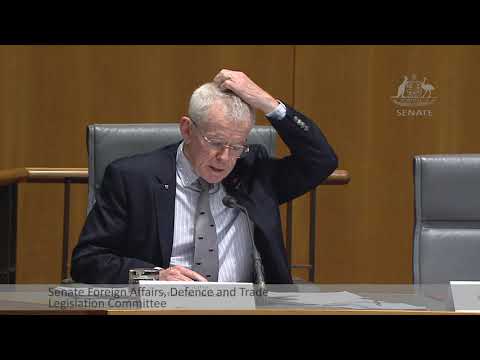
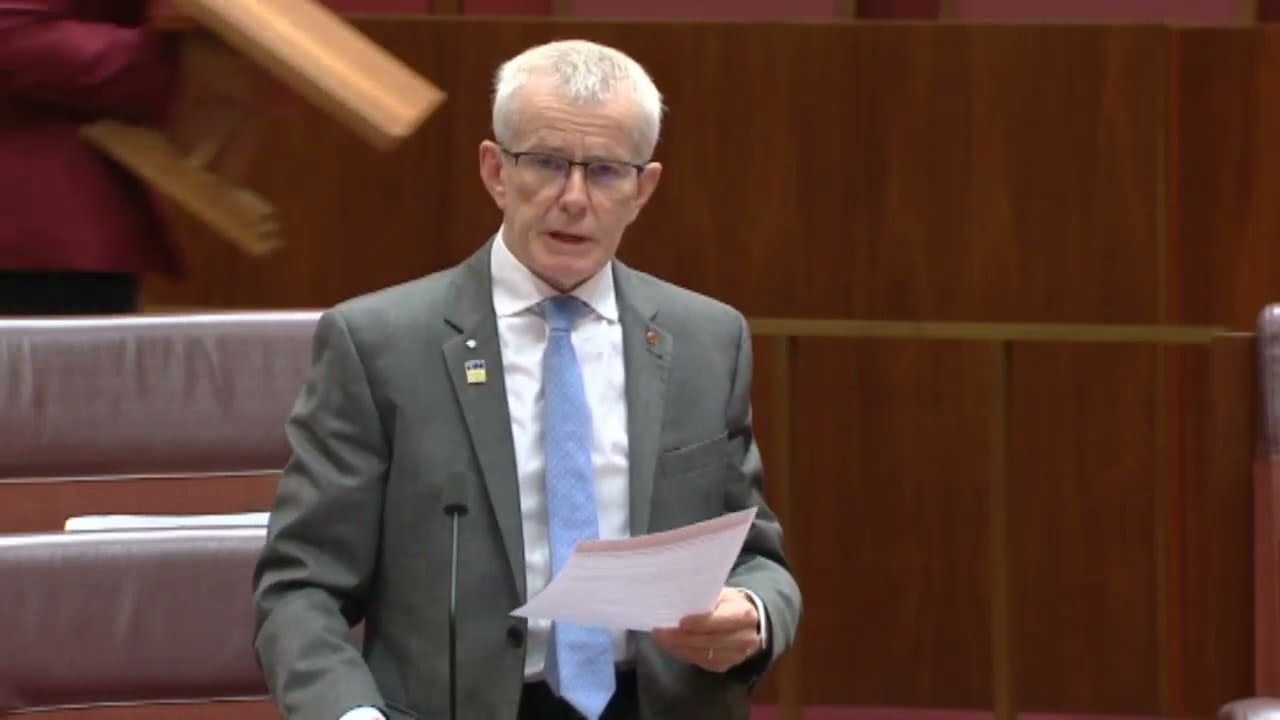
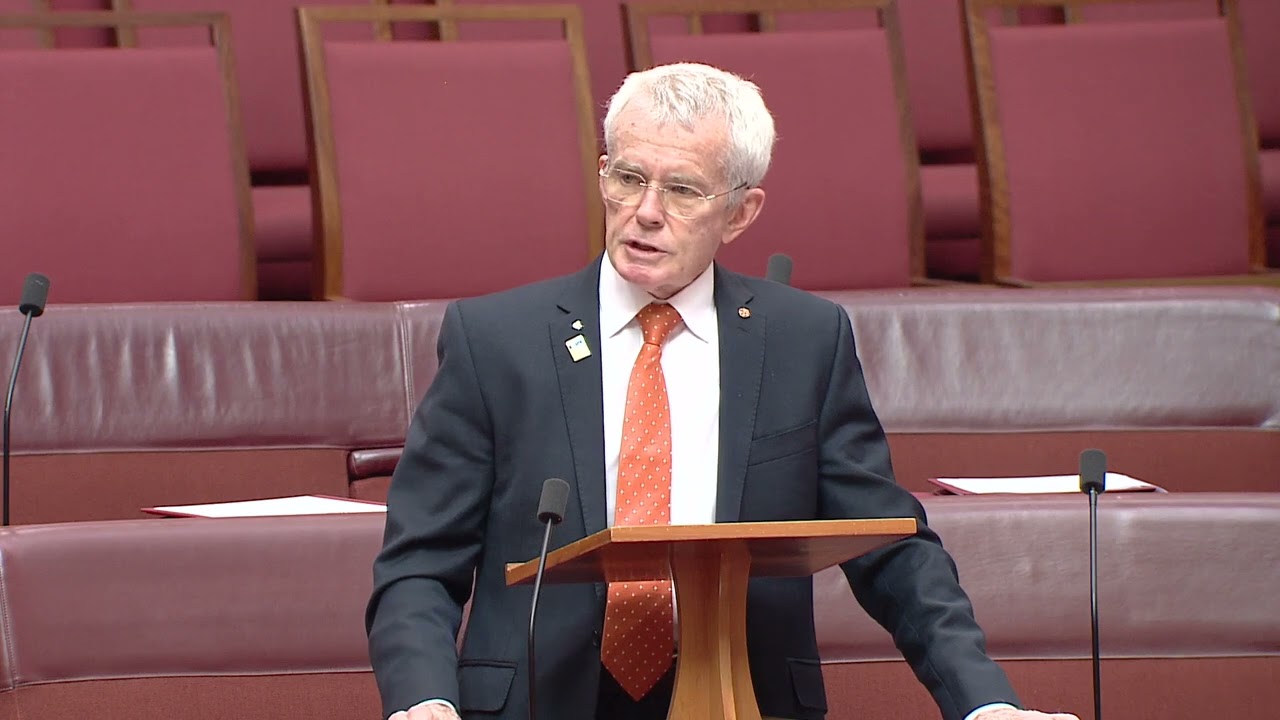
Last week, I once again raised the issue of Australian children being abducted by a parent and held in Japan, contrary to international law. I was informed that the Department is currently providing support to 17 parents of 24 abducted children.
Since 2004, there have been 90 cases of children abducted to Japan. I was advised that Japanese legislation is planned for 2026, which may allow for joint custody — but only if both parents agree.
Senator Penny Wong could not answer why an Australian parent would be required to pay child support to the abducting parent in Japan. She did say, however, that she had raised the issue of the abducted children with the Japanese government again on September 25 this year.
— Senate Estimates | October 2025
Transcript
Senator ROBERTS: Thank you. I now move to the fact that many Australian children are currently being held by a parent in Japan—not one parent, but several cases, by one of the parents—contrary to Australian and international law, without a remedy for the Australian parent to have their child returned. These are truly stolen children. I’ve brought this up before in Senate estimates. My first question is: how many of these abducted children are in Japan, as reported to the department? Previously it was 89. Some children returned—I think it was 18—and are no longer listed as abducted children. How many are now in Japan, abducted?
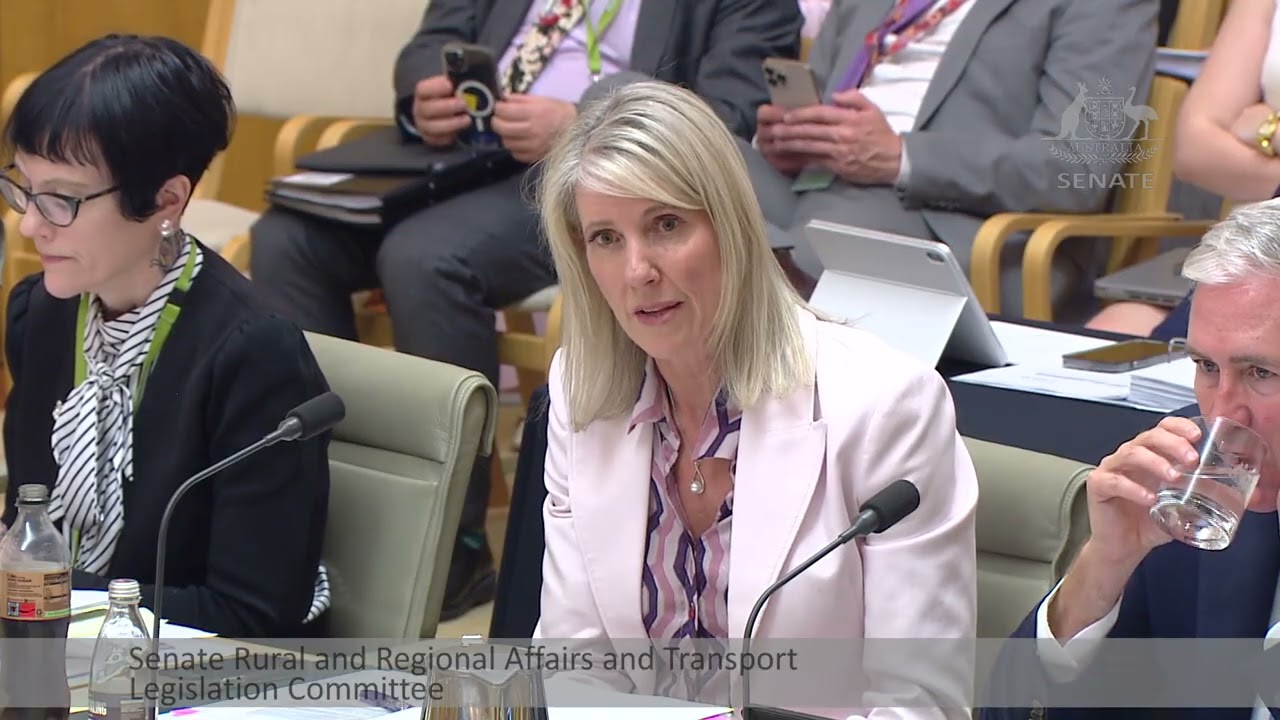
Ms McGregor: Thank you for your question, Senator. I can confirm that DFAT currently provides consular assistance to 17 parents—and that’s in respect of 24 children—on parental abduction and child custody issues in Japan. Since 2004, we have provided assistance to the parents of 90 children in similar cases. Those are the numbers.
Senator ROBERTS: That’s a big improvement. What progress has been made to return these children since the last time I raised this in Senate estimates? Numbers, and also action you’ve taken.
Ms McGregor: There has been some progress recently with the passage of Japan’s legislative reforms, through their legislature, that will allow joint custody from the middle of 2026. We continue to engage with Japan to encourage them to implement that legislation in a way that will allow children to have relationships with both parents where it’s in the best interest of the child to do so. We will continue to advocate with Japan for those reforms. Minister Wong raised child custody with the foreign minister of Japan at a bilateral meeting in the margins of the 2+2 meeting in early September 2025. Minister Wong also raised the issue with then foreign minister Kamikawa in July 2024 in Tokyo, and before that in 2023 in September, and on multiple occasions with Foreign Minister Hayashi as well. We continue to make those representations. There has been other assistance. The Hon. Justice Victoria Bennett of the Federal Circuit and Family Court visited Japan in April last year to share experiences of family law reform with parliamentarians, and her visit helped strengthen Australia’s advocacy. We also supported a six-month visit to Australia by a Japanese Ministry of Justice judicial official to learn about Australia’s family law system. That was from October 2024 to March 2025. Other than that our ambassador to Japan and other officials consistently raise this matter with Japanese ministers and authorities, and we coordinate advocacy with like-minded countries.
Senator ROBERTS: Thank you. Minister, my next question is to you. Thank you for your advocacy on this matter. It’s been successful so far. The upcoming laws in Japan in 2026, though, do not solve the problem because visitation rights with the non-custodial parent are not addressed and joint custody is only made possible if both parents agree. What’s your view on that, and what prospects have we got for resolving it?
Senator Wong: We have advocated to Japan in the way that officials have outlined. We have encouraged Japan to implement this legislation in a way that allows children to have relationships with both parents where it is in the best interests of the child and it is safe to do so. That has been the position that we, the officials and I, have articulated. Obviously, these are matters for domestic processes in Japan, but I have engaged, as Ms McGregor talked about, with a number of foreign ministers in relation to this. We have had engagement through a judge of the Federal Circuit and Family Court of Australia, Justice Bennett, which Ms McGregor referred to. We’re trying to put our views and share some of our experiences, but ultimately these are matters that the Japanese system is determining. We are pleased that there has been progress. I understand it’s been very distressing for a number of parents.
Senator ROBERTS: I assume you’re still working on the visitation rights issue?
Ms McGregor: That is correct.
Senator ROBERTS: Minister, this may not be possible for you to answer, but is it possible that a parent without access to their abducted child can be forced to pay Australian child support to the abducting parent while the child is being held in Japan? Senator Wong: I’m not in a position to answer that.
Senator ROBERTS: Okay. If so—and I’m not trying to be cheeky; I’m trying to understand—by paying child support is the government not becoming complicit in supporting the process and the abduction? Now, I understand; I’ve had dealing with Japanese people. They’re very wonderful and respectful. I just wonder if that’s possibly the case.
Senator Wong: This is a question: if child support is required, what are the consequences of that?
Senator ROBERTS: Basically, yes, and does it encourage abduction?
Senator Wong: We don’t ever want children to be abducted. This portfolio doesn’t deal with child support, and I don’t know what the parameters are around the child support legislation—
Senator ROBERTS: That’s why I prefaced my question.
Senator Wong: so I can’t comment any further.
Senator ROBERTS: What is Japan, which is our supposed ally, saying to support its position of not assisting to resolve this matter with regard to returning abducted children? Do they understand our system? I know you’ve tried to educate them on our system.
Ms Adams: Perhaps I can offer some comment. I think the reality is that Japan has quite a different, you could say, family law approach overall than our country has. I think we—not just this department but other parts of our system—through our sustained advocacy have had some success in encouraging Japan to nudge their quite culturally specific, as they would see it, system towards one where access to both parents is more normal. But it’s fundamentally a different set—
Senator ROBERTS: A different culture.
Ms Adams: of legal and family-oriented decisions that they make.
Senator ROBERTS: I’ve negotiated with the Japanese. They’re wonderful people, but it is difficult to get across to a different culture at times. Is the Australian government minister prepared to bring this matter to the United Nations for resolution, in the same way that Australia achieved success globally in halting whaling by raising it at an international level?
Senator Wong: I don’t think you were in the room, but I responded to Senator McKim by making the point that grandstanding is not necessarily being effective. In fact, it usually is not effective. We have worked in the way that we have, bilaterally and respectfully, recognising that this is a matter for their domestic political processes in Japan, but we have sought to put our view, to express the sensitivity of this issue, the distress of a range of non-custodial parents whom we are aware of and deal with and what effect this has, and respectfully to encourage progress on this matter. I appreciate that there are people who will want more to have been done, but I think we have seen progress and we have seen the willingness of our counterparts to engage on this issue. I think that is a more effective way. The approach we have been taking has been, I think, a more effective way to progress this issue.
Senator ROBERTS: Out of respect, I would agree with you, because that is the way the Japanese do it, and I think you would be more effective that way anyway.
Senator Wong: Thank you.
Senator ROBERTS: Thank you, Chair. I will have more questions, if I can come back