

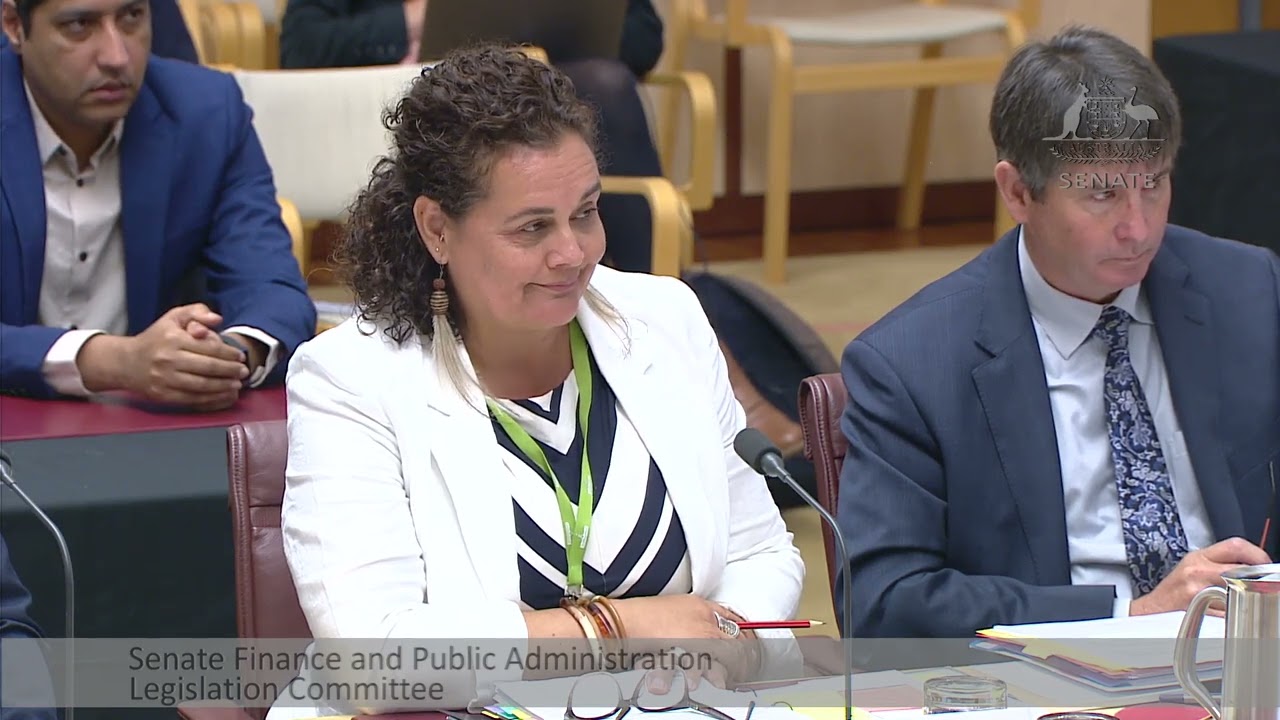
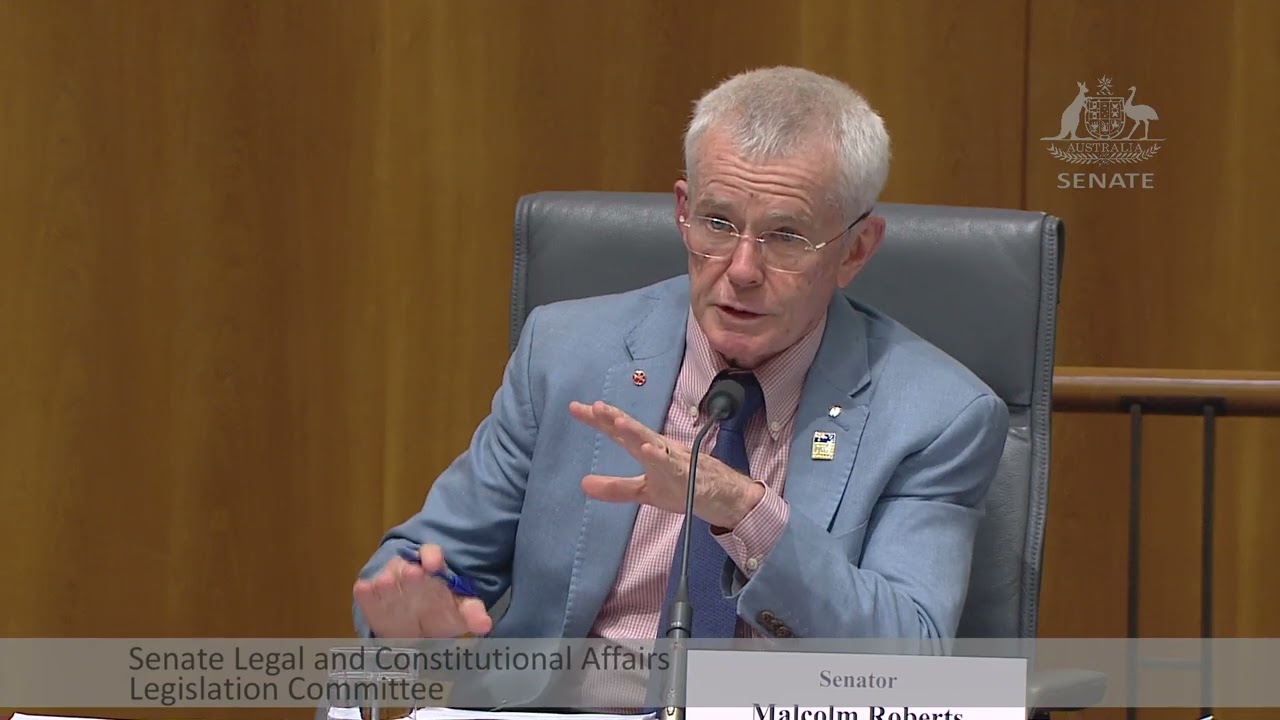
This exchange during Senate Estimates with the Therapeutic Goods Administration (TGA) sums up just how bad Estimates has become under the Albanese Labor Government.
The TGA is well aware that Senators only have a few minutes to ask questions, and they understand that the more they can stall, the less likely it is they’ll have to say anything that could cause problems for their Minister—regardless of the truth. Because of this, the Minister will not require the “witness” to answer the question, nor will the Committee Chair—both of whom are Labor Senators.
My first question was a genuine attempt to clarify misinformation circulating online about aluminium intake. The answer was a simple “yes.” Keep that in mind when you watch the video. Instead of confirming the obvious and allowing us to move on to another question about aluminium in vaccines, the opportunity was taken to stall for time by debating whether the question should even be asked at all. Dr. Lawler, Deputy Secretary of the Health Products Regulation Group within the Department of Health, oversees the agencies and committees the Government uses to spread responsibility, avoiding accountability. He was exactly the right person to direct these questions to.
The data I presented was straightforward: the level of aluminium in vaccines is unsafe for infants by an order of magnitude. Yet the TGA spent a great deal of time on their pre-prepared responses insisting that vaccines are safe. They refuse to accept any data showing that this level of exposure is causing health issues in infants. I then asked whether our vaccines had been subject to gold standard testing—a term used on many occasions by “witnesses” attending Estimates to defend COVID vaccines – yet suddenly, the gold standard is no longer relevant to … vaccines! Suddenly, testing a product against a double-blind placebo (saline) is now considered “unsafe,” despite this being the standard for a century?
In reality, what Big Pharma has been doing for years—and what the TGA has allowed them to do in Australia—is to compare new vaccines (or medications for that matter) against existing ones, rather than saline. If the harm detected is the same as that already being caused by the “placebo” medication, it’s deemed safe. This is not how things should be.
I will continue this line of questioning until we get a proper inquiry into the level of heavy metal contamination in infant vaccines.
— Senate Estimates | October 2025
Transcript
Senator ROBERTS: Thank you for being here again, especially Professor Lawler. Before I start, can we deal with a statement I hear on the internet all the time—that you get more aluminium in your food than you do in vaccines. Aluminium in food is ingested at 0.3 per cent. In vaccines, it’s ingested at 100 per cent. Individual results may vary. Is this a fair statement?
Prof. Lawler: I’m not sure where you’re seeing that. I don’t have the information you’re referencing in front of me.
Senator ROBERTS: I’m asking you whether it’s accurate.
Prof. Lawler: I’m not sure that is necessarily a question for the TGA to respond to. We can provide you with information on the process that we undertake in terms of the evaluation and authorisation of therapeutic goods, including vaccines. Is this a claim that the TGA has made?
Senator ROBERTS: No. That’s my understanding. What is the TGA’s recommended maximum daily intake of aluminium for a child aged six months, please?
Prof. Lawler: By mouth as a recommended daily intake?
Senator ROBERTS: Yes.
Prof. Lawler: I don’t believe that the TGA sets a recommended daily ingestion of aluminium, Senator.
Senator ROBERTS: What is the daily maximum for a child of six months that can ingest aluminium in food?
Prof. Lawler: I would suggest that those are probably questions best posed to Food Standards Australia New Zealand, Senator.
Senator ROBERTS: The US Food and Drug Administration recommends exposure of five micrograms per kilogram in infants. At six months, the average weight of an infant is seven kilograms, making the maximum daily exposure 35 micrograms. The Infanrix hexa vaccine contains 825 micrograms of aluminium per dose, which is 24 times its safe daily limit. Do you accept injecting children at 23 times the safe level? Do you accept that this unsafe aluminium exposure is a contributing factor to aluminium derived autism?
Prof. Lawler: I will throw to Dr Dascombe in a moment. I will answer a couple of the things there in reverse order, if I may. The first is that, in answer to your second question, no. I don’t believe that there is a recognised regulator—I’m happy to be corrected—that does.
Senator ROBERTS: Rather than relying on someone else, do you have any data or research?
Prof. Lawler: I’m just trying to answer your question. I don’t believe that there is another regulator. I’m just using that as back-up. We have seen no credible safety signal that aluminium load either in single or scheduled immunisation delivery is a contributor to autism. The second thing I would say is that I am not sure this is the forum, nor do we have the time, to clarify the distinction between injected and ingested aluminium. They are quite different biomechanical processes. I don’t think the two are comparable. I will ask Dr Dascombe to add to that answer.
Dr Dascombe: I echo the comments of Professor Lawler. Neither the TGA nor any international regulator has detected or confirmed any safety signals relating to any vaccine and autism. This is also supported by the weight of scientific evidence.
Senator ROBERTS: What is the TGA guidance for the injection of multiple vaccines into a six-month-old at the same time causing amplified aluminium? Each of those doses has aluminium adjuvant, a preservative, so each of them is 24 times the daily safe limit.
Prof. Lawler: My apologies for breaking in, Senator. There are a couple of points on that. It is not the practice or the role of the TGA to make recommendations on immunisation schedules. That sits within the province of ATAGI, the Australian Technical Advisory Group on Immunisation. I would also highlight that we have frequently responded to questions around the aluminium load in the vaccination schedule and their consequences. Most recently, but perhaps more recently, is a Senate question on notice 24-003075. We have discussed it in this place a number of times.
Senator ROBERTS: You see the problem. Just one vaccine can be 24 times over the safe daily limit. You are recommending injecting multiple of them at the same time. These infants could be getting over 100 times the safe limit and you just keep on injecting them right in there and then claim aluminium poisoning isn’t the reason they come down with autism in some cases the very next day. How can you justify this?
Prof. Lawler: I will answer those questions in reverse order, if I may. I will answer the second. There is no indication that the vaccination schedule is linked to autism. Indeed, it has been highlighted not just today but previously. There’s no credible evidence that there is a linkage between vaccination and autism. As I just indicated in my previous answer, it is not the role of the TGA to recommend vaccinations. We assess them for safety, quality and efficacy. It’s the role of ATAGI to recommend the vaccination schedules.
Senator ROBERTS: Why don’t you tell the pharma companies to reduce the aluminium preservatives down to safe levels so you can get parents to trust your vaccine again and the parents can trust your advice again?
Prof. Lawler: There are a couple of elements in your question. We evaluate the submissions from sponsors and evaluate the process of manufacture and quality control to ensure that the balance of risk versus benefit is appropriate. That is a determination that we make not only in the authorisation but also in the post-market monitoring through our pharmacovigilance of any therapeutic good with the inclusion of vaccines. In terms of trust, we recognise that there is an active campaign to undermine the trust of regulators, the TGA particularly. We undertake to restore or bolster the trust of the public, which I have to say was during the pandemic and is still, despite some narratives, at a high level. We seek to do that through education and guidance. We do that through being very clear and transparent about what we do and by addressing dis- and misinformation when and if it occurs.
Senator ROBERTS: How many vaccines in the Australian schedule have been subject to a gold standard trial, meaning specifically a randomised double blind placebo control study where the placebo is saline and not another vaccine?
Prof. Lawler: I recognise that you weren’t here before lunch. We had a conversation with Senator Antic regarding the use of the term ‘gold standard’. We recognise that the use of a placebo control randomised double control trial—there are a number of different terminologies used—is of a very high standard and presents robust and dependable evidence. The challenge, of course, is whether something constitutes a gold standard in the way that you have used it. It actually very much depends on context. We use controlled or blinded trials or placebo trials when we are interested in determining the difference between a control arm and an intervention arm. This is really effective when we’re looking at incremental improvements in therapies or when we’re looking at the introduction of new therapies. The challenge we have, of course, is that when there is an established therapy that has been shown over decades using both documented and real-world evidence to be both safe and effective, it is ethically questionable—and, in some instances, ethically indefensible—to use a placebo in that non-intervention arm. I will give you two examples, if I may. We have vaccine preventable diseases, and we have a very clear demonstration of reduction in not only mortality but morbidity in those diseases. Let’s choose polio and small pox, diseases that have had a specific impact for many decades and have led to untold suffering. One of them has been eradicated by the use of vaccines and one of them has been virtually eradicated. If we were to introduce placebo controlled trials for those drugs, that would be horrendously unethical. We would be essentially and knowingly infecting children with a disease that could kill, paralyse or maim when we know that there is a way of preventing that. That’s not ethically defensible.
Senator ROBERTS: What you are saying is that there has been no double blind placebo control study where the placebo was saline and not another vaccine?
Prof. Lawler: No. What I am saying is that would not be an appropriate approach to be taking today with the vaccines we use.
Senator ROBERTS: Has it been taken in the past?
Prof. Lawler: I also would highlight that the introduction of vaccines occurred some time ago. And also—
Senator ROBERTS: So it has not been done?
Prof. Lawler: I will let you finish.
Senator ROBERTS: So it has not been done, then, the tests?
Prof. Lawler: Whether these—
Senator ROBERTS: A double blind trial?
Prof. Lawler: Well, we’ve actually already taken on notice to provide concrete evidence on which of those vaccines has been subjected previously to blinded control trials.
Senator ROBERTS: How many COVID vaccines have been destroyed because they aged out? What was the purchase cost for those products?
Prof. Lawler: Dr Anna Peatt from the national immunisation division will respond to that.
CHAIR: This is your last question, Senator Roberts.
Dr Peatt: Senator, could you please repeat the question? I didn’t quite hear it.
Senator ROBERTS: Certainly. How many COVID vaccines have been destroyed because they aged out? What was the purchase cost for those products?
Dr Peatt: Senator, I would have to take that question on notice. I don’t have that available with me today.
Senator ROBERTS: Was close to 35 per cent of the multibillion-dollar COVID vaccine supply binned or trashed?
Dr Peatt: I would have to take that question on notice.
Senator ROBERTS: I am asking for you specifically to tell us whether or not it was 35 per cent.
Dr Peatt: I don’t have that figure in front of me.
Senator ROBERTS: I am asking for you to just say what the figures are. Can you confirm that is 35 per cent of what we bought?
Dr Peatt: Yes, I can do.






When are these criminals going to be held accountable for their lies and crimes?
When are these vile criminals going to be held accountable for their crimes?
Can this type of behaviour be called out? It is a waste of time and money.? These highly paid government officials are acting like spoiled brats. They are a waste of space, and not worth what they are paid.