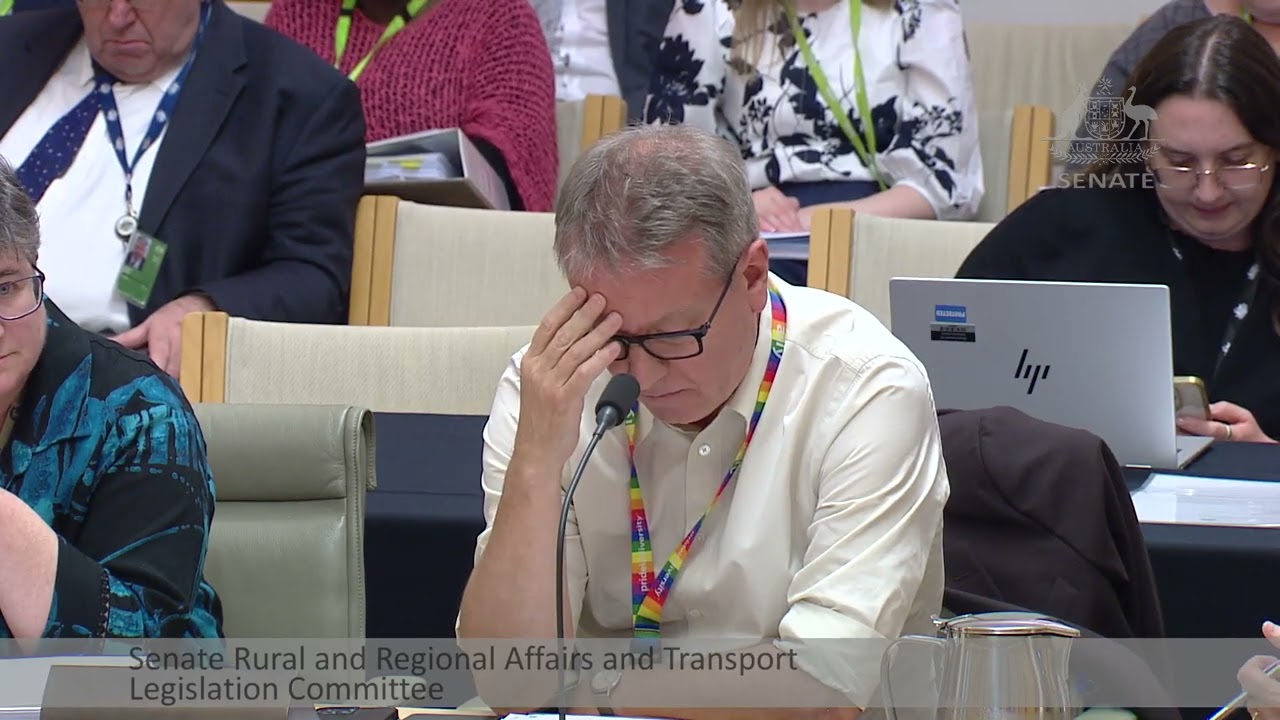
I raised with Creative Australia the “rumoured” $800,000 grant to Sara M. Saleh. While the CEO, Mr. Collette, could not confirm this specific figure, he did clarify that artist Khaled Sabsabi, whose political views have been a point of contention, has received over $800,000 from the agency over the last 20 years, including his current representation of Australia at the Venice Biennale.
I questioned why a commercial entity like APRA, with record revenues of $740 million, requires $4.3 million in taxpayer-funded grants. This raises the question: should public money subsidise the talent development of a profitable private firm? We must ask if these funds are supporting growth or simply replacing private capital.
I also sought clarity on the accounting for Aboriginal arts programs. It was confirmed that approximately $32.1 million is dedicated to First Nations creative practice out of a total grant pool of $285 million.
Several questions have been put on notice. I will wait for the exact figures on overseas spending, recent grants to Mr. Sabsabi, and the specific KPIs from their annual report to ensure that “investment” isn’t just a buzzword for unchecked spending.
My focus remains on ensuring that government funding serves the Australian public effectively and stays clear of political extremism.
Transcript
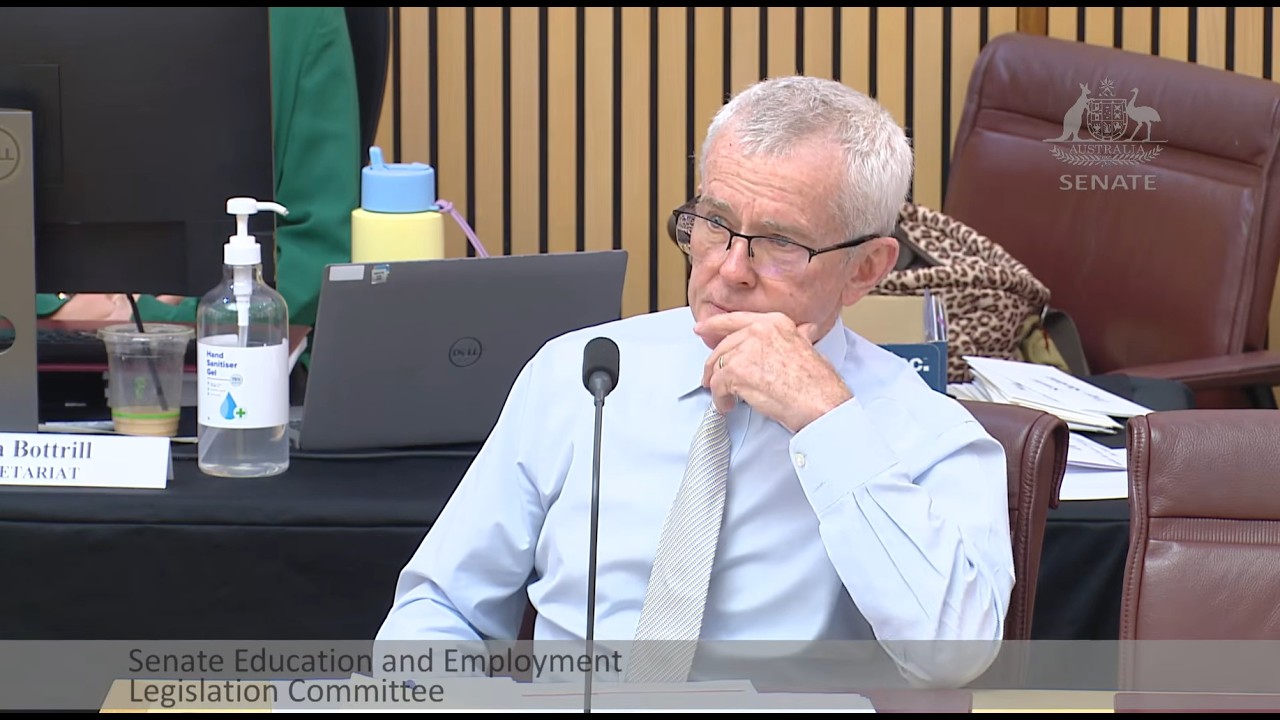
Senator ROBERTS: Thank you for appearing today. My first question is on behalf of a constituent, who provided it, actually. It is a fact check on social media reports that Sara M Saleh, a Palestinian Australian writer, activist and human rights lawyer, has received an $800,000 grant from Creative Australia. We can’t find anything on your website, and it’s a larger grant than usual. Do you have any information on this?
Mr Collette: I don’t have specific information. If you let me speculate for one moment, I think that, if it were a grant of that size, I would be aware of it. But we will have to take that on notice to check it.
Senator ROBERTS: If you could, please.
Mr Collette: You have to remember that we give about 3,700 grants and contracts a year.
Senator ROBERTS: In reviewing your grants, we can see a lot that appear to be for the purpose of sending Australians overseas. My question is not criticism at this point. Please explain how much was spent sending artists or students overseas and what the cost benefit for taxpayers was.
Mr Collette: I will have to take that on notice and get you the final figure. But, yes, we do invest in programs to send artists overseas. That is done for the best possible reasons: to support their careers and to make sure that great Australian storytelling and music making are experienced overseas. I’d ask you to keep this in mind, particularly in the fields of literature and contemporary music: we are a relatively small English-speaking market competing increasingly against very large English-speaking markets. Since the establishment of Revive, in particular, we’ve doubled down on supporting Australian artists to establish their careers overseas. We are at a particular moment now in contemporary music, for example, where we find that Australians have never listened to more music, because of streaming services, but that the Australian artists they are listening to constitute only about eight per cent of that. So we have a big challenge ahead of us. The way we are working in contemporary music, in particular, is through matched and incentive grants, which I think is a great development in Creative Australia. We have a very strong eye on export. We will co-invest in an artist and a career with a record label with other forms of matched funding that are trying to break this artist overseas.
Senator ROBERTS: Khaled Sabsabi and his extremist political views have been an issue for Creative Australia. First, he was our Venice Biennale selection, then he wasn’t, then he is again—perhaps—then he had a large grant, then it was a $100,000 ‘sorry’ grant. Can you provide us the latest on Khaled Sabsabi, please? What sort of money is he being given? Is he representing us in any way?
Mr Collette: He’s representing us, I’m very pleased to say, at the Venice Biennale, which opens in May this year. You’re aware of the history. We recommissioned Khaled Sabsabi as the artist and Michael Dagostino as his curator. We have worked very closely, as we do with all our Venice artists, to support the development of their work.
Senator ROBERTS: How much money has he received from Creative Australia?
Mr Collette: All up, we believe he’s received slightly in excess of $800,000 over a 20-year period. That includes his commissions for Venice.
Senator ROBERTS: What about the last 12 months?
Mr Collette: In the last 12 months he’s received—I’m trying to get the dates right in my head—his commission for Venice and he’s also applied for, competitively, and received a grant. Actually, more accurately, I think the South Australian gallery did to ensure that the work he does in Venice is able to be brought home so that Australians get to enjoy the work as well.
Senator ROBERTS: What would that total in the last 12 months?
Mr Collette: To get you an exact number, I’d have to take it on notice.
Senator ROBERTS: That’s fine. Moving on, I note your continued strong spending on orchestras, theatre and dance. Thank you for that. This question goes to accounting, not to Australian values. You list the Australian Cultural Fund at $13.5 million, which includes several programs for First Nations. Then you have a line item for First Nations of $15.6 million. Is this figure the total spend for dedicated First Nations and Aboriginal arts programs or just an element of it? If not, what was the total spend on Aboriginal grants?
Mr Collette: We can get you that number. I think the number you are alluding to—the $15 million—under Revive we established a dedicated First Nations fund with its own First Nations board that has decision-making rights over the spending of those funds.
Senator ROBERTS: So you give money to the board and they disburse it?
Mr Collette: Yes. We had that fund, and the First Nations board, appointed by the minister, has decision making rights on how that fund is invested. What I’m trying to get for you is the total—I think the total for 2024- 25 invested in First Nation creative practice and arts was $32.1 million.
Senator ROBERTS: To give the figure context, for those new to the subject, this is out of a total spent on grants of $285 million—correct?
Mr Collette: Yes.
Senator ROBERTS: And about $74 million for orchestras, including regional.
Mr Collette: As a part of the creative sector, the orchestras constitute our biggest area of funding. That is as part of the National Partnership Framework. Importantly, that is an understanding of co-investment with all the states and territories as well. We fund each of the state orchestras, plus the territory orchestras. We co-invest with the states.
Senator ROBERTS: Thank you. I note that the Australasian Performing Right Association, APRA, has received around $4.3 million in grants in the last three years. APRA had record revenue last year of $740 million, with revenue noticeably outpacing inflation. Isn’t it their job to develop local talent and then benefit from increased Australian airplay and the royalties they collect from their talent? They have a great business model here, it seems. Why are taxpayers funding a commercial operation that should be funding new talent themselves?
Mr Collette: They do indirectly fund new talent, because their business collects receipts for—
Senator ROBERTS: So why should you be funding it?
Mr Collette: Well, the most particular thing we do with APRA is fund Sounds Australia. That is an organisation that we have funded historically, and we chose to continue that funding, even after the establishment of Music Australia, because it is such an effective way of supporting Australian artists to get to and benefit from overseas markets.
Senator ROBERTS: But can’t the Australasian Performing Right Association—which are a commercial entity, by the sound of it—do it on their own? They’re developing the talent and they’re making money off it.
Mr Collette: You’ll have to ask them that question.
Senator ROBERTS: But you’re giving them money, so you—
Mr Collette: We’re giving them money because we think it is very good value for money, given the expertise they bring to supporting Australian artists to get to overseas markets.
Senator ROBERTS: Are you replacing private funding with government funding?
Mr Collette: Not at all. In fact, it’s growing, I’m happy to say. To get back to first principles, under Revive, our revised legislation allowed us, really for the first time, to co-invest. That means co-invest with philanthropic interests. It means co-invest with commercial interests. That is why, for example, if we want to invest in Australian artists getting overseas, we can ensure that we are co-investing with commercial interests to try and drive the value of our government funding further.
Senator ROBERTS: Thank you. There are only a few more quick questions to go. Doesn’t the music industry need more live venues? Have you done any grants in that area?
Mr Collette: I don’t think we’ve done any grants specifically into live venues, no.
Senator ROBERTS: You call these grants ‘investments’, yet we don’t see any mention of a return on investment—how Australia benefited from the spend. How many people attended events that you funded?
Mr Collette: We do have that number. I will get it to you. In the last annual report it was upwards of $14 million.
Senator ROBERTS: Last question: do you have any performance metrics to ensure that you are spending where the public want it spent, as evidenced by ticket sales, artwork sales—some tangible KPI?
Mr Collette: Yes, we do. If you look at our annual report, we report against KPIs, and attendance at the events we fund is very much part of that. Again, because of Revive, we will be putting an even greater emphasis on audience and market development going forward.
Senator ROBERTS: Where can we get that figure?
Mr Collette: We can get it for you. It is in the annual report last published.
Senator ROBERTS: Send us that on notice.
Mr Collette: Sure.
Senator ROBERTS: Thank you very much.