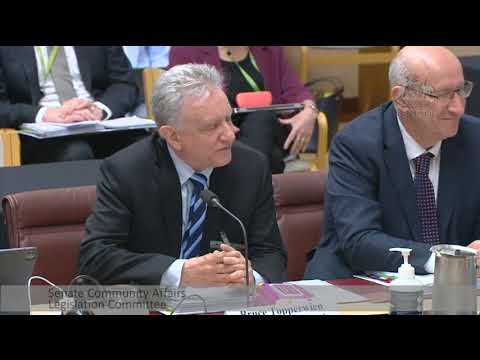
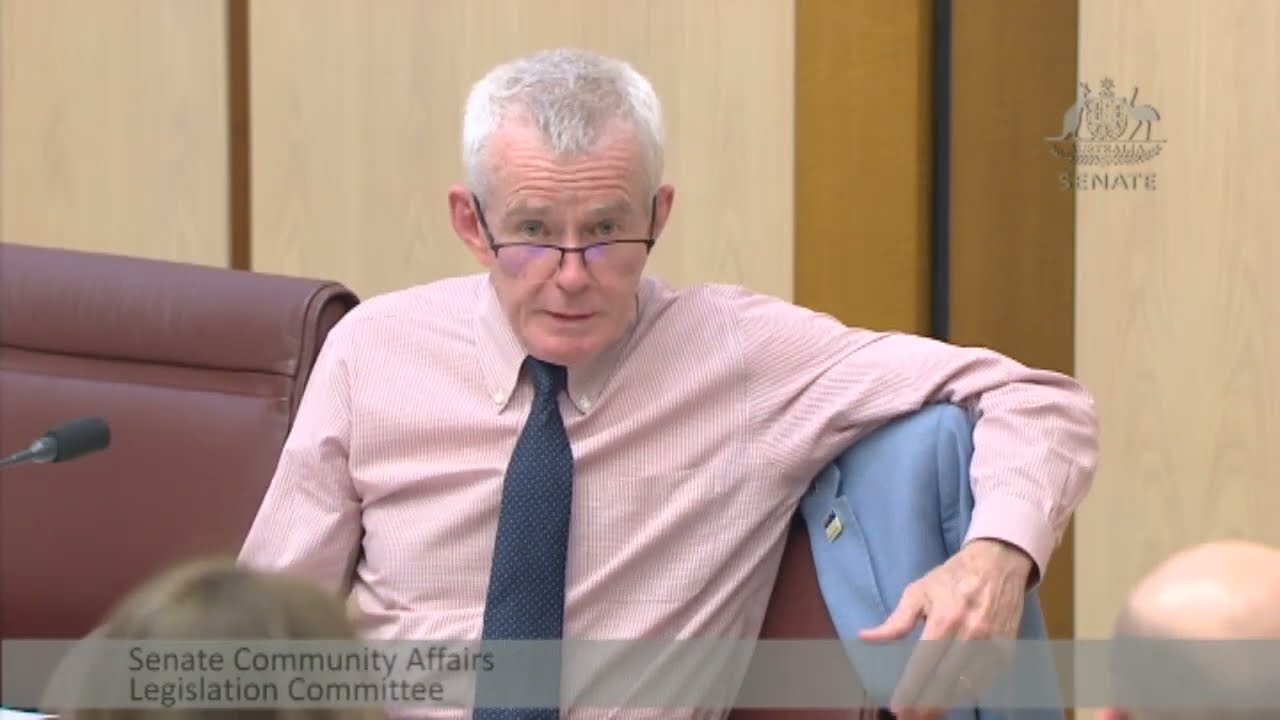
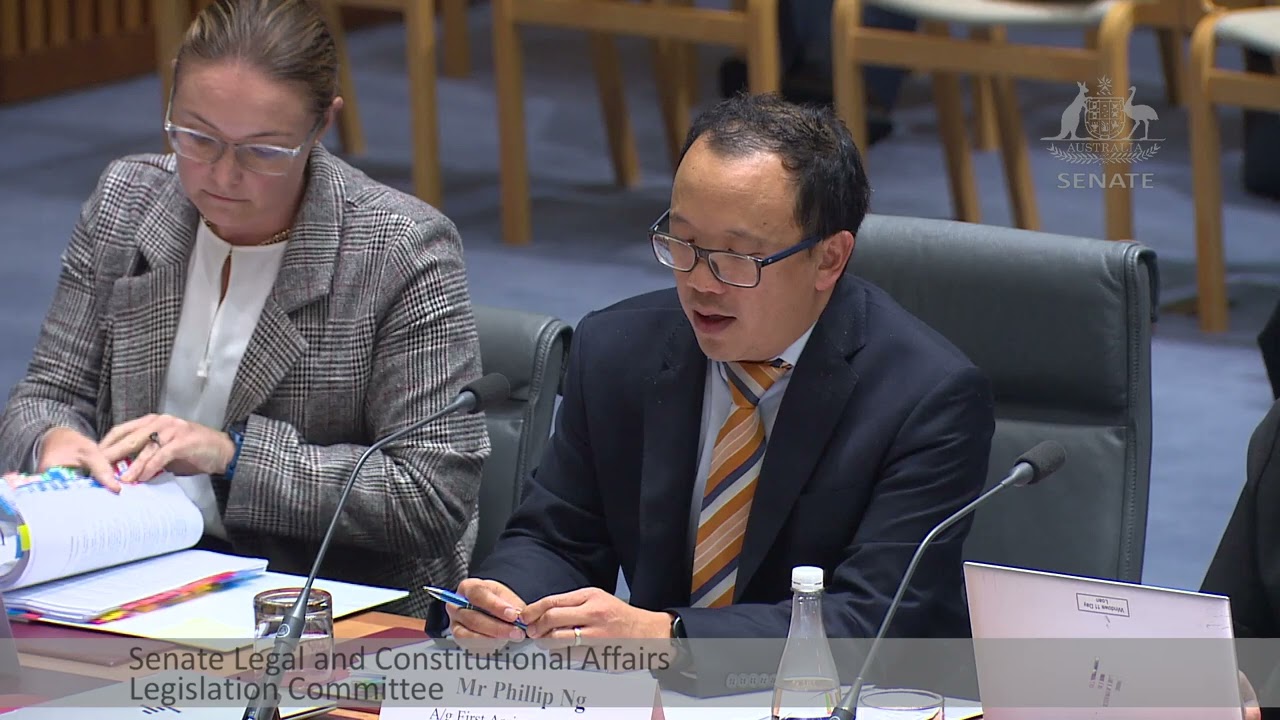
My exchange with the Professional Services Review (PSR) during the December 2025 Senate Estimates only deepened my concerns regarding the integrity of their review process. It is becoming increasingly clear that their ‘peer review’ is a mere box-ticking exercise, dominated by lawyers rather than the medical peers the legislation intended.
I questioned why lawyers, rather than the doctors themselves, are drafting the reports. While the PSR claims lawyers only “put together” the doctors’ views to ensure procedural fairness, it appears to me that the heavy lifting, sometimes over 150 hours of drafting, is done by legal staff, while committee members may spend as little as seven to 10 hours reviewing the final product.
I raised the issue that there is no legal requirement for committee members to share the same subspecialty as the GP under review. A GP in a niche field like aerospace medicine could be judged by practitioners with zero experience in that specific group.
I questioned Professor Dr Dio and Ms. Weichert on the lack of basic legal protections, such as the absence of a presiding judge, the inability to cross-examine the committee on their views of “general body” standards, and the lack of a formal merits review.
Several questions were taken on notice, specifically around providing detailed log of hours spent by both staff and committee members on reports over the last three years. We need to see if the time spent by doctors actually justifies calling this a “peer-reviewed” outcome.
— Senate Estimates | February 2026
Transcript
Senator ROBERTS: At the December 2025 Senate estimates, Professor Dr Dio, you indicated that lawyers prepare their reports from the review scheme but that the committee members review the reports. In what way does the PSR monitor the performance of the committee—including if the committee has read the entire report and the material presented to it before signing it off?
Prof. Di Dio: The committee diligently reads the draft reports and the final reports, and we have staff who liaise with the committee at various stages after draft reports and final reports have been sent to them. So should for any reason a committee member not do their duty and read in the draft report, the legal officer in charge of giving service to that committee would firstly of course remind the committee members to review the report, and if they do not, they would then come to me. But that’s a theoretical possibility, because I cannot recall that happening.
Senator ROBERTS: The PSR committee process is supposed to be a peer review process performed by doctors. Why then don’t the doctors write their own reports? If administrative support is needed, why are lawyers drafting their reports instead of administrative or secretarial staff, which would come at a lower cost to the department?
Prof. Di Dio: Because the reports are incredibly important. We are passionate about according natural justice and procedural fairness to all practitioners under review. It is my view that the best way to do that is to have the best qualified, quality people writing those reports. Reports of this nature would be best written by people who are very good at supporting doctors in providing their reports.
Senator ROBERTS: ‘Best qualified’ to me would seem to be the doctors—and then trimmed up or modified by the lawyers.
Ms Weichert: The lawyers are writing up what the doctors have formed a view about as part of that committee process, as part of the hearing process, the concerns they have put to a person under review and the things that have come back—the lawyers are just putting it together. They are the doctors’ concerns or the medical practitioners’ concerns. It is they who sign off on the report, who approve the report. They are the peer review committee members’ views.
Senator ROBERTS: If it can be shown that a lawyer spends over 150 hours drafting a report, but a committee member only spends seven to 10 hours reviewing the material and reading the report, is this truly considered by the PSR to be a legitimate peer review?
Ms Weichert: That’s not taking into account any of the time that was spent in the hearing, in questioning and the time that the committee members have turned the matter throughout the process.
Prof. Di Dio: A hearing might take eight days; it might take 50 or 60 hours. The prehearing reading might take many, many hours. The contemplation of what happened during the committee hearing might take the committee members many, many hours to turn their mind to it.
Senator ROBERTS: Over the past three years, as an average, what percentage of the total services reviewed has the committee found the services provided by doctors to be inappropriate?
Prof. Di Dio: I will have to take that on notice.
Senator ROBERTS: This question is about general practitioners. The Royal Australian College of General Practitioners recognises 37 specific interest groups as subspecialities. If a GP is under review by the committee, is it correct that there is no legal requirement for the committee members to share the same subspecialty? For example, if a GP practices solely in aerospace medicine, there’s no legal requirement for the committee to have any experience in aerospace medicine, because they all fall within the category of general practitioners. Why is there no subspeciality matching?
Prof. Di Dio: The subspecialty matching is that members of the committee are general practitioners. But the PSR strives to find general practitioners who have experience in those matters. I can assure you that for some practitioners who are in craft groups that are exotic, as you say, like me—I have particular special interests—we try to match those as much as we can. But, under the law, a general practitioner can review a fellow general practitioner.
Senator ROBERTS: Is it correct that the legislation allows just three committee members to decide what is unacceptable to the general body of general practitioners? In deciding what the general body of general practitioners find unacceptable, do the committee members have to have any regard to any external resources or consideration of other doctors? Do the lawyers draft that part of the report as well, about what the general body of doctors think?
Prof. Di Dio: One of the things that we train committee members to do, to absolutely and scrupulously give fairness to the practitioners under review, is try as much as possible to ask one question at a time to avoid the risk of the practitioner missing the opportunity to respond to any and all of the questions put to them. I’d be very grateful if you could ask me the first couple, and I’ll go through them with you systematically.
Senator ROBERTS: Is it correct that the legislation allows just three committee members to decide what is unacceptable to the general body of practitioners?
Prof. Di Dio: Yes. Ms Weichert: It’s at least three. There are certain circumstances where there could be additional committee members appointed, but it is usually three.
Senator ROBERTS: In deciding what the general body of general practitioners find unacceptable, do the committee members have to have any regard to any external resources or consideration of other doctors?
Prof. Di Dio: The committee members have to have regard to all of the evidence before them so that they can—
Senator ROBERTS: All of the evidence before them?
Prof. Di Dio: Yes. The committee members welcome from the practitioner any materials that they wish to submit as further evidence either before, during or after the hearing.
Senator ROBERTS: While PSR committees are intended to operate as expert peer-review bodies, concerns include the absence of a presiding judge, the lack of merits review, the inability to cross-examine the committee on what they believe to be the views of the general bodies, the downweighting of significant evidence, limited engagement with defence submissions and a lack of transparency. Why do PSR procedures deny these basic elements of procedural fairness and justice, and how does the PSR contend that the peer-review function is being properly exercised in their absence?
Prof. Di Dio: Could you ask the six points one at a time, and I’ll gladly respond to them.
Senator ROBERTS: They’re intended to operate as expert peer review bodies. Concerns include the absence of a presiding judge.
Prof. Di Dio: The process is a peer-review process. So, if somebody is trying to find out whether I’ve engaged in inappropriate practice, then the best placed people to do that are my peers, not a judge.
Ms Weichert: And, ultimately, we are applying the scheme as it is set out in the Health Insurance Act, so that provides for a committee—
Senator ROBERTS: That may be the problem. The lack of merits review?
Prof. Di Dio: Under the act, there is no formal merits review; however, we try as much as we can to build fairness into this process by having multiple opportunities to respond and make submissions—multiple opportunities.
Senator ROBERTS: The inability to cross-examine the committee on what they believe to be the views of the general bodies?
Prof. Di Dio: The committee is there to ask questions and find out if the practitioner under review has engaged in inappropriate practice. It’s not the committee that is under review.
Ms Weichert: But the person under review can put forward their information when they’re answering the questions and the information that they would like the committee to consider, and that will occur as part of the process.
Senator ROBERTS: The downweighting of significant evidence?
Prof. Di Dio: What do you mean by that?
Senator ROBERTS: As I said, ‘the downweighting of significant evidence’—
Prof. Di Dio: I don’t understand what you mean.
Senator ROBERTS: with significant evidence being put cursorily or downgraded.
Prof. Di Dio: What significant evidence? Who has reviewed something cursorily or downgraded it? I don’t understand.
Senator ROBERTS: If there is significant evidence put before the committee, it’s downgraded in terms of the verdict.
Prof. Di Dio: I don’t understand what you mean by that.
Senator ROBERTS: Okay. Limited engagement with—
Prof. Di Dio: I would gladly take that on notice if it’s clarified for me. I just don’t quite understand. I’m not in any way being disrespectful.
Senator ROBERTS: Okay. I can’t understand how you can’t see that, because the words seem to be selfexplanatory.
Prof. Di Dio: Are you suggesting that, during a committee process, a practitioner under review gives significant evidence and the committee then downgrades or chooses to ignore it?
Senator ROBERTS: Yes.
Prof. Di Dio: I’m not aware of that occurring.
Senator ROBERTS: Limited engagement with defence submissions and a lack of transparency?
Prof. Di Dio: ‘Limited engagement with defence submissions’—again, practitioners under review can make submissions. Those submissions are welcome, and they are reviewed.
Senator ROBERTS: Okay. Next question—
CHAIR: Senator Roberts, can I interrupt you for one quick second. There are media in the room, and I need to give a short statement. The media have requested permission to film and take photos of proceedings, and the committee has agreed to this. I remind the media that this permission can be revoked at any time. The media must follow the direction of secretariat staff. If a witness objects to filming, the committee will consider this request. The media are also reminded that they are not able to take images of senators’ or witnesses’ documents or of the audience. Media activity may not occur during suspensions or after the adjournment of proceedings. Copies of resolution 3, concerning the broadcasting of committee proceedings, are available from the secretariat. My apologies, Senator Roberts.
Senator ROBERTS: Thank you, Chair. A former PSR director has been found liable in the Queensland court for misfeasance in public office for failing to perform her statutory duties. Given these matters raised, why should the PSR’s legislation, governance and current officeholders not be subject to a comprehensive independent review?
Prof. Di Dio: We did have a comprehensive review in 2023 called the Philip review, which made findings. We have acted on all of those findings, including the appointment of associate directors to the scheme.
Senator ROBERTS: The former director was found liable for making a decision without adequately considering submitted materials. Isn’t that exactly what’s still happening?
Ms Weichert: We do not consider that to be happening.
Senator ROBERTS: Okay. What percentage of the department’s budget is spent on the committee review process, and how many cases per year go through a committee process?
Prof. Di Dio: I can’t tell you the exact amount— An incident having occurred in the committee room—
Senator RUSTON: You might want to turn your device off, Malcolm; you’ll have Bridget McKenzie after you! Prof. Di Dio: It might save us all a bit of time!
Senator ROBERTS: Only if it’s in super-rational mode—other than that, it’s just filled with garbage. Can you take that percentage on notice?
Senator CAROL BROWN: It hallucinates from time to time. You have to be careful.
Senator ROBERTS: Yes. I might just turn it off.
Prof. Di Dio: I woke up this morning, and ChatGPT told me I was going to have a stress-free day, so I think it was hallucinating! Without notice, I can’t tell you exactly what percentage of the budget is spent on committee hearings, but we can take that on notice and give you an accurate reading.
Senator ROBERTS: Thank you.
Prof. Di Dio: The second part of your question was—
Senator ROBERTS: How many cases per year go through a committee process? Prof. Di Dio: It changes from year to year, but we get approximately 100 to 120 cases per year referred from Medicare, which in turn represents about 30 per cent of the cases that Medicare reviews. Of those cases, a ballpark figure of approximately 10 per cent get no further action under section 91, about 80 per cent get an agreement with the director or the associate director under section 92 and about 10 per cent get referred to a committee. So maybe 10 practitioners get referred to a committee in a year.
Senator ROBERTS: Thank you. I need to put on record that we’re not debating whether or not the PSR should be there. They are process which I now understand are legislated. That’s what the problem is for us and for doctors. It is very concerning. Take this as a question on notice. Please table a log of the hours spent on each of the draft and final reports by the PSR staff combined and each of the committee members for the last three years of PSR committee matters. It’s expected that this log will table around 60 rows for each of the cases it reviewed over that period.
Prof. Di Dio: Thank you.
Senator ROBERTS: Thank you very much for appearing. See you next time.