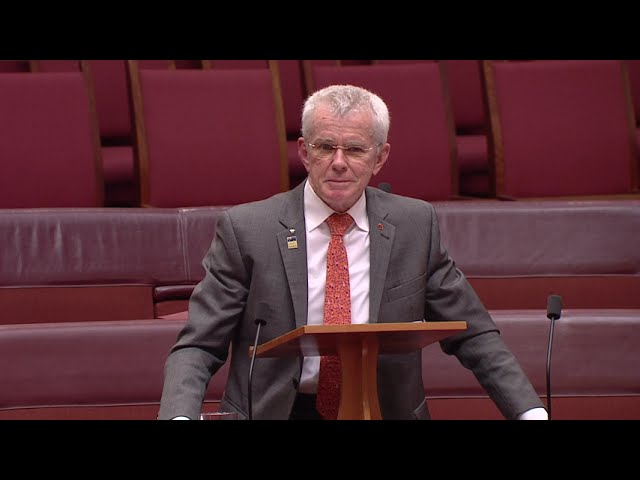
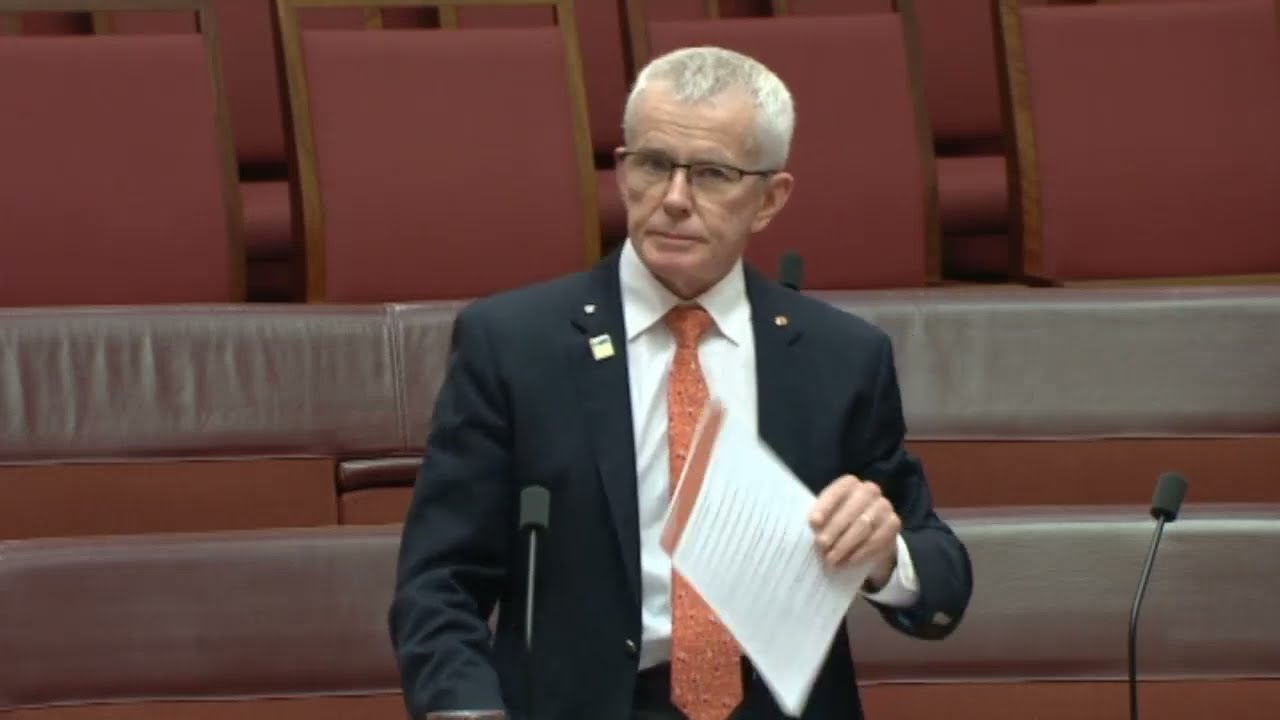
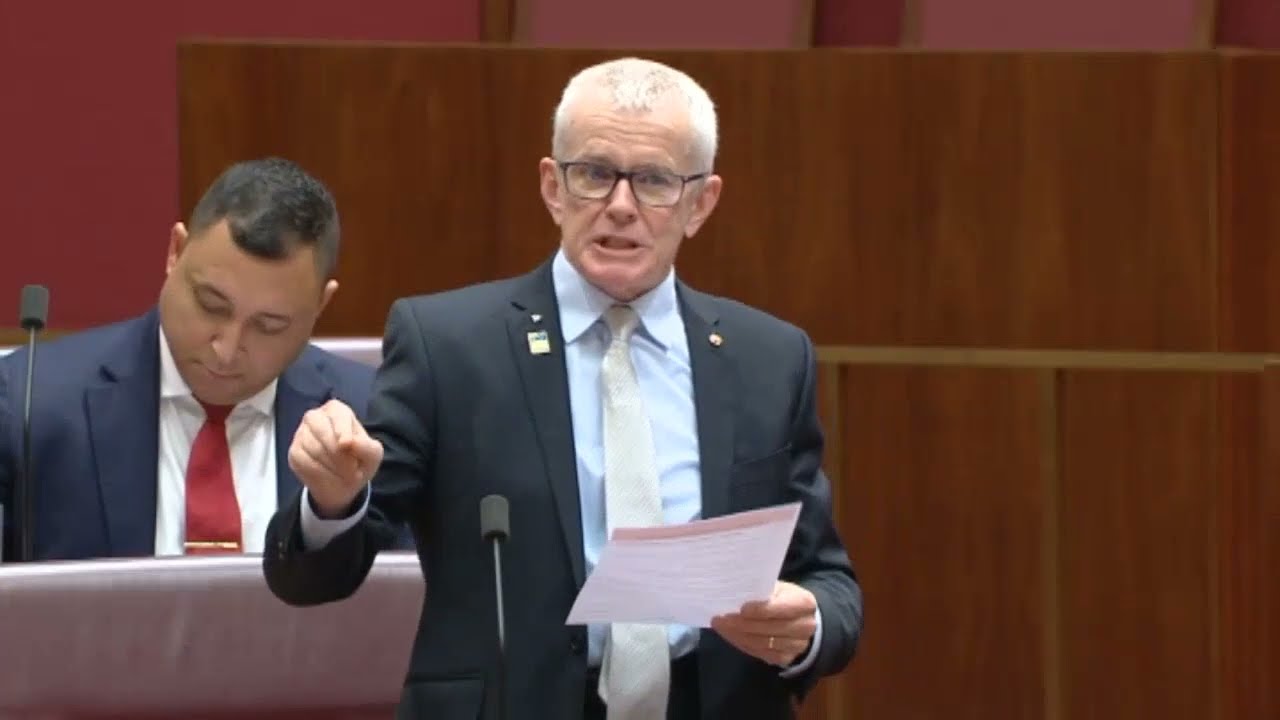
I have expressed grave concerns that we are signing our young Australians up to be “debt slaves” to the big banks. It’s one thing to offer a “leg up” onto the property ladder, but it’s another thing entirely to push them into a lifetime of unmanageable debt.
During my questioning of Housing Australia, I pointed out a massive flaw in how they report their success. The department “brags” about a low default rate — only 11 claims out of 250,000 — yet admit that they stop tracking borrowers the second they refinance or exit the scheme. Think about that. If the families under the most financial stress are the ones forced to refinance or leave, they vanish from the government’s data. We’re essentially flying blind, ignoring the very people who might be “going backwards.”
I’ve said it before on the Senate floor, and I’ll say it again: this scheme is “smoke and mirrors.” Pumping more low-deposit buyers into a market where there aren’t enough houses to go around, the government is just upping the price of entry-level homes. This completely ignores the root of the problem—supply, caused by mass immigration. We’re watching house prices increase and the very people this was meant for— the younger Aussies — can’t even afford the ‘starter’ homes.
I’m not going to let this rest. We need to see the real numbers, not just the cherry-picked stats that make the government look good.
Australians deserve to know if their “dream home” is actually a debt trap.
— Senate Estimates | December 2025
Transcript
Senator ROBERTS: I’ll try to be brief. I refer to data on how people who are taking on these 95 per cent mortgages are actually faring, because I have grave concerns that the government is just signing up first home buyers to be debt slaves to the banks. Firstly, does Housing Australia track participants who later refinance or discharge their lower deposit guaranteed loans with a different lender?
Mr Rimmer: I’ll pass that question to Mr Langford in a minute. The five per cent deposit scheme has been in place for five years now. Over 250,000 guarantees have been issued. Only 11 of those 250,000 have been paid, at a total cost of about $500,000, a relatively small amount of payment per claim. Out of all 250,000 Australians who were supported into purchasing a house through this program, 11 have fallen into very significant arrears.
Senator ROBERTS: If you don’t track participants who later refinance, how do you avoid a survivorship bias in your arrears metrics if the borrowers most at risk of stress are those who refinance?
Mr Langford: We only have a relationship with the borrower until the point they exit the scheme. There is no ability for us to track what happens to them beyond that.
Senator Ayres: For everybody who enters the scheme, it’s their first home. It’s not unusual for somebody to refinance. They have their foot on the ladder, so they might go and buy a larger home, a different home, a home in a different country town or whatever it is. If you are apprehensive that there might be something in addition to the 11 out of 250,000 people experiencing difficulty, everybody who has a mortgage, every Australian has challenges from time to time meeting their mortgage—
Senator ROBERTS: We certainly do.
Senator Ayres: That’s right. These people are no different from everybody else. It’s just that they’ve got a leg up because they fit the criteria of the scheme. Of course, we want them to have that first step on the ladder, to grow—to grow families and to grow in opportunity. That’s a good thing.
Senator ROBERTS: My concern is if we’re tracking to see whether they’re getting a leg up or a push down. That’s what I want to track.
Senator Ayres: The evidence in this scheme is that—
Senator ROBERTS: I’m trying to go through this quickly for the sake of everyone. Could you please provide on notice counts by year since 2020 of scheme backed loans refinanced or discharged?
Mr Rimmer: We’ll take on notice what information we have that could be useful to answer that question.
Senator ROBERTS: And where possible, with any available reason as to what they’re doing?
Senator Ayres: Yes, they’ll do their best to provide that to you.
Senator ROBERTS: That’s all we can ask for.
Senator Ayres: But don’t take it from that those are bad outcomes. Those are overwhelmingly good outcomes.
Senator ROBERTS: My office and I want to get the data to understand this.
Senator Ayres: We’ll do our best to provide what can be provided.
Senator ROBERTS: Your reports show the share of loans ‘in advance/on schedule/90-day plus arrears’. But you explicitly state you do not receive participants’ current income or valuation data and rely on lender hardship programs. Why is Housing Australia not collecting borrower-level hardship outcomes?
Mr Langford: In the way that the scheme’s designed the relationship is between the borrower and the bank. We are providing a guarantee ultimately to the lender. For a range of reasons, including privacy, we don’t get updated information from the applicants.
Ms Jarman: Further to that, each month we do get from the lenders the actual number of borrowers under the scheme in 90-day-plus arrears or in hardship.
Senator ROBERTS: Can you table or give me on notice the number of scheme participants flagged as in hardship by panel lenders by state and lender?
Ms Jarman: Yes. I don’t have the state breakdown here. I do have the overall number. We can take the state breakdown on notice.
Senator ROBERTS: And the resolution number? I don’t expect you to have the data here. How many scheme backed loans have progressed from arrears to default and resulted in a Commonwealth guarantee call?
Ms Jarman: Some 11 claims have been paid under the scheme since its start in 2020.
Senator ROBERTS: Could you provide the number and value of claims against the guarantee by financial year, and the cohort in terms of which guarantee scheme they are and geography?
Ms Jarman: Yes, we have that data.
Senator ROBERTS: You’ve previously told me that roughly 61.5 per cent of scheme loans are ahead, 38.4 per cent on time and 0.1 per cent in 90-day-plus arrears at a point in time. Do you have an update on those figures?
Ms Jarman: We do. As at the end of October, the in-advance number is 75 per cent of all loans, the on schedule is 23 per cent, the arrears number is 0.6, and the hardship number is 0.8.
Senator ROBERTS: What’s the cohort composition behind those figures—loan age, borrower, income band?
Ms Jarman: I don’t have that breakdown in front of me.
Senator ROBERTS: Can we get that on notice?
Ms Jarman: Yes, we could provide further detail there.
Senator ROBERTS: Debt-to-income and loan-to-value at origination versus latest?
Senator Ayres: Just at an aggregate level.
Senator ROBERTS: Per year.
Mr Langford: Do you mean per year of origination?
Senator ROBERTS: Yes.
Mr Langford: We’ll do our best to provide what information we have on notice.
Senator ROBERTS: Without longitudinal borrower data, these metrics really are incomplete. Can you provide distribution tables for scheme borrowers by debt-to-income bands, loan-to-value ratio bands and income quartiles at origination and latest available?
Ms Jarman: We can take that on notice.
Senator ROBERTS: The Reserve Bank finds that highly leveraged borrowers are most likely to fall into arrears in the current environment. Of your five per cent deposit borrowers, how many are in the bottom income quartile? That’s the one that the RBA refers to as going backwards.
Mr Rimmer: I’m sure Housing Australia will do their best to find that. My understanding is that the arrears rate for loans under this scheme is lower than the arrears rates in the market as a whole. My colleagues may wish to correct that if it’s wrong.
Ms Jarman: That’s correct. When we speak with our panel lenders, the feedback that they provide is that with the cohort of borrowers under the scheme the arrears performance is equivalent, if not favourable, to their other borrower cohorts.
Senator ROBERTS: We’d like to see that in the data.
Senator Ayres: We’ll certainly provide that, but that’s the evidence that’s been given time after time on this question and it fits with our experience. Working people are very disciplined about meeting their mortgage commitments.
Senator ROBERTS: They certainly have good values.
Senator Ayres: And that’s what’s going on here. That is a very good story, and an improvement on the last set of figures; 75 per cent of Australians are ahead as a result of this scheme. That’s a very good outcome.
Senator ROBERTS: What proportion of arrears and defaults sit in the going backwards quartile?
Ms Jarman: Sorry. What do you mean by the ‘going backwards’ quartile?
Senator ROBERTS: The bottom income quartile.
Ms Jarman: I don’t have any arrears data broken down by borrower cohort in front of me.
Mr Langford: If there’s a range of these statistical matters that you’re interested in, we’d be very happy to receive those and see what we can provide.
Senator ROBERTS: I’ll put them in writing for you.
Mr Langford: That would be much appreciated.
Senator ROBERTS: Have you run stress tests for the guarantee book to estimate how many will go from on time to arrears or default by quartile and debt-to-income or loan-to-value ratio bands?
Ms Jarman: Yes, every year.
Senator ROBERTS: Could we get that?
Ms Jarman: Yes, you can.
Senator ROBERTS: Once a participant refinances or exits, does Housing Australia have any visibility of their subsequent hardship or default outcomes?
Ms Jarman: No, we don’t.
Senator ROBERTS: How can parliament be confident that public reporting is not undercounting stress by removing the most vulnerable borrowers from your data?
Senator Ayres: You can’t refinance if you’re in hardship, right? That’s not a realistic thing to happen. If somebody can’t meet their obligations, they won’t get refinanced; 11 people haven’t met their obligations out of the 250,000. If they purchase a new home, they’re not doing it under the scheme, they’re doing it using the improved equity. People point to bad outcomes out of house prices going up, but there are good outcomes. House prices lift, they get increased equity, they get up the next step on the housing ladder, and then they’re out of the scheme. That’s a good thing. There’s no downside to either of those propositions. We’ll provide what we can. I understand the point you’re making.
Senator ROBERTS: Could you please provide counts on notice of scheme loans exited via refinance and any post-exit arrears or default?
Ms Jarman: We can provide the discharge reason, but I can’t provide information once they’ve discharged. I don’t have visibility of that from the lenders.
Senator ROBERTS: You can’t get it from the lenders?