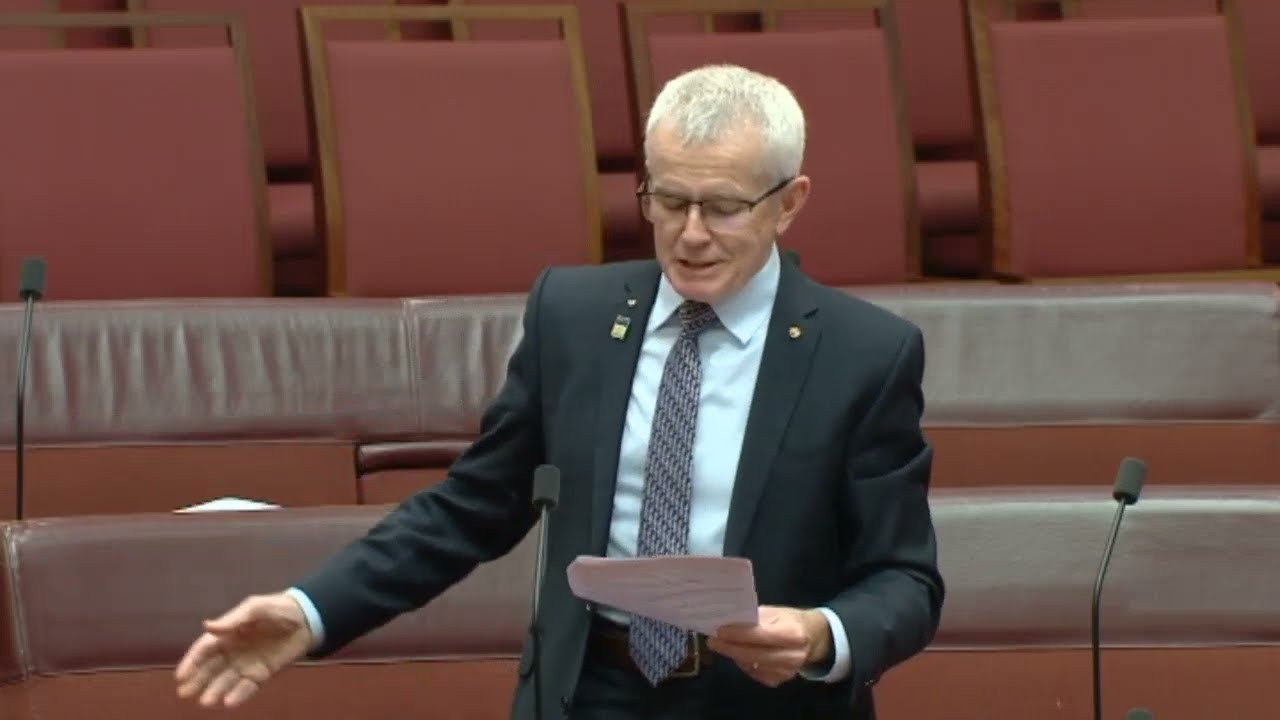
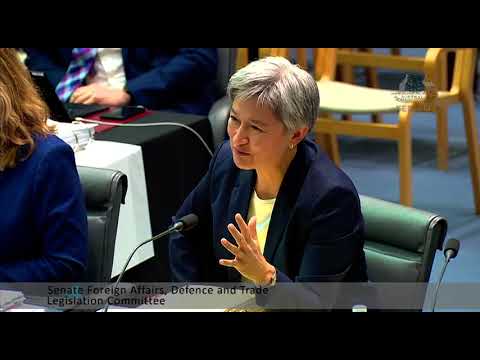
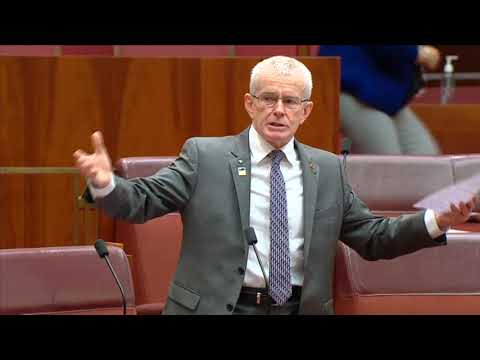
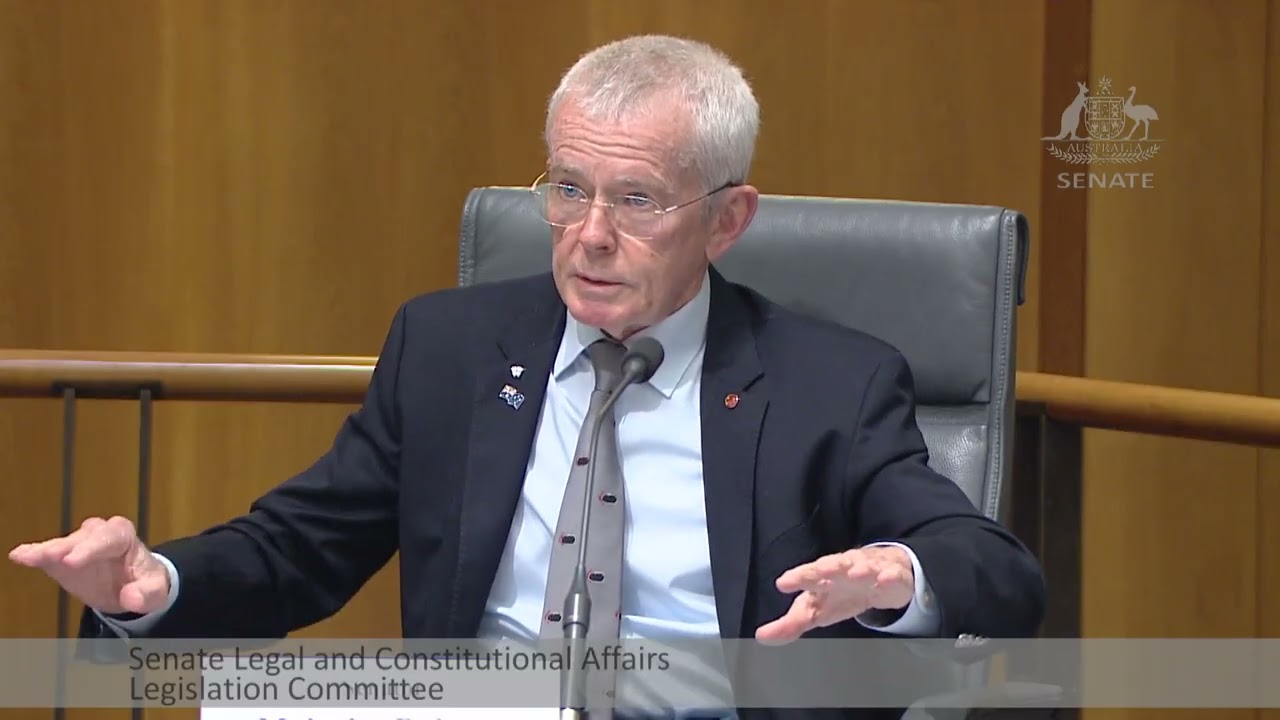
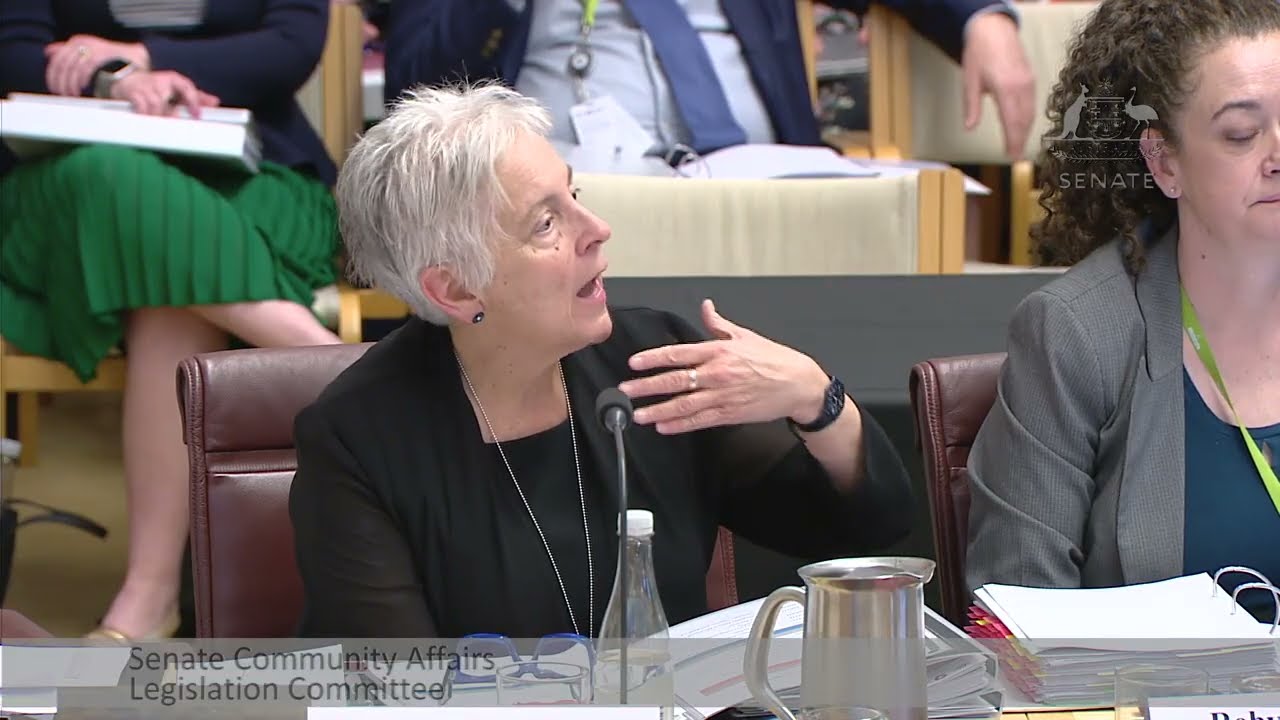
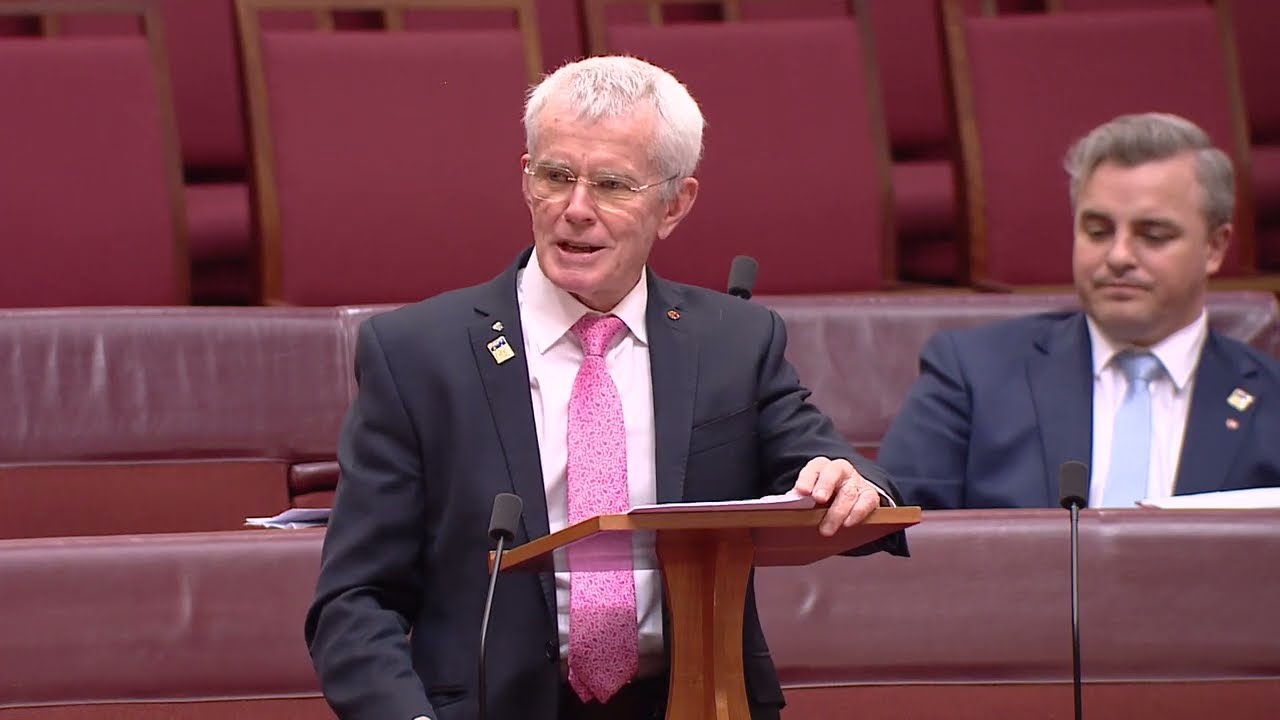
At Senate Estimates, I raised key questions about workplace gender equality and family policy. I asked the Workplace Gender Equality Agency to state executive salaries — the head earns $313,000.
I highlighted to them that the agency itself has a gender pay gap in favour of women — women earn $111,746 vs men $106,141, and that 17 women hold executive roles compared to just 2 men.
My message: Equality should mean fairness and choice — not ideology or quotas.
— Senate Estimates | October 2025
Transcript
Senator ROBERTS: Thank you for appearing today. My questions are entirely to the Workplace Gender Equality Agency. Can everyone who is executive level or senior executive service at the desk state their salary please.
Ms Wooldridge: I, as the accountable authority, have a remuneration tribunal determination, with a total remuneration of $313,000.
Senator ROBERTS: Thank you very much. What is a woman? It’s not a trick question.
CHAIR: Senator Roberts.
Senator ROBERTS: This is the agency in charge of workplace gender—
CHAIR: No, this is a political experience here that none of us want to listen to.
Senator ROBERTS: I’m going to be getting into figures in a minute, so I need to be sure. What is a woman?
Ms Wooldridge: I’ll refer to our act, which does define a woman. This is the Workplace Gender Equality Act 2012, and it says: woman means a member of the female sex irrespective of age.
Senator ROBERTS: Does a man who identifies as a woman count in your statistics for women—in looking at your staffing statistics, for example?
Ms Wooldridge: I’ve defined a woman as per the act, and we apply the act in terms of the operation of our agency and our reporting.
Senator ROBERTS: Does that mean a man who identifies as a woman is not a woman in your staff classifications?
Ms Wooldridge: Senator, once again, I’ll refer you to the definition under the act.
Senator ROBERTS: In your application of that definition, is a man who claims to be a woman, identifies as a woman, listed as male or female?
Ms Wooldridge: Perhaps it would assist to clarify that, in terms of reporting to the agency, the employers who are relevant employers—with 100 or more employees—are required to report to us every year. They are asked, for their employees, who are men and who are women. We also collect, voluntarily, data for people who identify as non-binary. So employers have those three categories on which they can report their employee data to us.
Senator ROBERTS: Men, women and non-binary? Okay, thank you. In response to question on notice 97, you’ve reported the salary for women and men employed in your department. By the way, that figure shows that the average salary for women in your department is $111,746 and the average salary for men is $106,141. That’s a five per cent pay difference, so you have a pay gap against men.
Ms Wooldridge: We have a gender pay gap that’s negative. That’s right.
Senator WHITEAKER: Chair, on a point of order, I’m just not sure how the question is relevant to the work of the department.
Senator ROBERTS: You’re not sure?
Senator WHITEAKER: No.
Senator ROBERTS: This is the Workplace Gender Equality Agency.
CHAIR: Yes, Senator Roberts.
Senator ROBERTS: I’m checking to make sure they’re working—
CHAIR: I do have a level of sympathy with Senator Whiteaker’s frustration here at what appears to be heading down an overtly political and somewhat offensive pathway. Ms Wooldridge, I would encourage you to only answer the questions that you feel to be relevant to your agency and relevant to Senate estimates.
Senator ROBERTS: Chair, what is offensive about the question I just asked? This woman is in charge of informing—
CHAIR: Senator Roberts, we all know where you’re going.
Senator ROBERTS: Oh, do you? Okay, up to you.
Ms Wooldridge: So, yes, we have a negative gender pay gap. Eight per cent of employers that report to us have a negative gender pay gap, which reflects an average total remuneration slightly higher or higher for women than men. But we do know that the vast majority of employers in Australia do have a gender pay gap in favour of men, which is a positive gender pay gap. That’s a normal calculation that we make for employers in Australia.
Senator ROBERTS: You have 38 full-time workers and three part-time; 29 female, 11 male and one nonbinary. With your gender pay gap favouring women, doesn’t it show how ridiculous the entire concept of trying to equalise aggregate wage is?
Ms Wooldridge: We’ve discussed before the definition of the gender pay gap. We believe that it’s a very valid measure as a proxy for gender equality. It’s used very effectively; it’s used internationally—around the world. Each individual employer has a different result, and we encourage them to reflect on their results and look at how the gender pay gap can be narrowed to ensure we have a greater equality in our workplaces.
Senator ROBERTS: Reading your staffing breakdown, from the question on notice, you had 17 women employed at executive level or higher. I understand executive level starts at $120,000 a year. There are 17 women employed at that level and above and only two men. Is that your definition of gender equality.
CHAIR: That could only be said by a man, right?
Senator ROBERTS: I happen to have been educated by my mother.
Senator Wong: Unless Ms Wooldridge wants to, I might just respond briefly, Senator. I understand you have a view about this agency. You’re entitled to that. We disagree with it.
Senator ROBERTS: What is my view, Senator Wong?
Senator Wong: Alright, maybe you don’t have a view. I was inferring it from your questions. But could I say this: I think the proposition that, because in this one agency there are more women on high salaries than men, the gender pay gap is not relevant is a very odd one. We have ABS statistics which still show a gender pay gap of 11½ per cent. WGEA statistics, which use different methodology—I think that was the evidence before—show it in excess of 20 per cent. It’s not the only way in which we look at equality, but it does tell us something. It tells us that our daughters are likely to earn less than our sons. That’s not merit based, and there are reasons for that. Some of those reasons may be valid and some of them may not. So it is one of the ways in which we try to improve the economic equality of our society, and I would argue it’s of benefit to everybody. Yes, it benefits women, but I think it is of benefit to all of us if we work to remove those barriers to the full participation of women and men in the workplace.
Senator ROBERTS: I would agree with you. I do agree with you, Senator Wong. In fact, I’ll pay you a compliment; I hope it’s well received. You are one of the outstanding performers in the Senate. I don’t agree with some of your policies, statements and values, but you’re one of the outstanding performers. You’re not equal to everyone else in the Senate; you’re far superior to many. That’s no doubt.
Senator Wong: I don’t know quite what to do with this, Senator Roberts. This is probably not good for either of us!
Senator ROBERTS: No, it’s certainly good for me, because we compliment people when they deserve it, and you deserve that recognition. My mother told me the sad mistake is for women to claim they’re equal, because in many ways women are far, superior to men—far, far superior. That’s on the record.
Senator Wong: There you go.
CHAIR: Senator Roberts, we need to wrap up.
Senator ROBERTS: It’s not just because my party leader’s a female.
CHAIR: I will just advise you that we’re going to break for lunch in two minutes, Senator Roberts. Those two minutes are all yours.
Senator ROBERTS: Okay. The replacement family rate is on average 2.2 babies per couple. That inevitably leads to women being out of work for pregnancy just so we don’t go extinct in our species. What adjustment do you make to calculations to account for the fact that we do need to have babies and it’s a good thing, or Australia goes extinct?
Ms Wooldridge: The gender pay gap is calculated by looking at average salaries between men and women in an employer, in an industry or in the nation as a whole. One of the things we do know, though, is that a very significant portion of the gender pay gap is attributable to the time women take out of the workforce to care for family and responsibilities.
Senator ROBERTS: Thank you.
Ms Wooldridge: So the gender pay gap is reflective of that, but there are many things that employers can do to minimise the impact of that time out of the workplace in order to encourage women who need to, or want to, to be able to engage with work as well as manage caring responsibilities.
Senator ROBERTS: Acknowledging what you just said, Ms Woolridge, isn’t it true that, for the gender pay gap to be completely erased, we have to either stop women having babies or have them work the day before and the day they give birth?
Ms Wooldridge: I disagree with you, Senator. In fact, there are many employers who do have zero gender pay gap and who are able to create that equal and fair experience at work. But we do acknowledge that, yes, there are some aspects of the gender pay gap that are attributable to the time out of the workforce, and I think we’re aspiring to minimise the gender pay gap so that those inequalities at work are removed and people do have an equal experience.
Senator ROBERTS: Last question, Chair.
CHAIR: Senator Roberts, we are going to wrap up now, because we’re already running late. I can come back to you after the break if required.
Senator Wong: We’d be happy with one more question.
CHAIR: Just one?
Senator ROBERTS: Yes. It’s for the minister, and I thank you, Minister. Mothering is the nation’s most important job. The critical years for formation of both character and intellect are from birth to six, and the mother shapes that enormously. Granted, for some couples, the mother works and the father stays home or whatever. That’s a choice. Women and men deserve choice. The tax system eliminates choice, and mass immigration drives down wages. What are your view on income splitting as a policy to adopt?
Senator Wong: That is probably not for this group, but the government is supportive of a progressive taxation system. We are also supportive of putting in place policies that contribute to stronger families and parenting. You have seen support for parents. You’ve seen what we’ve done in the areas of health, child care and education.
CHAIR: Senator Roberts, from a personal perspective, as a single mother, I had an extraordinarily flexible employer. I must say it does make a fundamental difference to your life to have an employer who understands the value of giving you space to bring up your children and equally deliver on your responsibilities at work.
Senator ROBERTS: Of course, and an enlightened employer hires people of all kinds of backgrounds for that very reason.